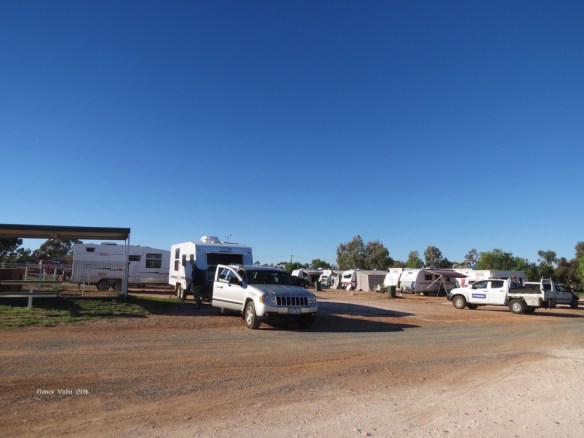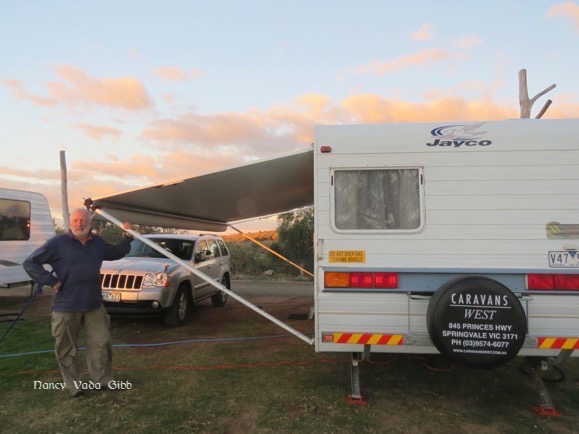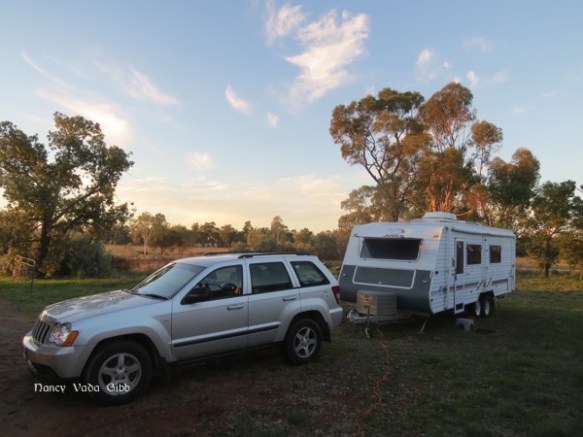
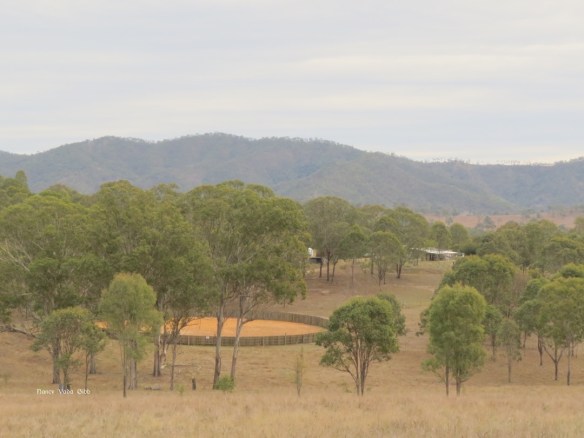
 We had a lovely restful stay at Nic and Mick’s property near Toogoolawah, with Westie parked in a paddock next to the horses and also a ‘little house’ with a shower and toilet so we didn’t have to bother them at the ‘big house’ too often.
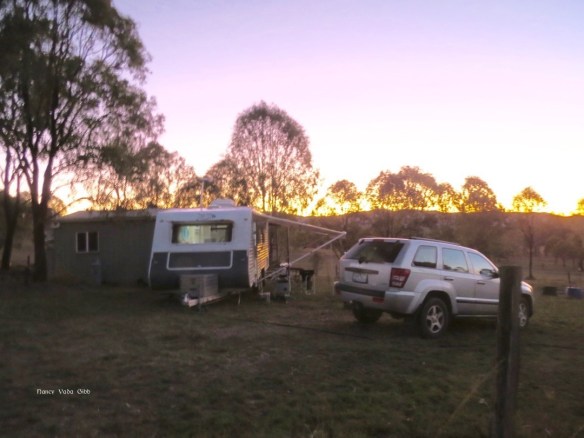
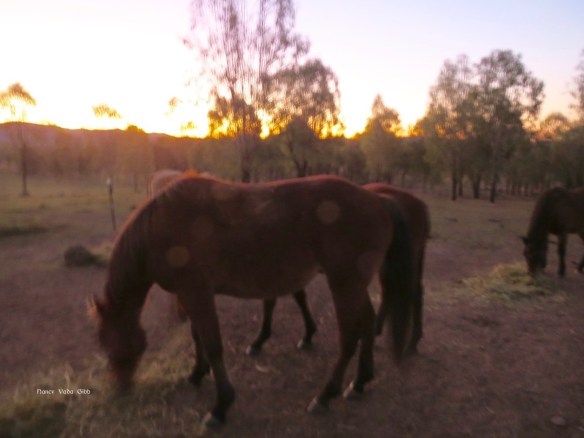
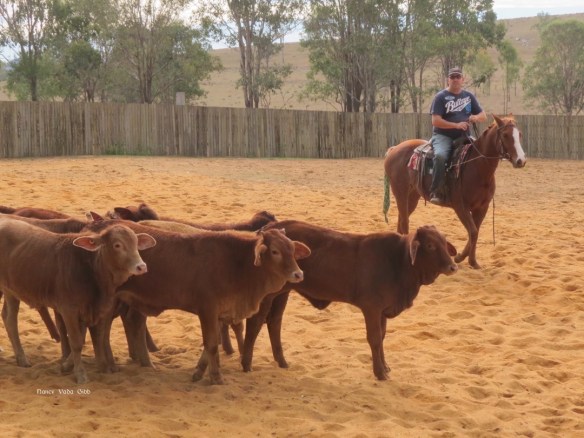
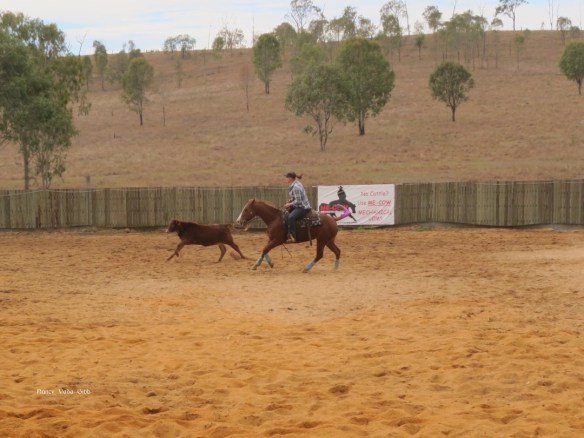
We made several shopping trips into Toogoolawah to stock up on food and also various hardware-store-stuff needed for the caravan. We enjoyed watching Nic and Mick and their friends practising cutting in the arena which Dave (briefly!) helped build two years ago.

All too soon it was time to return to Toowoomba to collect Dave’s new driving glasses and to get Grandy’s bull-bar fitted. We were lucky to find a place which could supply one in three days’ time; at other places including Melbourne we were always quoted two weeks. It is a very shiny bull-bar, Dave may have to put some black masking tape on the parts facing the driver if we drive at night, otherwise the headlights get reflected in the driver’s eyes. Hopefully we never need to drive at night though. The number of dead roos by the roadsides is sobering.


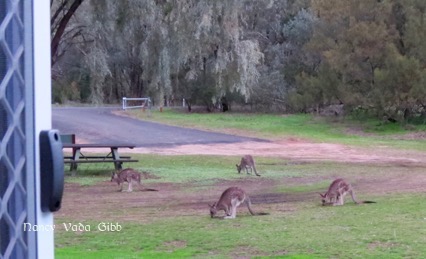
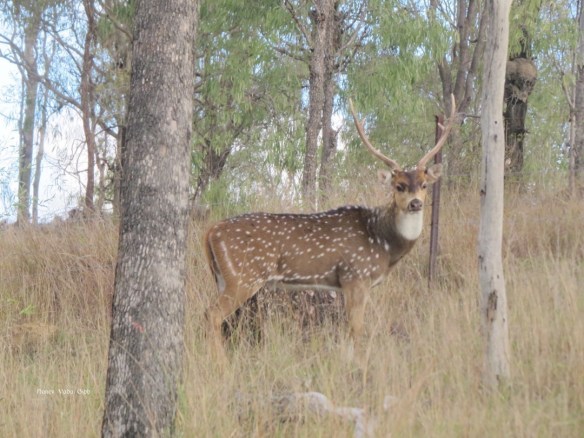
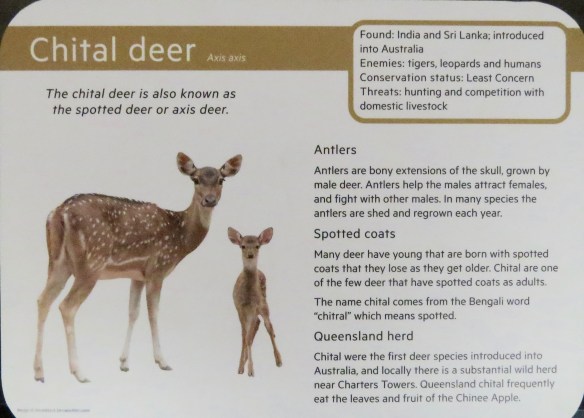
We spotted one roo as we were leaving Nic and Mick’s, and also a little family of wild deer. We were to learn a little later at the Cobb & Co. Museum in Toowoomba that they were chital deer, released many years ago in several parts of Queensland for hunting.


 We drove via a circuitous route to take in Narangba and visit friend Carole’s cousin Elaine, last seen about 25 years ago. We agreed we’ve all got a few more wrinkles but otherwise are unchanged! A lovely reunion. We parked in their extensive backyard and have suggested they make part of it available to visiting caravans, similar to the privately-owned POP sites in NZ. Incidentally, there seem to be very very few similar sites in Australia. Or perhaps i just haven’t found them yet.
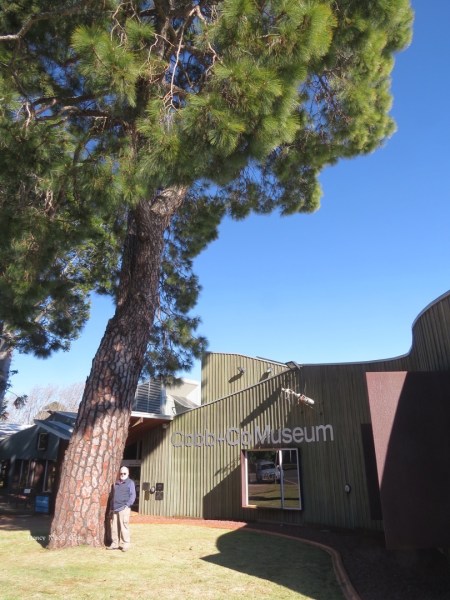
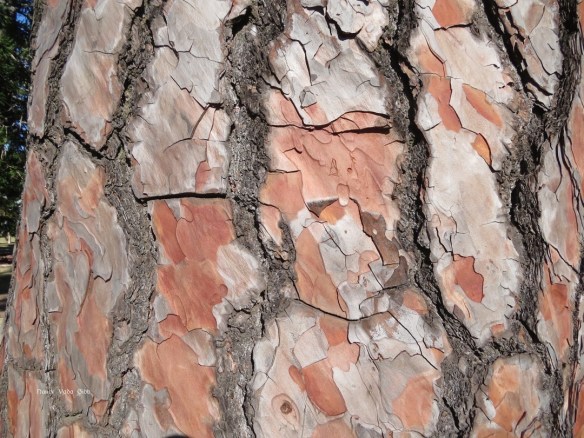
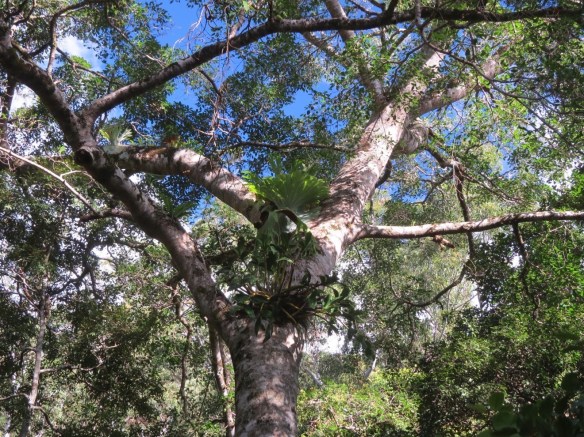
Before leaving Toowoomba we paid a visit to the Cobb & Co.Museum. The first thing I saw on entry (after admiring a really huge old tree outside, with beautiful bark) was not a stagecoach but a roomful of wild animals (!). A notice said that most of the specimens had been donated to the Qld Museum, some as a result of confiscations. Usually they spent most of their time in storage, out of the public eye …. however their main value is in their ability to display a conservation message. Hence the room … to help ensure that wild places continue to be set aside for wild animals. “Before it is too late.”
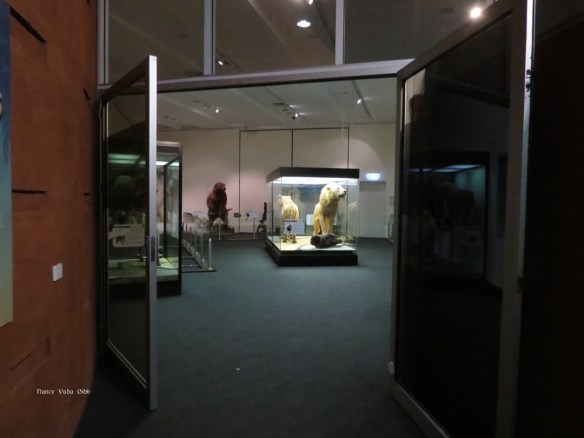
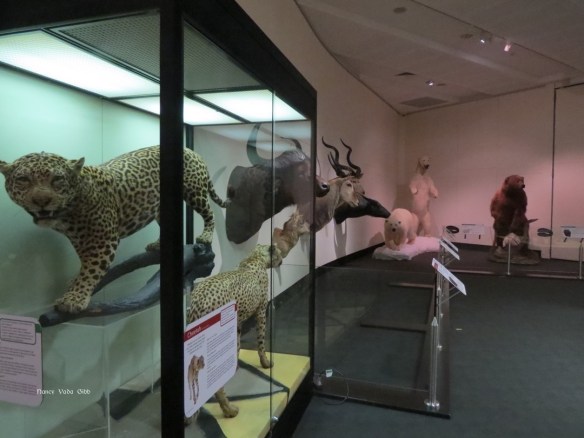
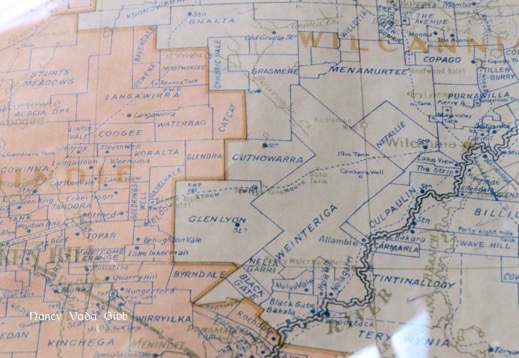
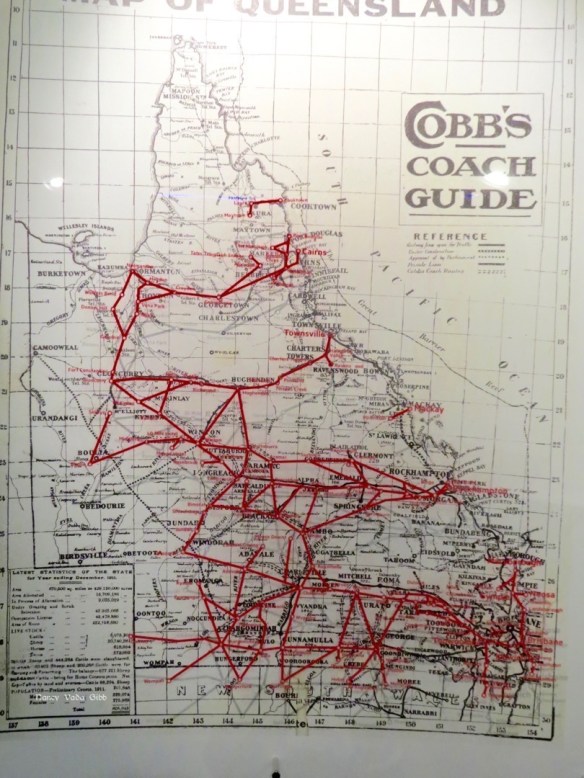
The museum proper was chock full of Cobb & Co. items, including various coaches, maps of routes, etc. I was amazed to realise just how much of the country they traversed. Now I know how my grandmother likely got from Cloncurry to Toowoomba for the birth of her first child (my aunt) in 1910.
There were so many wonderful old photos which I have reproduced. I may be able to get better copies on-line but these museum ones captured my attention.


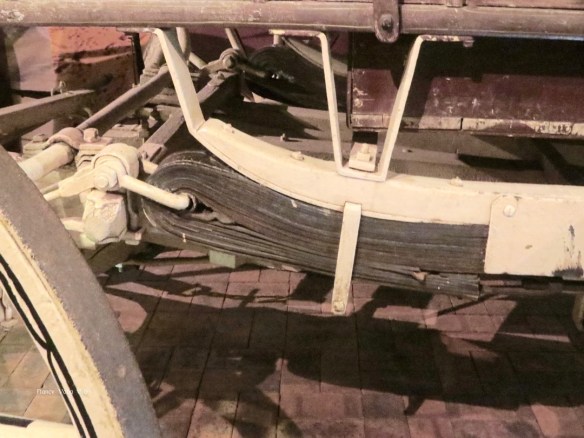
Many passengers suffered motion sickness because the wooden coach bodies were suspended on thick leather straps called thoroughbraces which caused a rocking motion.
Because Cobb & Co carried the Royal Mail, they needed to deliver on time. As the driver approached a changing station he would blow a bugle, and a groom would be waiting with fresh and harnessed horses ready for the next 30 km of the trip.
There were all sorts of coaches and associated horse-drawn vehicles…..

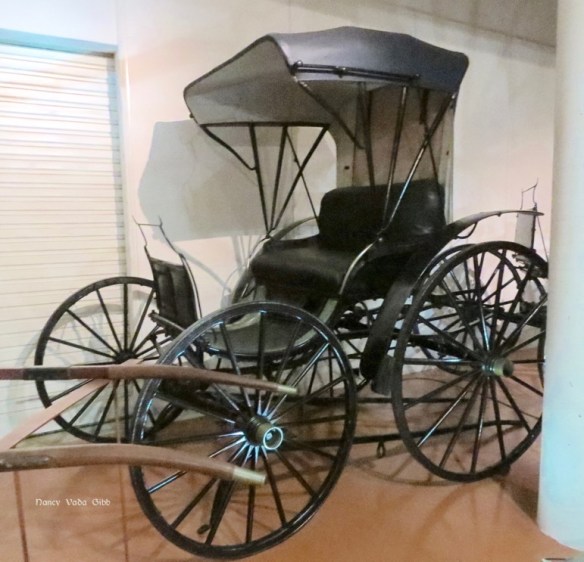

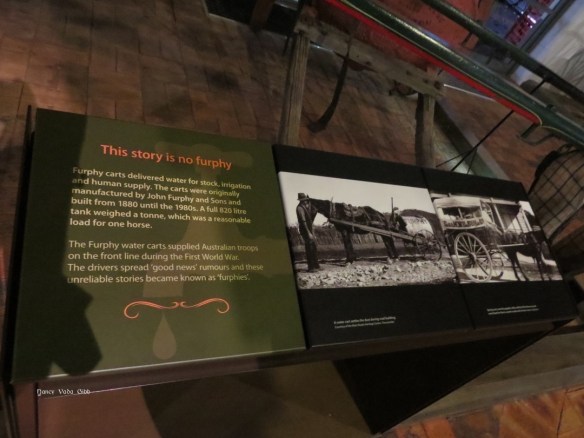
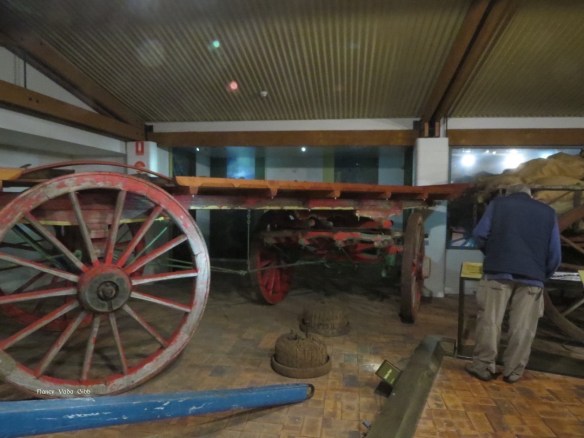
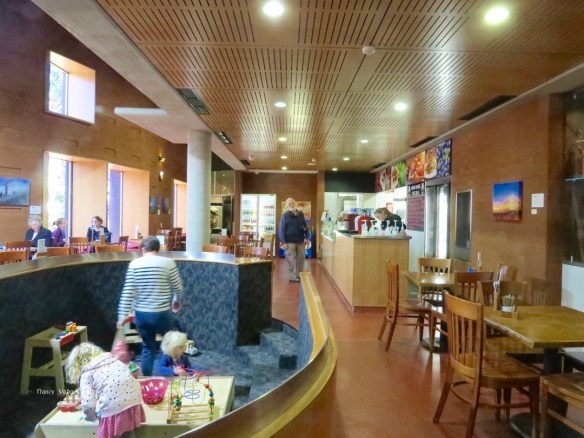
I would highly recommend this museum not just for the quality of the exhibits but also for making them so child-friendly. There were so many quirky little things designed to attract and hold a child’s attention. Even in the cafe there was a wonderful sunken pit well equipped with toys. the scones and coffee were also very good value!
A lovely little incident happened at some traffic lights. The driver in the car next to us had a cochlear implant. I attracted his attention, pointed to our implants, and his face split into an enormous grin. “I can hear!” he mouthed just as the lights changed and we had to move on.
Being the end of Australia’s financial year, all the shops were having Sales. So off to the wonderful R M Williams’ store in Toowoomba where I purchased an identical padded vest to the one I lost (and at the same price paid about seven years ago at the airport) and Dave pounced on some very good boots which he badly needs. An excellent shopping trip!













 It was also where a cat called Minou came into my life. Minou, of indeterminate parentage and striking streaky-black-cream-brown appearance, lived to be 19 and had an amazing life, living in a variety of flats, my parents’ home while I was overseas, more flats, a farm, and finally about seven years on a boat. She definitely used up most of her nine lives, survived a fight with a snake (I found it half dead on my kitchen floor), being yanked down and out of an old chimney by her tail, various swimming episodes and several bouts of VERY BAD seasickness followed by soothing warm baths. When first husband Geoff and I were living in a small flat in Sydney while working on the boat, Minou would almost always come with us in the dinghy when we went out to the boat. She was a wonderful cat. (And by an amazing coincidence, my daughter now has an almost identically-coloured cat!).


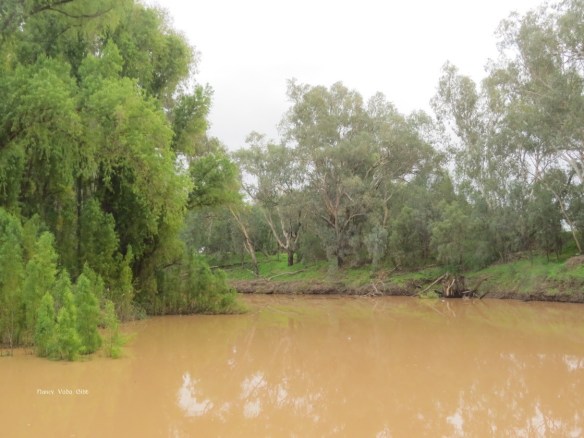
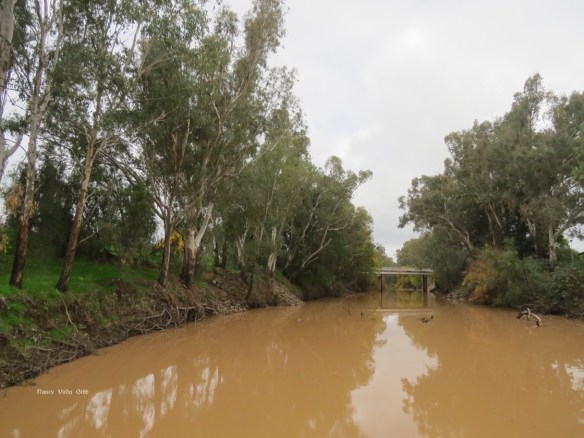
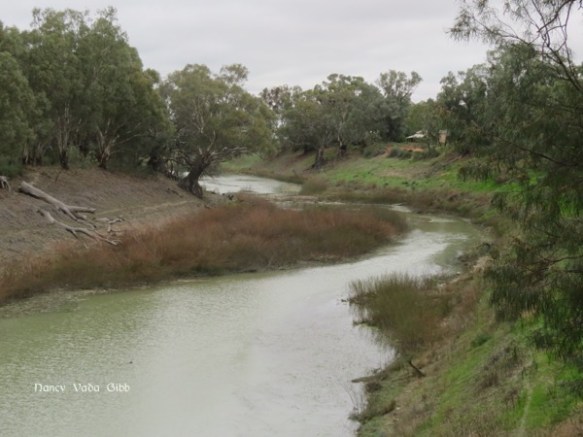
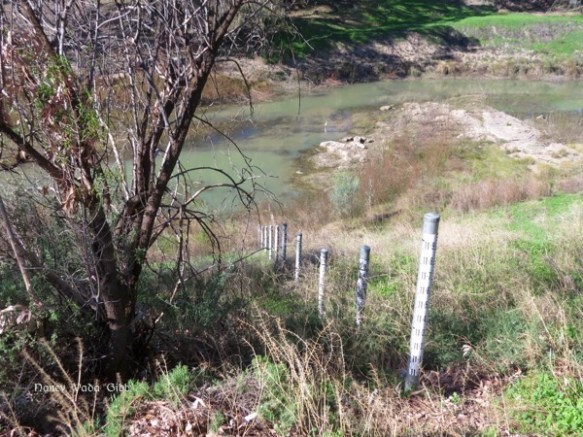
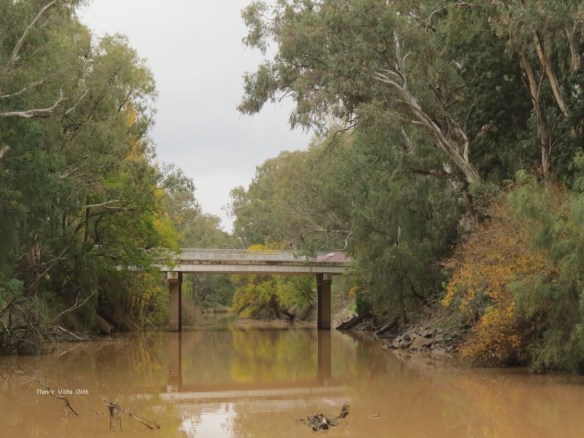 The view from the other side. Wattle trees lined the banks.