141. An Earlier Tour of the Outback.

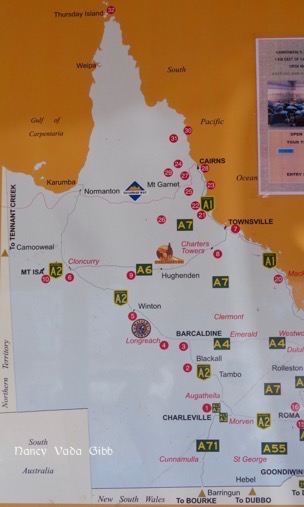
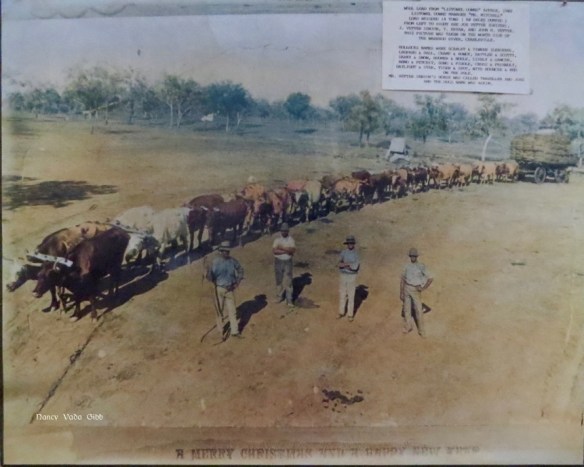
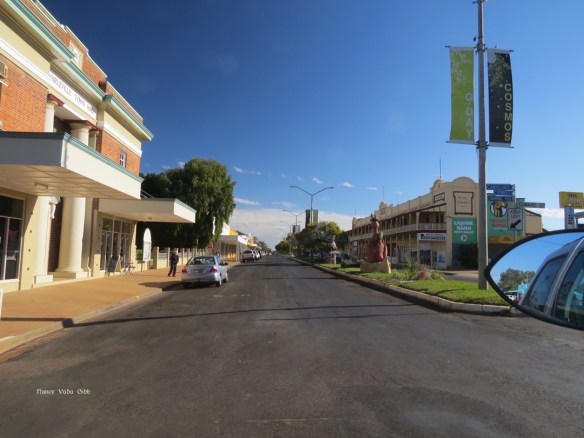
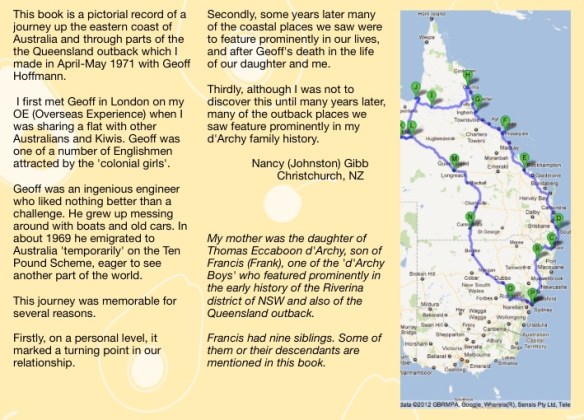
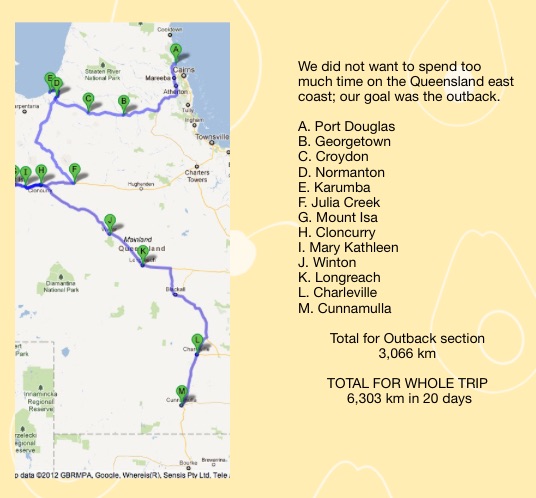
I’ve mentioned a few times that I was in the Queensland outback in 1971. Here are a couple of pages from a booklet I published four years ago about that journey. My 1971 slides were in a bad state but we were able to clean up most of them.

The booklet is available in eBook form at http://www.blurb.com/ebooks/181803-outback-queensland-by-mgtf

My first husband and I took three weeks’ leave from our respective workplaces (I had to beg and plead for mine as someone else from the chemical pathology laboratory had already ‘booked’ that time), loaded up Geoff’s 1952 partly-restored but mechanically very sound MGTF, and set off from Sydney. It had taken several months’ hard work each evening in my parents’ garage to take the car to pieces and reassemble, including a complete engine overhaul.

intro

After welding a custom-designed rear rack for the MGTF on a friend’s property in Armidale (the same property Dave and I visited 45 years later and a few blogs back) Geoff and I headed up the east coast as far as Cooktown, then with youthful fingers crossed set off for the outback proper.

Qld route

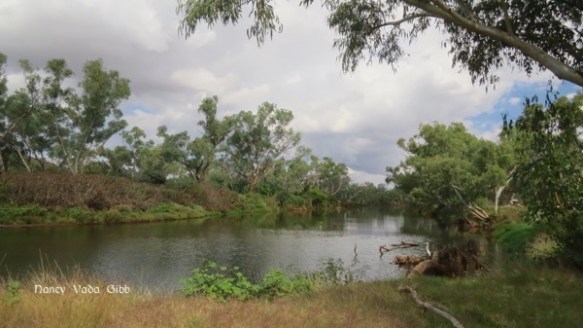
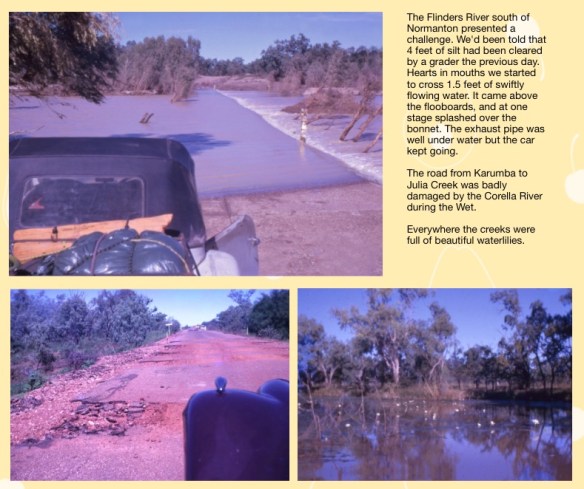
It was in April, just after the Wet had finished, and many rivers were still running. It was my job to wade across first, checking for hidden potholes and braving possible crocodiles and snakes (fortunately we didn’t see any).

Flinders R., J.Ck

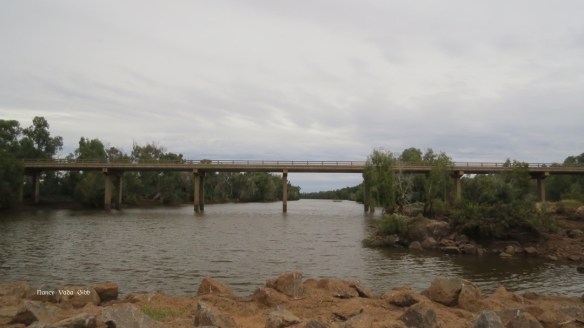
This is the (old) Angellala bridge near Augathella, on the then highway (true!)  between Blackall and Roma. Too late I realised Dave and I had just passed it. No way to stop and turn around on what is now a major highway with a big caravan in tow. Doubly regretful as in Longreach we learned that not so many years ago a much more recent bridge in the same place had blown up and is now a tourist attraction!

angellala Ck

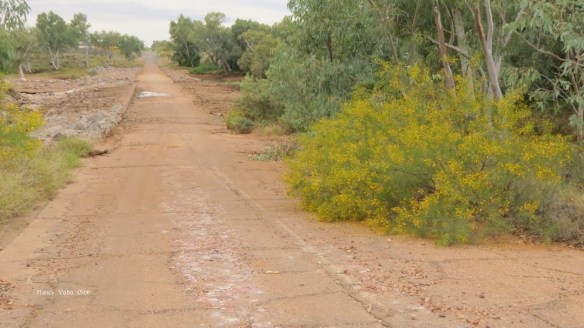
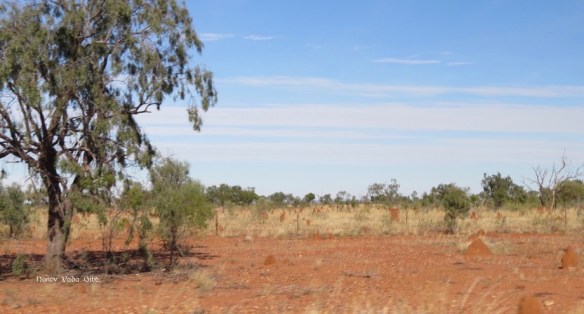
This was a typical road at the time. Actually they are still like this but with a nice tarred and reasonably smooth surface, with wide red shoulders.

C'mula-Ch'ville Rd

boulia pump

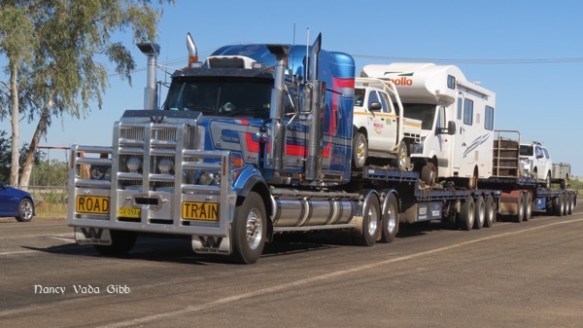
It has been awesome retracing that journey, albeit in reverse. The most noticeable differences between then and now are the roads and the vehicles on them. Thousands of caravans and huge road trains now thunder along at 110 kph on what were narrow and often unsurfaced roads. Small outback towns which once sported a single petrol pump, e.g. Boulia,  are now producing glossy tourist brochures enticing visitors to stay at the multitude of motels and B&Bs which now line both sides of the highways. Local waterholes and other beauty spots have been prettied up and supplied with rubbish bins and toilets.

in 1971 we drove pretty slowly; a broken axle meant the end of the trip and probably the end of the car as well. We had one small tent, a single primus stove and a basin for washing both dishes and ourselves. I don’t recall just what sort of road traffic we encountered but definitely there were very few caravans. Needless to say we were viewed with utter disbelief. “How did you get here in THAT?” was the usual comment.

Oh but it was fun!

140. Chinchilla and Roma

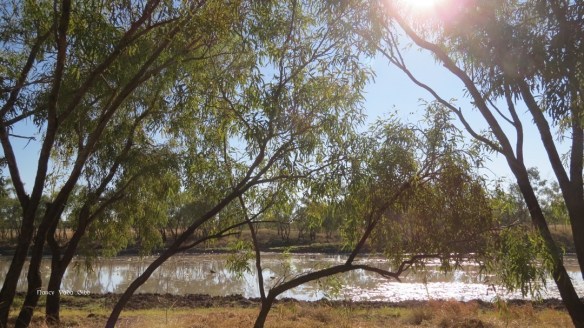
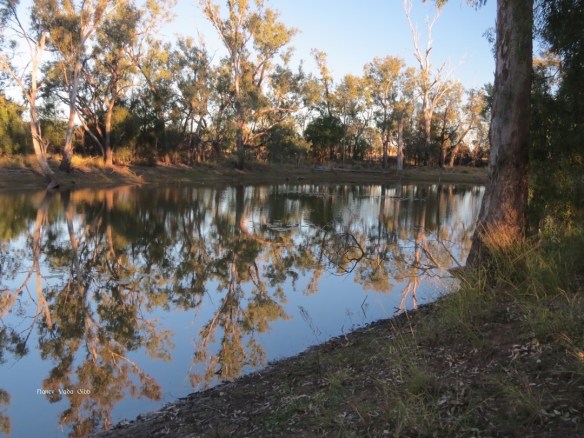
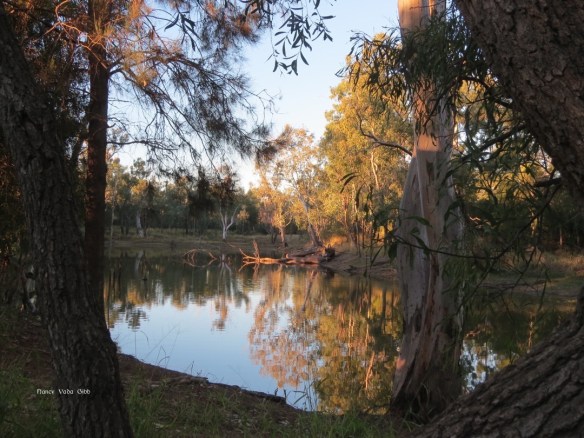
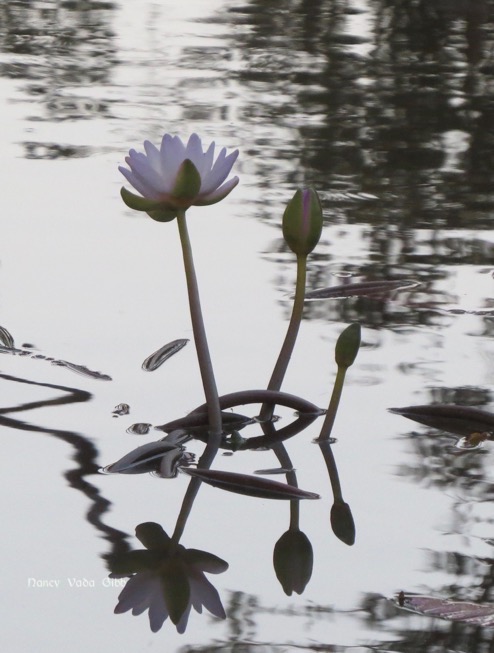
Leaving Toowoomba we headed for Charleville but as it was getting late decided to stop at a free camp near Chinchilla. Sometimes the very best camp sites are discovered by accident. The Round Waterhole was absolutely beautiful and there were only three other vans to share the paradise.

IMG_9724

IMG_9719

IMG_9725

IMG_9737

IMG_9738

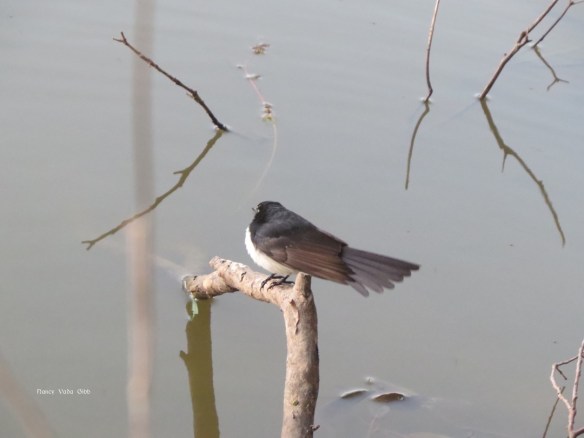
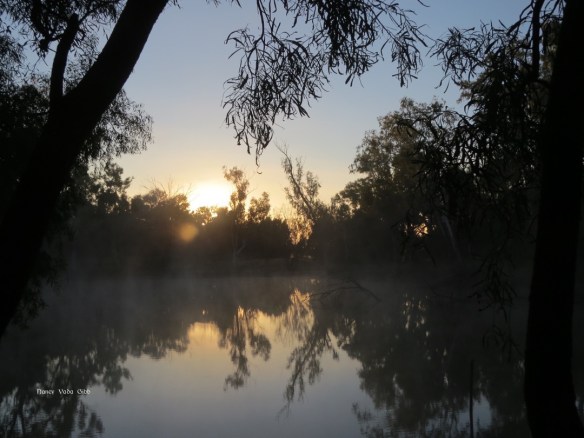
I was up very early next morning (a rare occurrence these days especially as the nights are still very chilly) taking photos of the early mist rising. A willy wagtail entertained me for a long time, but getting a good photo was another thing.

IMG_9739IMG_9740IMG_9749IMG_9758IMG_9761IMG_9764

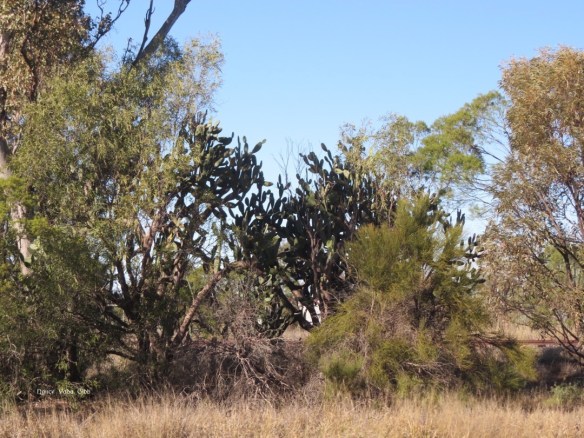
Next stop Roma along a road lined with huge prickly-pear ‘trees’ .

IMG_9774

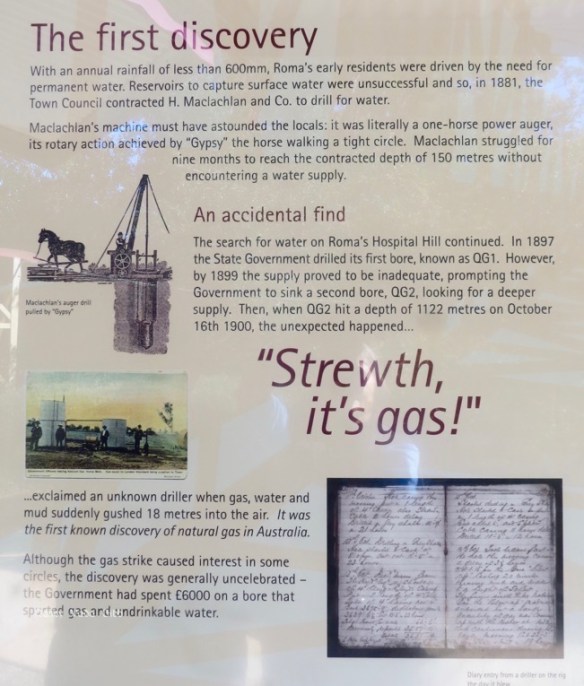
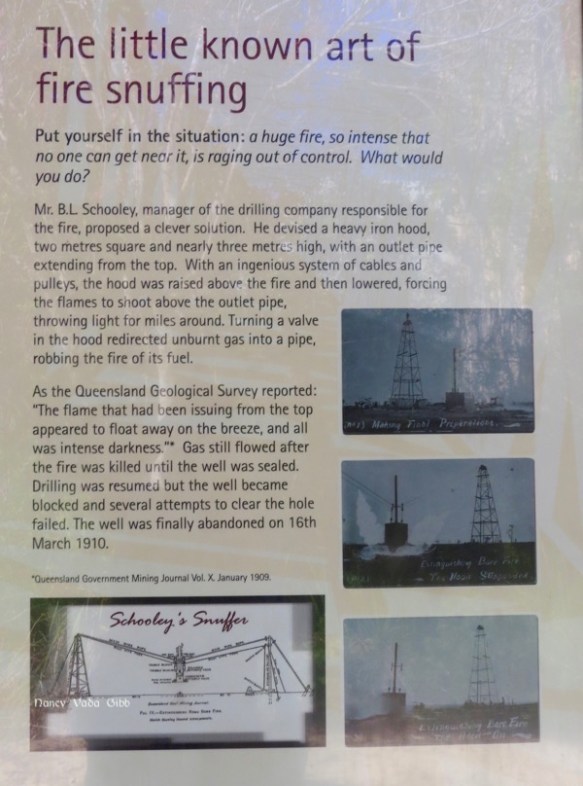
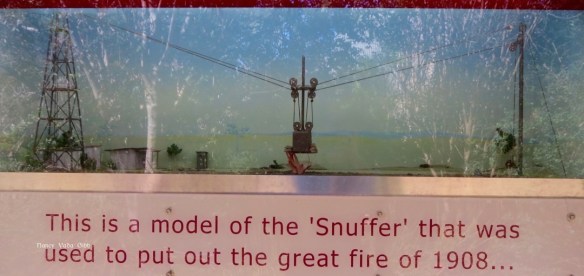
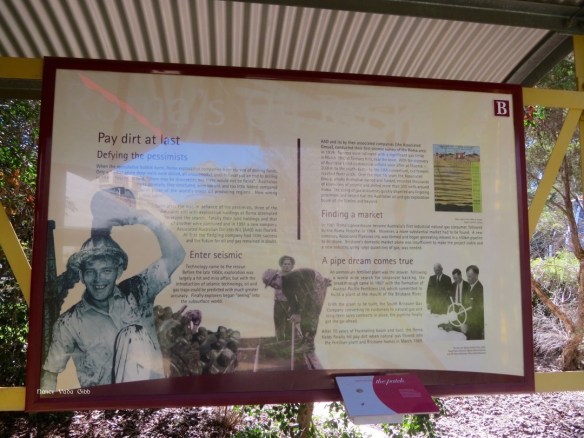
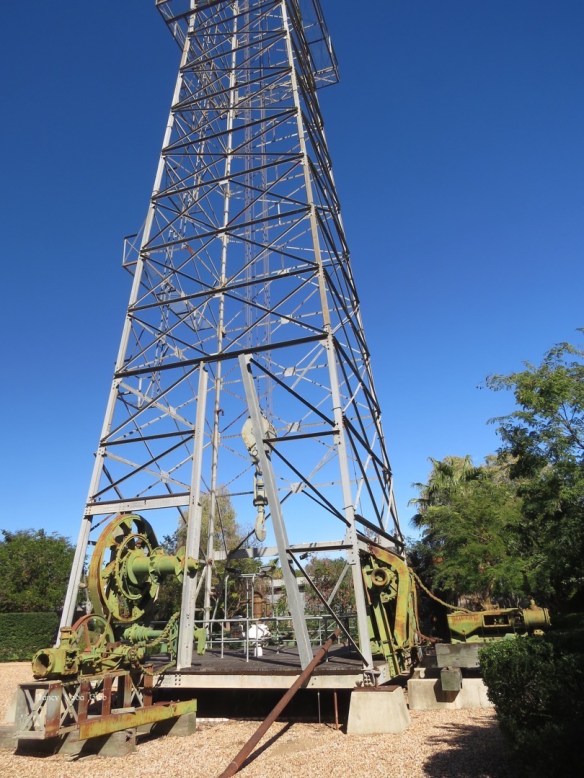
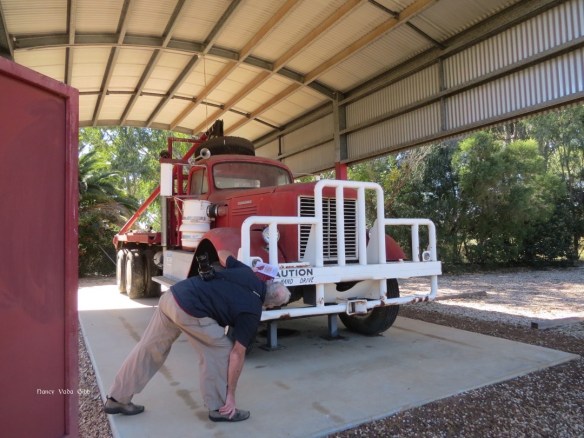
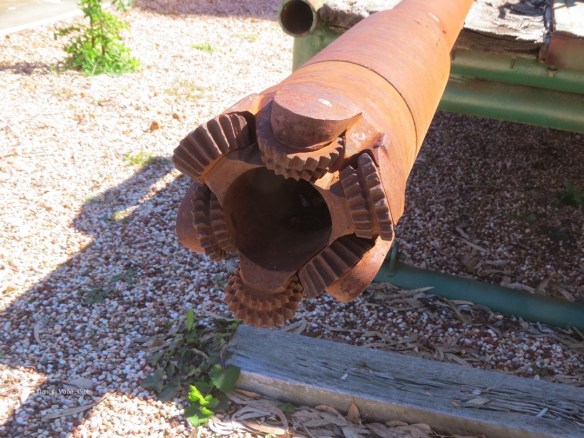
The Big Rig at Roma demanded a visit. It is a living memorial to the pioneers of Australia’s oil and gas industry. Again, a very good and well laid out display with lots of informative signs (e.g. “Strewth, it’s gas!”); I felt I was not missing anything even though there were many audio points too. For a little while the township enjoyed gaslight but all too soon the first gas well died out. That was in 1906.


IMG_9777IMG_9779IMG_9780IMG_9787IMG_9790

I learned rather more than I needed about drilling techniques, types of rig, etc etc. But both Dave and I agreed it was an interesting museum worth a visit.

IMG_9796IMG_9799IMG_9803IMG_9805IMG_9807

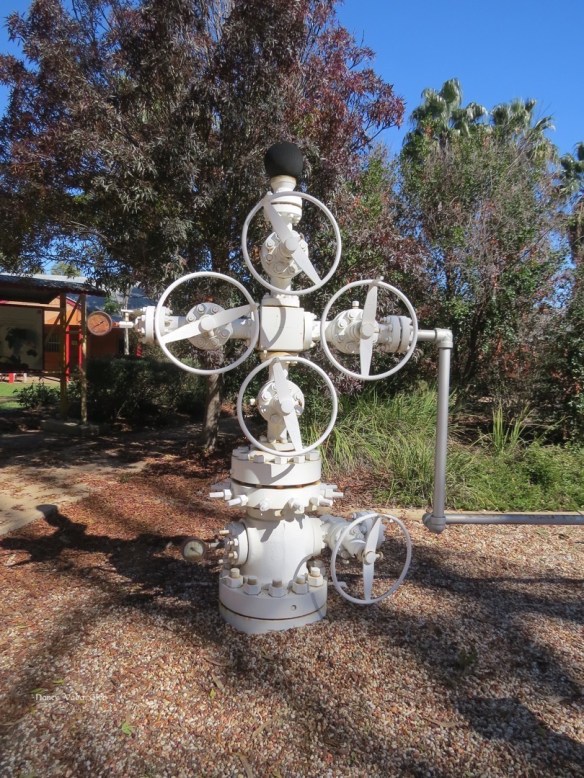
This is a ‘Christmas Tree’ …

IMG_9808

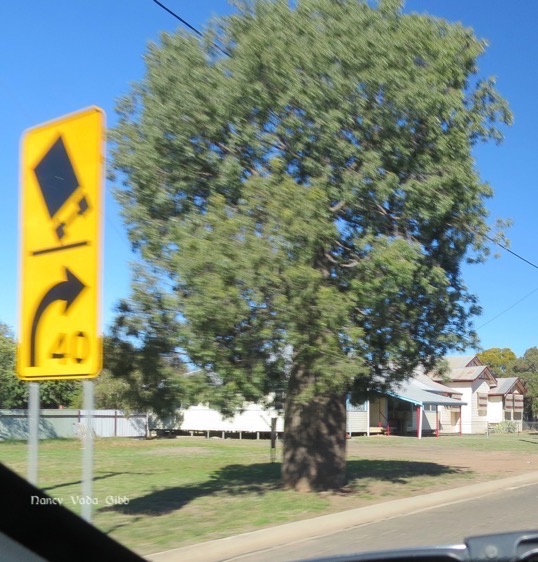
We did not linger in Roma, a pity really as the town has much to offer. On through Tambo where I remembered too late that I wanted to have my photo taken with one of the huge bottle trees lining the main street – to compliment the same photo I’d had taken the last time I was in Tambo in 1971 (!). But at least I did get some hasty shots of the bottle trees through the windscreen.

2016-07-12_1012

IMG_9812

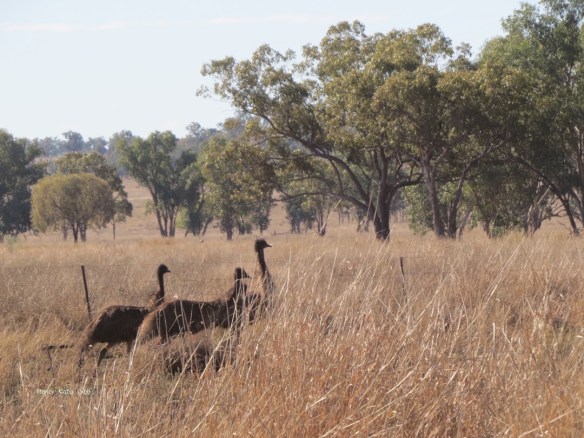
Not far outside Tambo we took what we thought was the road to a ‘historical place’ but instead it took us miles out into the countryside. It was not entirely a wasted trip though, we spotted a mob of emus, stalking along in a stately manner.

IMG_9822

IMG_9823

Next stop Charleville. This blog is being posted in Cloncurry so I have a few to catch up on!

139. Toogoolawah and Back to Toowoomba

IMG_9618We had a lovely restful stay at Nic and Mick’s property near Toogoolawah, with Westie parked in a paddock next to the horses and also a ‘little house’ with a shower and toilet so we didn’t have to bother them at the ‘big house’ too often.

IMG_9623

IMG_9620

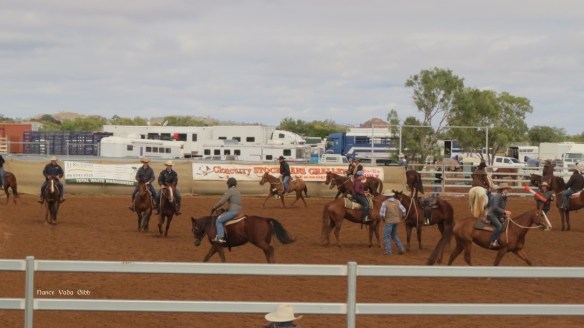
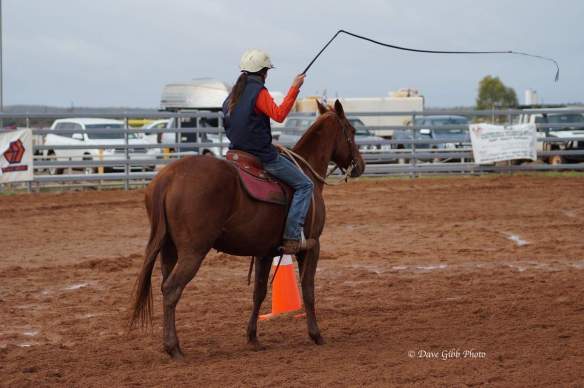
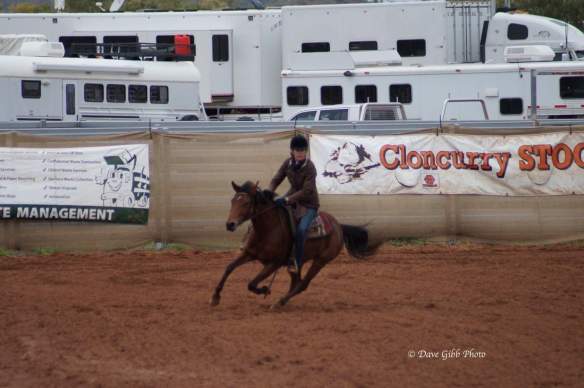
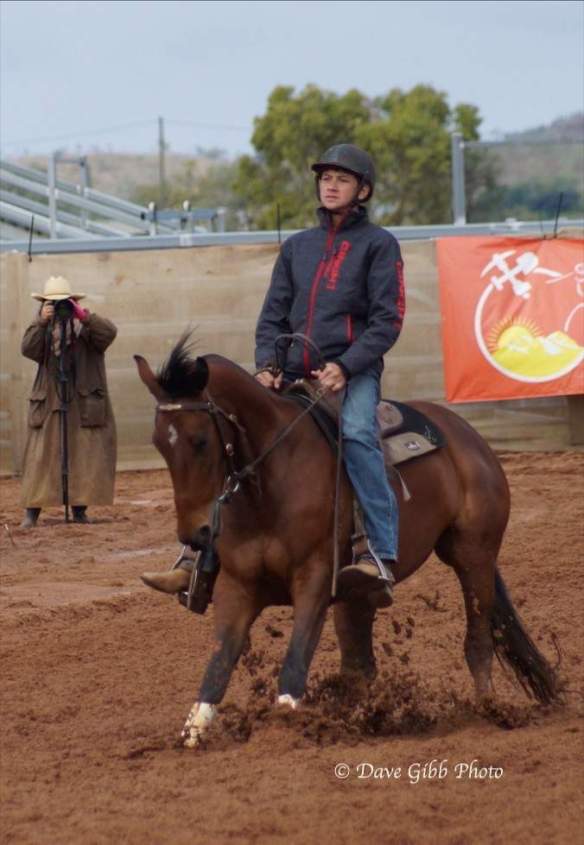
We made several shopping trips into Toogoolawah to stock up on food and also various hardware-store-stuff needed for the caravan. We enjoyed watching Nic and Mick and their friends practising cutting in the arena which Dave (briefly!) helped build two years ago.

IMG_9589IMG_9591IMG_9600

IMG_9608

All too soon it was time to return to Toowoomba to collect Dave’s new driving glasses and to get  Grandy’s bull-bar fitted. We were lucky to find a place which could supply one in three days’ time; at other places including Melbourne we were always quoted two weeks. It is a very shiny bull-bar, Dave may have to put some black masking tape on the parts facing the driver if we drive at night, otherwise the headlights get reflected in the driver’s eyes. Hopefully we never need to drive at night though. The number of dead roos by the roadsides is sobering.

IMG_9652IMG_9657

We spotted one roo as we were leaving Nic and Mick’s, and also a little family of wild deer. We were to learn a little later at the Cobb & Co. Museum in Toowoomba that they were chital deer, released many years ago in several parts of Queensland for hunting.

IMG_9629

IMG_9613

IMG_9618

IMG_9667We drove via a circuitous route to take in Narangba and visit friend Carole’s cousin Elaine, last seen about 25 years ago. We agreed we’ve all got a few more wrinkles but otherwise are unchanged! A lovely reunion. We parked in their extensive backyard and have suggested they make part of it available to visiting caravans, similar to the privately-owned POP sites in NZ. Incidentally, there seem to be very very few similar sites in Australia. Or perhaps i just haven’t found them yet.

Before leaving Toowoomba we paid a visit to the Cobb & Co.Museum. The first thing I saw on entry (after admiring a really huge old tree outside, with beautiful bark) was not a stagecoach but a roomful of wild animals (!).  A notice said that most of the specimens had been donated to the Qld Museum, some as a result of confiscations. Usually they spent most of their time in storage, out of the public eye …. however their main value is in their ability to display a conservation message. Hence the room … to help ensure that wild places continue to be set aside for wild animals. “Before it is too late.”

IMG_9660IMG_9661IMG_9663IMG_9665

The museum proper was chock full of Cobb & Co. items, including various coaches, maps of routes, etc.  I was amazed to realise just how much of the country they traversed. Now I know how my grandmother likely got from Cloncurry to Toowoomba for the birth of her first child (my aunt) in 1910.

IMG_9675

There were so many wonderful old photos which I have reproduced. I may be able to get better copies on-line but these museum ones captured my attention.

Many passengers suffered motion sickness because the wooden coach bodies were suspended on thick leather straps called thoroughbraces which caused a rocking motion.

IMG_9697

Because Cobb & Co carried the Royal Mail, they needed to deliver on time. As the driver approached a changing station he would blow a bugle, and a groom would be waiting with  fresh and harnessed horses ready for the next 30 km of the trip.

There were all sorts of coaches and associated horse-drawn vehicles…..

IMG_9709

IMG_9699IMG_9700IMG_9701IMG_9703

I would highly recommend this museum not just for the quality of the exhibits but also for making them so child-friendly. There were so many quirky little things designed to attract and hold a child’s attention. Even in the cafe there was a wonderful sunken pit well equipped with toys. the scones and coffee were also very good value!

IMG_9711

A lovely little incident happened at some traffic lights. The driver in the car next to us had a cochlear implant. I attracted his attention, pointed to our implants, and his face split into an enormous grin. “I can hear!” he mouthed just as the lights changed and we had to move on.

Being the end of Australia’s financial year, all the shops were having Sales. So off to the wonderful R M Williams’ store in Toowoomba where I purchased an identical padded vest to the one I lost (and at the same price paid about seven years ago at the airport) and Dave pounced on some very good boots which he badly needs. An excellent shopping trip!

138. A Birthday Party on Top of a Mountain.


We were a little apprehensive about taking the caravan up Tamborine Mountain in SE  Queensland, but a phone call to the caravan park was reassuring. There are actually two caravan/camping parks in juxtaposition, one is more of an adventure park with some camping and the other, a little further along the same track (as we later discovered) is for more serious campers and caravaners. We were warned that reaching the camp, halfway up the mountain, involved turning off the main road at a certain point – don’t miss it! – but we were not informed that the main camp was beyond the adventure camp so naturally turned off and then continued …….. down an extremely narrow road to some Falls! Fortunately there was a turning circle at the bottom, otherwise we would really have been in trouble.

Tamborine Mountain is actually the northern slope of a huge and long-extinct volcano. IMG_9521

Finally all set up on a nice level surface in a beautiful bushland setting, with facilities close by, we unhitched and drove further up the mountain to visit our friends and find out the details of next day’s birthday party. Eagle Heights, like North Tamborine and other mountain villages, is a magnet for weekend tourists particularly motorcyclists. Every second shop along the main street was a cafe or restaurant or tourist shop of some sort. Did you want a special icecream, holistic body lotion, clothing wild or elegant, jewellery ditto, aboriginal art, a cuckoo clock?? All there and lots more besides.

Tamborine Mt01

ALL the clocks were working!  Fancy a grandfather clock, brand new German-made? (Dave says – Eat your heart out, Ray!)

Tamborine Mt02Tamborine Mt03

The road up the mountain was built in 1924, the original road having been too steep for motor vehicles which were beginning to replace the horse and cart. the new road was Queensland’s first sealed road outside of Brisbane, and local residents had to pay road taxes. In 1930 the road as made a toll-road, and while all users were required to pay the toll, legend has it that the mountain locals used to avoid the toll by cutting through a neighbouring diary farm.

Ian’s 70th birthday party was held in a huge hotel at Eagle Heights, with a great view down to the Gold Coast. As it transpired we were in a private room on the other side of the hotel to ‘the view’ but it didn’t matter.  Try to imagine 20-25 mainly deaf people all using sign language, talking not only to people nearest them but to people on the other side of the room and even through the glass windows which separated us from another parts of the hotel! Dave was one of the few “hearies” and also about the only person who has not mastered sign language, so at times I had to interpret for him – talk about the boot being on the other foot! It was great fun seeing so many friends from my  Brisbane life of 16 years ago. The party continued till late afternoon with a change of venue to a private home, made just in time before a terrific deluge started.

Parts of Brisbane were flooded. The camp got a bit wet but we were on firm ground with good drainage, so were not worried.

Still at the Mountain camp next day, we were entertained by people being entertained by all the lorikeets. One woman was feeding them bread and putting it on her head … and when she saw Dave taking an interest, put some bread on his head too (!).

IMG_9504

IMG_9514

IMG_9511

IMG_9517

Other species of birds kept their distance, but one kookaburra did decide our caravan looked OK so sat down on the power box for a closer look. (I took this photo earlier).

IMG_9495

IMG_9503

We went on the Treetop Walk, about 4 km altogether, partly among the treetops (which were swaying madly in a strong wind)……

IMG_9524

IMG_9532

IMG_9536


IMG_9537

IMG_9528

IMG_9544

IMG_9530

…… and partly along a forest track down below.


IMG_9543

IMG_9538

We didn’t see any birds, very disappointing, but after all it was the wrong time of year and wrong time of day. It was still a lovely walk and the coffee at the cafe afterwards was good. I also learned something about strangler figs and eucalpypt forests.

IMG_9526

IMG_9523

We also visited the Falls which we had inadvertently “visited” the previous day with Westie in tow. Not large but a good flow probably due to the very heavy rain the evening before.

IMG_9550

But Queensland beckoned! First, Toowoomba. One night at the Showground camp, a good evening photographic session with a huge flock of white cockatoos which nest in a treeing a nearby lake, some essential shopping, we were off again for Toogoolawah.

IMG_9553

IMG_9560

IMG_9566IMG_9575IMG_9577

137. Armidale and some Reminiscences

We left the Warrumbungles with regret and headed east through Gunnedah to Tamworth. Half way between the two we passed through Somerton, scene of some exciting moments in my life – eight in fact -eight parachute jumps! I don’t remember the exact location (a private property) where the Tamworth Blue Diamonds Skydiving Club operated, it was just a wide expanse of grass with a few trees and fences here and there.

COR024

I was then a post graduate student at the University of New England (UNE) which had a small skydiving or rather parachuting club (none of us were experienced enough to really skydive, i.e. jump out of the Cessna and free-fall at terminal velocity for some distance before opening the chute. On the other hand, we all jumped on our own, none of the wishy-washy piggyback stuff that tourists do for a thrill these days.

We had to help pack our own chutes too, a very careful, closely supervised operation. The number of fine cords connecting the chute to the harness was amazing. Not just the main chutes but the reserve chutes. Thankfully I never had to use mine.

As a beginner I had to do nine static line jumps before I could be trusted to pull my own ripcord. Sadly the University club disbanded when I was one jump off from doing just that. I was required to practise landing falls, that is keeping the legs relaxed and rolling over at the moment of impact. I also had to get a medical certificate to testify I was fit, and official permission to jump because I was deaf. Apparently beginners are guided down by instructions through a loudspeaker but the Club must have convinced the authorities that I was capable of doing without. I think I was the first totally deaf woman in Australia to make a parachute jump. (I think this photo was taken after my first jump).

COR025

A static line is simply a stout line fastened to the plane with the other end attached to the ripcord which opens the chute. Normally one jumped from the plane, counted to at least five (to be sure of being clear), then pulled the ripcord. Experienced skydivers might not pull the ripcord for some time (!). As a beginner I was closely watched to see that I did the technique correctly.

One time when climbing out onto the step of the Cessna where one stood holding onto the wing struts before throwing oneself backwards with arm wide, my ripcord somehow became twisted around my arm. I waited and waited for the signal to jump but then realised they wanted me to get back into the plane and it circled while everything was sorted. I was annoyed because of course people on the ground would have thought I’d lost my nerve – which did happen with some other beginners.

Another time I landed very close to a barbed wire fence. The chute collapsed on one side and me on the other. Another club member was not so lucky and practically straddled a fence on landing. (Yes, some of my slides are in a bad way). COR026

As we approached Armidale the scenery became more and more familiar. Past the airport (more reminiscencing as we usually flew from Armidale to Somerton) and the highway turnoff. Thank goodness for the GPS. Armidale is a great deal larger than it was in the sixties.

We found Judy’s property without any trouble but the long narrow driveway with overhanging trees gave us a few anxious moments, as did the sight of the low trellis archway over the main driveway. No way could we get the caravan under that! Fortunately the driveway also branched away and we found a good spot to park although Dave did worry about how to turn the caravan round later. As it happened he had no difficulty at all, just drove through a few gates and did a wide circle in a paddock and back again.

Here’s one of the clever sheep dogs ….

IMG_9465

We paid a visit to the University but it is changed out of recognition. My old College is still there but the buildings have been much altered. I THINK that was my room in the second photo, on the ground floor and sightly to the left of centre, next to the window with a small sign underneath. DSC01226

DSC01225

I couldn’t identify the main building which once housed the Faculty of Rural Science.  I was however fairly sure of the paddock where I kept “my” horse (actually the property of Rural Science) and rode often, including before breakfast in winter when my toes froze in my boots and the horse’s hooves cracked the ice in road puddles. Friends living in town got used to me parking my horse in their front garden while we had a cuppa.

I did manage to identify a block of flats where Julie-from-Canberra and I had lived for about a year and where we first decided we would go overseas together.

DSC01219It was also where a cat called Minou came into my life. Minou, of indeterminate parentage and striking streaky-black-cream-brown appearance, lived to be 19 and had an amazing life, living in a variety of flats, my parents’ home while I was overseas, more flats, a farm, and finally about seven years on a boat. She definitely used up most of her nine lives, survived a fight with a snake (I found it half dead on my kitchen floor), being yanked down and out of an old  chimney by her tail, various swimming episodes and several bouts of VERY BAD seasickness followed by soothing warm baths. When first husband Geoff and I were living in a small flat in Sydney while working on the boat, Minou would almost always come with us in the dinghy when we went out to the boat. She was a wonderful cat. (And by an amazing coincidence, my daughter now has an almost identically-coloured cat!).

We’d missed most of the glorious New England autumn colours but did find one avenue of elms near the cemetery. There must be a microclimate in that area.

IMG_9473

IMG_9474

The town is also much changed although some of the old buildings remain, particularly Richardsons, a sort of country town Myer (Aust.) or Ballantynes (NZ). We found a jeweller who repaired our caravan clock, bought me a pair of casual and much-needed shoes, and generally enjoyed time with Judy and some of her family who live nearby, including three wonderful grandchildren.

Judy had discovered a most unusual skull on her property. We could not decide what it was . A frilled-neck lizard was the closest we could get but there were several features which belied that. Do any of my readers have any idea?

IMG_9481IMG_9483IMG_9486

After a relaxing few days it was time to move on. We needed to be at Tamborine Mountain in time for friend Ian’s special birthday party.  We wanted to avoid the congestion of the Pacific Highway so drove up the New England Highway which I used to know so well on my trips to Brisbane from Armidale. Through Glen Innes, Tenterfield and finally Stanthorpe where we decided to spend the night at the Blue Topaz camp a few km outside town. We were on a powered site so could use our big heater. A week or so later the highway from Glen Innes was closed due to black ice and snow!

Next day on to Tamborine via Warwick and Beaudesert. A nice quiet drive.

136. Heading East – Warren & The Warrumbungles

We wanted to visit my brother in a nursing home at Wauchope near Port Macquarie before finally heading for Queensland. The shortest route seemed to be Cobar – Nyngan – Warren – Gilgandra – Coonabarabran – Gunnedah – Tamworth – Walcha then down down down the Great Dividing Range to Wauchope. Not all in one day of course. Somewhere along the way I must have mislaid my treasured RM Williams’ navy quilted and studded sleeveless jacket – and am missing it sorely.  We’ve contacted as many places as we can remember to ask if it was left behind, but no luck so far. I really cannot understand how I could mislay it.

We stopped at Warren, which sits on the Macquarie River. Warren is a major cotton-growing area and the river water is used for intensive irrigation.  Following recent rains it was much discoloured.

IMG_9326


IMG_9335

The main highway goes over this bridge.

IMG_9330

IMG_9329The view from the other side. Wattle trees lined the banks.

IMG_9341

A nearby sign tells how the townsfolk battled to save their township  from a major flood in 1990.

IMG_9324

Warren is also notable for being the point where the explorers Oxley and Sturt passed this way during their early explorations in 1818 and 1828 respectively, the latter on the search for the ‘inland sea’.

IMG_9344IMG_9345

This map shows the location of Warren in relation to Broken Hill and also Tamworth, and the size of the Macquarie and Darling Rivers.

Warren map

After Warren came Gilgandra, the location of a memorable time when I was six years old. I was recovering from a serious bout of meningitis (which resulted in my deafness) when my mother, my little brother and me flew up for a ‘holiday’ on a wheat farm in the locality. We flew up courtesy of Butler Air Transport in one of the early DC3s. I have a photo of Barry and myself on the tarmac, but it is in storage in Christchurch. It was also the first time I’d been on a horse. My mother’s friends’ two daughters rode an old horse to the local bush school each day (oh how envious I was!) so when offered the opportunity this little city girl was plonked on top and the horse given a slap which made it take a few steps forward. And there it stopped. Nobody had told me about using my heels so I just sat up there on the giant, flapping the reins uselessly and shouting Giddap!  Every now and then someone would come out and give the horse another slap.

We were ready to call it a day by the time we were approaching Coonabarabran, and looking at the map I suddenly realised we were about to skirt the fabled Warrumbungles. A quick decision was made to spend a night or two there in the National Park. Turning off the main highway, the distant mountain landscape changed dramatically:

IMG_9352

IMG_9361

IMG_9370

IMG_9405

The park is an area of former volcanic activity; “…… a large shield volcano which was active from 13-17 million years ago. the lava overlays sandstone areas which are the remnants of the 150 million year old Pilliga Sea. Weathering of these rocks left the harder tracheae plugs towering over the wooded slopes ….”

WikiCamps indicated several camps but only Camp Wambelong looked close to the road, and as we were towing a 24 ft caravan we picked that one. It turned out to be a grassy area off the main road to the information centre which was about 5 km further on where there were many more camp sites, some even with power. But I’m glad we stayed where we did, surrounded by kangaroos at dusk, with walking trails in easy distance and a creek nearby.

IMG_9375

IMG_9387

We’d been noticing the effects of a bushfire everywhere but it was not until we visited the Information centre that we realised how major it had been. However, encouraging signs of regeneration were everywhere.

IMG_9396

IMG_9420

IMG_9409IMG_9421

IMG_9374

Described as a “once in 100,000 year event”, a firestorm, it occurred in January 2013 during a time of very high temperatures (up to 47 deg C) and fierce winds. Although the fire destroyed much of the National Park, Siding Spring Observatory and surrounding land (55,000 hectares in all), 51 homesteads, stock and farmland and also caused major damage to the park’s walking track infrastructure, no lives were lost. Only a few days later the region was hit by absolutely torrential rains which caused even more damage, washing away topsoil which contained many seeds necessary for regeneration. Signs of this were still visible.

IMG_9397

A major research program is being undertaken on the impact of all this on the region’s flora, fauna, cultural heritage and physical landscape. Nest boxes for birds, possums, gliders and bats have been put in place to replace hollow trees.

IMG_9380

We left the caravan parked at the Camp and drove to Coonabarabran to do some shopping, stopping at various viewpoints …….

IMG_9424

IMG_9402

IMG_9410

IMG_9402

IMG_9395

IMG_9401


……. and called in at the world-famous Siding Spring Observatory. The site houses 17 separate observatories including one with the largest optical astronomy research telescope in Australia. We decided not to visit the Exploratory Centre, which in retrospect and following too-late advice from friends, we should have done! But we did have some good coffee at the Visitor Centre.

IMG_9412

After two nights in the Warrumbungles it was time to move on (it was also a trifle cold with no heater) so off we were again heading for Tamworth, Walcha and then Wauchope.


135. White Cliffs (NSW)

This place needed a blog to itself. Heading east from Broken Hill, we thought it wise to top up the diesel tank at Wilcannia before venturing north into the unknown. Friends had warned us about the fine bull dust on this road but they travelled at a different time of year, and we were following the rain, so – no dust!  Just green grass verges all along the 93 km from Wilcannia.

White Cliffs was Australia’s first commercial opal field. It describes itself as “…. small, dusty, a bit ramshackle…” and so it is, but “… look deeper and you’ll find the beauty of opal, the gritty reality of mining, the chance to fossick for your own opal, and the fascination of underground living…”  All of which we found to be true.

IMG_9198

IMG_9243

IMG_9247

IMG_9267

We were not sure where to go on arrival but someone drove up and advised us that the Pioneer Tourist Park was just nearby, with powered sites for $25 a night. She was also the Park’s caretaker and showed us several sites, the park being rather full. It was a very clean, well organised park surrounded by trees and shrubs, with a swimming pool nearby. Across the road was a school; we were told there were ten pupils.

IMG_9274

IMG_9142

The Murray River Caravan Club (or similiar) whose members almost filled the camp,  invited us to join them on a guided tour the following morning. This turned out to be a very fortuitous invitation, the guide was excellent and of course we saw places and things we would not have seen or understood otherwise.

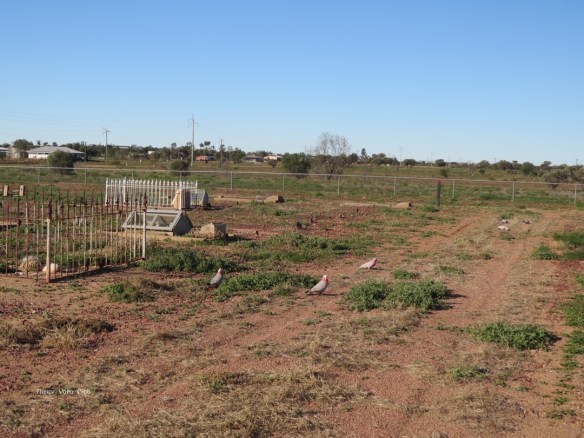
First we were taken to the Pioneer Children’s Cemetery with its sad little graves. It was said to have been White Cliffs’ first landmark.

IMG_9149

A bunny rabbit to hug?

IMG_9157

IMG_9158

The shaft of an abandoned mine. All around us were mullock heaps.

IMG_9166IMG_9163IMG_9159


IMG_9185

A registered claim is usually 50 x 50 metres with a post at each corner; that on the NE corner had a datum board (small metal tag) with the details of the claim holder. Claims had to be re-registered every year.

IMG_9187

We were shown examples of opal found in the field including an opal pineapple (a pseudomorph of Glauberite or Ikaite crystal clusters which are replaced with opal). These are only ever found at White Cliffs and the guide discovered one in his own backyard when spreading some mullock from another site to form the floor of a shed!

IMG_9179IMG_9180

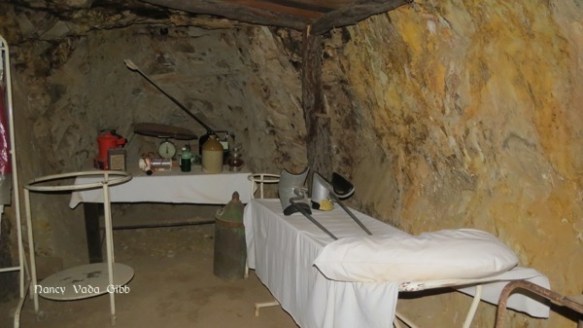
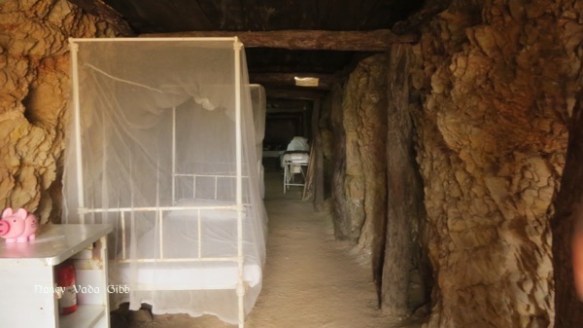
There are only two above-ground houses within the opal field, further homes being forbidden unless they are floor-less and easily transportable.Many homes were built partly underground. Some were mere shacks, others quite substantial.

IMG_9151


IMG_9231

IMG_9253

IMG_9262

This house was constructed from empty stubbies (beer bottles) with a huge heap beside the house ready for any extensions!

IMG_9192

IMG_9194

Lots of caravans too, of one form or another.

IMG_9200

IMG_9272

IMG_9172

IMG_9160

We were not really interested in buying any opal, but I was amused to see at one ‘serious’ shop the prices were very high, reflecting on the high quality of the stones, but at another more touristy place the prices were low – and although it was not said, the opals were probably only doublets or triplets.

An unexpected highlight of the tour was a visit to the White Cliffs Solar Power Station. Originally established as an experimental facility by ANU researchers in 1981, “… the Power Station is now nationally recognised as an iconic engineering project equal in status to the Snowy Mountains Scheme, the Sydney Harbour Bridge and the Parkes Radio Telescope.” In 2006 it was given the honour of receiving a Historic Engineering Marker.

IMG_9203

There are 14 sun-tracking parabolic dishes of 5 metre diameter. The electricity from the station was ‘sold’ to customers within the township (the local hospital, school, PO and 12 residences), making White cliffs arguably the first commercial solar power station in the world.  In 1997 the faculty was converted to a photovoltaic system, the dishes were resurfaced with new mirror panels …..  the system was 22% more efficient.  It was the first solar dish concentrator photovoltaic plant in the world and  played a part in the development of solar technology.

IMG_9214IMG_9210

Wilcannia etc13Wilcannia etc12

We were told that one man looked after the whole system, and his duties included cleaning all the mirrors, using a trestle fitted to the top of a truck.

IMG_9221

The present generation of this technology is now commercially operating in central Australia at ten times the scale of White Cliffs.

Here are more photos taken next morning before we left.

IMG_9239

IMG_9242

IMG_9250

There are three of these special shacks labelled Nobody’s, Somebody’s and Everybody’s.

IMG_9258

Yes, it was surprisingly green. Tiny little plants and native bushes were popping up everywhere following recent rain. I wonder how many will survive next summer.

IMG_9230


134. Silverton
Quote from a very helpful publication “This Month in Broken Hill”: “ Silverton is essentially an abandoned settlement. It was the largest township to exist in the Barrier Ranges before the discovery of the Broken Hill field in 1883…” Silver was first discovered in the area in 1876… but all early mines had ceased operation by 1896. By the end of 1884 there were 1,745 inhabitants with a district population of 4,000. But once Broken Hill was extablished, the population of Silverton declined.
Everyone said we MUST go and visit. So we did.

There are only a few houses left in the main street, Including a rather impressive if small “Municipal Council Chambers” ((formed in 1886) and a few private houses. The Council ceased operation in 1899.

IMG_9048

IMG_9021

IMG_9020

The ruins of other houses are visible here and there. The current population is about 60.
IMG_9051

IMG_9018

The Silverton Museum on the site of the old Silverton Gaol is chock-full of interesting local memorabilia.

IMG_9023

Outside was a mine cage used for transporting men to the underground mine. A complex series of bells signalled at which shaft level the cage had arrived.

IMG_9024IMG_9026

IMG_9025

Quite a coincidence – the first police officer in Silverton had earlier been involved in hunting down Ned Kelly…. (see my fascination for Ned in earlier blogs).

IMG_9028

There were some interesting early characters. Home-brew, anyone?

IMG_9030

A nice photo of an early mail coach to Wilcannia.

IMG_9035

Dame Mary Gilmore (Mary Jane Cameron) was one of the early teachers at the Silverton Public School from October 1887 to December 1889.  As an Australian schoolgirl I learned several of her poems, particularly  “I love a sunburnt country…”

IMG_9027

Her portrait by William Dobell was a very controversial entrant in the (Australian) Archibald Portrait Prize in 1957, so I was delighted to find this description/explanation of the portrait:

IMG_9033 (2)

Here it is, from the NSW Art Gallery website. Certainly controversial at the time. I remember seeing it with my parents.

Dame Mary Gilmore

Various rooms in the old gaol were devoted to specific topics, for example family history. The stained glass window came from a church.

IMG_9038

Other  rooms notably the original holding cells had examples of clothing – i was most impressed by the light and delicate cotton clothing which looked like it had been starched and ironed only that morning.

IMG_9043

This photo of five sisters caught my eye – think of dressing them all!

IMG_9045

Part of a hairdressing establishment within the womens’ quarters of the old gaol.

IMG_9047

Around a corner was an old pub, the Silverton Hotel, where a couple of donkeys lazed around  … inside was quite a collection of toilet humour notices, the sort that are funny seen individually but en masse are quite overwhelming. The same brochure I quoted earlier says “The town provides an intense cultural tourism experience for visitors” . Hmmm !

IMG_9054IMG_9052

Just out of town we visited a photographic studio. Extremely good photos, a pleasure to view. The photographer also showed me around her garden, a real oasis. She was one of those rare people who I can immediately lipread almost 100%, so I didn’t want to leave!  She also breeds horses. A lonely life but she seemed to flourish.

On the road back to Wilcannia we crossed a bone-dry river bed. Yet there had been rain recently, there was plenty of green grass along the roadsides.

IMG_9059

We returned to our camp at Broken Hill and next day set off back to Cobar via Wilcannia, with a detour and overnight stay at White Cliffs.

133. Broken Hill.

We did not stay overnight in Wilcannia but continued on to Broken Hill, arriving just at dusk. We’ve been strongly advised by many people to be off the road well before then as the kangaroos start to come out in force, and we are yet to acquire a bull-bar for Grandy. indeed, when we were at Euabalong and went to Condobolin for the day in Jim’s car, driving back in the evening we saw quite a few kangaroos.

The road to Broken Hill may have been long but the scenery changed every now and then. There had been reasonable rain and everywhere the road verges were bright green, particularly noticeable against the red earth. Some areas were bushland, some scrub, others mainly saltbush. We saw a few emus, some dead kangaroos and a fox making off with some roadkill ……

IMG_9141

IMG_9140

….. but by far the largest number of livestock were feral goats. Small multicoloured mobs were everywhere. I wish I’d had my camera ready, particularly for the black billygoat outlined against the sky.

IMG_9317

An interesting cloud formation lured us on.

IMG_8959

The caravan camp at Broken Hill, just inside the city boundary, was very clean and well organised. There were not nearly as many caravans there as at Cobar. The weather was initially so good that Dave decided to try and put up our huge awning for the first time!

IMG_8961

IMG_8964

IMG_8968

Broken Hill itself I found a little curious, it has many lovely old buildings but it is also most definitely a mining town rather than a typical country town. It is dominated by a huge slag heap near the railway, and has a curious mix of old miner’s cottages (some in original condition, some “modernised”) side by side with far larger and more modern homes. Very few if any had flowers in their front gardens although most had a shrub or two.

IMG_9009

IMG_8971

IMG_8974

IMG_9010

I had a date with the librarian at the Family History centre, but it was Sunday, so to curb my impatience we visited a museum or two. The Railway museum was fascinating, particularly for Dave – so many old trains to clamber over and around and through! The pressed metal ceiling in the entrance was a work of art.

IMG_8998

IMG_8979

IMG_8977

IMG_8978

Trains!

IMG_8994

IMG_8995

IMG_8996

IMG_8986

A newish section was devoted to the many immigrants who arrived following WW2. Many personal stories were told. It was a moving display. Here’s just one of many panels each covering a different aspect.

IMG_8999

Next door was room devoted to old transport – buggies, a stretcher for transporting people who had to be turned frequently, etc ……..

IMG_8993

…… and on the wall a huge old map …. and there was “Cuthowarra”, near another old Darchy property “Yarrawirra”, and well to the north of the Broken Hill-Wilcannia road.

IMG_8990

Here’s a navigation map for the Darling, hand-drawn on linen;  it scrolled up and down.

IMG_8992

So meeting the Librarian next day was a bit of an anticlimax, but she did have another very clear map for me, and some information she’d gleaned from the slightly infamous “Ancestry” website, infamous because too often in the past people submitted incorrect information and it is all still there. I will have to contact them and try to correct it – AGAIN!!  I

(I know who put the incorrect information in – an extremely distant cousin who thought the way to build a family tree was to grab any likely tree (same surname etc) and just mis them all together and hope some matches resulted….. This person also entered incorrect information about one of my families so that a great grandmother is now “married” to her grandson!!)

It was mostly cold and dismal while we were in Broken Hill, but a visit to the Pro Hart gallery soon changed that – a lovely explosion of colour on a cold dull day. There are also some of his sculptures on a vacant allotment just across the road.  (i could not take photos inside the gallery).

IMG_9011IMG_9012IMG_9014

We made a day trip to Silverton, a blog in itself.

132. The Wild West – Wilcannia 

We left our friends’ property at Euabalong West near Lake Condobolin with regret, it had been a lovely warm haven during some overcast chilly weather. We discovered a lovely old Dodge in one of the farm sheds, and Dave photographed the local birdlife.

IMG_8855

euabalong etc01euabalong etc02

IMG_8861

IMG_8877IMG_8873
Euabalong etc04
euabalong etc05

euabalong etc03
euabalong etc07Wilcannia etc08

Rain is always welcome … although we discovered right in the middle of the puddle, more or less, was the best place for WiFi reception! Another good place was down the driveway.

IMG_8867

Saltbush – the farmer’s friend.IMG_8871

A couple of hours’ driving through light rain and past very green verges saw us in Cobar, THE gateway to the West. We bailed up in the Cobar Caravan Park, a very tidy well-laid out place with excellent facilities. As the weather sounded better at Broken Hill we decided to head straight off in the morning.

IMG_8883

It’s 261 km from Cobar to Wilcannia. I couldn’t wait. Wilcannia was the birthplace of my grandfather Dick d’Archy, whose father Frank ran “Cuthowarra” station for some years in the 1880s.

IMG_8886

IMG_8894

Wilcannia was once an important port on the Darling – Murray River system. In 1859 Captain Francis Cadell and his steamer the Albury arrived, effectively beginning the paddle steam trade on the Darling. The system flourished for over 70 years.  River ports established included Walgett, Brewarrina, Bourke, Louth, Tilba, Wilcannia, Menindee, Pooncarrie and Wentworth. The importance of the river for transport declined n the 1920s as new forms of transport emerged.

IMG_9089

The Darling River system itself is one of the largest in Australia – or was. it covers over one million square kilometres (14% of Australia) from its source in Queensland to its mouth south east of Adelaide. It is 3,370 km long, and was once an integral part of the lives of many Aboriginal people and continues to hold great significance to them.

IMG_9031

In recent years the river has become a shadow of its former self, due in part to multiple damming and water extraction by greedy cotton farmers in the north. Not to get into politics here, but the Government certainly has much to answer for. The beautiful Menindee Lakes south of Wilcannia are now mostly dry.

IMG_8936

IMG_8898

IMG_8908

These indicators show high the river once was – 0ver 11 metres.

IMG_9296

We heard there is to be a protest in the form of a (partial?) blockage of the bridge at Wilcannia on the 16-19 June. Sadly we won’t be there then, I would have liked to have supported the organisers. Odd of me perhaps as “Cuthowarra’” was some distance away from the river ….. but still, Frank d’Archy would have been dependent on the river for supplies and for shipping his wool to market.

IMG_9134

IMG_8896

Wilcannia etc15

The town itself is now a shadow of its former self, but there are signs that it is reviving. Most of the graceful old buildings have been restored.

Granddad d’Archy would have collected his mail here…..

IMG_8938

IMG_8926IMG_8931


IMG_8950IMG_9100IMG_8939

IMG_8934

IMG_8942

IMG_9113

…..  and others such as the Old Fuel Store Cafe recently received Heritage grants to help with restoration. We had coffee at the cafe on our way back from Broken Hill and I can attest to the quality of the coffee/chai and in particular the cold bread and butter pudding with cream which was served as a “cake” – very light with just the right amount of sugar and sultanas. Dave was happy with his Hummingbird cake too. Recent Heritage funding has greatly improved the streetscape outside the Cafe and around the Courthouse area.

IMG_9285IMG_9290

IMG_9102

We filled up with diesel at the BP station off the main highway, an odd location perhaps but it is next to the remains of a river wharf. About six dogs guard the pumps at night. They were very friendly while the proprietor was around but I would not like to go near the place at night!

IMG_8946

IMG_8948

On our return from Broken Hill we stopped in Wilcannia again and noticed the old Athenaeum (Library) and Museum building was open. Oh joy!

IMG_9105

IMG_9106

IMG_9107

But on enquiry we discovered the Museum had been closed and the building taken over by other organisations. We were directed to the nearby Council Chambers (another gorgeous old building, formerly a Bank) but the helpful clerk told us the Museum’s contents are now in a shipping container, “and probably full of termites”.

IMG_9112

IMG_9108

The old hospital also received a visit. Established in 1879, I doubt Grandfather and his two younger siblings would have been born there, it would have been a full day’s journey from “Cuthowarra” in a  buggy.

IMG_9126IMG_9127

IMG_8920

IMG_8922

The old church of St. James ….

IMG_9135

An interesting carved stone in a park…

IMG_9121

I did not want to leave….. it is unlikely I will ever go that way again. Am I being maudlin dwelling on the past? I think not, I just want to immerse myself in some family history. I will be writing up about Wilcannia and its place in the family history at more length in my other blog, The d’Archy Chronicles.

IMG_9308