135. White Cliffs (NSW)

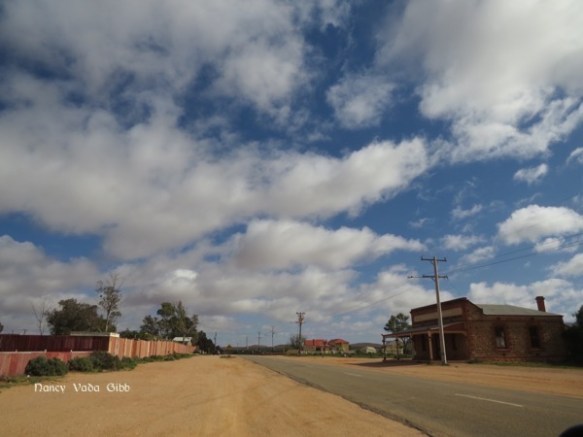
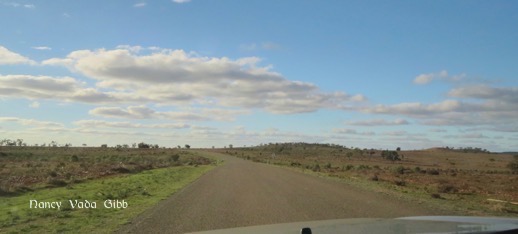
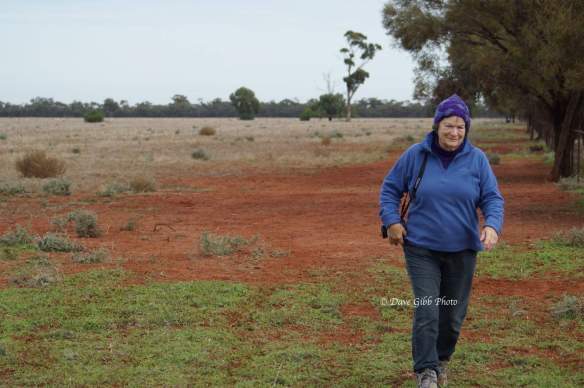
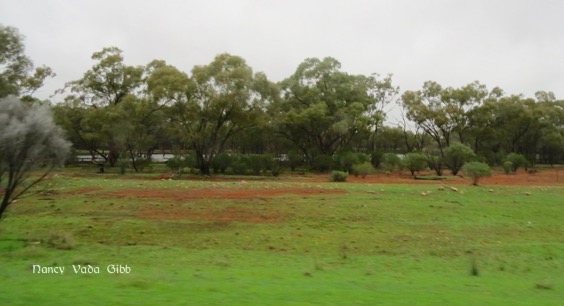
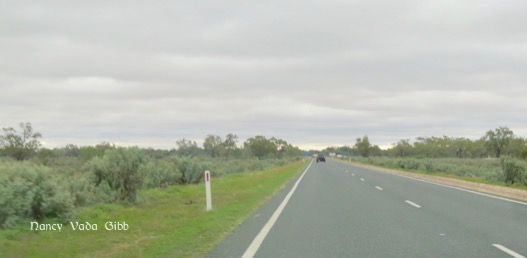
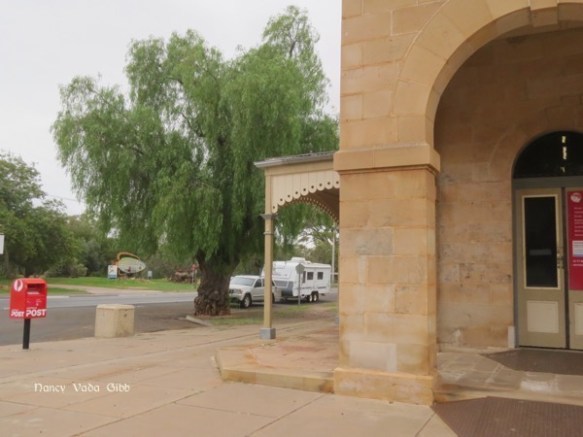
This place needed a blog to itself. Heading east from Broken Hill, we thought it wise to top up the diesel tank at Wilcannia before venturing north into the unknown. Friends had warned us about the fine bull dust on this road but they travelled at a different time of year, and we were following the rain, so – no dust!  Just green grass verges all along the 93 km from Wilcannia.

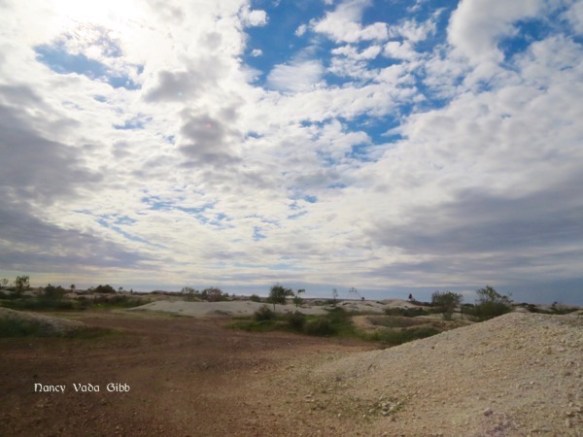
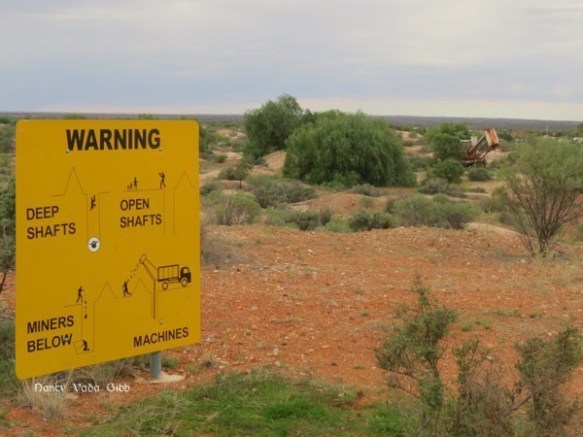
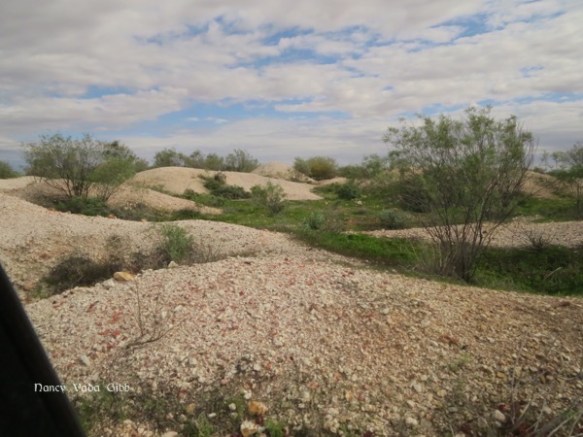
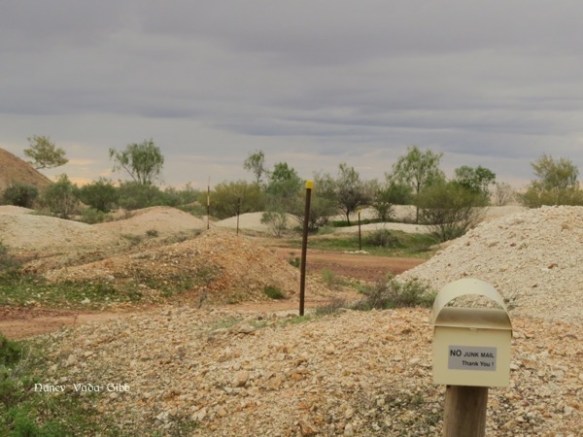
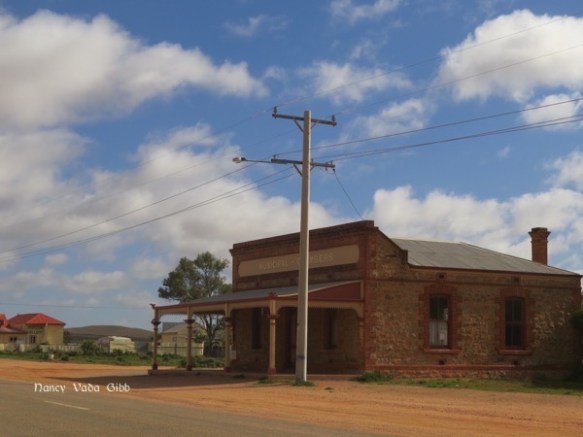
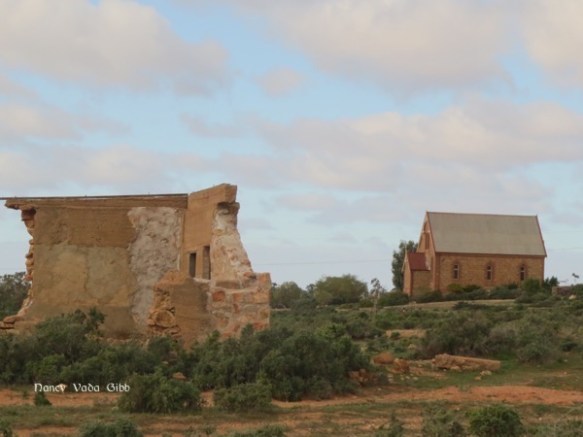
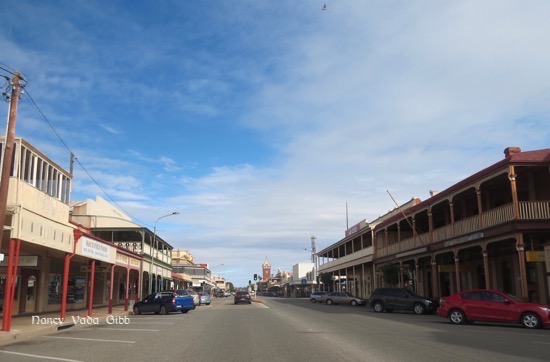
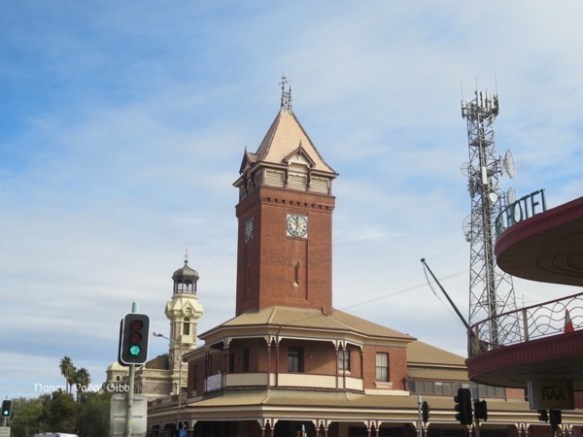
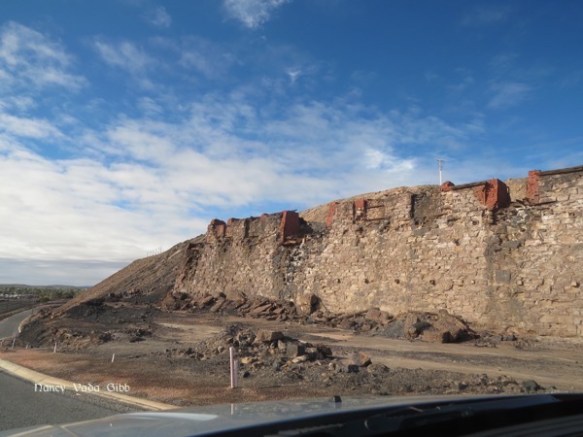
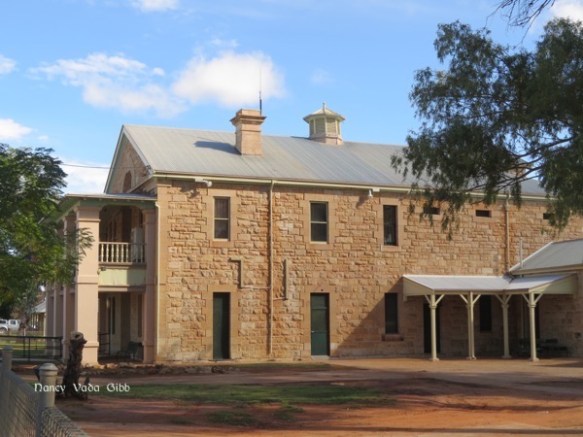
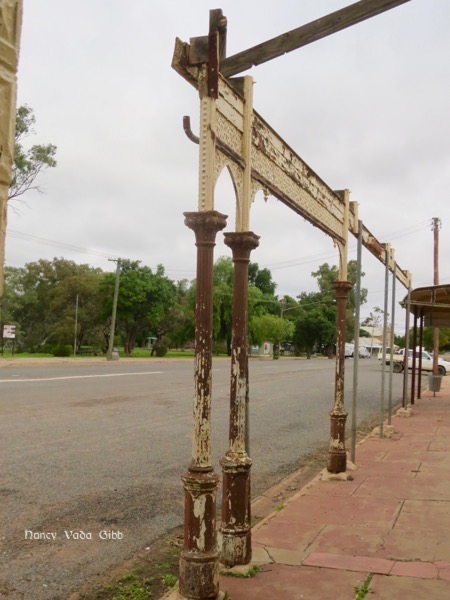
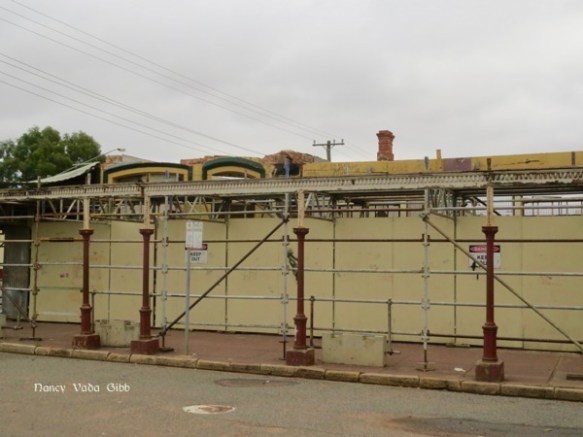
White Cliffs was Australia’s first commercial opal field. It describes itself as “…. small, dusty, a bit ramshackle…” and so it is, but “… look deeper and you’ll find the beauty of opal, the gritty reality of mining, the chance to fossick for your own opal, and the fascination of underground living…”  All of which we found to be true.

IMG_9198

IMG_9243

IMG_9247

IMG_9267

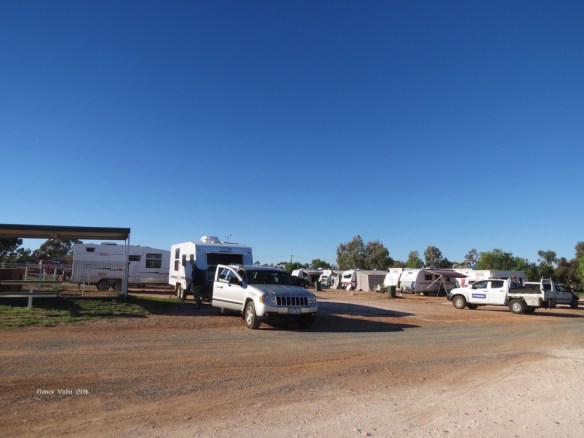
We were not sure where to go on arrival but someone drove up and advised us that the Pioneer Tourist Park was just nearby, with powered sites for $25 a night. She was also the Park’s caretaker and showed us several sites, the park being rather full. It was a very clean, well organised park surrounded by trees and shrubs, with a swimming pool nearby. Across the road was a school; we were told there were ten pupils.

IMG_9274

IMG_9142

The Murray River Caravan Club (or similiar) whose members almost filled the camp,  invited us to join them on a guided tour the following morning. This turned out to be a very fortuitous invitation, the guide was excellent and of course we saw places and things we would not have seen or understood otherwise.

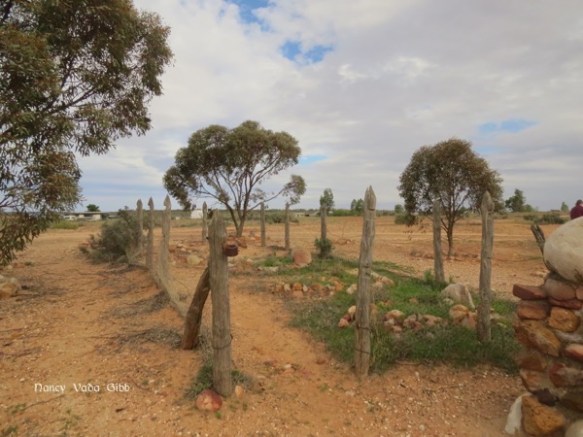
First we were taken to the Pioneer Children’s Cemetery with its sad little graves. It was said to have been White Cliffs’ first landmark.

IMG_9149

A bunny rabbit to hug?

IMG_9157

IMG_9158

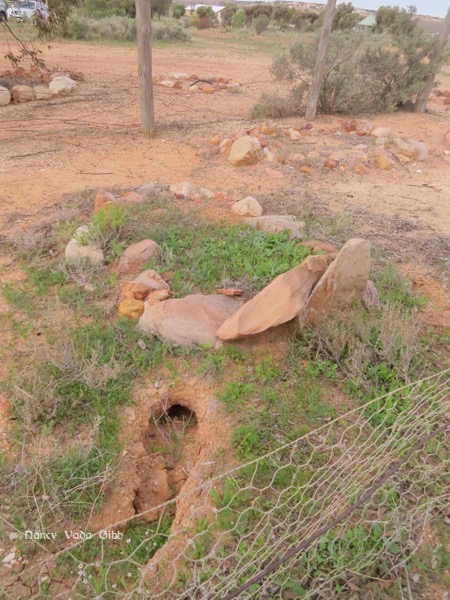
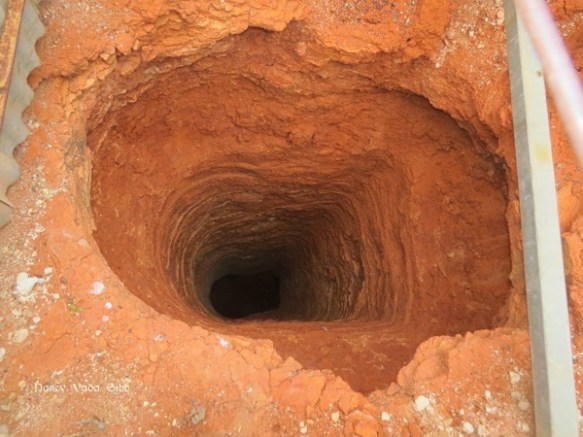
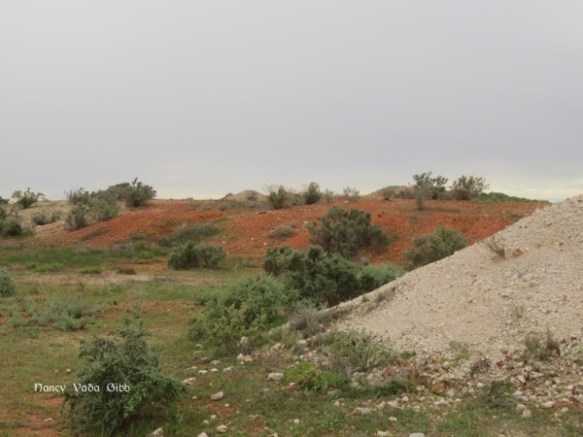
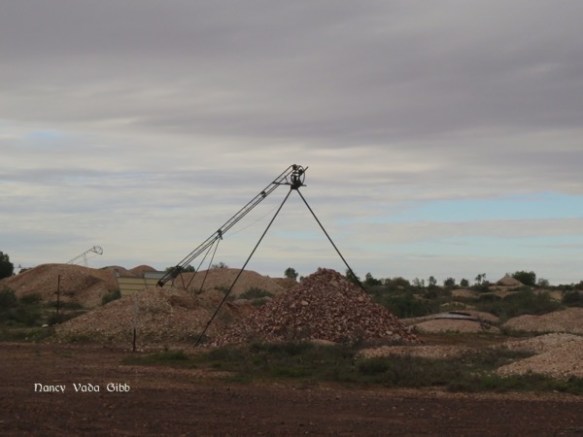
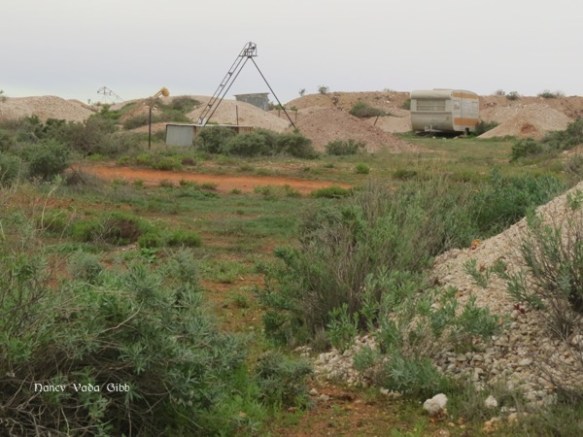
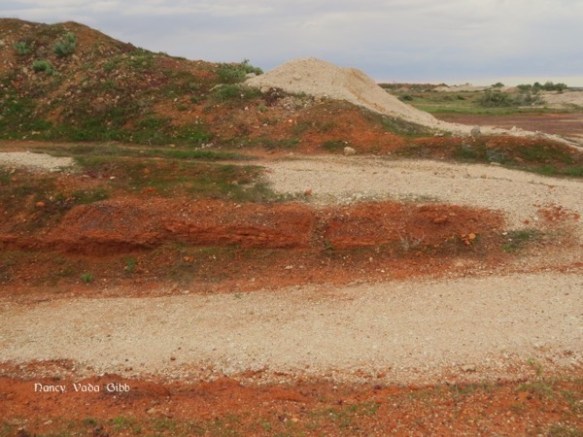
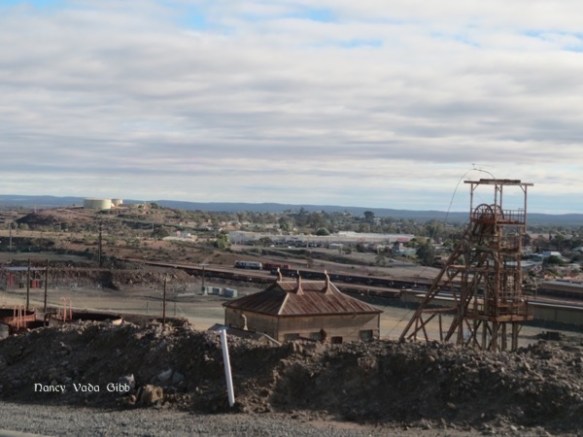
The shaft of an abandoned mine. All around us were mullock heaps.

IMG_9166IMG_9163IMG_9159


IMG_9185

A registered claim is usually 50 x 50 metres with a post at each corner; that on the NE corner had a datum board (small metal tag) with the details of the claim holder. Claims had to be re-registered every year.

IMG_9187

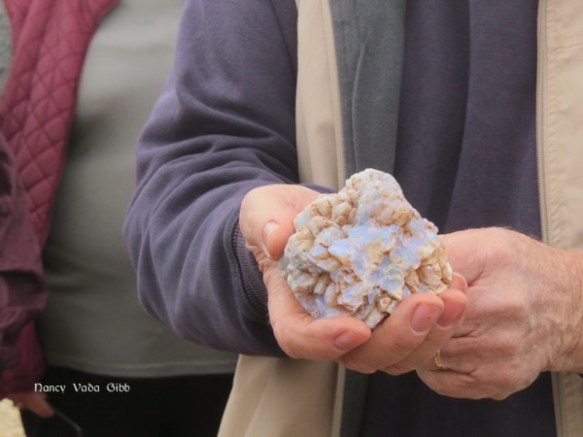
We were shown examples of opal found in the field including an opal pineapple (a pseudomorph of Glauberite or Ikaite crystal clusters which are replaced with opal). These are only ever found at White Cliffs and the guide discovered one in his own backyard when spreading some mullock from another site to form the floor of a shed!

IMG_9179IMG_9180

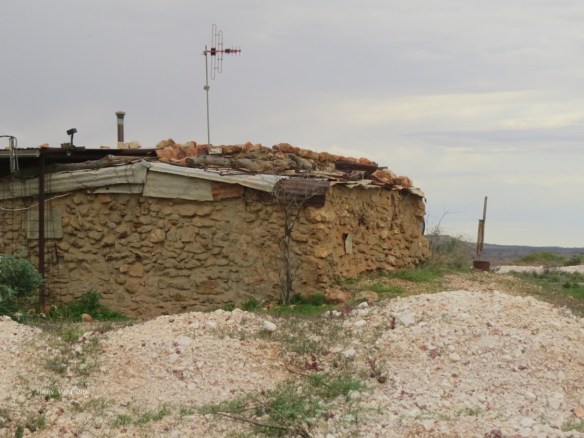
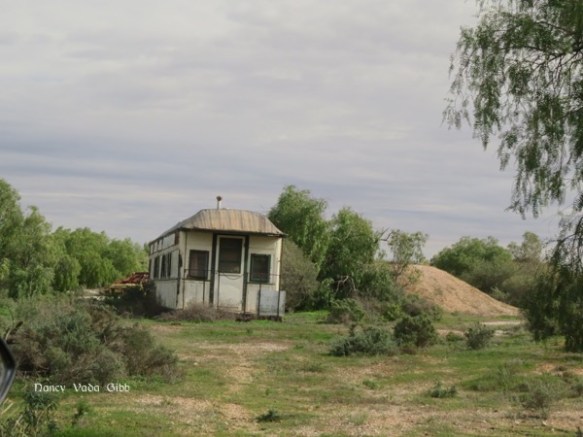
There are only two above-ground houses within the opal field, further homes being forbidden unless they are floor-less and easily transportable.Many homes were built partly underground. Some were mere shacks, others quite substantial.

IMG_9151


IMG_9231

IMG_9253

IMG_9262

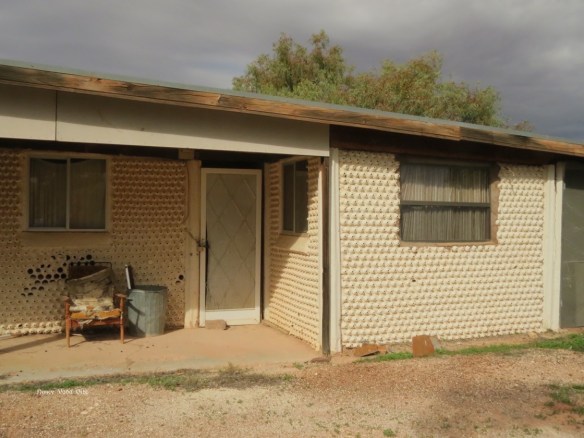
This house was constructed from empty stubbies (beer bottles) with a huge heap beside the house ready for any extensions!

IMG_9192

IMG_9194

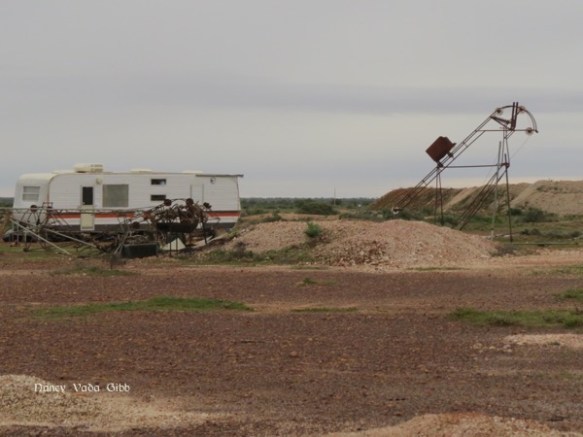
Lots of caravans too, of one form or another.

IMG_9200

IMG_9272

IMG_9172

IMG_9160

We were not really interested in buying any opal, but I was amused to see at one ‘serious’ shop the prices were very high, reflecting on the high quality of the stones, but at another more touristy place the prices were low – and although it was not said, the opals were probably only doublets or triplets.

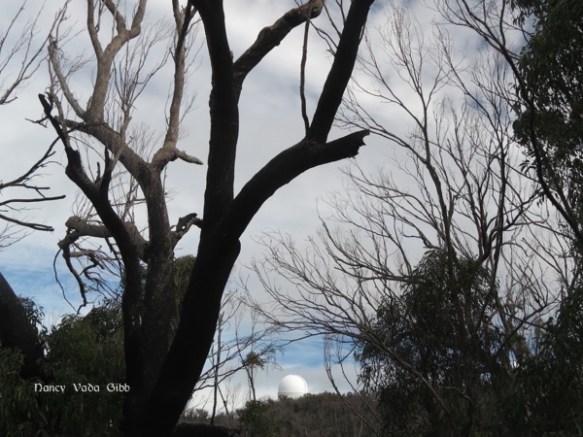
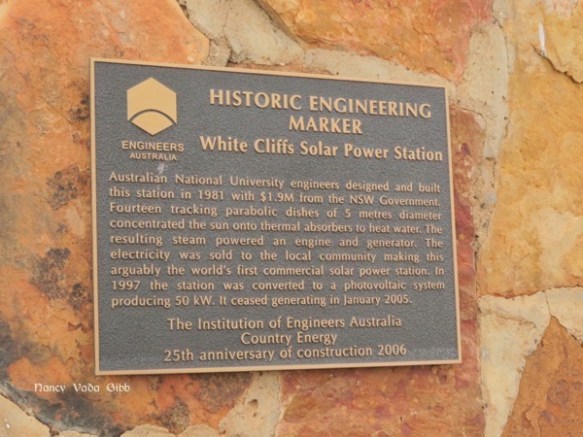
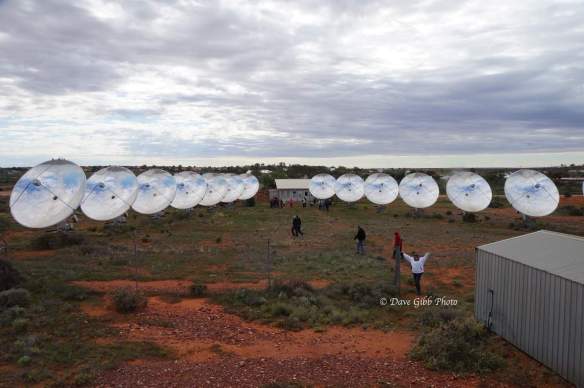
An unexpected highlight of the tour was a visit to the White Cliffs Solar Power Station. Originally established as an experimental facility by ANU researchers in 1981, “… the Power Station is now nationally recognised as an iconic engineering project equal in status to the Snowy Mountains Scheme, the Sydney Harbour Bridge and the Parkes Radio Telescope.” In 2006 it was given the honour of receiving a Historic Engineering Marker.

IMG_9203

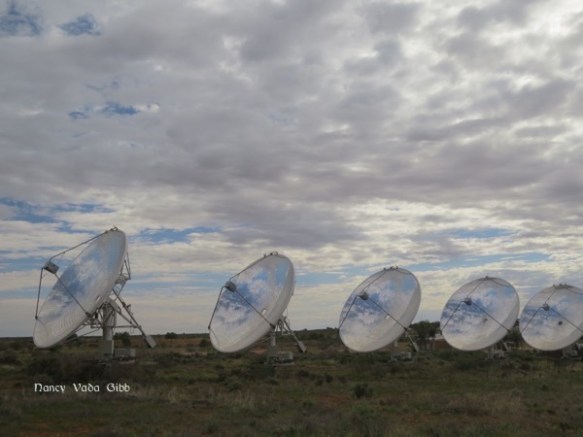
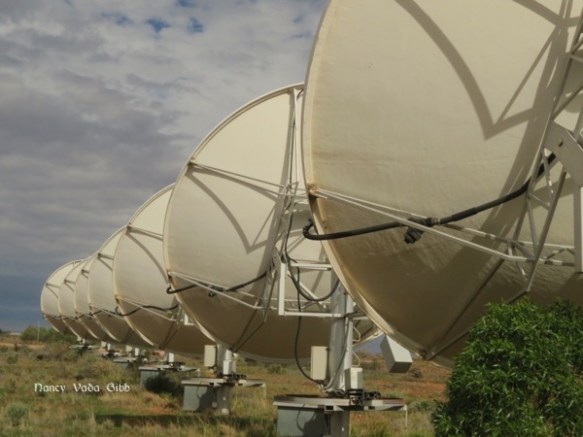
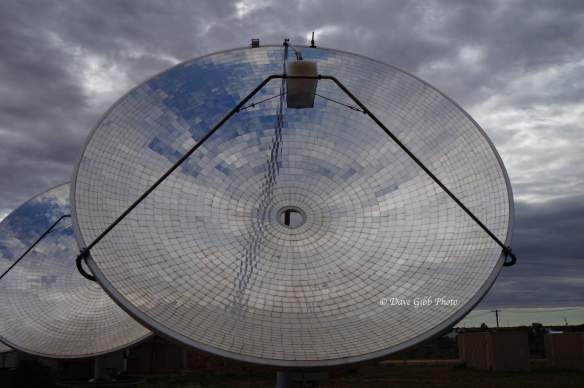
There are 14 sun-tracking parabolic dishes of 5 metre diameter. The electricity from the station was ‘sold’ to customers within the township (the local hospital, school, PO and 12 residences), making White cliffs arguably the first commercial solar power station in the world.  In 1997 the faculty was converted to a photovoltaic system, the dishes were resurfaced with new mirror panels …..  the system was 22% more efficient.  It was the first solar dish concentrator photovoltaic plant in the world and  played a part in the development of solar technology.

IMG_9214IMG_9210

Wilcannia etc13Wilcannia etc12

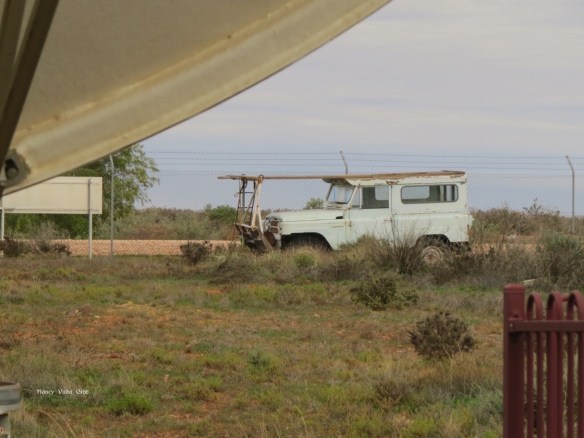
We were told that one man looked after the whole system, and his duties included cleaning all the mirrors, using a trestle fitted to the top of a truck.

IMG_9221

The present generation of this technology is now commercially operating in central Australia at ten times the scale of White Cliffs.

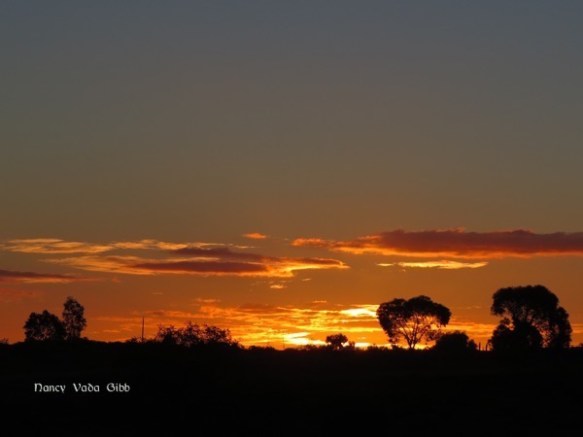
Here are more photos taken next morning before we left.

IMG_9239

IMG_9242

IMG_9250

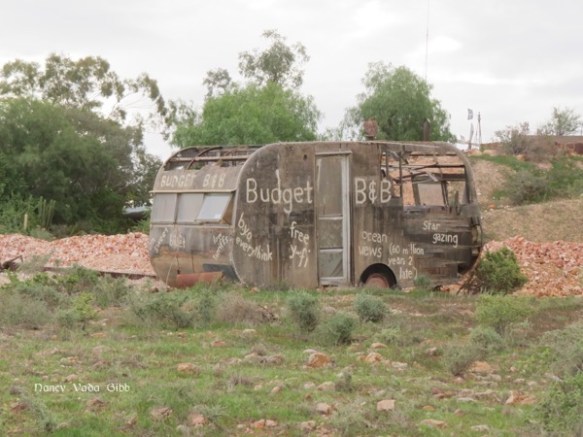
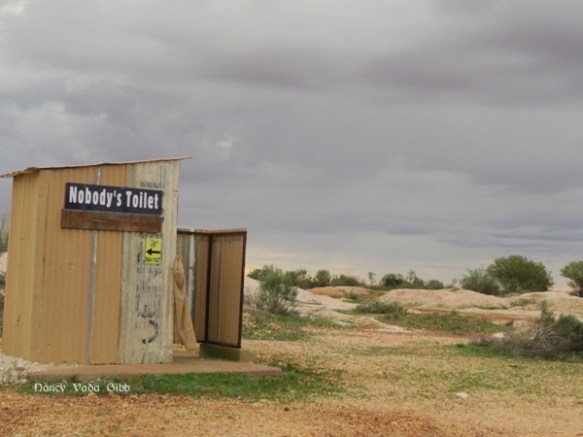
There are three of these special shacks labelled Nobody’s, Somebody’s and Everybody’s.

IMG_9258

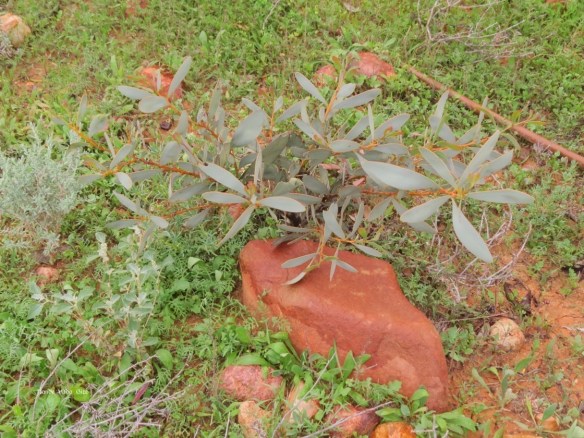
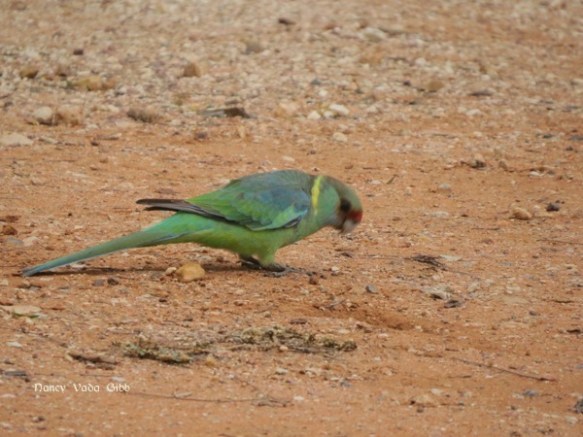
Yes, it was surprisingly green. Tiny little plants and native bushes were popping up everywhere following recent rain. I wonder how many will survive next summer.

IMG_9230


134. Silverton

Quote from a very helpful publication “This Month in Broken Hill”: “ Silverton is essentially an abandoned settlement. It was the largest township to exist in the Barrier Ranges before the discovery of the Broken Hill field in 1883…” Silver was first discovered in the area in 1876… but all early mines had ceased operation by 1896. By the end of 1884 there were 1,745 inhabitants with a district population of 4,000. But once Broken Hill was extablished, the population of Silverton declined.

Everyone said we MUST go and visit. So we did.

There are only a few houses left in the main street, Including a rather impressive if small “Municipal Council Chambers” ((formed in 1886) and a few private houses. The Council ceased operation in 1899.

IMG_9048

IMG_9021

IMG_9020

The ruins of other houses are visible here and there. The current population is about 60.

IMG_9051

IMG_9018

The Silverton Museum on the site of the old Silverton Gaol is chock-full of interesting local memorabilia.

IMG_9023

Outside was a mine cage used for transporting men to the underground mine. A complex series of bells signalled at which shaft level the cage had arrived.

IMG_9024IMG_9026

IMG_9025

Quite a coincidence – the first police officer in Silverton had earlier been involved in hunting down Ned Kelly…. (see my fascination for Ned in earlier blogs).

IMG_9028

There were some interesting early characters. Home-brew, anyone?

IMG_9030

A nice photo of an early mail coach to Wilcannia.

IMG_9035

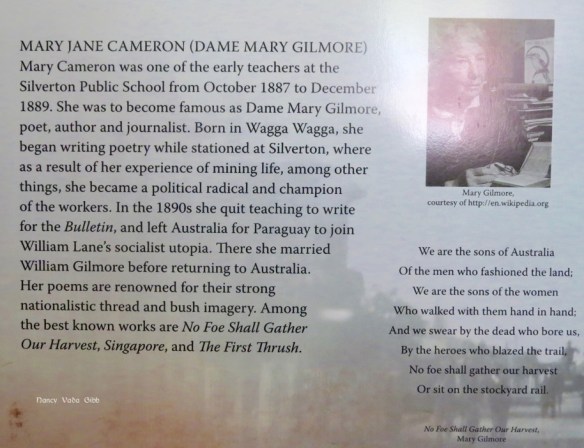
Dame Mary Gilmore (Mary Jane Cameron) was one of the early teachers at the Silverton Public School from October 1887 to December 1889.  As an Australian schoolgirl I learned several of her poems, particularly  “I love a sunburnt country…”

IMG_9027

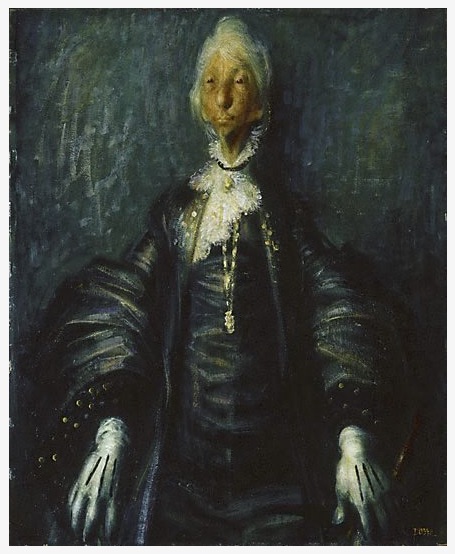
Her portrait by William Dobell was a very controversial entrant in the (Australian) Archibald Portrait Prize in 1957, so I was delighted to find this description/explanation of the portrait:

IMG_9033 (2)

Here it is, from the NSW Art Gallery website. Certainly controversial at the time. I remember seeing it with my parents.

Dame Mary Gilmore

Various rooms in the old gaol were devoted to specific topics, for example family history. The stained glass window came from a church.

IMG_9038

Other  rooms notably the original holding cells had examples of clothing – i was most impressed by the light and delicate cotton clothing which looked like it had been starched and ironed only that morning.

IMG_9043

This photo of five sisters caught my eye – think of dressing them all!

IMG_9045

Part of a hairdressing establishment within the womens’ quarters of the old gaol.

IMG_9047

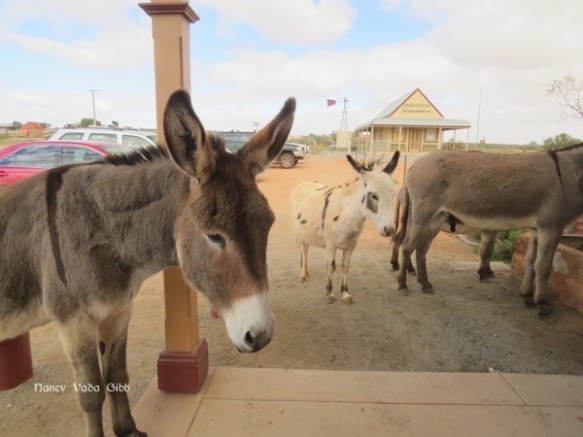
Around a corner was an old pub, the Silverton Hotel, where a couple of donkeys lazed around  … inside was quite a collection of toilet humour notices, the sort that are funny seen individually but en masse are quite overwhelming. The same brochure I quoted earlier says “The town provides an intense cultural tourism experience for visitors” . Hmmm !

IMG_9054IMG_9052

Just out of town we visited a photographic studio. Extremely good photos, a pleasure to view. The photographer also showed me around her garden, a real oasis. She was one of those rare people who I can immediately lipread almost 100%, so I didn’t want to leave!  She also breeds horses. A lonely life but she seemed to flourish.

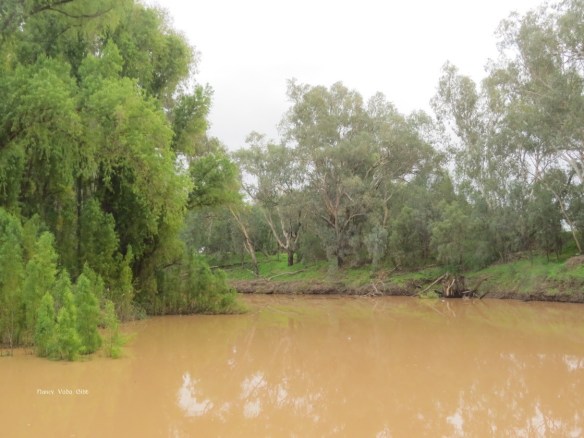
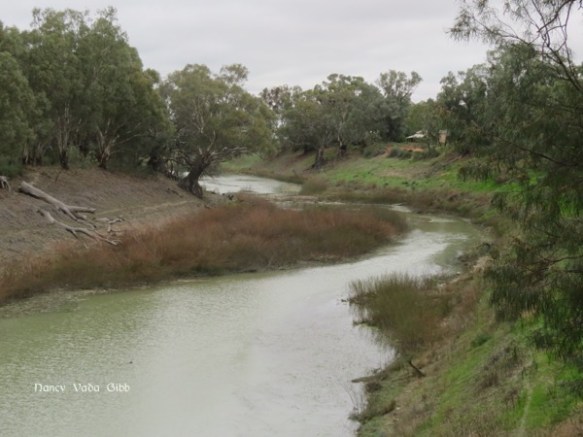
On the road back to Wilcannia we crossed a bone-dry river bed. Yet there had been rain recently, there was plenty of green grass along the roadsides.

IMG_9059

We returned to our camp at Broken Hill and next day set off back to Cobar via Wilcannia, with a detour and overnight stay at White Cliffs.

133. Broken Hill.

We did not stay overnight in Wilcannia but continued on to Broken Hill, arriving just at dusk. We’ve been strongly advised by many people to be off the road well before then as the kangaroos start to come out in force, and we are yet to acquire a bull-bar for Grandy. indeed, when we were at Euabalong and went to Condobolin for the day in Jim’s car, driving back in the evening we saw quite a few kangaroos.

The road to Broken Hill may have been long but the scenery changed every now and then. There had been reasonable rain and everywhere the road verges were bright green, particularly noticeable against the red earth. Some areas were bushland, some scrub, others mainly saltbush. We saw a few emus, some dead kangaroos and a fox making off with some roadkill ……

IMG_9141

IMG_9140

….. but by far the largest number of livestock were feral goats. Small multicoloured mobs were everywhere. I wish I’d had my camera ready, particularly for the black billygoat outlined against the sky.

IMG_9317

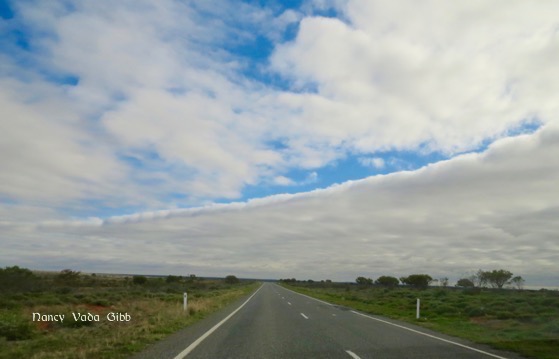
An interesting cloud formation lured us on.

IMG_8959

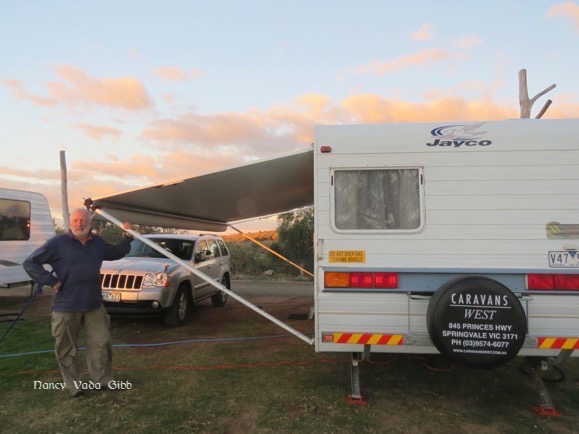
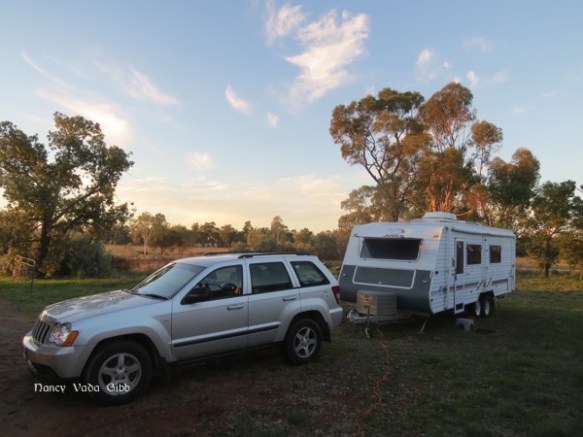
The caravan camp at Broken Hill, just inside the city boundary, was very clean and well organised. There were not nearly as many caravans there as at Cobar. The weather was initially so good that Dave decided to try and put up our huge awning for the first time!

IMG_8961

IMG_8964

IMG_8968

Broken Hill itself I found a little curious, it has many lovely old buildings but it is also most definitely a mining town rather than a typical country town. It is dominated by a huge slag heap near the railway, and has a curious mix of old miner’s cottages (some in original condition, some “modernised”) side by side with far larger and more modern homes. Very few if any had flowers in their front gardens although most had a shrub or two.

IMG_9009

IMG_8971

IMG_8974

IMG_9010

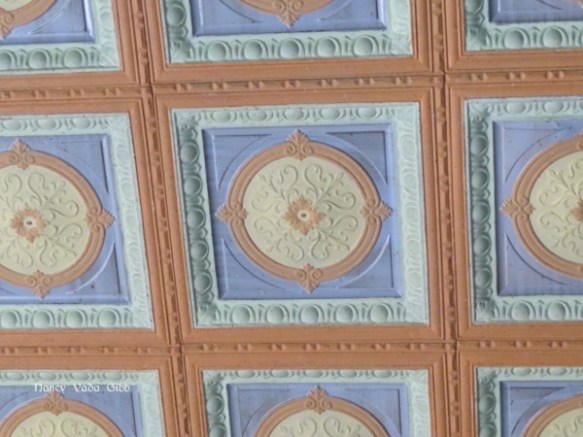
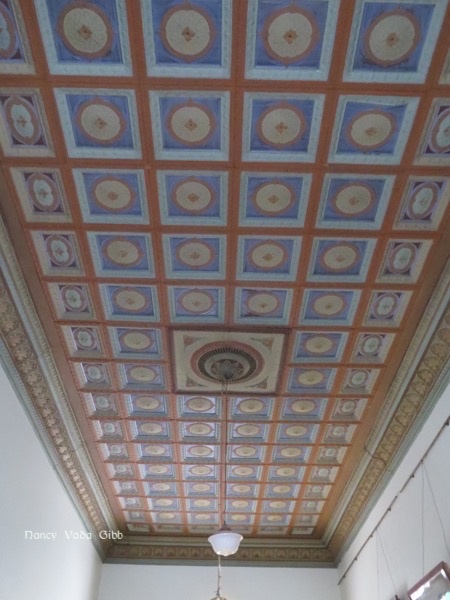
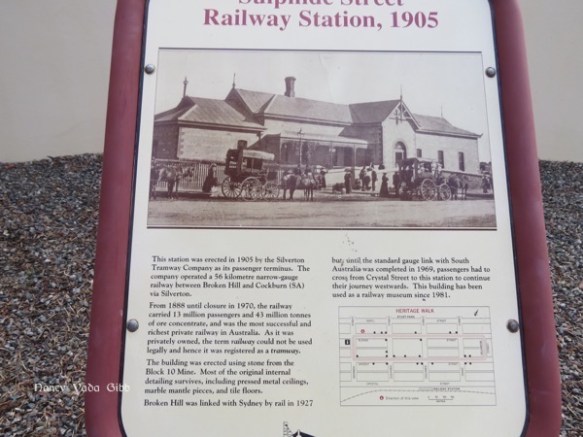
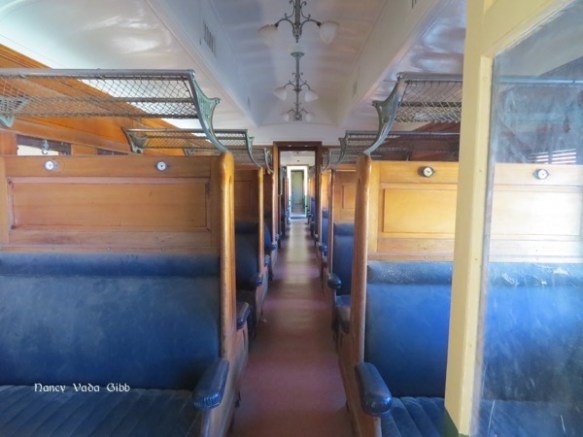
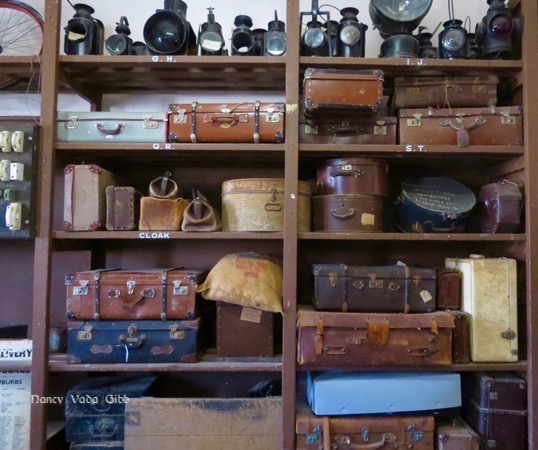
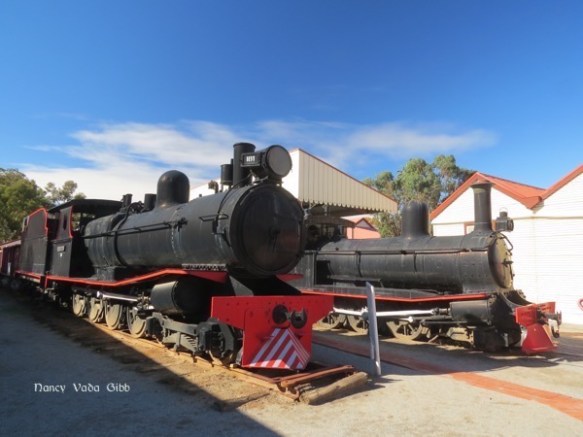
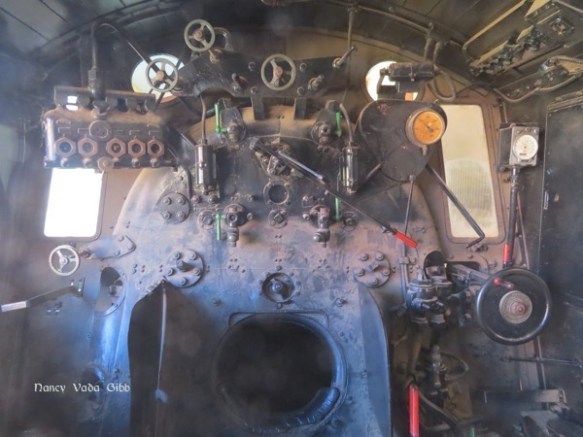
I had a date with the librarian at the Family History centre, but it was Sunday, so to curb my impatience we visited a museum or two. The Railway museum was fascinating, particularly for Dave – so many old trains to clamber over and around and through! The pressed metal ceiling in the entrance was a work of art.

IMG_8998

IMG_8979

IMG_8977

IMG_8978

Trains!

IMG_8994

IMG_8995

IMG_8996

IMG_8986

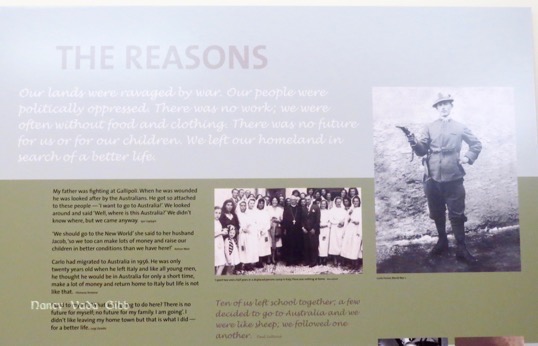
A newish section was devoted to the many immigrants who arrived following WW2. Many personal stories were told. It was a moving display. Here’s just one of many panels each covering a different aspect.

IMG_8999

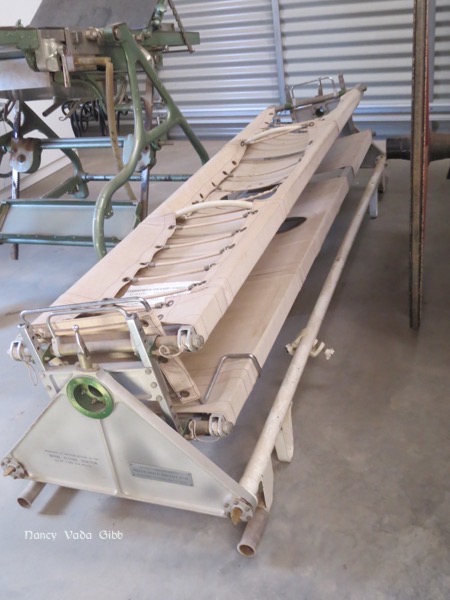
Next door was room devoted to old transport – buggies, a stretcher for transporting people who had to be turned frequently, etc ……..

IMG_8993

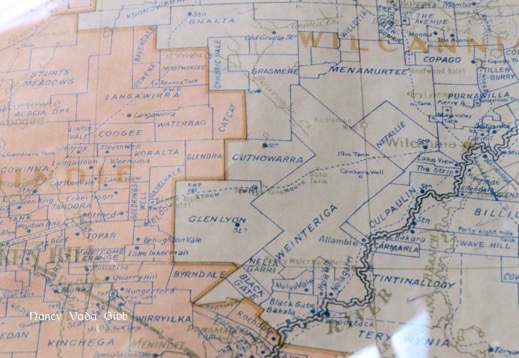
…… and on the wall a huge old map …. and there was “Cuthowarra”, near another old Darchy property “Yarrawirra”, and well to the north of the Broken Hill-Wilcannia road.

IMG_8990

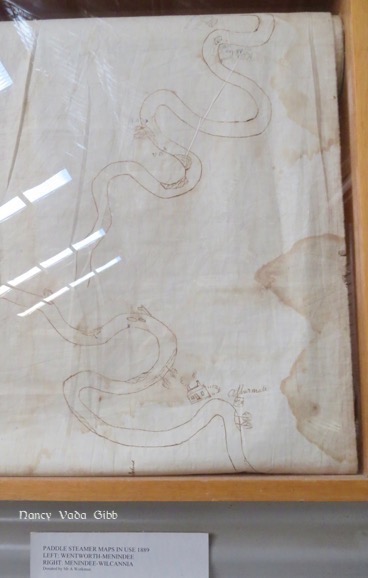
Here’s a navigation map for the Darling, hand-drawn on linen;  it scrolled up and down.

IMG_8992

So meeting the Librarian next day was a bit of an anticlimax, but she did have another very clear map for me, and some information she’d gleaned from the slightly infamous “Ancestry” website, infamous because too often in the past people submitted incorrect information and it is all still there. I will have to contact them and try to correct it – AGAIN!!  I

(I know who put the incorrect information in – an extremely distant cousin who thought the way to build a family tree was to grab any likely tree (same surname etc) and just mis them all together and hope some matches resulted….. This person also entered incorrect information about one of my families so that a great grandmother is now “married” to her grandson!!)

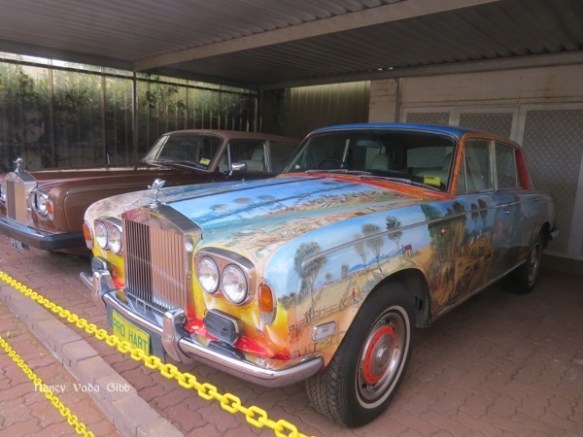
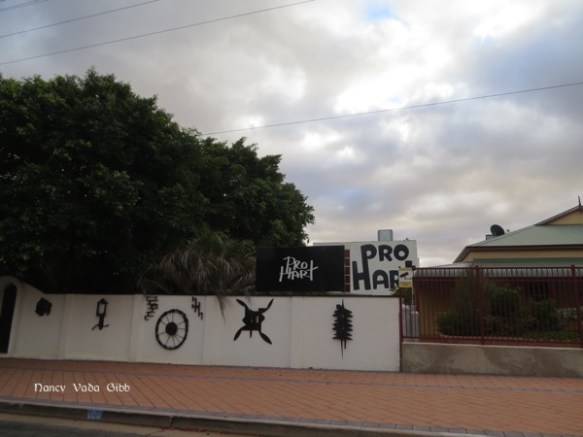
It was mostly cold and dismal while we were in Broken Hill, but a visit to the Pro Hart gallery soon changed that – a lovely explosion of colour on a cold dull day. There are also some of his sculptures on a vacant allotment just across the road.  (i could not take photos inside the gallery).

IMG_9011IMG_9012IMG_9014

We made a day trip to Silverton, a blog in itself.

132. The Wild West – Wilcannia 

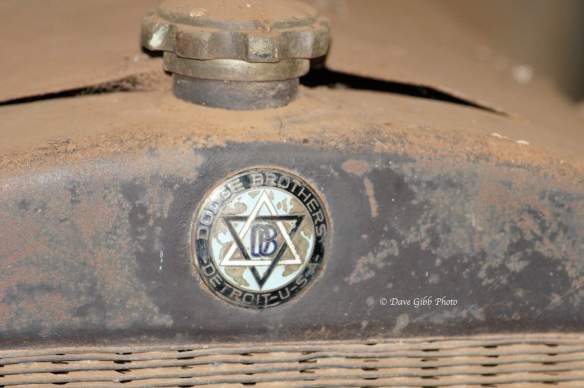
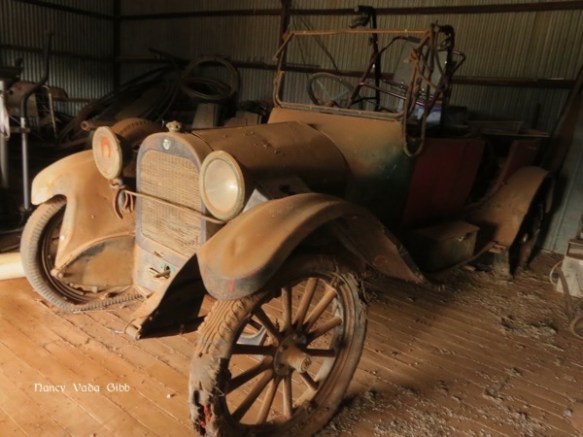
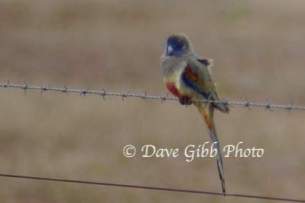
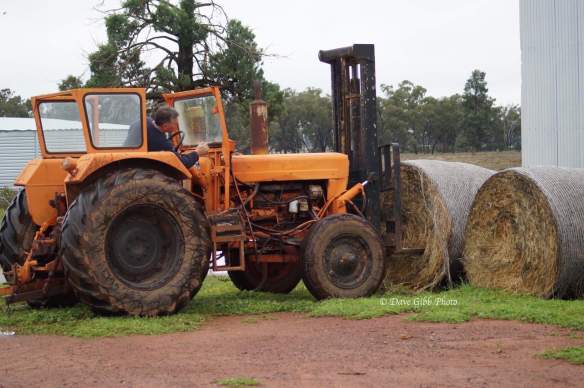
We left our friends’ property at Euabalong West near Lake Condobolin with regret, it had been a lovely warm haven during some overcast chilly weather. We discovered a lovely old Dodge in one of the farm sheds, and Dave photographed the local birdlife.

IMG_8855

euabalong etc01euabalong etc02

IMG_8861

IMG_8877IMG_8873
Euabalong etc04
euabalong etc05

euabalong etc03
euabalong etc07Wilcannia etc08

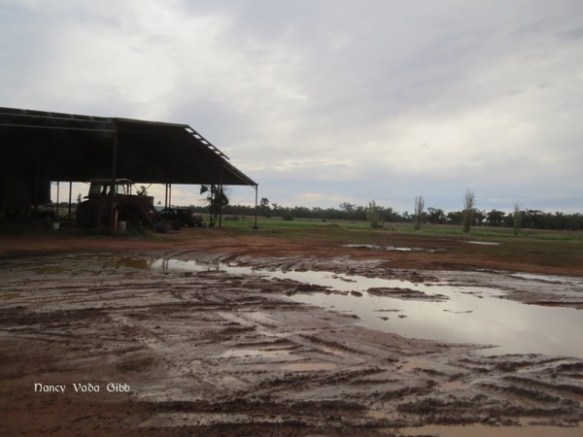
Rain is always welcome … although we discovered right in the middle of the puddle, more or less, was the best place for WiFi reception! Another good place was down the driveway.

IMG_8867

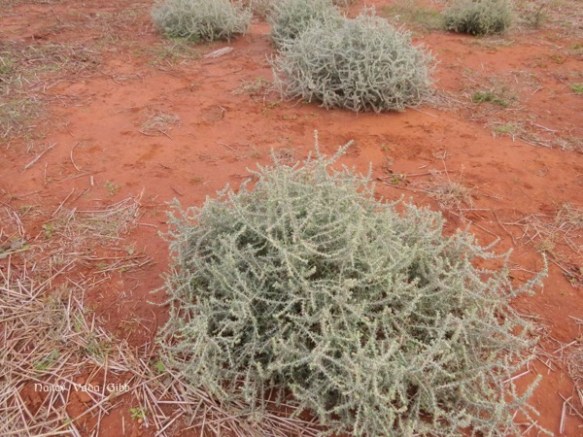
Saltbush – the farmer’s friend.IMG_8871

A couple of hours’ driving through light rain and past very green verges saw us in Cobar, THE gateway to the West. We bailed up in the Cobar Caravan Park, a very tidy well-laid out place with excellent facilities. As the weather sounded better at Broken Hill we decided to head straight off in the morning.

IMG_8883

It’s 261 km from Cobar to Wilcannia. I couldn’t wait. Wilcannia was the birthplace of my grandfather Dick d’Archy, whose father Frank ran “Cuthowarra” station for some years in the 1880s.

IMG_8886

IMG_8894

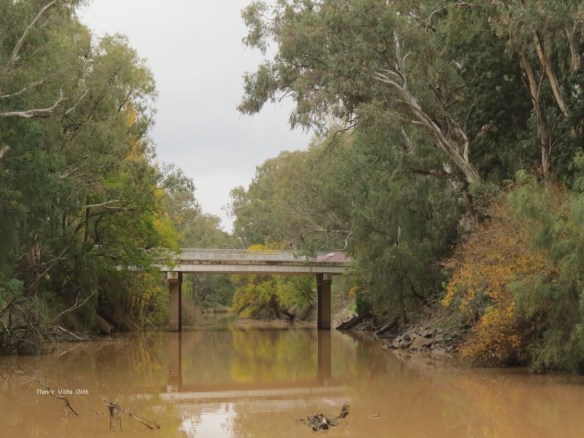
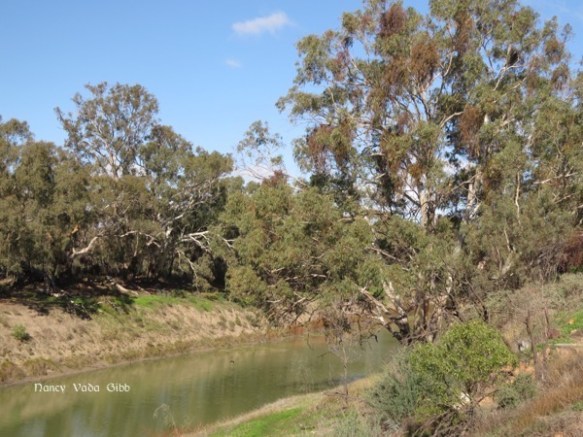
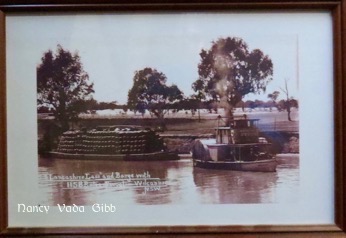
Wilcannia was once an important port on the Darling – Murray River system. In 1859 Captain Francis Cadell and his steamer the Albury arrived, effectively beginning the paddle steam trade on the Darling. The system flourished for over 70 years.  River ports established included Walgett, Brewarrina, Bourke, Louth, Tilba, Wilcannia, Menindee, Pooncarrie and Wentworth. The importance of the river for transport declined n the 1920s as new forms of transport emerged.

IMG_9089

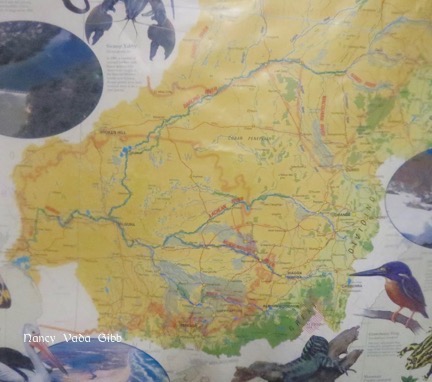
The Darling River system itself is one of the largest in Australia – or was. it covers over one million square kilometres (14% of Australia) from its source in Queensland to its mouth south east of Adelaide. It is 3,370 km long, and was once an integral part of the lives of many Aboriginal people and continues to hold great significance to them.

IMG_9031

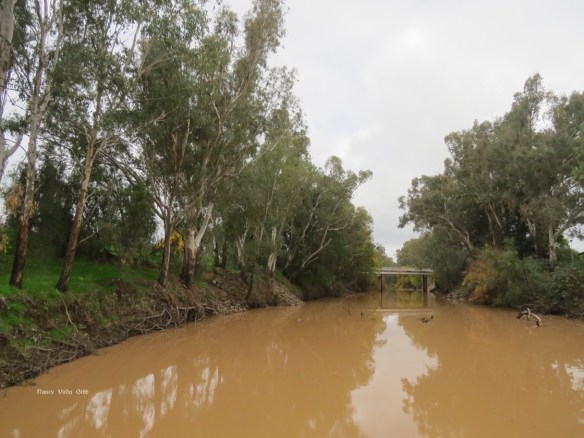
In recent years the river has become a shadow of its former self, due in part to multiple damming and water extraction by greedy cotton farmers in the north. Not to get into politics here, but the Government certainly has much to answer for. The beautiful Menindee Lakes south of Wilcannia are now mostly dry.

IMG_8936

IMG_8898

IMG_8908

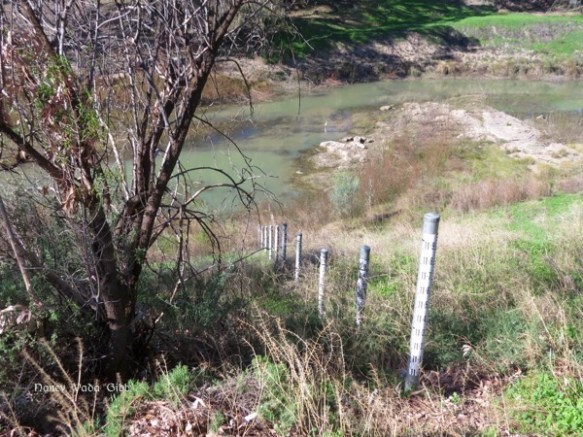
These indicators show high the river once was – 0ver 11 metres.

IMG_9296

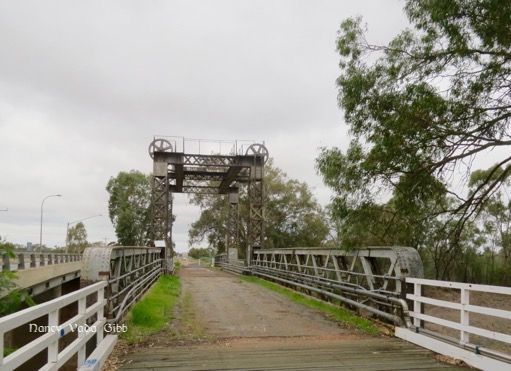
We heard there is to be a protest in the form of a (partial?) blockage of the bridge at Wilcannia on the 16-19 June. Sadly we won’t be there then, I would have liked to have supported the organisers. Odd of me perhaps as “Cuthowarra’” was some distance away from the river ….. but still, Frank d’Archy would have been dependent on the river for supplies and for shipping his wool to market.

IMG_9134

IMG_8896

Wilcannia etc15

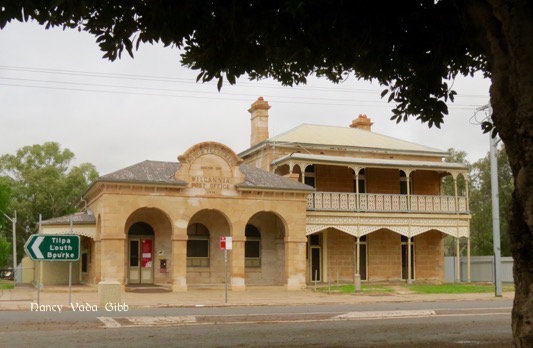
The town itself is now a shadow of its former self, but there are signs that it is reviving. Most of the graceful old buildings have been restored.

Granddad d’Archy would have collected his mail here…..

IMG_8938

IMG_8926IMG_8931


IMG_8950IMG_9100IMG_8939

IMG_8934

IMG_8942

IMG_9113

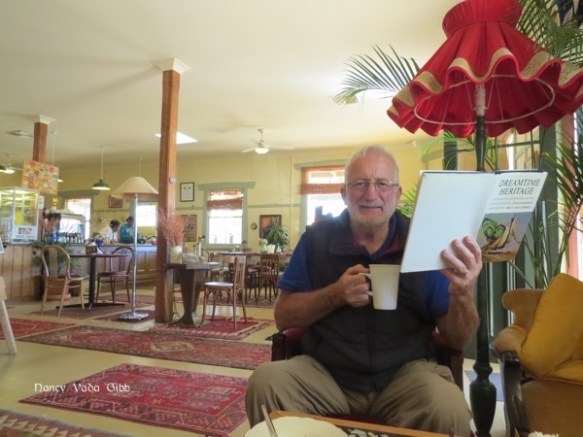
…..  and others such as the Old Fuel Store Cafe recently received Heritage grants to help with restoration. We had coffee at the cafe on our way back from Broken Hill and I can attest to the quality of the coffee/chai and in particular the cold bread and butter pudding with cream which was served as a “cake” – very light with just the right amount of sugar and sultanas. Dave was happy with his Hummingbird cake too. Recent Heritage funding has greatly improved the streetscape outside the Cafe and around the Courthouse area.

IMG_9285IMG_9290

IMG_9102

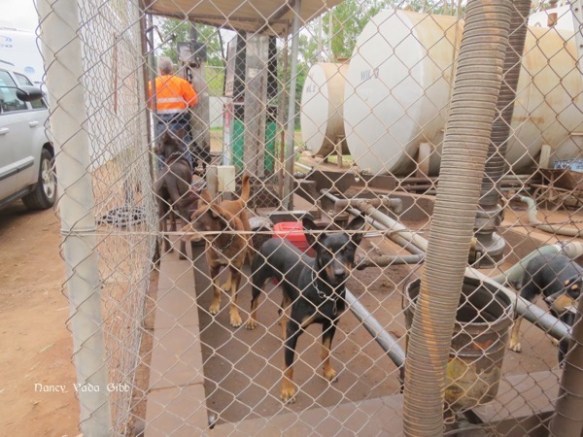
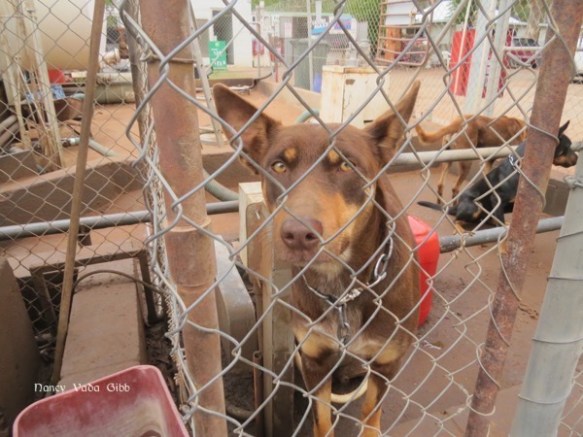
We filled up with diesel at the BP station off the main highway, an odd location perhaps but it is next to the remains of a river wharf. About six dogs guard the pumps at night. They were very friendly while the proprietor was around but I would not like to go near the place at night!

IMG_8946

IMG_8948

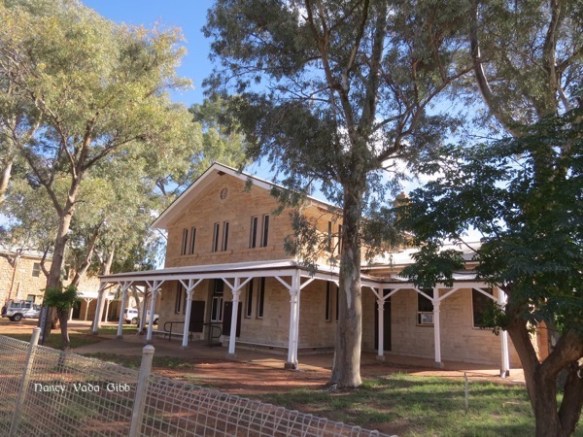
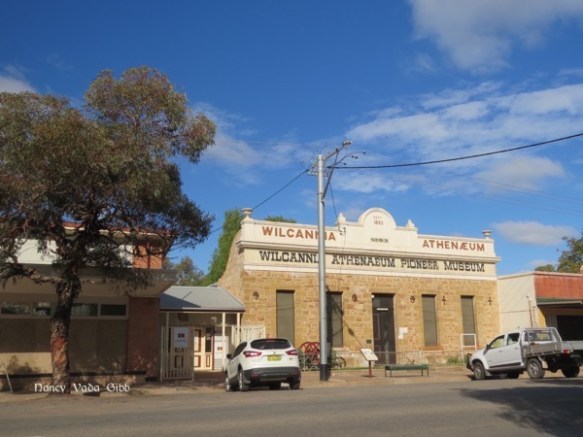
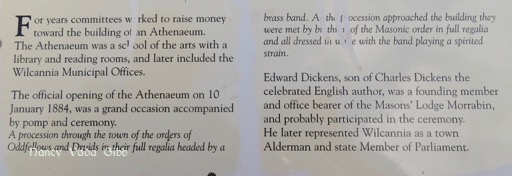
On our return from Broken Hill we stopped in Wilcannia again and noticed the old Athenaeum (Library) and Museum building was open. Oh joy!

IMG_9105

IMG_9106

IMG_9107

But on enquiry we discovered the Museum had been closed and the building taken over by other organisations. We were directed to the nearby Council Chambers (another gorgeous old building, formerly a Bank) but the helpful clerk told us the Museum’s contents are now in a shipping container, “and probably full of termites”.

IMG_9112

IMG_9108

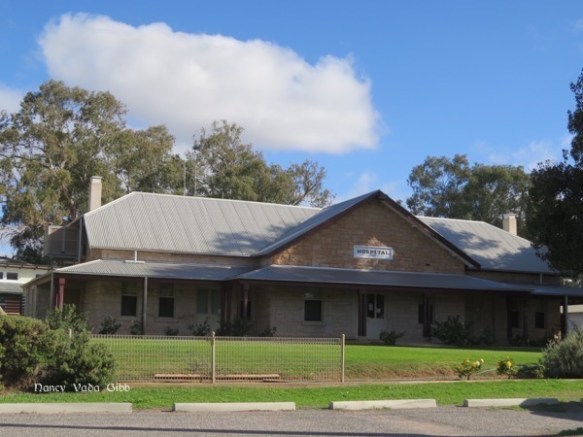
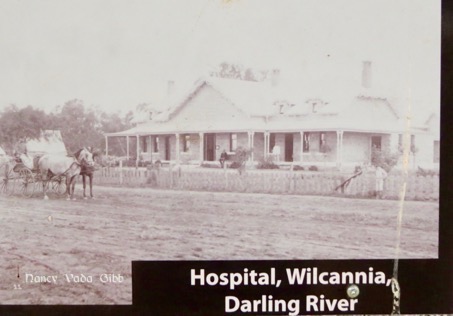
The old hospital also received a visit. Established in 1879, I doubt Grandfather and his two younger siblings would have been born there, it would have been a full day’s journey from “Cuthowarra” in a  buggy.

IMG_9126IMG_9127

IMG_8920

IMG_8922

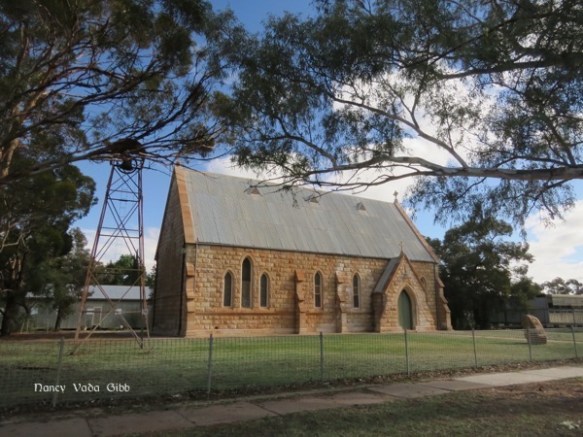
The old church of St. James ….

IMG_9135

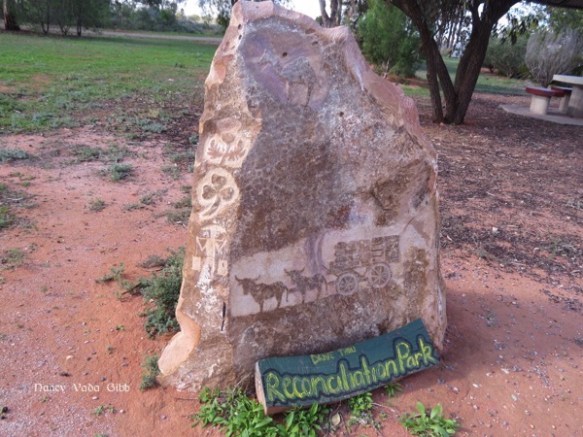
An interesting carved stone in a park…

IMG_9121

I did not want to leave….. it is unlikely I will ever go that way again. Am I being maudlin dwelling on the past? I think not, I just want to immerse myself in some family history. I will be writing up about Wilcannia and its place in the family history at more length in my other blog, The d’Archy Chronicles.

IMG_9308

131. A brief Postcard ….

I am seriously behind with this Blog. So just to let people know where we are … camped in the Warrumbungles National Park near Coonabarabran. It’s dusk and there are kangaroos hopping around everywhere. We are the only caravan in the camp although there are several camping groups with tents, BBQs etc … making me feel both privileged and very old (!).

We had not planned to come here but I realised we were going to skirt the Warrumbungles anyway, so simply had to come closer. I’m so very glad we did. I was last here in about 1962 on a walking trip with a group of people from Armidale, and  I still remember the awesomeness of the place.

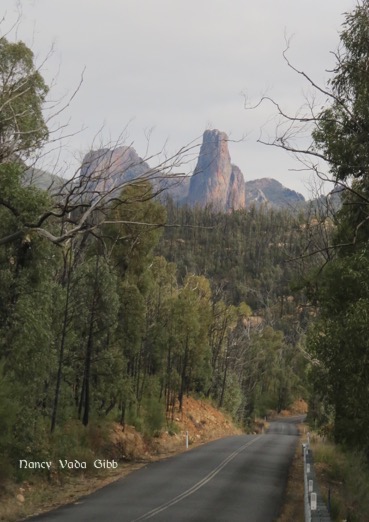
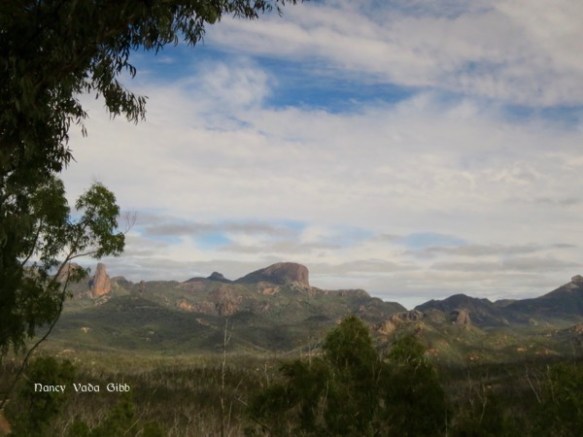
Here’s the Warrumbungles from a distance, and from the road after entering the Park. More anon.

IMG_9361IMG_9370IMG_9375

We are heading for Port Macquarie to visit my brother in a nursing home. Then we head north again.

130. Dubbo (NSW)

A visit to the Western Plains Zoo at Dubbo was a must-do. Now part of the great Taronga Zoo in Sydney (one of my favourite childhood haunts) it is very different from most zoos as it is set in several hectares of bushland with at least 6 km of winding surfaced road plus numerous cycle and walking tracks. The entry ticket covers two consecutive days!
IMG_8750

IMG_8848

Visitors can drive their own cars or ride their bikes or hire a motorised golf buggy or special bicycles which cater for various family groups.  For example I saw one family of 5, mother was riding a bicycle pulling a baby buggy with the two little ones, the eldest child rode her own bike, and father was on a tandem with the second child riding behind him.
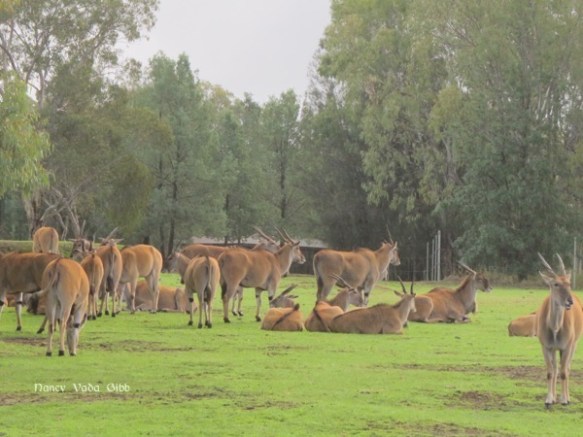
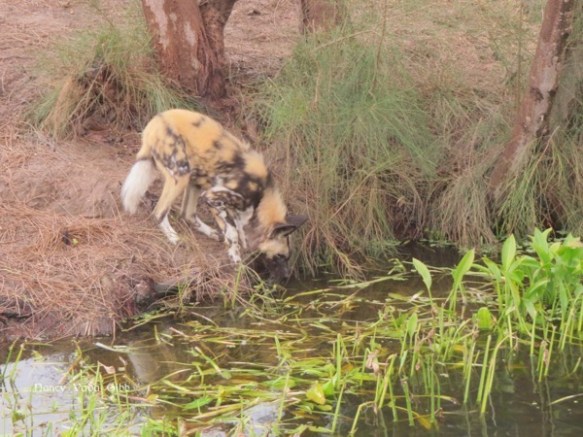
Although the number of different species was not as large as in a conventional zoo, the size of the herds was impressive. It was lovely to see the antelope and other African species including African wild dogs wandering at will, and also a herd of Przewalski horses – I’ve only ever seen one solitary Przewalski before and that was in Taronga many years ago.

IMG_8669

IMG_8693

IMG_8641

IMG_8642

IMG_8748

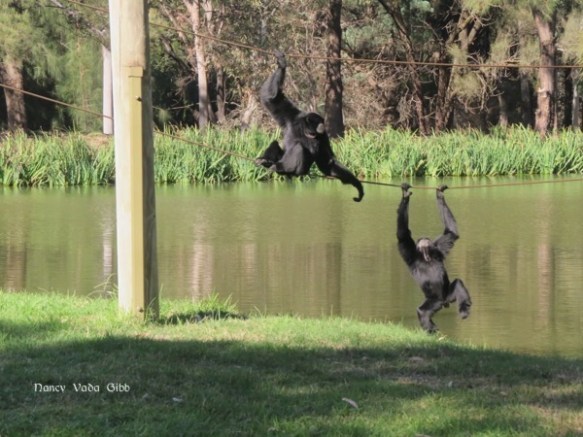
The primates – not a large selection but an interesting one – had their own special area with a number of  islands connected by monkey-style swing bridges. There were plenty of large trees on each island plus some little cubby houses.

IMG_8824

IMG_8712IMG_8713

IMG_8842

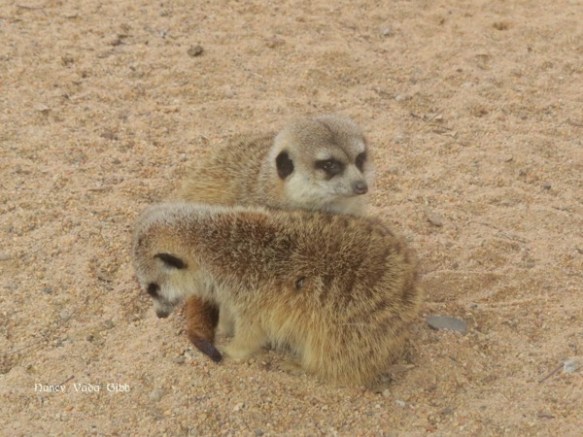
There was a huge tribe (now what is the correct collective noun?) of otters, absolutely delightful to watch but very difficult to photograph, and also meerkats.

IMG_8636

IMG_8644

Meerkats always have one sentinel posted ….

IMG_8637

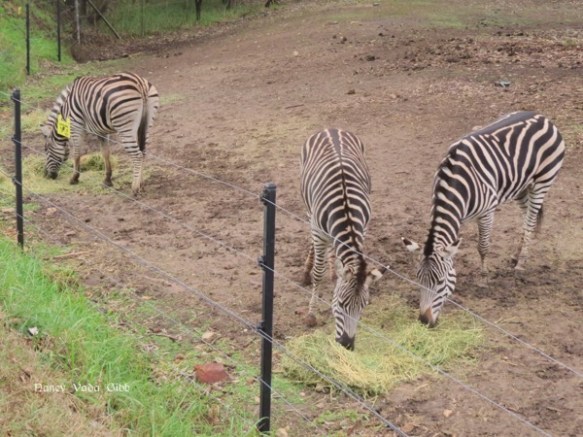
The larger animals included quite a number of hippos, rhinos, giraffes (including babies), zebras with varying stripes and 5 elephants plus about 8 Galapagos tortoises, three of them bred at the zoo. Throughout the day talks were given and the animals seemed eager to cooperate. The giraffes in particular – who could resist a nice piece of carrot (!).

IMG_8655

IMG_8668

IMG_8660

One of the hippos loved having the keeper scratch inside his mouth (very slimy!).

IMG_8673

IMG_8767

IMG_8792

IMG_8791

The zoo has several endangered animal breeding programs including one for the rare white rhino (which isn’t white). There was one little baby …

IMG_8677

IMG_8679

This is a Bongo – and apparently the males collect large harems.

IMG_8735

The solitary Bengal tiger was sulking the first day we visited – cold and rainy it was, and him without a mate … but he looked happier next day devouring his dinner.

IMG_8808IMG_8832

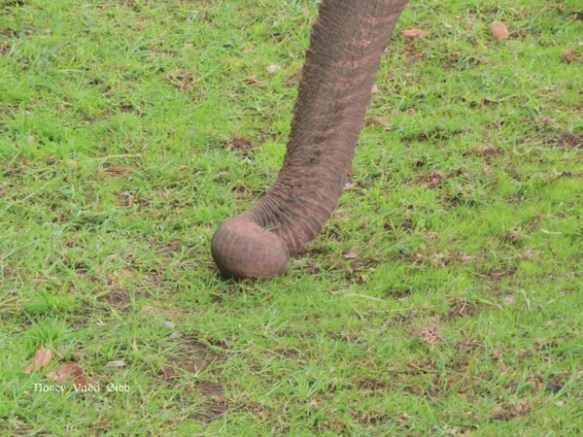
the Zoo has five elephants, one African (“Cuddles”) and four Indian. They do not mix so cuddles has been given a couple of camels as companions (there were several other African elephants originally).

IMG_8686

The grass is always greener …..

IMG_8687IMG_8690

IMG_8799

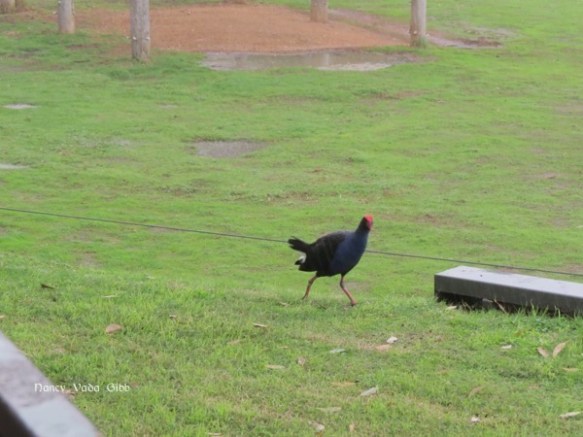
I thought for a moment I was in NZ … this is NOT a pukeko it’s an Aussie swamp hen.

IMG_8691


Dubbo was also the place where we finally succumbed and bought some cosy winter PJs! We’ve been trying to keep our winter clothes to a minimum as we expect to spend most time in the warmer north. However I think the PJs may still be needed at night, I remember the night temperature at the Alice was rather low in April, and we will be in northern Qld in July-August.

A half-day’s drive through Parkes took us to Condobolin and then (after a false start, the GPSr had a hiccup) to Euabalong West, where we arrived just at dusk. Kangaroos were already in evidence and one hopped right in front of us but we saw it coming and slowed in time. Once at Euabalong West the question was – where were my friends? I had no idea! However, a quick question to one of the locals soon had us on our way.

IMG_8849

I’ve known Valda since schooldays and spent many happy school holidays on her and Jim’s parents’ properties. Here is a reminder of what I got up to at Jm’s …. the cow’s name by the way was Chloe. There, that’s now recorded for posterity!

IMG_8851

Dave cannot raise the WiFi on his Telstra wireless modem despite their claims to have the “best cover”. Hopefully I can post this and the previous blog at Condobolin but we will see.

Later: here we are in Condo having just had the best butternut pumpkin soup ever at a cafe called “Happy Daze”. I’m just about to post two blogs so am indeed happy.

129. Temora (NSW)

On our last full day in Canberra Dave went off to do some more Museum-ing while Julie took me to a friend’ birthday party at a Nepalese restaurant. The food was delicious.

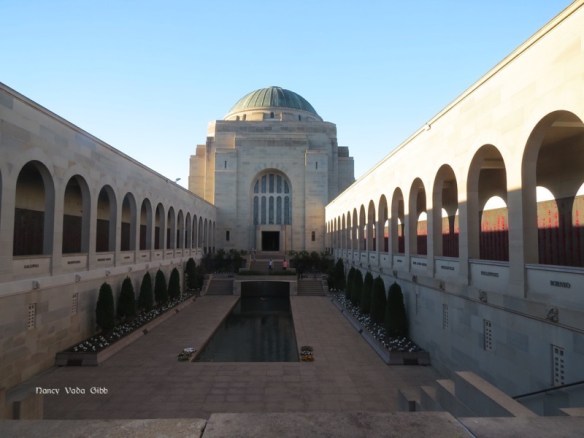
Late that afternoon we went to the War Memorial (which Dave had explored alone earlier) to see the various displays ……

IMG_8561

IMG_8571

IMG_8572

IMG_8587IMG_8586

IMG_8574


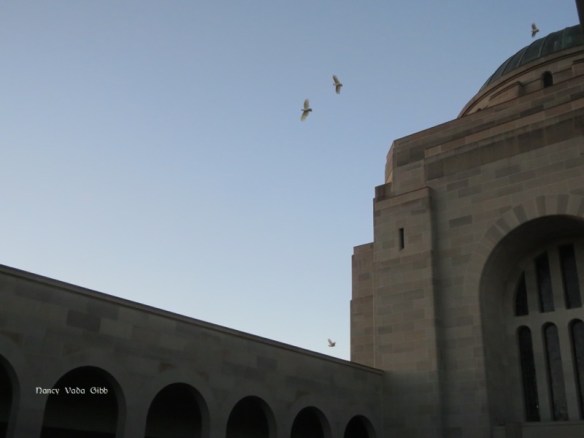
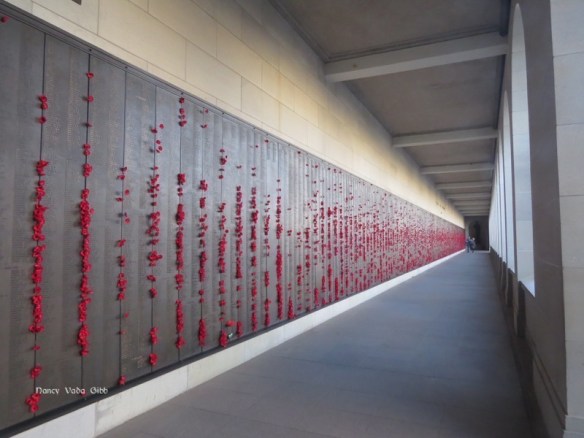
……. And to watch the Last Post ceremony.Usually it’s a simple ceremony, one soldier’s name read out and his story, then the Last Post sounded. But that day there was some wreath-laying as well. Both a lone piper and a bugler were in attendance. Cockatoos wheeled overhead, the eternal flame burned on, the sun sank and the ceremony started …. It was a moving ceremony, we watched it all from an upper gallery which gave a clear view of everything but was also very exposed to the chilly Canberra air.

IMG_8591IMG_8602IMG_8605

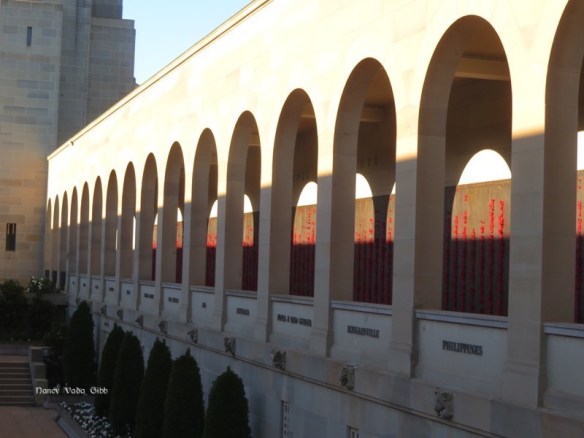
Both sides of the gallery are lined with soldiers’ names from every war in which Australian men and women have fought.

IMG_8573

IMG_8570

IMG_8566

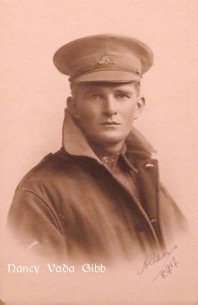
Scattered throughout the museum are photos of soldiers, often with their families – studio photos taken before they left to fight in the Great War. Few are labelled. Some are very poignant. One looked very like a d’Archy cousin but there is no way to tell if it was the same man – here is the Museum photo (left) and a family photo of Max Wreford d’Archy 1897-1966.

IMG_8582 (1)Max Wreford d'Archy ((probably) copy

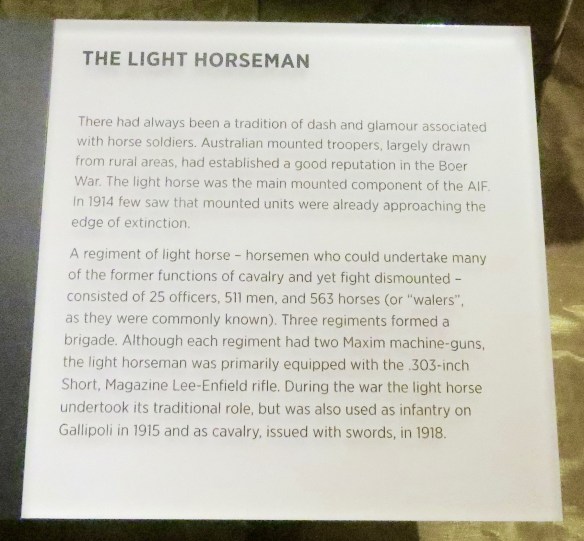
There was a reasonable display about the Light Horse but not as extensive as I’d hoped.

IMG_8585IMG_8584IMG_8577

We had not heard back from the farmer about Five Mile Creek by the time we were due to leave Canberra, so headed straight for Temora, with a slight detour through Yass to take photos of the old buildings lining the main street.

IMG_8613IMG_8615

That evening the farmer rang, and confirmed that the old Inn site was exactly where we had surmised. Jubilation! He also offered to meet us there if we returned. Meanwhile Dave discovered that he still had our friends’ front door key, so we did seriously consider retracing our caravanning steps just for a day, leaving Westie at the excellent campsite run by the Temora council. However, we’ve decided to press on instead.

We were waved in by Dave’s sister’s relatives Biffy and Spud; Biffy’s blog has been our inspiration for some time.

Dave spent a happy morning at the big Air Museum in Temora with Spud; I elected to practice with my ‘new’ oven and do some knitting. I’m sure the museum is very good but I have seen quite a few air museums by now (!). Photos by Dave.

Temora 01Temora 02Temora 03Temora 04Temora 05

Next day a hasty farewell, they went south and we went north – sort of. We DO want to get north before Winter officially arrives, even though to all intents and purposes it already has.

128. Yass.

We’ve now been in Canberra for several days. Initially we concentrated on bringing Westie the caravan and Grandy the Jeep up to scratch – Westie has a persistent leak and Grandy a persistent rattle (!). Dave thinks the leak comes from the TV aerial inlet or possibly the solar panel power line inlet on top of the caravan, or just possibly somewhere else which could have been damaged by a tree branch when we were trying to extricate ourselves from the driveway in Melbourne. He has removed all the old caulking and applied new, then hosed down the caravan and we await developments, assisted by an early morning rainfall.

Grandy has proved more troublesome. Initially the noise was thought to be a stone caught in the brakes, but after removal in Cooma the noise started again … so in Canberra we went to an authorised Jeep dealer and they had a good look and said the wheel bearings were getting worn and would need replacing fairly soon, but they couldn’t do it for two weeks. We may move on and get it done elsewhere further north.

Nearby Yass has long been on my list of places to visit, as it features in my Darchy family history several times. Legend has it that my ancestor Thomas Darchy worked for or at least visited Hamilton Hume on one of his Yass properties; it would have been in about 1841-43,  long after Hume had retired from active exploration. Ann “Nanno” Byrne, the mother of Thomas’ future bride Susan, ran an Inn nearby at Five Mile Creek, so it is likely Thomas met Susan in the Yass district. They were married in Campbelltown just outside Sydney in 1844, then made their first home at Black Mountain near Yass. It is not clear to me yet if Five Mile Creek is part of the Black Mountain area, but records show that their first child was born at Five Mile Creek in 1845. Later they moved further west to more open country in the Lower Murrumbidgee.
 

Ann Byrne was the fourth of 16 children and was born at sea on the “Tellicherry’” as it approached Australia in 1806.

According to the Monaro Pioneers Index and some other records “Nanno” Byrne was the owner of 1900 acres and leased the Coach and Horse Inn on Old South Road at Five Mile Creek in 1855. She may have been the licensee even earlier. She married her third husband Joseph McKeogh in 1853 in Yass but I think continued to use the Byrne surname.  She died in 1864 at Five Mile Creek, of “Atrophy and debility, the effect of accidentally breaking her legs”  two months previously and was buried in Yass under the surname McKeogh. Her name is not on the list of headstones in any Yass cemetery.

Where was Five Mile Creek? It is described variously as:

1. near Bogalong, Yass. District of Burrowa.

2. south of Bogalong, near Beremangra.

3. Between Yass and Jugiong, near Bookham.

Maps show most of these place names, but not Five Mile Creek. So one fine morning we set off on a voyage of discovery (!).

First – Yass. Just before the town I spotted Hamilton Hume’s cottage, now owned by the National Trust. Did Thomas Darchy visit Hume there? Probably! But even without that inducement it was an interesting old building.

cottage  from ainr.IMG_8425IMG_8345IMG_8351IMG_8354

IMG_8402

IMG_8361IMG_8366

Did Thomas Darchy dine here?

IMG_8378

Perfect matching of old wallpaper (the darker bits) ….

IMG_8382

The original approach was from the north but once the Hume Highway was built the ‘back entrance’ became the main entrance. This would have been the early view from the main entrance.

IMG_8364

IMG_8363

IMG_8362

Finally on to Yass itself.  A charming town full of old buildings. We visited the Museum which had an interesting display of old hotels in the town, but alas Nanno’s was not mentioned.

IMG_8411

IMG_8413

IMG_8423

Keeping an Inn must have been interesting in those days, quite apart from the danger from bushrangers. Family legend has it that Nanno was held up at least once.

IMG_8418

I did discover a small display about the Rev. Brigstocke who baptised some of Thomas and Susan Darchy’s children. In those horse-and-buggy days the distances were so vast that whichever travelling priest/minister arrived first was given the honour. The religion didn’t matter that much!

IMG_8422

After lunch in an old building converted to a modern cafe with excellent food, it was time for the Great Five Mile Creek Hunt. We drove as far as Bookham then turned off the highway. Bookham is just a couple of homes, a huge junkyard for old farm machinery, a church and little else. We explored a couple of narrow roads but the feeling was that Five Mile was further along the highway.

IMG_8450

It was! We almost missed it. The old Hume Highway, which mostly followed the Old South Road, was just the other side of a narrow reedy creek. On the banks of this creek were several non-native  bushes ….. was that the site of the Inn? Boolara Road led off from the highway and we followed it for some way but decided the Inn was most likely close to the highway.

IMG_8477

IMG_8481

IMG_8475

IMG_8486

IMG_8484

We could not drive down the old highway as the way was blocked by a gate and a notice – with a phone number for a local farm. Julie phoned the farm for me next day and made contact with people who “know the history of the place” . A I write this I’m waiting to hear back from them via email. They may know the exact location of the Inn.

IMG_8488

IMG_8489IMG_8490IMG_8497IMG_8505

We continued along to Jugiong, just to make sure we hadn’t missed anything. At Jugiong there is a large camping ground for caravans, some houses, a very old hotel being restored, and not much else apart from an interesting sculpture and series of notices describing the death of the local policeman Sergeant Edmund Parry “killed in the courageous execution of his duty” in 1864 at the hands of bushrangers.

IMG_8527IMG_8525IMG_8524IMG_8514IMG_8511

Being in Canberra, a visit to a least some of the National treasures is mandatory. We spent a lovely morning wandering about the National Art Gallery, which houses all sorts of art ranging from some Monets (including Waterlillies) to Blue Poles to Nolan’s entire range of Ned Kelly paintings. also lots of modern australian artists, some of whom I have not heard, others whose names I remember well from Mrs Adams’Art classes at school. Then it was back home for afternoon tea with friends from Armidale University days, who neither Julie nor I have seen for over forty years!

Today Dave has gone off to explore the Australian War Memorial Museum on his own while I am working on this blog. We are thinking of heading north soon to Temora to see a special Air museum and meet up with Dave’s relatives who like us are touring with a caravan.

127. The Sapphire Coast (NSW)

We left Westy/Westie the Caravan (the name still not settled) sitting in a paddock where earlier there were several large kangaroos feeding unconcernedly, and drove further south to Eden on Twofold Bay. A special museum beckoned – the Killer Whale Museum. I was expecting the usual display of whale skeletons, vertebrae, harpoons, old photos of harpooning etc etc and indeed they were all there, but what amazed me was the story of Old Tom. From my early schooldays I’d heard about Twofold Bay, Ben Boyd, whaling, etc but never this story.

IMG_8251IMG_8252

How about this as a cure for rheumatism? Also a Jonah story….

IMG_8259IMG_8260

IMG_8268

it wasn’t just Old Tom though …

IMG_8270

it was good to see that the contribution of Aboriginals in the early days of the whaling industry at Twofold Bay are being recognised and acknowledged.

IMG_8256


There was a cute little playroom for the littlies …..

IMG_8273

Two lovely old clinker-built rowboats reminded me strongly of Cornelius’ tender. Some people were surprised we didn’t get a modern fibreglass model instead but Geoff was all for tradition – and strength. IMG_8271

IMG_8275

Down at the waterfront, I was trying to get my bearings. Cornelius sailed into this harbour in late 1980. Since then a modern fishing wharf has been built. We had an indifferent lunch at a waterfront cafe, I think we must have picked the worst one. Very disappointing as i was looking forward to my first meal of prawns – but they were coated in a very thick batter and fried for rather too long.

IMG_8276IMG_8280

Up the hill we tried to get a good view of the harbour and lighthouse.

IMG_8283IMG_8286

Next day we headed north up the coast, with a stop on the heights above Narooma to check out the very narrow channel through which Cornelius had been guided by a fishing boat. The sea at that time was far rougher than the day I took these photos. They do not show the channel as well as I had hoped.

IMG_8323

IMG_8325

However, down at the wharf there was a photographer’s treat, a mob of pelicans and seabirds plus a couple of huge stingrays all milling around a gutting table. The water was very clear.

IMG_8304IMG_8297

IMG_8307

IMG_8317

A sign at a rest area on the coast shows the amazing abundance of fish species in this area.

IMG_8287

IMG_8289A little further up the coast we stopped at Tuross Head to have some ultra-fresh bread rolls for lunch-with-a-view. A lone surfer kept us entertained, then a lone beach walker arrived. We met up with him a little later and he said he walks about 5 km on the beach every day.

IMG_8331

IMG_8332One night at Braidwood; we woke to see  early-morning tai-chi on the nearby golf course.

IMG_8335

And now – here’s proof that we are finally in Canberra! We are parked in the driveway at Julie and Allan’s home and are being spoilt rotten by my very dear old friends. Julie and I went overseas together in the late 60s and have a few reminiscences (and quite a few giggles) to catch up on!

IMG_8343

126. Cooma to the Coast (NSW)

Cooma was not quite what I had expected – it was smaller for one thing, but it did have some reasonable shops where we bought a few cold-weather items of clothing as we will probably be in the southern parts of Australia for a week or two more. Nanny Goat Hill gave a good view over the town, and the road to a small cafe/restaurant just outside town gave an even better one. It being such a small world these days, we were not really surprised when the waitress started talking about cochlear implants and a little girl she knew who had one. A wallaby was waiting outside to say goodbye.

IMG_8194

IMG_8195

IMG_8198

IMG_8199One must-see was the Snowy Hydro-Discovery Centre just outside Cooma. Not only for the quality of the exhibits and the delicacy of the little cakes at the cafe but also the sight of a small group of “Lace Ladies” who invited me to view their work. Three were making incredibly delicate old-fashioned lace with numerous spindles, another was doing tatting and gave me a lesson (I still have a tatting bobbin somewhere at home).

it is difficult to visualise the magnitude of the Snowy scheme which started in 1949 before modern tools were available.

IMG_8206

IMG_8203

IMG_8214

There is a monument outside to the approximately 120 men and women of over 30 nationalities who lost their lives during construction between 1949 and 1974.

IMG_8190IMG_8188

Writing of tools – here’s a calculator the surveyors used. This would have been about the same time as my fellow students and I at the University of NSW were using logarithmic tables and/or slide rules.

IMG_8216

IMG_8215

A scale model showed our route to Cabramurra the previous day – it’s the yellow line which snakes from near Khancoban (middle of model) up to Tooma then a steep drop and onwards to Cabramurra (just out of sight to the left).

IMG_8207

Leaving Cooma our route took us through Bombala in so-called Platypus Country. Just before the town we stopped to check out a small cottage which Mary McKillop once visited,  and across the road, the Bombala river.

IMG_8229IMG_8225IMG_8227IMG_8228

Past the town we found a special Platypus Reserve, but we didn’t sight any there either. I have only ever seen one platypus in the wild and that was many years ago by chance when I was driving along a country road and saw some people intently watching something from a bridge. Curiosity made me stop and join them.

IMG_8231IMG_8233IMG_8236

IMG_8237From Bombala it was a long twisty ride down and down and down the Darragh Mountain Road to Merimbula.

IMG_8246

IMG_8248We planned to stop over at an Australian Motorhome and Caravan Club POP at Pambula but several phone calls to the owner were unreturned (she did make contact next day, she was in Sydney). We went to the place anyway but found it deserted and on a narrow road with a difficult entrance, so continued to Merimbula where we were soon settled in a camp just as the sun was setting. Yes, another sunset shoot!

IMG_8250