73. Wairarapa Safari – Ngawi

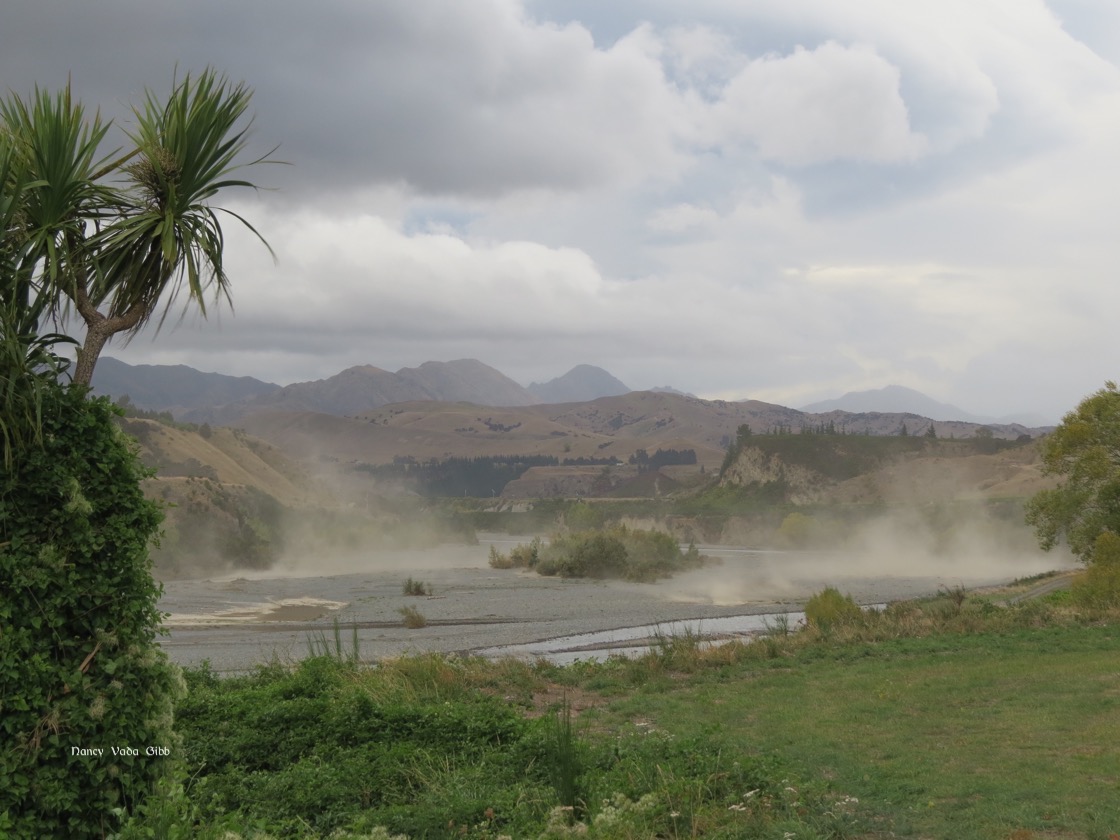
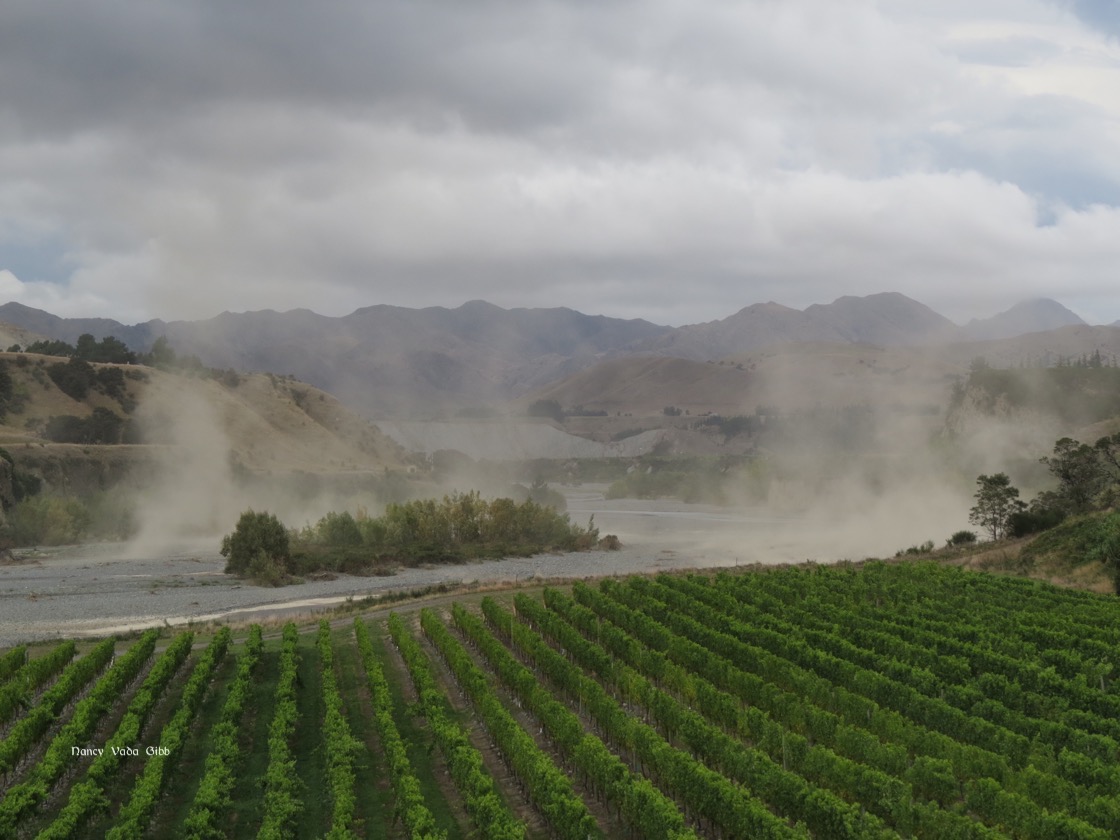
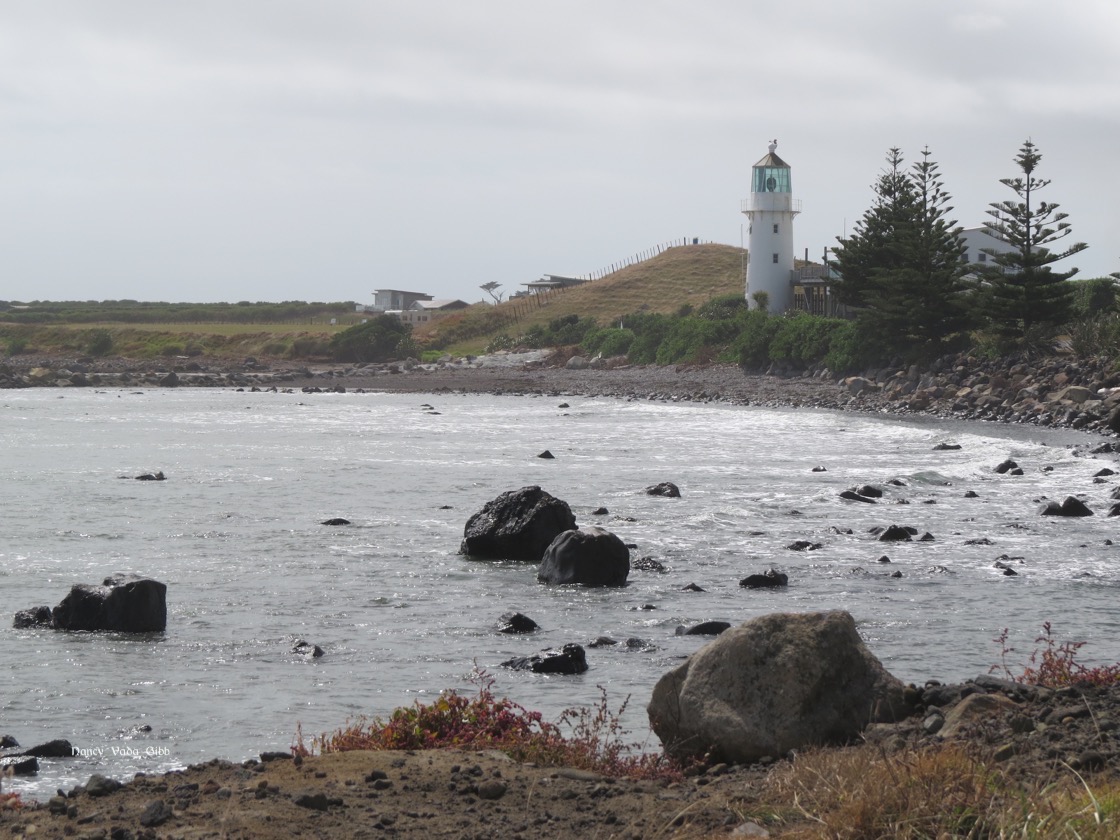
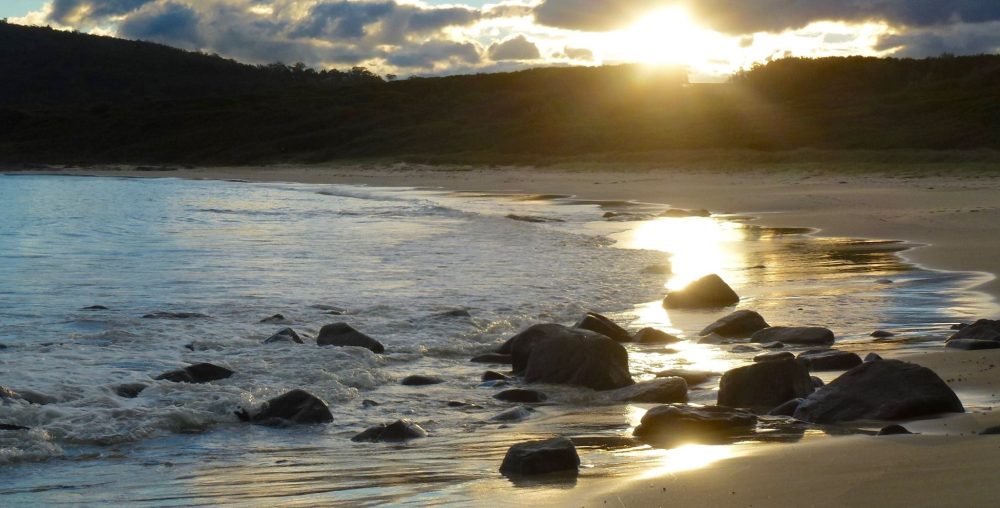
After 3 nights at windswept Tora it was back to Martinborough for supplies and then to Ngawi, a tiny fishing village at the south eastern corner of Palliser Bay right down at the southern tip of the north island.

IMG_9013

IMG_8714

We were all camped in an open paddock close to the beach and the wind was so strong for the whole of our stay that most caravans/motorhomes left a day early.

IMG_8733

We did not attempt to climb the steps to Cape Palliser Lighthouse, we would’ve been blown away……

IMG_8709

IMG_8712

……. but we did visit the nearby large seal colony twice. It was wonderful to be able to get so close and I could have spent hours sitting there watching the young seals playing unconcernedly although the adult seals were aware of our presence.

IMG_8690 IMG_8688 IMG_8682

IMG_8680

IMG_8691 IMG_8767

A mob of surfie seals were riding the waves, waiting for the big one ….  IMG_8794

At other times of the year penguins are a road hazard.

IMG_8715

Ngawi is an extraordinary place with a large number of rusting bulldozers all lined up along one side of the main street which is also the beach front. It’s said there are more bulldozers per head of population than anywhere else.

IMG_8719

IMG_8717

IMG_8760  IMG_8730

Apparently there is no more fishing this season, the quota for paua, crayfish and cod has been reached. Anyone want to buy a fishing boat, bulldozer and boat cradle? Elsewhere we have seen old tractors being used, but at Ngawi ithas to be bulldozers apparently, as there is no wharf and the beach can be very rough as well as steep.

IMG_8756 IMG_8754 IMG_8748 IMG_8747

IMG_8722

The dark grey shaley sand was very clean apart from multi-coloured seaweed. The reds and greens of the sea lettuce were such an enticing and realistic green.

IMG_8759

IMG_8795 IMG_8801 IMG_8798

Ngawi has also had its share of shipwrecks. The best known is probably the 1116 ton iron-hulled Zuleika which foundered on Good Friday April 16 1897. Eight of the drowned crew were buried in a single grave now marked by a memorial which also notes the deaths of another 4. Of the 21 men on board 10 including the Captain survived. There is an excellent newspaper article about the wreck in the Evening Post of 21 April 1897, which can be found at www.paperspast.natlib.govt.nz/

IMG_8811 IMG_8809

Another notable wreck was the Ben Avon which ran aground on 11 November 1903. She sailed straight in during the night in thick weather. The pilot died (from shock?) but the Captain and crew managed to get into a lifeboat and landed seven miles away from the wreck.  On the 13th November the Ben Avon was still upright, sails flapping idly in the wind, her holds full of water. She broke up soon after. (http://www.divenewzealand.com/index.asp?s1=diving&s2=lower%20north%20island&id=76)  The Captain was severely castigated in a court of enquiry – he should not have put all trust in the pilot – but was allowed to keep his certificate.

IMG_8672

This is the cove where it happened.

IMG_8673

72. Wairarapa Safari – Tora

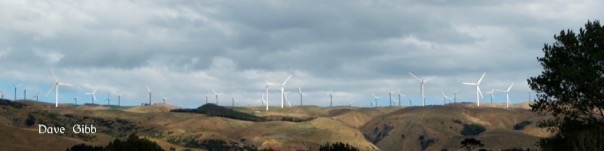
After a few days at Pongaroa the Safari moved back to Greytown and then south east to Tora on the coast. Along the way … some more wind vanes.
IMG_8503

IMG_8506IMG_8510

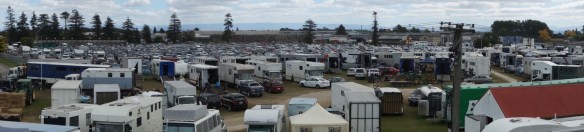
We had not been there before and did not know what to expect. After what seemed a very long drive on narrow twisty roads and over a mountain range (photo above) we came to what looked like a holiday camp called Tora, but no sign of any other caravans/motorhomes (there should have been at least 50 ahead of us) and also no sign of the coast so we pressed on – and on – and finally reached the coast but still no sign of other humans for several more km, then suddenly there everyone was in a paddock beside the sea.

IMG_8514

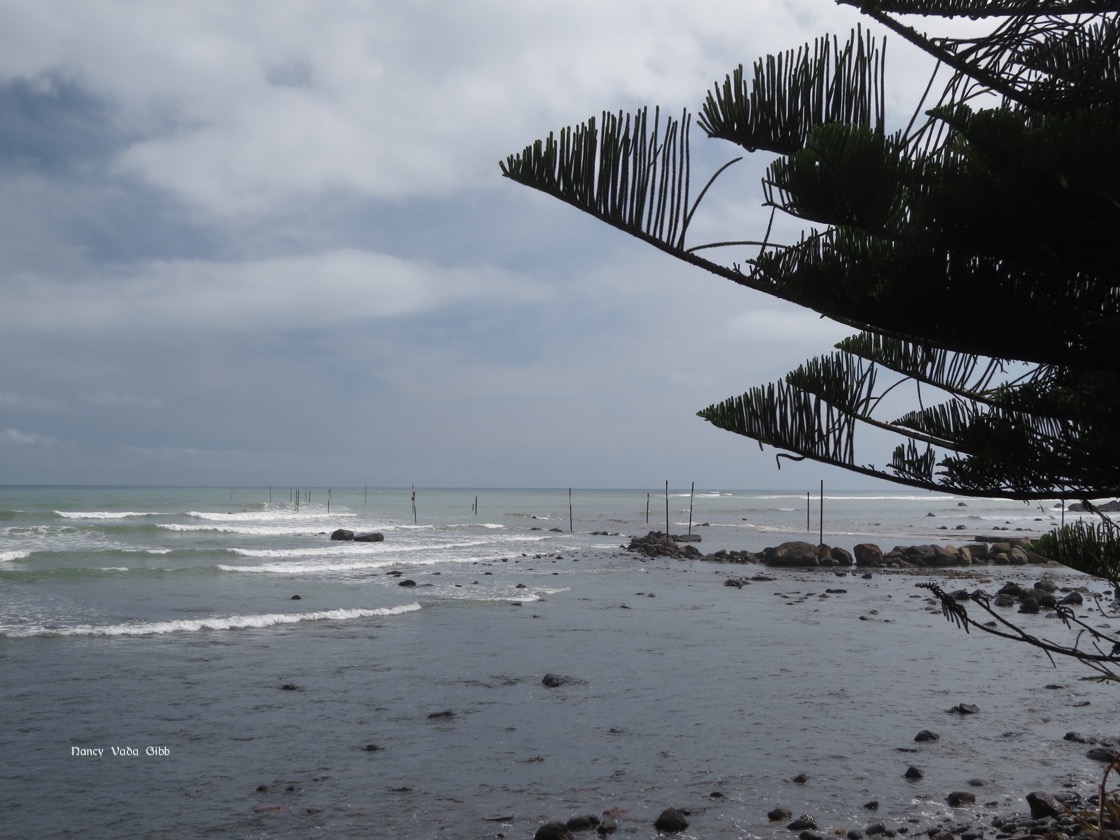
The coastline was very rocky with curious fine layered shale rocks with sandstone inclusions and limpid pools at low tide. The limpets were enormous.

IMG_8557

IMG_8548 IMG_8554

IMG_8561

IMG_8529

IMG_8566

It was paua (abalone) country judging from the number of shells lying around plus the number of NZMCA members poking around the pools at very low tide, plus lobster country as we watched a fishing boat checking on lobster pots twice a day.

IMG_8553

IMG_8543

IMG_8546

Local fishing boats are hauled out by bulldozer rather than tractor …

IMG_8569

Not a good coastline to founder on as a nearby shipwreck attested. Entrance channels to little bays were well marked.

IMG_8635

IMG_8636

IMG_8577

IMG_8584

Yet despite its remoteness there were quite a few baches and large holiday homes scattered about. With magnificent views.

IMG_8602

IMG_8573

IMG_8595

IMG_8599

We spent several days there enjoying the ambience.

IMG_8533

IMG_8610

IMG_8612

IMG_8620

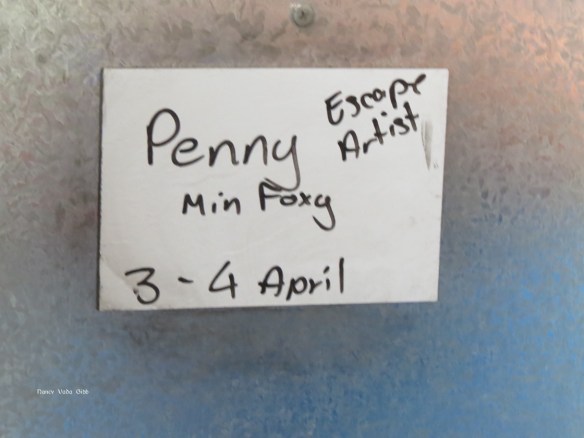
Penny had a lovely time with another foxie named Lucy with a very sweet nature. She was a standard size so a little bigger than Penny who is a so-called miniature. For some reason the breeder clipped the top of Lucy’s tail. I think Penny’s looks more aesthetically pleasing yet it used to be the custom to only leave a stump

IMG_8521

IMG_8524

IMG_8526

71. Wairarapa Safari – Pongara

Arriving at Pongaroa we had no idea where the Domain was … ask at the pub? But then we espied what could only be another retired caravanning couple (they always seem to have an ummistakable air of elan), who simply waved us onwards – “Keep going!” and just out of town we foiund the Domain already half full of the usual huge collection of motorhomes and caravans. More arrived over the next few hours. Since we’d been in Pongaroa before and explored the main attractions, this time we took it pretty easy with just walks with Penny, some baking and dinner the last night at the local pub which had a reputation for awesome food.

IMG_8496

IMG_8498

The restaurant was fully booked for an early sitting so we settled for a late sitting at 7.30 pm. We arrived on the dot and ordered at the bar, as is the custom there. After waiting some 10 minutes while our table was vacated we were shown into the dining room, where we waited … and waited …. after 50 minutes one of the bar girls came in to check whether I had ordered the seafood chowder or seafood basket??! – our order had been sitting on the bar all that time. However, the kitchern must have worked fast as 10 minutes later our food finally arrived with many apologies and the offer of free drinks. We’d already had plenty so asked for free desserts instead, but unfortunately for us it transpired they’ d run out of vanilla icecream for the affogato I coveted and only had sickly sweet blueberry ripple icecream!

We joined about 40 members for a mini-sfari through the famed Akito station, now run by a fifth generation family member. The 5-triangled entrance sign represented the 5 generations.

IMG_8450

Perched on the cliffs overlooking the ocean, with some extensive pine forest as well as hilly grazing, it was supposed to be a memorable trip. So it was but not for the usual reasons. Mist!! For most of the transverse of the station and particularly along the cliff top it was difficult to see more than a metre in front. IMG_8468

Initially it was not too difficult. The windswept Akito beach with its huge piles of driftwood and interesting rainbows in the spume bubbles made a good stop for morning tea. Hoof prints showed we had just missed a horse having some jumping practice.

IMG_8426

IMG_8428

IMG_8433

IMG_8430

Then on past the entrance to Marainanga Station with the beautiful old homestead visible from the road (visits by appointmernt only)……

IMG_8436

IMG_8435

…..and a little further on we all assembled on the site of an old airfield where a tattered windsock still waves forlornly in the wind.

IMG_8446

IMG_8444IMG_8447

A member of the Akito ruling family gave an interesting talk finally curtailed by increasing rain (“Don’t worry it’s only Scotch mist!”). And off we all set uphill into heavy mist which only dispersed on the lower reaches where it was possible to take photos of the extensive pastures and nearby beaches.

IMG_8457

After leaving Akito Station the road continued for some way beside the coast.

IMG_8486

Spotted on a nearby hill; a lovely little blue caravan.IMG_8477

We revisited the tiny little settlement of Herbertville but discovered access to Cape Turnagain (lovely name!) was not possible. Named by Captain James Cook in 1769, he sailed south to this point before deciding to turn and head north around NZ. It is a prominent headland part way betrween Hawkes Bay and Cook Strait.

A little further back towards Pongaroa a lonely memorial caught our attention; it commemorated the lives of the Herrick family who lived there at Tautane “… in splendid isolation” in the early 1900s. It noted that “Transporting wool was one of the many challenges presented by farming in such a remote location. This had to be taken by lighters from a jetty at Cape Turnagain to a waiting coaster to be shipped. “

IMG_8488

IMG_8479

Another day we left T5 sitting in the middle of the rugby field and drove to Dannevirke where we found a good laundrette and excellent library and did some shopping. Along the way it was interesting to see a new pine plantation on the steep banks bordering a stream, while the flatter land above was kept for grazing.

IMG_8490

IMG_8491

IMG_8423

70. Wairarapa Safari – 2. Carterton to Mangatainoka

Day 5 of the Safari we all congregated again on the rugby club pitch at Carterton. It was very hot and very crowded as the safari was joined for the occasion by local NZMCA members for a rally.

We did not take part in the main rally events but we did pay nearby Stonehenge Aotearoa a visit. “A window into the past where the visitor can rediscover the knowledge of their ancestors. It incorporates ancient Egyptian, Babyonian, Celtic and Polynesian star lore.” Hmmmm. Interesting enough but not particularly gripping. Before inspecting the modern concrete edifice we were asked to watch a 5 minute video. Not captioned, of course, so afterwards we suggested that be done, and ‘they’ were surprised, they’d been thinking of captioning in German, French, etc but in English ….?? Of course no script of the AV was available either. Such a contrast to our visit to Hobbiton.

IMG_8338 IMG_8342 IMG_8344 IMG_8346 IMG_8352 IMG_8354

On the hill just above this fake Stonehenge was a ruined house – what happened to it? It must have once been substantial, with fabulous views over the countryside towards Carterton. My ideal location.

IMG_8357IMG_8362

IMG_8363

Spotted in a paddock near town – at first I thought the dogs were real. They are all metal cut-outs.

IMG_8368Wisely perhaps we did not revist Carterton’s Schoc chocolate shop (“85 flavours, from classic strawberry and caramel to lime/chilli or smoked tea!”. The heady aroma would have been enough to make us buy and buy …..

But we did have breakfast at the Wild Oats cafe in the main street. Dave as usual went for the Full Breakfast [an outright lie!!!  I usually have the Eggs Bendict!!!!](I have no idea how he manages to scoff it all). My occasional sinful treat of pancakes with blueberries and maple syrup was a hundred times better than the so-called pancakes at Taupo. Fresh home-made bread was also available. We’d go back there any time.

The next camp was up at Mangatainoka just north of Pahiatua. On the way we resisted the urge to revisit the Mount Bruce Sanctuary (it was nowhere near kaka feeding time) but did turn off to investigate what was advertised as a model railway and a cheese factory. Now THOSE were interesting!!

The railway is the work of one man who was operating it at the time we were there….

IMG_8369 IMG_8376 IMG_8373

…. said to be the most extensive model railway in NZ. I have only seen one better, on the Sunshine coast in Queensland. In quite a few places there were signs saying “This is going to be ….” etc. etc. so it is going to continue being developed for years.

The cheese was what really captured my attention though. Cwmglyn Farmhouse Cheese made by Biddy Fraser-Davies …. she was the subject of a very interesting segment on Country Calendar a few years ago. As the milk is not pasteurised she has had to jump through all sorts of hoops to be permitted to sell her cheese. It won a high award at the World Cheese Awards 2013, the only NZ entrant. And it has been been served no less a person that the young Prince George.

IMG_8372 - Version 4

IMG_8372

IMG_8383

IMG_8384

These two signs will tell the story – they were in different parts of the building. We can both attest to the fact that the cheese from one particular cow tastes different to that from a mix of 3 cows’ milk. We bought some cheese from Isobel – lovely and creamy and full-flavoured. We did not see Isobel herself, she was “up on the hill” but we did see one of the calves which will be future milk and cheese producers.

IMG_8379  IMG_8381IMG_8386

On the way out Dave spotted an old motorised Railway Jigger. My father was a Ganger on the Railways and had to do a track inspection every Saturday and I was allowed (unofficially of course) to go with him when I was 5 or 6. When I started doing this the Jiggers were propelled by hand but then the motorised version came along so it was much less work AND much faster so I was ALWAYS happy to go out on one of them so to see one sitting in the yard at the model railways brought back quite a few memories!!   

IMG_8388

A little further on a roadside monument caught our attention. It marked the site of a former Polish Children’s Camp which existed from 1944 to 1949.

IMG_8395

IMG_8389

A nearby signboard in both Polish and English tells that the land was once part of the Pahiatua Racecourse, established in 1901. Soon after Pearl Harbour, it was converted to an internment camp for foreign nationals, who remained there for two years. It then became a home for 733 Polish Children and 105 accompanying adults, who made the site their home for 5 years. when the childrens’ camp was officially closed in 1949, the camp was converted into a Displaced Persons camp and remained so until 1952 when the camp was finally closed and the buildings sold for use  as barns, halls and beach cottages. The land reverted to farm land.

IMG_8393733 children and an unknown number of displaced persons who had become stateless as a result of boundary changes in Europe after WW2. I wonder how many of them now look back on this place with fond memories. [Dave: Quite a lot because they built the statuary as a reminder of their time at the camp].

Here’s a photo of our next stop on the banks of the Mangatainoka River next to the famed Tui Brewery. We are in the foreground, with the awning out. Established 1889 by Henry Wagstaff, who was smitten by the pure waters of the river. Actually it’s almost all motorhomes in the photo, caravans were supposed to go to the brewery car park but we were not informed, so were routed to the front place next to the roadway but with a nice rustic-y view of tall grass rather than lots of other motorhomes, which suited me and Penny – she because the long grass provided endless hunt-the-ball fun! IMG_8404 IMG_8406

The NZMCA had arranged special brewery tours for us; I don’t know if these were truncated versions of the real thing but neither Dave nor I were particularly impressed. It seems we also picked the wrong day as all the bottling with thrilling sights of endless clunking convey belts was done on Thursdays and it was only Monday! A normal tour includes tasting 6 different types of beer but we were only offered one. I’m far from a beer drinker, but at least we both appreciated the generous ploughman’s platter ($18) at the cafe.

We left Penny in the well-ventilated ute parked in deep shade while we did the tour, and on return discovered she had chewed through her third seat belt harness, or rather the part that secures the harness to the seat belt attachment. She can roam from one side of the back seat to the other but not get into the front seats – usually! Instead of buying yet another full harness this time we took the two ends to an old-fashioned upholsterer’s shop in Pahiatua and the youngish guy there soon fixed us up with a repaired lead covered with some strengthening fabric …. any bets on how long it takes Penny to get through it??

IMG_8398

I have now “published’ this blog 3 times and been forced to edit it – too many typos, too much of a hurry …. I hope it is all now intelligible.

69. Wairarapa Safari – 1. Castlepoint and Glenburn

The day after the Airshow and following a lovely lunch with Dave’s cousin Judith and her husband Les we joined 85 other caravans and motorhomes for a 19 day safari around the Wairarapa. Organised by the Wairarapa branch of the NZMCA, these safaris have apparently been very succesful in the past. In order to avoid major traffic disruption on the narrow highways and even narrower minor roads, we do NOT travel in school crocodile formation, but well spread out over a full day. The plan is to stay at 8  different places, some in normal campgrounds and some out in the wilds.

Our first camp was near  Castlepoint or rather in a paddock opposite the Whakataki hotel; we had stayed in the hotel grounds for several days soon after the start of our Circumforaneous ramblings. It was nice to be back!

IMG_8211

There was no sign of Penny’s little friend Ferrari, but there were several other dogs  including a 3-legged ‘Bandit’ and two fox terriers on the safari. Once again we battled strong winds on the climb to the lighthouse, and noted various changes in the lagoon area where the sand has been shifted around especially on the seaward side.

IMG_8220

IMG_8218

IMG_8223

IMG_8224

IMG_8233IMG_8232

IMG_8244 IMG_8238

\The second night at Whakataki a large flock of sheep were kept overnight  in a nearby paddock, and the constant barking of the sheepdogs set Penny off, resulting in a doorknock at about 2 am – could we please keep our dog quiet? This has never happened before, at least as far as we know. Penny is very swift to tell us about strange noises outside, eg our neighbour fiddling with his gas bottle (!) but not about her own barking.

IMG_8252

Next day we all shifted to Glenburn, a station further down the isolated South eastern coast of the north island. Only about 60- km from Masterton and through some very varied country, especially the up-and-down kind. Fortunately all but the last 15 kn of very narrow and occasionally very steep and winding road was surfaced.

IMG_8255 IMG_8264

After the interminable steep hills it was amazing to suddenly break out on the coast and see the lovely flat land fringing the coast!

IMG_8267 IMG_8269  IMG_8287

Here’s some of the mob. We were parked on the far side with a nice view…IMG_8276

IMG_8270

While there we paid a visit to an old Gibb Family bach which Dave remembered with some difficulty as the sea has encroached greatly and even taken over the former long drop (pictured – the little pile of stones). Once again Dave bemoaned our lack of a boat. But I do not think the launching of a lightweight collapsible boat would have been easy or even wise from that shore. Such boats are mainly for lakes and quiet rivers. 

IMG_8296

IMG_8299IMG_8302

IMG_8307IMG_8308

IMG_8313

The rockhounds among us found many good specimens in the bed of a nearby stream, fortunately reduced to a trickle while we were there.

IMG_8271

The climbers among us on the other hand simply went up and up …. Dave and Penny among them. (Two tiny little dots at the top of the hill .. that’s Dave and one of the other men, Penny was with them but invisible at that distance.)

IMG_8316 IMG_8321

68. Wings Over Wairarapa

IMG_8158

IMG_8178

We thoroughly enjoyed this famous air show in company with thousands of others. As I said in the previous blog there was a special huge parking space available for motorhomes and caravans which meant we did not have to put Penny in Pet Care for the three nights we were there. Graeme and Barbara offered to dog sit a few times so we could go over to the main area to check out various displays. Other times we sat up near the fence with umbrellas.

IMG_8144

IMG_8129

WOW Airshow01 2IMG_8202

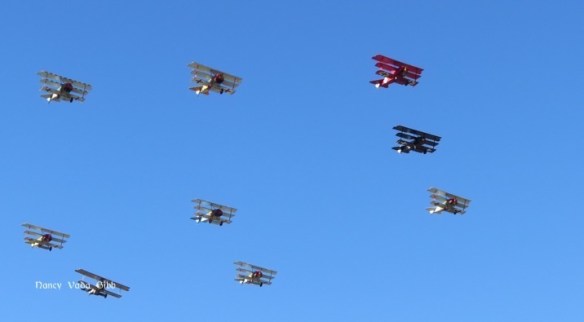
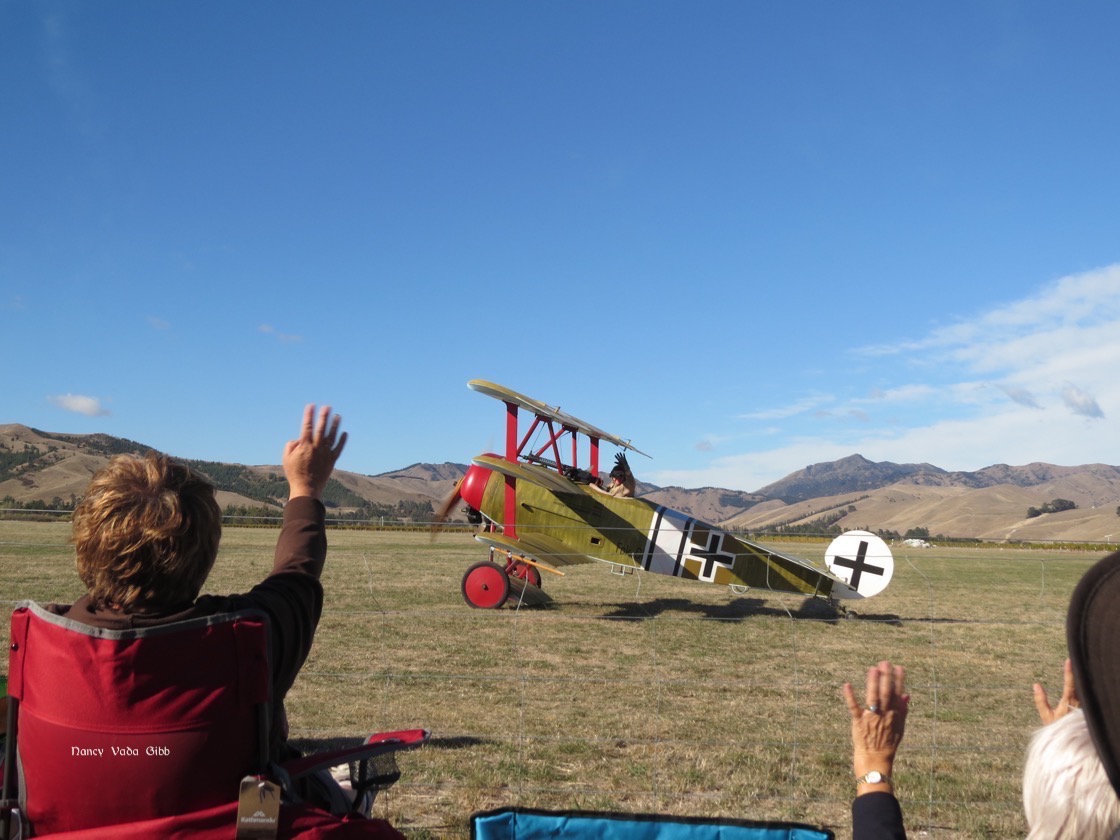
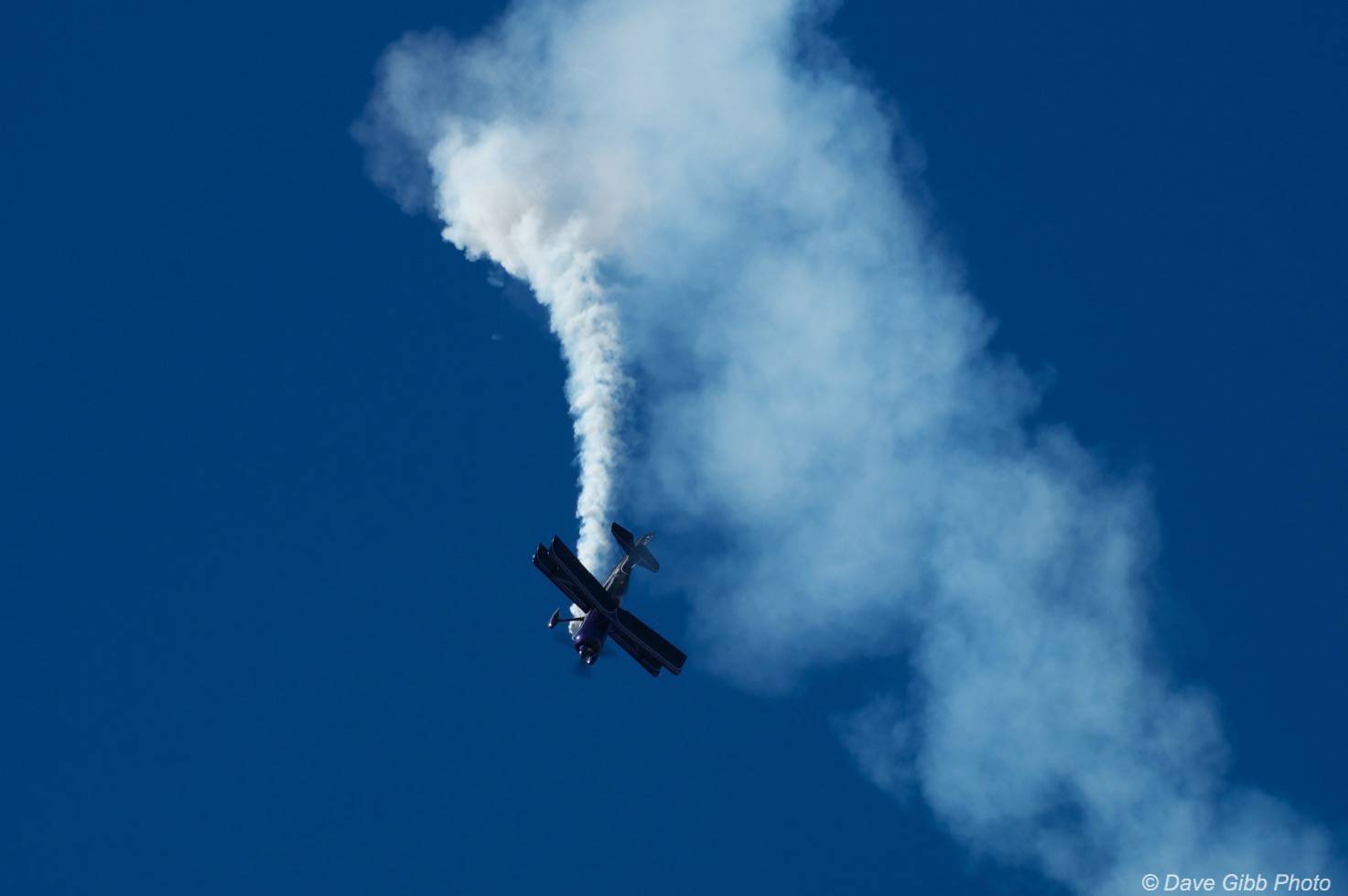
The weather was at times threatening but remained hot and mostly sunny but unfortunately also rather windy so the oldest aircraft could not fly on the last day. The wind  made interesting patterns to the smoke trails left by the formation or stunt flyers.

IMG_8186

IMG_8122

IMG_8165

IMG_8143

WOW Airshow08The Army was there in force. Whatever the fascination is with old army vehicles it is still alive and kicking! They can even provide shade for a picnic.

IMG_8132

IMG_8152

in particular, there were Bren gun carriers. 33 of them, of which 27 managed to trundle a complete circuit of the airfield and create a new world record.

IMG_8137

WOW Airshow06

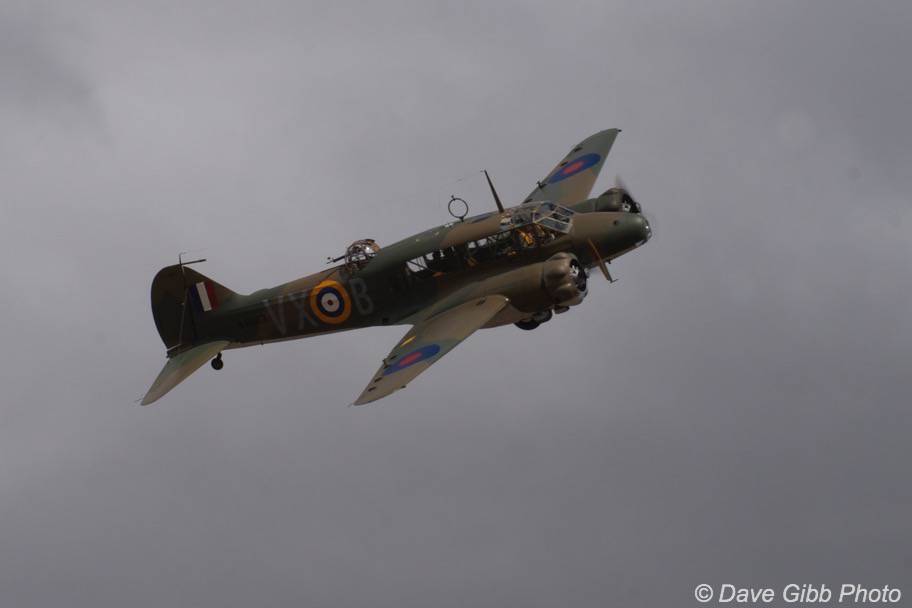
There were models of two very early New Zealand aeroplanes – Richard Pearse’s and the Pither – plus a number of vintage planes from Peter Jackson’s collection.  I’m glad I took photos on the first day as they could not be flown on the second due to the wind.

IMG_8190

IMG_8150

Here’s an interesting cloud formation.

IMG_8192

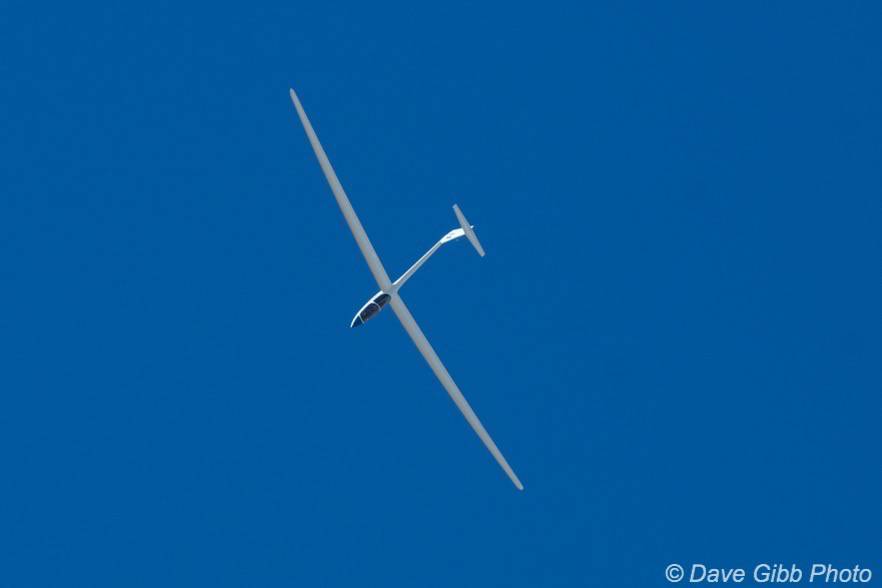
And some of Dave’s planes….. WOW Airshow01 WOW Airshow02 WOW Airshow04 WOW Airshow05 WOW Airshow07 WOW Airshow10

Labelled with special neck tags, we were able to enter and leave the large park at will, so once established on our site we made a beeline for the nearest laundromat and then library, one of the first we have encountered on our travels which charges for power use. By then I was desperate to get my computer properly fired up and send off a couple of blogs!

On our last day in Masterton we enjoyed a lovely lunch with Dave’s cousin Judith and husband Les, who said they had just installed a new washing machine “especially for us”. I gave it a good workout – many thanks, J & L! Penny behaved very well towards their three cats. She has not yet met a friendly feline since we left the chestnut orchard in Christchurch, but is always hopeful. Laden with clean washing and garden produce we finally set off to join the NZMCA-organised Wairarapa Safari at Castlepoint.
67. Eketahuna and the Pukaha Mount Bruce sanctuary.

On to Eketahuna for one night, ready to make the final hop to Masterton and get to the showgrounds early for the famous Wings Over Wairarapa airshow. The organisers have made a special parking space available for motorhomes and caravans, which means we will be able to see the show in comfort and Penny does not have to go to a commercial kennels for 3 nights.

The Eketahuna Club provides a nice flat POP site with water and a dump station, an ideal location for travellers on the road from Rotorua or Taupo down towards Wellington. The clubhouse is an interesting old building with a photo of not the Queen but the Queen Mother in the foyer and a beautiful richly furnished billiards room with wood panelled walls. The popular dining room served good fish and chips. Luckily the Clubhouse  appeared to have been undamaged in the earthquake which struck the region a year or so ago.

IMG_8109 IMG_8111

This photo above shows Graeme and Barbara’s caravan next to ours. If a new number plate is issued every one minute in NZ (actually I have no idea, just making this up) then G&B in Tauranga bought their vehicle just 23 minutes before we bought ours in Christchurch!

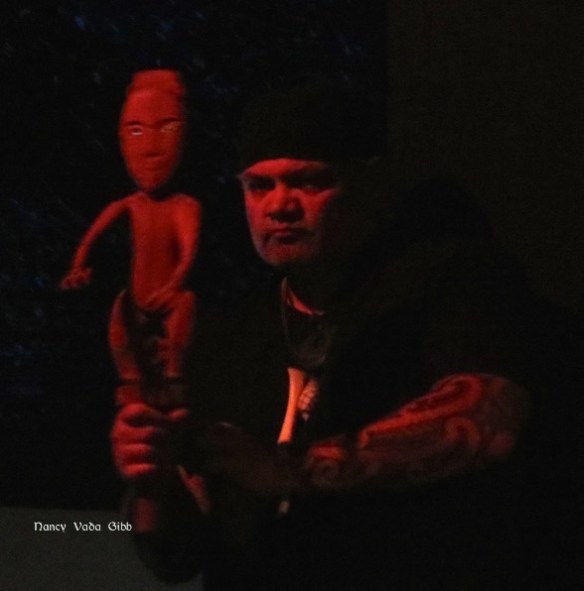
While based at Eketahuna we visited the Pukaha Mount Bruce sanctuary, home of the unique white kiwi Manukura and various endangered birds, plus some tuataras and gheckos. It was difficult to see the kiwis as their nocturnal house was even more dimily lit than any other kiwi house I have visited. However, the white kiwi certainly stood out amongst the gloom! Apparently not an albino but the result of the parents both carrying a rare recessive gene, Manukura is now a big girl who is hoped to mate with her brown male companion before too long. Her name is a very old and noble one meaning ‘of chiefly status’. She was hatched at Pukaha; her parents came from Little Barrier Island. Her hatching made world-wide news and even now she has her own Facebook page.

IMG_8100 IMG_8101 IMG_8105

We arrrived at the sanctuary right on Kaka feeding time, and the girl at the desk kindly directed us straight to the feeding area via a ‘Staff only’ entrance. Kaka are large birds and it was a little alarming to be dive-bombed by several as we entered the area! Although endangered, there are over 140 wild Kaka flying free at Pukaha.  As usual both Dave and I could not stop taking photos.

Mt. Bruce01Mt. Bruce02Mt. Bruce03IMG_8079 IMG_8073
A Kaka breeding ‘nest’ ….IMG_8092

The sanctuary has several large aviaries containing at risk or endangered birds – the Stitchbird, Kokako, Kakariki etc. The aviaries are huge and it was a pleasure to walk along the trails within native bush. At one place we spotted a young rabbit and were later told that it was a good sign that there were no stoats and ferrets around.  The sanctuary is surrounded by a predator-proof fence, of course.

Next day, on to Masterton via the chalky cliffs of Vinegar Hill and the winding Rangitikei river. We stopped at Stormy Point to take in the incredible views. The notice board said “Stormy Point lookout offers you the chance to view one of the best preserved sequences of river terraces in the world…..”  IMG_8028 IMG_8027 IMG_8025

IMG_8032

And off we go again ……

IMG_8035

66. Taupo to Feilding and Eketahuna

The Taupo Riverside Market on Saturday was wonderful, we stocked up with lots of fruit and vegs and I also bought a family history book by a local author which has since proved to be interesting reading – certainly not your usual family history. If we are back in Taupo one day I’d like to meet her!

Taupo does not have any suitable dump points for large caravans like ours so we went to one down at the south end of the lake, at the boat harbour. The view from  that end is quite different.

IMG_7982

Then south again heading for Feilding via dandelion-rich fields, pine forests and finally the Desert Road (for non-Kiwis, it’s a sort of tundra desert, certainly not like the golden sandy deserts of Arabia). Mt. Ruapehu and the other mountains came closer and closer, Ruapehu with some snow of course and Mt.Tongariro steaming fairly gently. It truly is a thermal landscape. (Photos shot through windscreen so not really sharp). 

IMG_7984 IMG_7988IMG_7997

Half way to Waiouru the weather suddenly closed in despite predictions for another fine day.

IMG_7989

We stopped off at the Army Museum at Waiouru to deliver some more knitted and crocheted poppies, and by good luck met the co-ordinator of the project and were shown 4,000 of the 11,000 or so poppies which have been donated so far. They aim to get 18,166, one for every NZ serviceman and servicewoman who died in WW1. Among the thousands of poppies are a few white ones, representing the Chinese who served in the NZ Army, white being their colour of mourning.

IMG_8005 IMG_8003 IMG_7999

Also at Waiouru we saw a scale model of a WW1 Western Front battlefield, which is proposed to be built as part of our commemorations fo the centenary of WW1. It was designed with the help of Sir Peter Jackson and is scheduled to open in 2016 in paddocks at the back of the museum. Here are some photos of the scale model showing the incredible detail. I do wonder though how the very muddy trenches will be represented in the full scale model. Surely not with real mud.

IMG_8016

IMG_8006 IMG_8010 IMG_8009 IMG_8007

At Feilding we joined up with Graeme and Barb and spent 2 nights at a POP in the grounds of the Coachhouse Museum. I missed exploring this museum but Dave said it was wonderful. We spent several hours at the Feilding Library and at last I was able to get off several blogs all at once, with another almost ready.

The traverse of Manawatu Gorge next day was quite different without the strong wings that buffeted us last time. Parts of it reminded me of the Taieri Gorge railway near Dunedin. The wind vanes on the hilltops were quiet.

IMG_8063 IMG_8059 IMG_8057 IMG_8050 IMG_8044 IMG_8040

65. The “Ernest Kemp”, Craters of the Moon and some Prawns.

Oh no – somehow this unfinished blog has already been published. Please ignore, here is the real deal. Also, I’ve been corrrected, we were at Five Mile Bay not Beach. 

Another evening in Taupo together with friends Graeme and Barbara we went on a late afternoon cruise on the “Ernest Kemp” a replica steamboat regrettably propelled not by steam but by diesel. A nice little boat nevertheless, suitably decorated in places with the ropeweaver’s art then heavily tarred.

IMG_7825

IMG_7828

IMG_7846

IMG_7852

IMG_7851

IMG_7850

We ‘steamed’ out of the little boat harbour and along the northern shore to the Western Bay, admiring the palatial homes on the clifftops until we reached a carved rocky cliff where the water was crystal-clear and some ducks and black swans came to welcome us.

IMG_7899IMG_7893

IMG_7877

After a short stay while some of passengers had a quick swim, including Graeme …….

IMG_7906

IMG_7899

IMG_7909……we were off again heading across the bay, along the eastern shore fairly close to where T5 was camped at Five Mile Bay, and thus back to the boat harbour.

IMG_7921

IMG_7927

Wine or beer and nibbles were plentifully supplied particularly on the way ‘home’ and by the time we got to our berth everyone on board was chatting together like old friends.

IMG_7832

IMG_7935i was curious about the rock carving, although maori-style it did not look that old and it was surrounded by some rock carvings of animals. Thanks to Google <chrisjolly.co.nz/> I have discovered that the 6 metre carvings were commissioned by the NZ Arts Council in 1979. the main face depicts Ngatoroirangi, a High Priest and great navigator of the Te Arawa canoe which he piloted to Aotearoa (NZ) from Hawaikii during the great migration of the 13th century. 

IMG_7866

IMG_7867On the nearby rocks are carvings of Tuatara (lizard) regarded by Maori as Taniwha, meaning Protector. 

IMG_7892

On the way home we stopped off at the Fishbox for some ‘chish & fips’. This must be the most popular fish shop in Taupo as the waiting time after placing an order was about 45 minutes! – but well worth the wait as we eventually discovered.

IMG_7938

Despite what I said in an earlier blog about having seen all the steamy stuff I wanted (!!!) we went to investigate one of Taupo’s newer attractions, the Craters of the Moon. This involved a 45 minute walk mainly on boardwalks over a curious landscape, “…. still a very active and expanding area where steam vents and craters are constantly forming and changing as underground streams finds new passages to the surface.”

IMG_7949

IMG_7944IMG_7947 IMG_7946IMG_7940

Notices everywhere warned us not to venture off the boardwalks unless we wanted scalded legs.

For non-Kiwis, thermal activity is common in NZ because it lies on the edge of two colliding tectonic plates, the Pacific and the Indo-Australian Plates. The former is pushing downward beneath the North Island and the deeper it goes, the hotter it gets. These colliding plates are also responsible for NZ being so earthquake-prone, truly the “Shaky Isles’.

This crater last erupted in 1983 …

IMG_7956

This one erupted in September 2002, the biggest eruption in a decade. The surrounding paths and boardwalks were covered with mud, ash and pumice to a depth of 5 cm.

IMG_7962

This large mud crater frequently erupts pumice and mud, but did not oblige for us.

IMG_7965

The bright orange and red clays are  formed by the action of condensed steam and acidic gas chemically altering the pumice soil, and hardy algae growing around some vents make the soil look green. Obviously the ferns and mosses that colonise the area have adapted to the conditions.

IMG_7957

Penny had to stay in the ute of course, but recently we purchased some window shades (the big folding silvery type for the windscreen and dark shadecloth-type for the side windows) and they do help keep the interior cooler. We also have grilles fitted to both back windows. Penny seems to be happy with this arrangement, plus her back-seat bed, a water bowl and a toy or two. She would rather stay in relative safety and comfort than be tied up in a shady spot outside, although that is sometimes necessary.

When we were driving towards the Rapids (last blog) we noticed a sign saying “Prawn Park”. What!? Prawns in NZ?? How I miss the Queensland ones. We decided to brave lunch there, which which turned out to be warm large freshwater prawns of rather different appearance to the Queensland Kings. Not too bad but not a patch on … well you know what. The Prawn Park has been turned into a tourist attraction with a number of geothermically heated shallow ponds surrounded by beach-style paraphernalia; people are invited to catch their own prawns using simple bamboo rods and a tiny bit of bait, either from land or safely- moored  rubber boats.

Prawn farm02

64. Taupo Again.

This time we thought we’d camp at Five Mile Beach rather than the NZMCA camp near the airport. On arrival we noticed one caravan perched on a rise overlooking the lake, and as we are too long to fit into a normal parking spot right beside the lake this seemed an excellent option. We had a lovely view of the lake minimally obscured by a campervan below us.

IMG_7670

IMG_7711

That first evening there was a wonderful cloud formation with many others to follow on subsequent days. Penny loved meeting all the other dogs on their twilight strolls.

IMG_7702

IMG_7729

IMG_7730 IMG_7723 IMG_7719 IMG_7713 Lake Taupo is a popular spot for para-sailing as well as all sorts of other water sports. Parachuting is also avilable at the nearby airport.  While we were shopping in town the next day a small plane full of would-be parachutists crashed into the lake not too far from the camp; the pilot and all passengers jumped to safety and were rescued – and we missed it all.

IMG_7681

Penny’s ball fell into the lake so Dave simply stripped and went in too … that was on a weekeday, the following weekend the whole “beach’ was thronged with swimmers right into the late evening.

IMG_7706 IMG_7708

We spent a lovely few days catching up with Dave’s old friends and some newer ones who with a little encouragement (after all it was quite a narrow strip of hilly land)  parked their caravan right behind us. We tried out some local hot springs but the Lake’s coolness also beckoned. Dave retrieved a huge piece of natural pumice stone floating past him.

IMG_7742 IMG_7737 IMG_7735

We went to watch the Aratiatia Rapids which carry water from Lake Aratiatia towards the Waikato river. There is a power station at the end of the lake and at set times every day the spill gates are open for a short time. This creates a fantastic display of foaming water. We watched from an excellent viewing point fromt which we could just see the dam and the people standing on top of it waiting for the spill gates to open. Dave says it was quite an audible display, first the warning sirens then the water tumbling out through the gates and coming roaring down the gorge. Here’s a series of photos which I hope will  convey some of the excitement.

IMG_7756 IMG_7759 IMG_7771 IMG_7773

Spill gates just opening…

IMG_7779 IMG_7790 IMG_7793 IMG_7795 IMG_7797 IMG_7802 IMG_7807

It only lasted about 15 minutes then the water began to go down again.