158. Herberton and the Bat Hospital

When we drove from Mt. Surprise to Mareeba we did not stop to explore any of the tableland towns, but now with the window glass ordered and various caravan parts in hand we had more time to explore. Herberton beckoned. Here’s a map to show where we’ve been recently and where we are going.

IMG_2046

The Herberton Heritage Village is said to be one of the best known living museums in Australia. It was certainly large and beautifully maintained, on a gently sloping grassy site with plenty of walkways between buildings.

IMG_1715

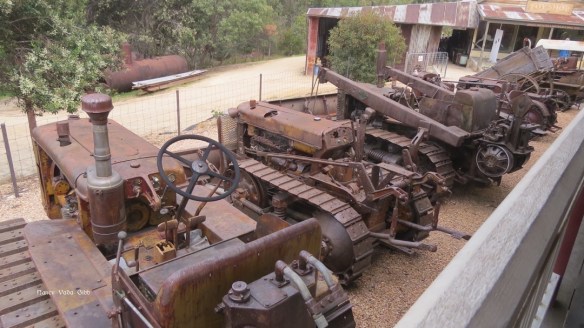
There are over 60 restored period buildings chock full of relevant items, many antique motor vehicles, tractors and other machinery.

IMG_1742

IMG_1721

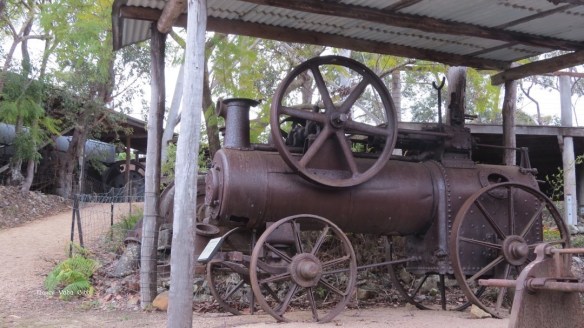
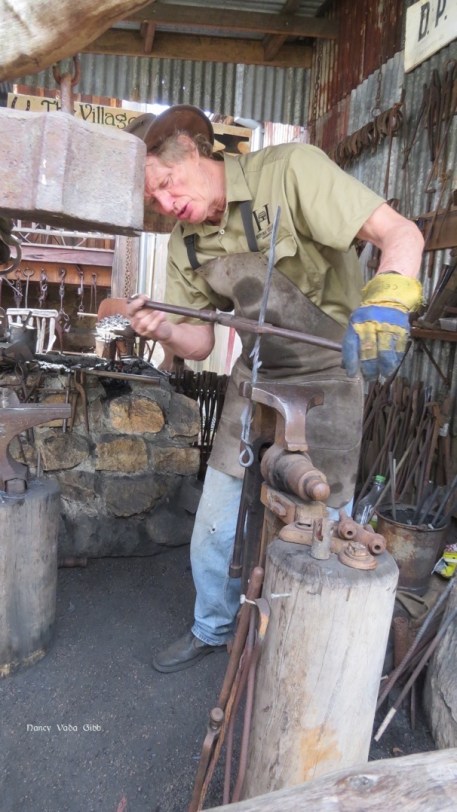
Many are still in working condition; we were lucky to catch the huge old steam engine working but missed the vintage motorcycle (or at least I did).  A modern-day blacksmith worked with made souvenir items while we watched.

IMG_1735

IMG_1723

IMG_1733

The shop had a beautiful collection of golliwogs …

IMG_1707IMG_1756

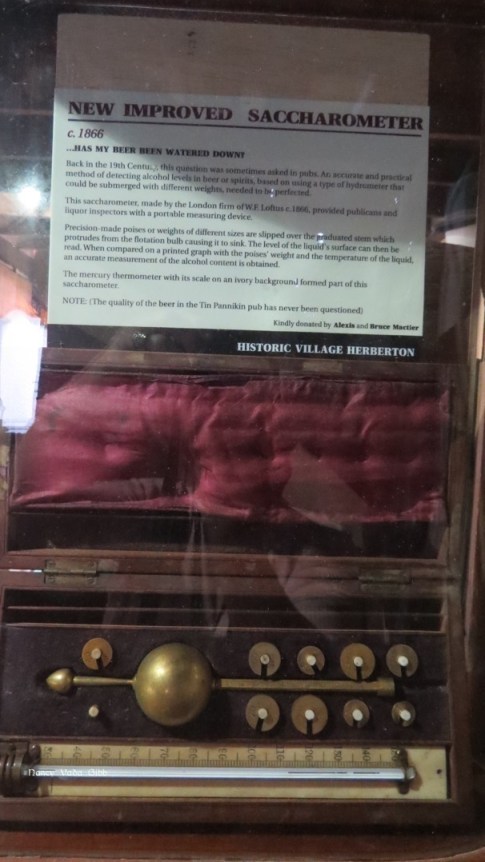
The old pub was well equipped … (it was the only building not an ‘original’)

IMG_1708

IMG_1711

This old wedding photo caught my eye, the couple look so happy and full of anticipation, not like the usual stiff (and probably scared) stony-eyed pair. IMG_1714

Intricate sequin work on an old gown. IMG_1717

IMG_1716A restored hearse complete with plumes. The coffin, although vintage, was “never used”.

IMG_1725

I used to love the coloured  bottles in the local chemist’s shop, in fact all coloured bottles ..IMG_1719

IMG_1720IMG_1737IMG_1738

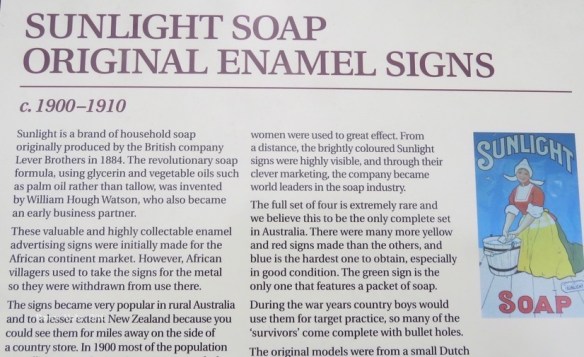
Sunlight soap signs. I will look at them differently from now on!

IMG_1739IMG_1740

The toy shop … with working automaton made in Paris in 1896. The clowns move their heads and the one on top extends his legs and lifts one hand.

IMG_1747

IMG_1749

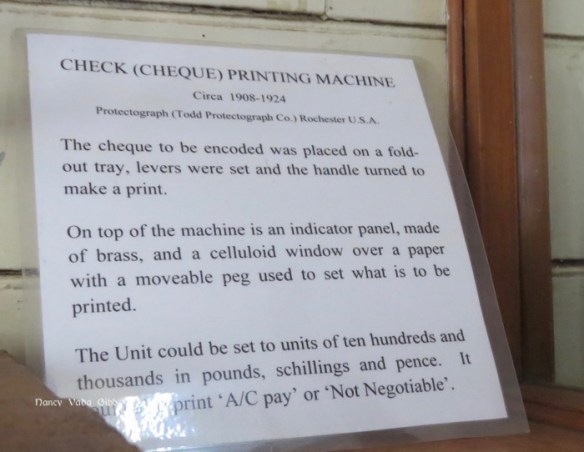
IMG_1743A cheque printing machine in the old bank.

IMG_1753

IMG_1750

IMG_1754On our way ‘home’ we turned off near Tolga to visit the Bat Hospital. When I first arrived in Brisbane in about 1990 I spent time with an old school friend who was an injured wildlife carer – which included bats. I was with her when she took her orphaned flying fox which she had reared since he/she was about ten centimetres long to the bat halfway house, where he had to learn to socialise with other bats and eventually be released. So I was keen to see more bats!

Australia has more than 90 bat species and more than half are found in tropical north Queensland. They are roughly grouped into microbats and megabats (the spellcheck kept on turning that into megabits); the two groups generally have quite different lifestyles, diets and habitats.

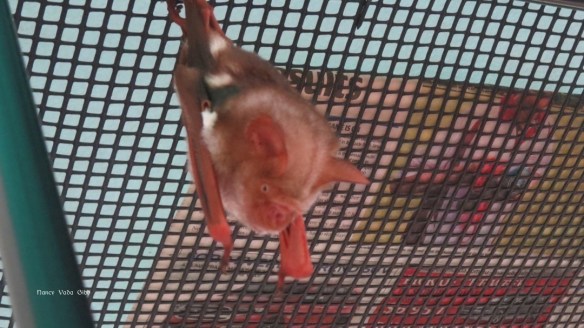
The hospital is almost entirely self-funded (“she spent her inheritance”), depending on donations and volunteers during the busy season. On the Atherton tableland, the bat breeding season coincides with the onset of the tick season, consequently there are many tick-paralysed adult bats with babies. When we visited the season had not yet started and there were almost no babies. However we did see a few which had been brought in for other reasons.

IMG_1763

IMG_1759

The yellow dots are camouflage to help them blend in with leaves on trees. This young one was waiting to be fed mango juice, sucking it from a syringe.

IMG_1760

The hospital building had several dedicated rooms, with varying equipment – hanging wire racks, chains, etc – and even an incubator. All very clean and tidy and ready for the onslaught expected in a few weeks’ time. A charming young woman took time to explain everything carefully. There were also lots of informative signs.

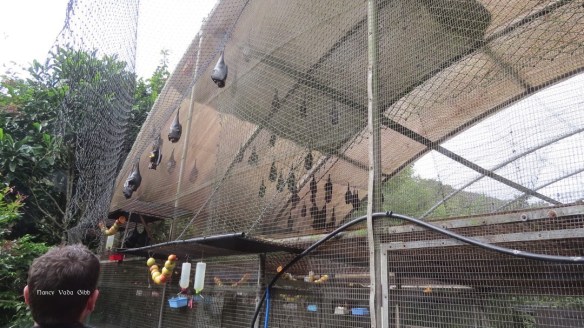
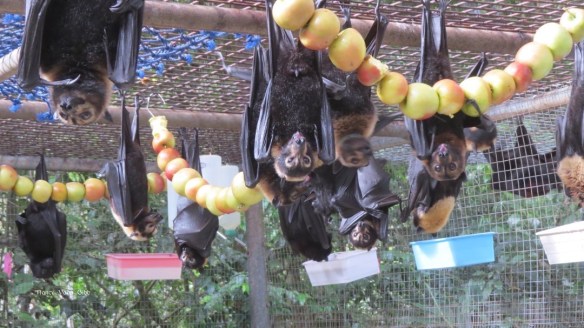
The main attraction was a huge cage full of squeaking flurrying beady-eyed adult flying foxes, all hanging upside down among festoons of apples. This was actually the half-way house; the bats were free to go outside and fly away but preferred to stay where they were. There was provision for ‘outside’ bats too. I don’t know how many exited each night then returned.

IMG_1778

IMG_1777

Although a bat spends most of its life upside down, they right themselves temporarily when they want to have a pee!

IMG_1774

IMG_1780

This is how they get a drink – they dive-bomb the water then swoop up at the last minute, enjoy the ‘shower’ and fly up to lick the moisture off their bodies.

IMG_1765

157. Granite Gorge

We  made a day trip to Cairns, 62 km via a very twisty road down the mountain. We didn’t stop to visit Kuranda, that will be for another day.

IMG_1669

Once in Cairns, noticeably hotter and more humid than Mareeba, full of palm trees and overshadowed by the mountains, the GPSr worked overtime as we sped from one caravan spares place and/or cabinet maker and/or Jaycar electronics shop to another. By good fortune the local Jayco (caravan) dealer had just three of the cupboard drawer hanger/guides – which had been removed from their catalogue a while ago but fortunately still kept! We called in at one of my early schoolteachers’ retirement village but although she was “somewhere around” she wasn’t at home and we had to leave, but now armed with her phone number next time we can give some warning.

IMG_1671

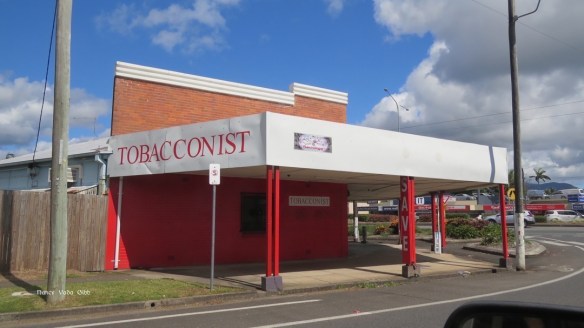
Notable in Cairns, as in Mareeba, was a shop selling just cigarettes.

IMG_1670

The big Mareeba market was scheduled for that Saturday so off we went. It was HUGE. One thing that distinguished it from most other markets seen so far were the large number of plant stalls selling large beautiful bromeliad plants in a huge variety of colours and shapes. Lots of fruit and vegetable stalls featured all the usual stuff plus avocadoes, pineapples and sev real varieties of kale. We disgraced  ourselves with two huge twists of sweet potato (never called kumara here) dredged with salt and cheese; then finished off with ice creams! (Sorry no photos).

The annual Gold Panning competition was under way. We stopped to watch but didn’t see anyone make a big find. Some competitors swirled frantically, probably knocking most of the gold out with the initial sand mix. Dave bought a modern-style ridged plastic gold pan …. we shall see if it works when we get back to NZ.

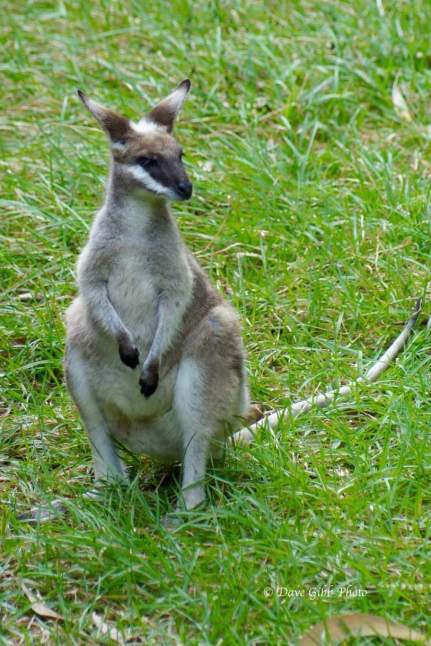
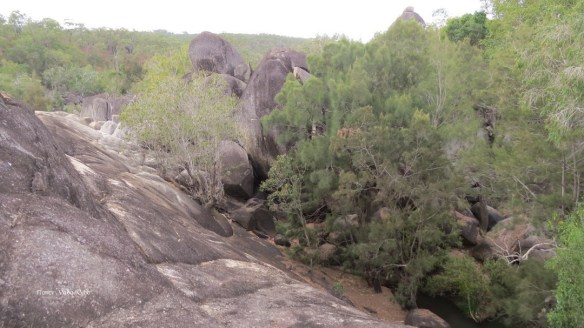
After a morning relaxing, doing some washing and catching up with emails, Dave had cabin fever so we made an afternoon trip to nearby Granite Gorge. A highly regulated area which includes a camp, it still provided an interesting stroll along a well-marked track over huge rocks, with rock wallabies spotted every now and then.

IMG_1702

IMG_1699

IMG_1698IMG_1696

It is apparently a tourist coach stop which provides bags of wallaby food so that everyone is guaranteed to see a couple of wallabies within a very short time!

IMG_1701

IMG_1693IMG_1690IMG_1689IMG_1686Granite Gorge Cooktown01
Granite Gorge Cooktown03

I was talking to this cocky and giving it a scratch, then we went round  to the other side of the cage and a sign said to keep fingers away, they bite (!). I think he enjoyed all the attention. He shouldn’t be in a cage anyway.

Granite Gorge Cooktown04Granite Gorge Cooktown09

156. Mt. Surprise & Mareeba.

After surviving the corrugations back to Georgetown without further mishap, we made good time to Mt. Surprise where we stayed for two nights in a small campground optimistically called “Planet Earth”. It had several large mango trees as well as some flowering trees…..

IMG_1605

IMG_1603

IMG_1606IMG_1607

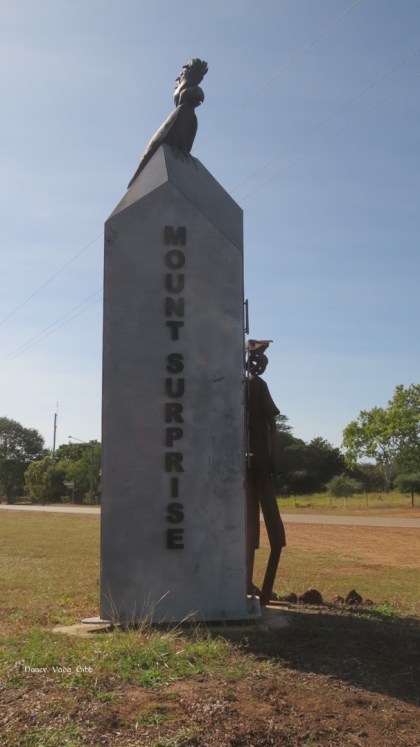
….. and on the second night we enjoyed a plate of barramundi, salad and chips with some of the other residents at the ‘cafe’. Mt. Surprise didn’t have many surprises but it did have an interesting ‘entrance’ and one claim to fame as a radar station during WW2.

IMG_1613

IMG_1609

IMG_1616

IMG_1618

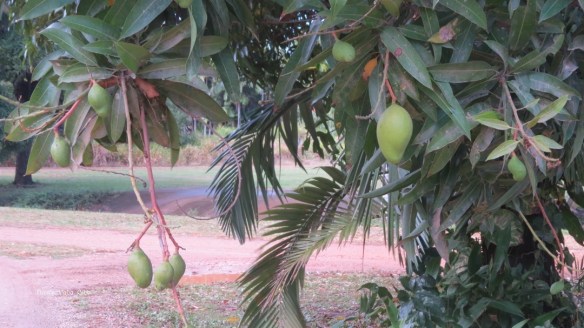
Regarding mangoes – we have been seeing isolated trees and even plantations ever since Croydon. it seems the custom now is to give them crew cuts, doubtless to make harvesting the fruit easier. It is the flowering season and the trees are easy to identify with their wavy reddish flower spikes. Alas we will not be here when the mangoes ripen – bad timing(!).

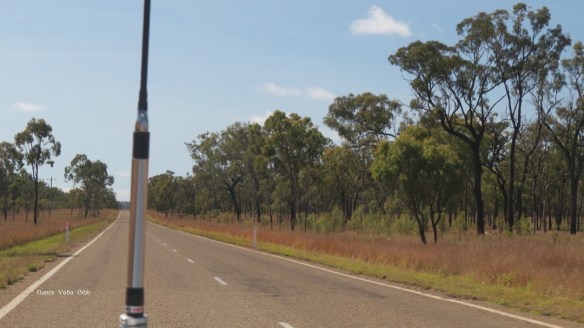
The road east alternated between one-lane uneven seal and good two-lane marked seal. The distant mountains gradually became closer.

IMG_1599

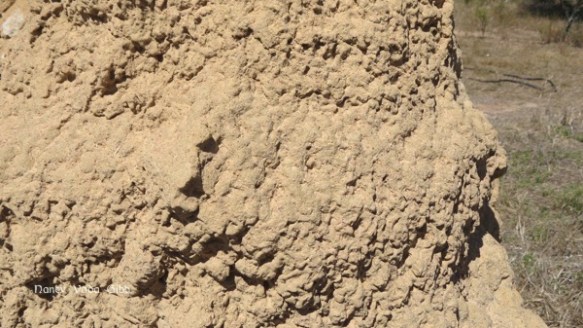
It was amazing how the scenery changed in less than a day, going from distinctly Outback (red/ochre earth, spiky grass, pointy red anthills and droopy gum trees) to tropical Tableland (mountains, mist, thick green grass, large squat grey-brown anthills and different trees).

IMG_1620

IMG_1639

Here’s an even larger anthill …

IMG_1646

We sped through Herbert and Atherton, intending to return for a more leisurely visit another day, and reached Mareeba in good time. There are a  number of large commercial camps at Mareeba but we had no trouble getting place at the Rodeo show ground. The organisation there is awesome, all caravans in neat rows, plentiful rubbish bins all precisely aligned, good clean facilities, polite notices reminding us that water is precious, etc. A sign over the washing machines says to check the colour of the water first! There were some gorgeous sunsets.

IMG_1675

IMG_1674On the way to the camp we passed the cemetery. A huge number of mausoleums no doubt reflect on the large Italian population which arrived after WW2. I have never seen that number of mausoleums in Australia before.

IMG_1788

First stop after setting up, an automotive glass supplier. After expressing surprise that the jeep’s window was still holding together, thankfully they said they could fix or rather replace it but would have to order the glass from Brisbane, so we stayed in Mareeba five days. There were a number of other things Dave needed for the caravan but few were available in Mareeba so we did a day trip to Cairns (next blog).

IMG_1641

IMG_1680

We also took one of the kitchen drawers to a cabinetmaker. The plastic ‘drawer hanger/guide’ at the back had broken off during the ride to and from Forsayth. We were told that we’d be very lucky to find any more of those plastic stops! West was built in 2001 and styles have moved on since then.

Mareeba has a large visitors’ centre associated with a historical village, well worth a visit.

IMG_1663

IMG_1664

IMG_1645

Realistic school exhibit!

IMG_1644

Old butter churns.

IMG_1651

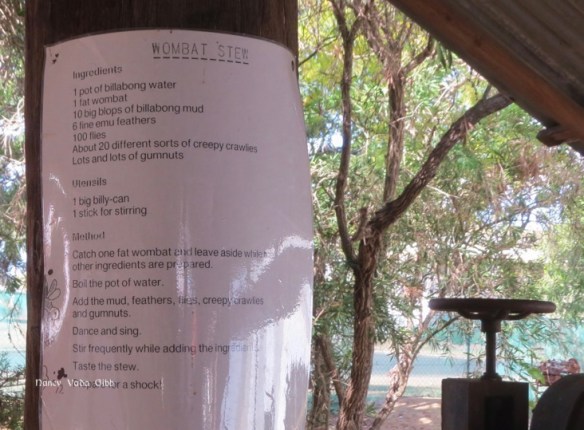
Wombat stew, anyone?

IMG_1649

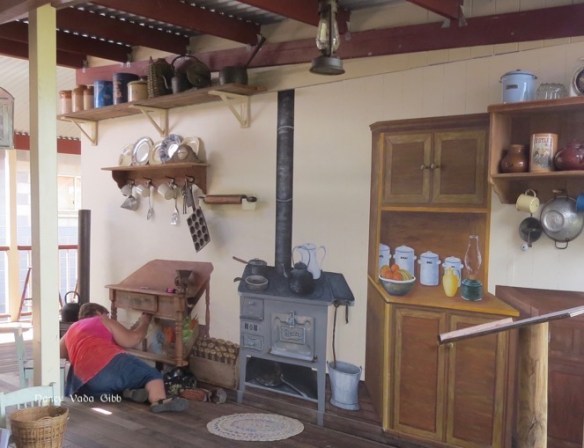
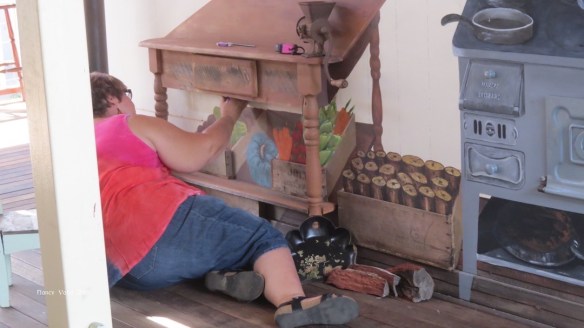
This lady was preparing a new exhibit, part of a restored colonial house. Only the shelves above her are real, including a very short one directly above her hand, plus the one at the top right.

IMG_1647

IMG_1648

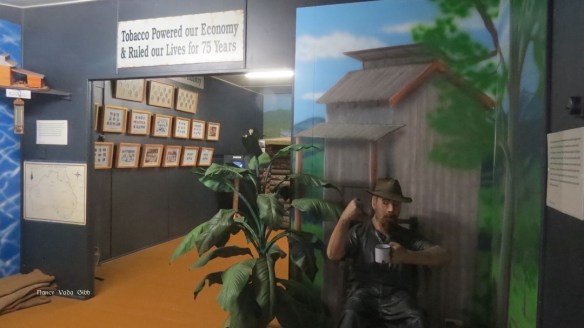
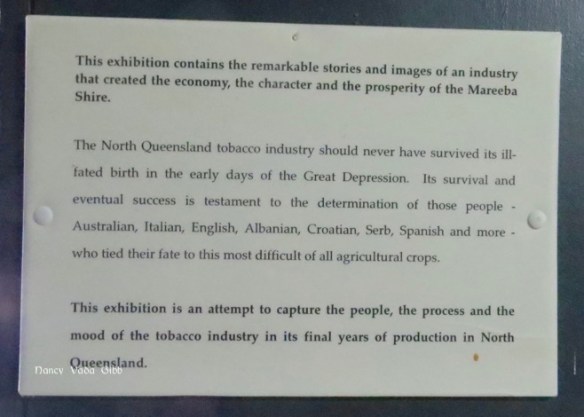
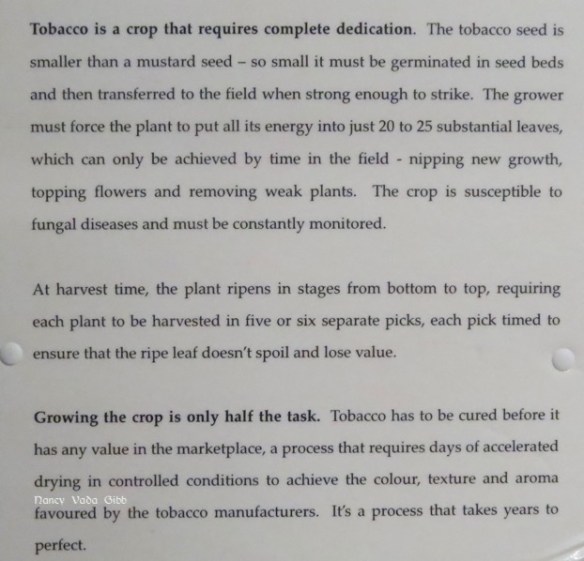
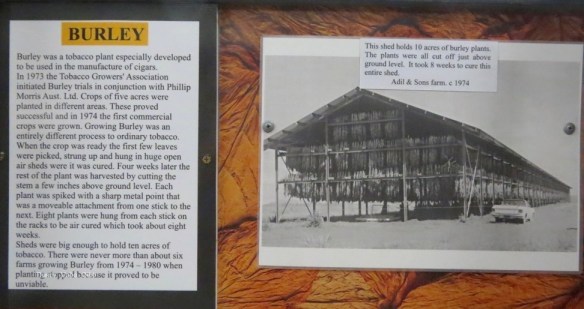
The piece de resistance for me was the Tobacco Exhibition. The North Queensland tobacco industry was centred around Mareeba. I was amazed to learn how labour intensive growing tobacco is/was, and how many different types of product there were. My photos tell the story.  Tobacco seed is the smallest seed in the world!

IMG_1652

IMG_1653

IMG_1656

IMG_1657IMG_1658

IMG_1654

IMG_1659

IMG_1660IMG_1661

IMG_1655

More about Mareeba and surroundings in the next blog.

155. Georgetown & the Forsayth Show

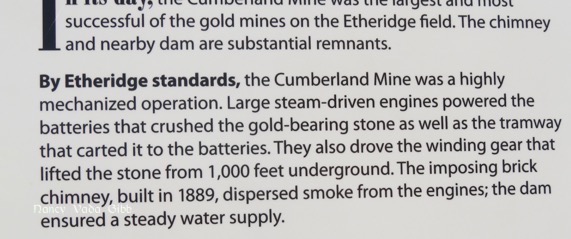
Leaving the Gilbert River camp rested and refreshed we headed for Georgetown, with a stop at a curious high brick chimney which we could see from the road. This turned out to be the Cumberland Chimney, which with a large dam built to provide water to the mill and batteries, are the remains of the Cumberland mines on the Etheridge fields.

IMG_1359

The chimney was built in 1889 to disperse smoke from the large steam driven engines powering the batteries that crushed the gold bearing stone. It was a highly mechanised operation.

IMG_1356

The gold soon ran out and the mine was sold in 1886; the new buyers abandoned it in 1897.

At its peak there were almost 4500 mine workers ad families with another hundred or so people living there. Shops were numerous, there was a school and a police station and bank. By 1898 the township was reduced to a single hotel.

IMG_1361

IMG_1363

Anthills are now the only things that overlook the dam.IMG_1368IMG_1370

We did not stop in Georgetown except to get diesel and some supplies. I did notice that the school had a huge shade awning over the tennis court – we’ve seen this in some other places too. Plus the usual number of old homes …

IMG_1377

IMG_1373

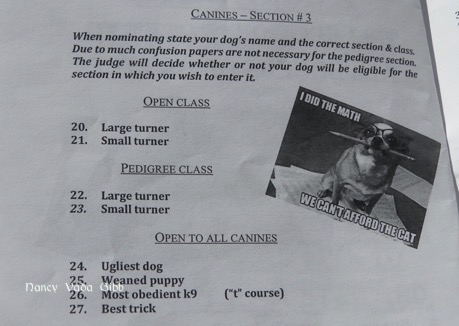
We wanted to visit the famed Cobbold Gorge, about 90 km south of Georgetown, but did not fancy dragging aged Westie that far on a dirt road, so decided to go only as far as Forsayth, leave Westie there and do a day trip to Cobbold. Part of the road to Forsayth was surfaced, but all too soon we hit the bull dust and corrugations. We’d heard there was to be a district Show (the Forsayth Roundup) that weekend and there was free camping at the show ground. I had picked up a show program in Croydon and it looked interesting. Here, for example, are the dog classes – not exactly Crufts.

IMG_1382

IMG_1384

IMG_1381

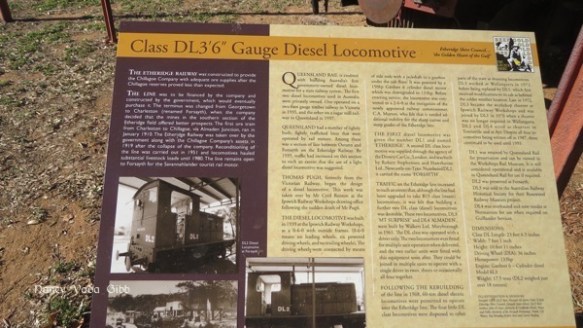
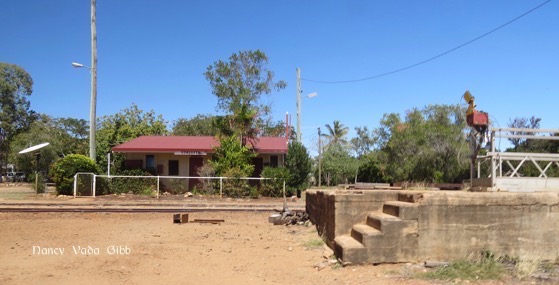
Forsayth is a tiny little place but as it is the terminus for the Savannahlander train it has spruced itself up and the local hotel has a nice modern facade. Old railway and mining mementoes were scattered around.


IMG_1391

IMG_1393

IMG_1397

IMG_1398

IMG_1440

Notice outside the police station.  10,000 sq km!

IMG_1402

Other important stuff:

IMG_1421

IMG_1423

The camp next door to the pub was chock full so we were glad we knew about the show ground. Finding the entrance was another thing, we missed the main entrance from the highway (I don’t think it was signposted at that stage) and bumped and lurched over the railway line and picked up a nail in one of the Jeep’s tyres!

IMG_1380

IMG_1418So there we were with a puncture (soon fixed) in the main show area, thankfully still almost empty, and in sight of the camping ground proper. It was on a slight rise overlooking the whole showground, with free power and water available. The nearby toilet block had hot showers, the water heated in a large drum over an open fire.

IMG_1442

As it turned out most of the show visitors elected to camp overnight in a grassy area elsewhere with no facilities, but we did not mind the rocky ground and anthills which surrounded us as we were also visited by hundreds of galahs and several inquisitive magpies, and had glorious views of the sunsets. We stayed there four nights. Very luckily the tyre was repaired in Forsayth.

IMG_1429

IMG_1386IMG_1390

IMG_1407

IMG_1409

The galahs were not so popular early one morning (shot thru the flyscreen)….

IMG_1447

The Show started very slowly. By the Friday evening (we arrived Thursday) still very little had been done, but early Saturday morning the place really began to fill up. By the time we strolled down, judging of the horses, livestock, dogs, crafts, culinary arts and children was well under way.

IMG_1403

IMG_1441IMG_1414

IMG_1444

IMG_1489

The lolly drop – one of two. The local dentist will be having field day later.

IMG_1511

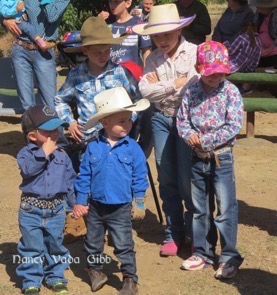
Here are some of the entrants for the children’s best-dressed classes …

IMG_1452

IMG_1503

…dogs … athletic events ….

IMG_1477

IMG_1479

IMG_1508

… eggs, jams, preserves, ‘decorated vegetables’ …..

IMG_1527

IMG_1526IMG_1528

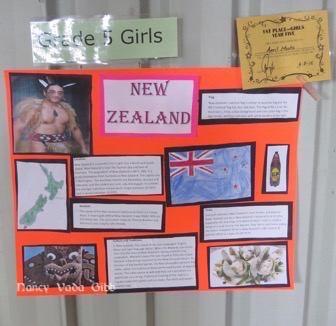
…. a school project entry – well done April even if you can’t spell haka…..

IMG_1529

… whip cracking … (the little guy was one of the best) …

IMG_1535

… dog high jump …. (photo taken at beginning; the winner jumped over 2 metres, the height was increased by building up boards between slots at each end of the ute).

IMG_1560

…  the greasy pig chase (I think the winner got to keep the pig) …

IMG_1537

IMG_1540

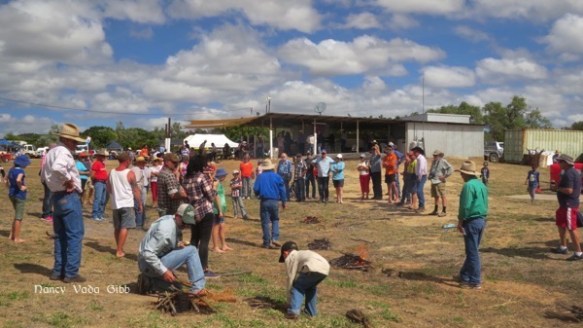
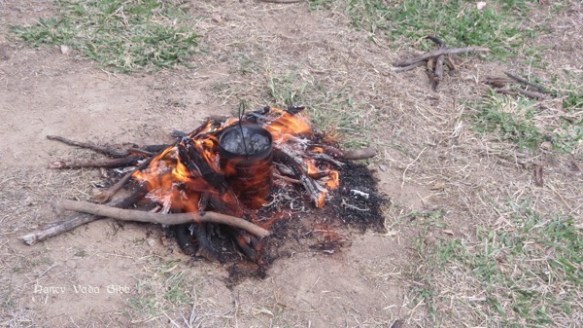
…. billy boiling competition, balloon throwing, tug of war, kick a goal ….

IMG_1546

IMG_1543

IMG_1549

IMG_1554

There was only what you could call one sideshow with two of those old-fashioned laughing clowns.

IMG_1493
But there were a fair number of other stalls, including a gold prospector’s who showed us a huge and surprisingly heavy lump of gold he had discovered (so he said). Note his hat.

IMG_1460

IMG_1461

And other types, not the usual city ones …

IMG_1457

IMG_1498

IMG_1462

The show did not finish till well after 9 pm when the last of the raffles were drawn  and donated goods were auctioned off. Two lucky locals picked up laptop computers for about $250 each. We did not win the wheelbarrow of alcohol which was donated by the local hotel.

By late next morning the whole show ground was deserted. Amazing! We stayed one extra day, did a little more exploring of the town including the scholchildren-beautified entrance…..

IMG_1574

IMG_1573

IMG_1578

….. watched the huge flock of galahs reclaim their area, enjoyed another beautiful sunset and left next morning just after the power and water had been turned off.

IMG_1590

IMG_1580IMG_1583

We had not escaped the dirt road unscathed. A stone thrown up by a speeding 4WD which didn’t slow down on the dirt road must have hit the driver’s side window, and before too long a three-armed crack started to appear. There was also a tiny chip on the windscreen. We decided to forego Cobbold Gorge and other attractions on the way and head  straight for Mareeba, the first large town near the coast. We may be able to see the Gorge at a later date, the Savannahlander train from Cairns stops at Forsayth and then there is a bus to Cobbold. The train also stops earlier at Mt. Surprise with a bus to the Undarra Lava Tubes which we also want to see. In one of those complicated “related to the sixth degree” (or something!) situations, Undarra is owned by a family whose daughter together with her husband Bob McFarland until recently owned the Darchy family station “Oxley” near Hay. My great great aunt married Bob’s great great uncle.

Posted from Cooktown. More blogs coming soon when we can find some WiFi spots!

154. Croydon & the Gilbert River

We didn’t want to but it had to be done … turn our faces and Grandy’s bullbar away from the north west and start to head east. First stop after Normanton was Blackbull, just a siding really, originally named Patterson’s Siding in 1890 when the railway was opened, but renamed because “a black bull was found in a mob of cattle when William and Joseph Taafe were out mustering cattle.” In 1891 the station layout consisted of a turning triangle, water tank and the station building. All are still there.

IMG_1245

IMG_1249IMG_1251

IMG_1247

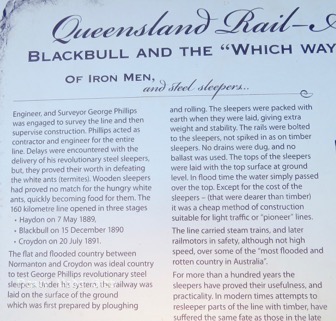
An interesting story about railway sleepers:

IMG_1250

A couple of nearby anthills …  and a photo of a rather large old one …

IMG_1252IMG_1253

IMG_1282

Nowadays Blackbull siding is a rest stop for the Gulflander train on its longer trips, not the one we experienced alas.

IMG_1254

Ever since we started our Australian travels every now and then we come upon a memorial to an early policeman or policemen. I think these are wonderful, so often such people who died in the line of duty are forgotten. Here is another. I doubt the grave will still be there after 135 years of floods.

IMG_1256

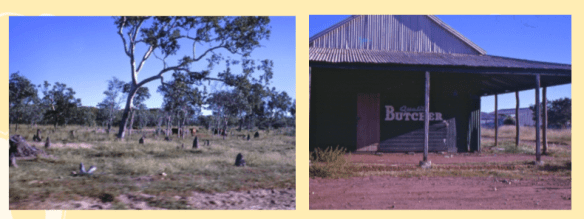
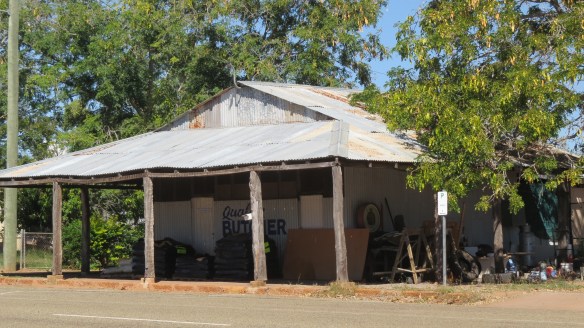
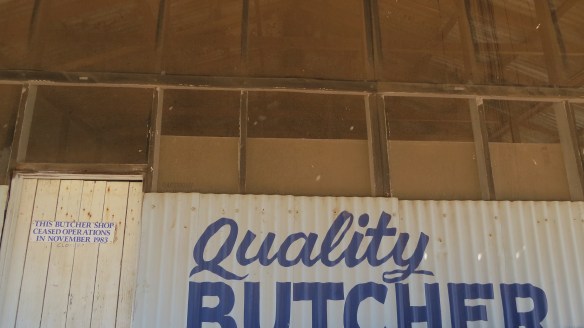
On to Croydon, where I was looking forward to seeing the old butcher’s shop I photographed in 1971. Alas it is no more, gutted by fire some time ago. It has been “restored” but is no longer in use.

croydon butcher

IMG_1271

IMG_1272

IMG_1275

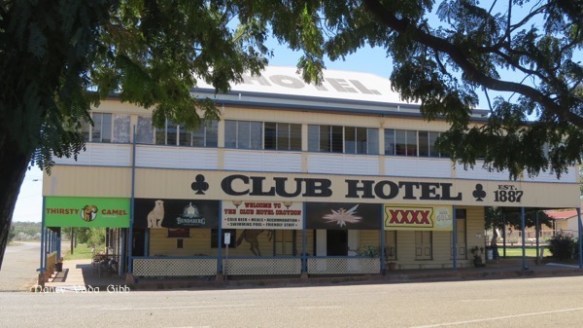
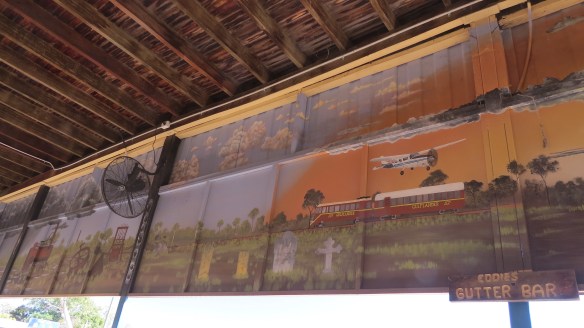
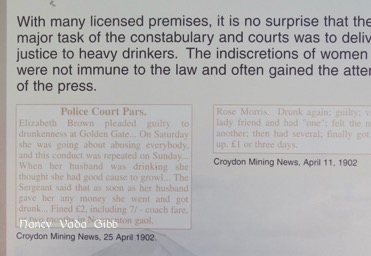
The town won a “tidy town” award some years ago but things seem to have degenerated a little since. It did not seem particularly interesting apart from the old pub (the only one remaining, once there were about 35)  with the extraordinary paintings on the inner side of the deep wooden awnings ….

IMG_1276

IMG_1274

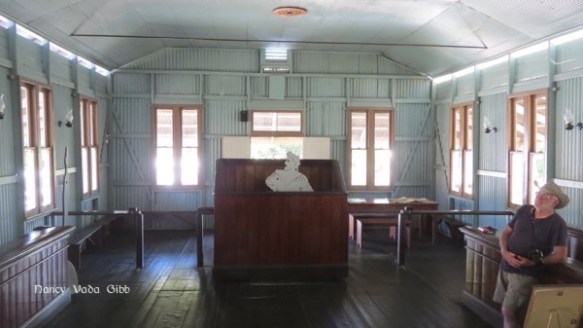
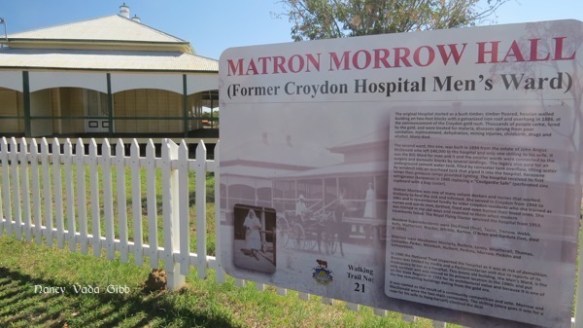
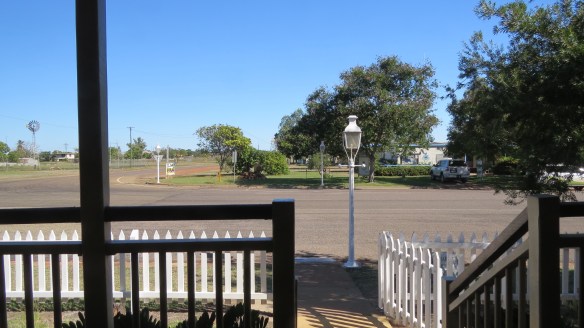
IMG_1273…. but then we hit a row of beautifully restored old houses. Full of local historical items too. The piece de resistance was undoubtedly the old courthouse, with much of the original furniture polished and touchable, where cutouts of the main protagonists in a Drunk and Disorderly hearing can be seen while a marvellous soundtrack (says Dave) let them ‘speak’ their parts.

IMG_1285

IMG_1287IMG_1290IMG_1291

IMG_1294

A few other things in Croydon…

IMG_1270IMG_1263

IMG_1279

One shilling left to his wife, so she could hang herself ?!

IMG_1278

The Town Hall – imagine all the dances.

IMG_1283

Things seen in the heritage houses: beautiful appliquéd cats

IMG_1295

The steam steriliser (autoclave) used at the hospital. I used one of these to sterilise laboratory glassware in my first job out of school with CSIRO, at that time located at Sydney University. It was in a room next to a lecture hall and one time I opened it a little too soon, there was a huge whooooosh of steam and all the students swivelled round  …

IMG_1297IMG_1299

The same man was the undertaker and the night soil man …

IMG_1300IMG_1301

After a very indifferent fish and chips lunch we left heading for Georgetown, intending to spend the night at a free camp on the Gilbert River.

IMG_1308

Hardly anyone stopped at the stop sign … but with such a long clear view, why bother.

IMG_1309IMG_1311IMG_1312IMG_1313

IMG_1314

IMG_1315

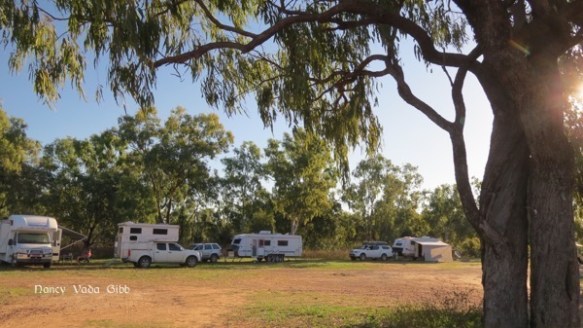
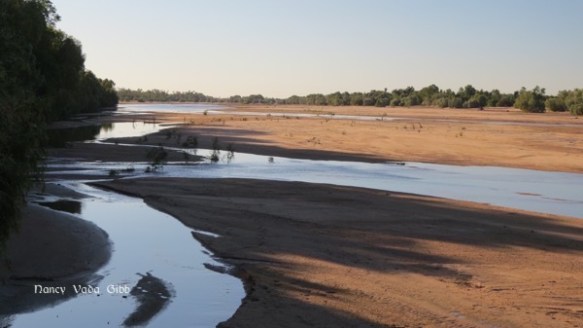
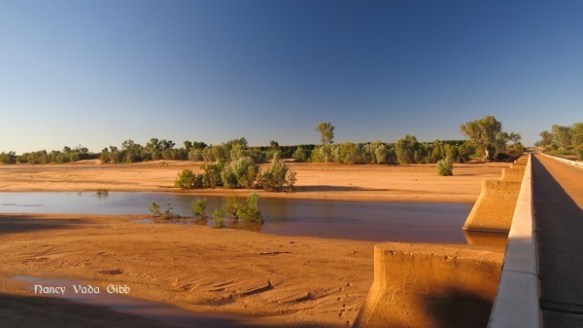
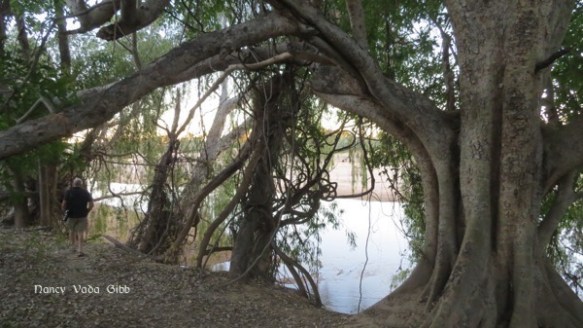
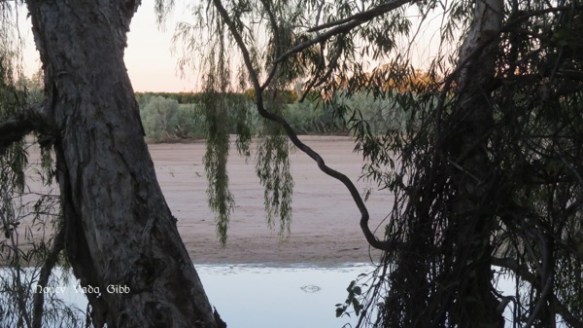
This was a lovely camp, although it was not so easy to get to the river for photos. We did however find one track close by, which was obviously used by others, particularly yabbie hunters who made full use of the huge fig trees’ tangled roots.  It was late afternoon, a perfect time for photos.

IMG_1325

IMG_1331

IMG_1328IMG_1334

We decided to give ourselves a rest day there, becoming in effect camp g guardians as everyone else had left by mid-morning. By late afternoon however the camp was filling up again.

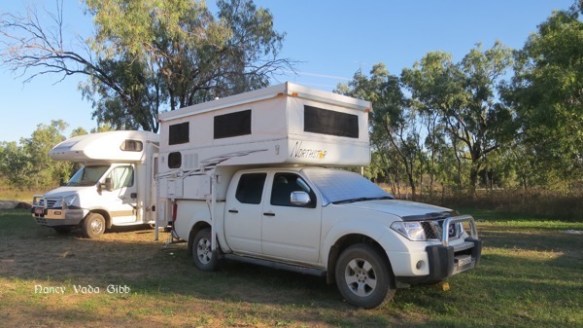
This Nissan Navara (the same as our tow vehicle in NZ) wasn’t towing a caravan, it had a slide-on camper built over its tray:

IMG_1305

We made friends with Brian who has already risen his bike around Australia once and is doing it again! Like Tracey ‘OneWomanWandering’ who we met some blogs back, he is accompanied by a little once-white dog, in this case named Bingo, who rides in style on the back seat, strapped in with a harness and with his very own sunglasses.

IMG_1338IMG_1339IMG_1341

Brian would be about 75 and a sign on his bike proclaimed that he was the longest-surviving kidney transplant recipient in Australia (?) but unlike Tracey he was not trying to collect funds for anything. His bike trailer had everything he needed including a camp stretcher, cooking apparatus etc. He does not keep a blog so we have no way of knowing how he is now faring.

IMG_1320IMG_1321IMG_1322

A little gecko tried to take up residence under my camp chair. I’ve been surprised we haven’t seen more, or any goannas.

IMG_1316

For some time we ‘ve been disgruntled by the quality of the bread available – mostly soft plain white or what they call multigrain which is the same white with a few grains added, or wholemeal which I suspect is at least half white. All very thickly sliced too. I do miss the lovely ultrathin slices of soy and linseed or multigrain Vogels available in NZ. We haven’t seen ANY thin-sliced bread in Aust. and only a few ‘sandwich’ size.

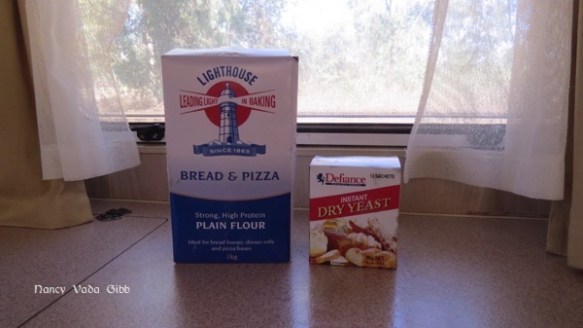
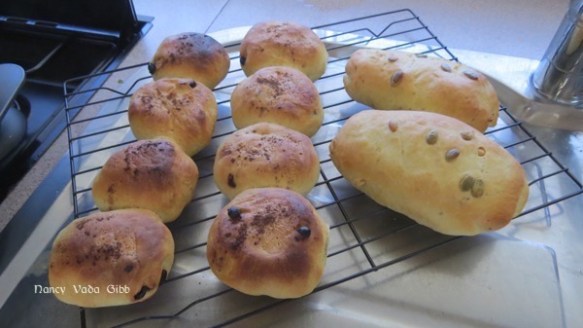
I decided to try and make some bead rolls using bread-and-pizza flour I found in Normanton of all places. (Nowhere is there the bread mixes we are familiar with in NZ, but at least yeast is available). My first attempt looked better than it tasted – not enough salt – but since then my technique has been improving and the last batch of focaccia was pleasing although still not ideal.

IMG_1318IMG_1319

I’m posting this from a car-wash cafe in Cairns. Yes, we’ve moved on a bit! More blogs soon.


153. Karumba

I thought Karumba deserved a blog to itself. We did not tow Westy the caravan there, as we had heard all the camps were full, and we were happy at the Normanton camp with its wide spaces and good facilities. As it turned out we could probably have squeezed into one of the Karumba camps, but no matter. It’s only 70 km one way …. and we ARE in the outback. What’s more we did the round trip twice (!)

Along the way we hit another river which featured in the 1971 MGTF trip. Walker Creek on the Karumba Road …

Walker Ck, Karumba Rd

…. and again now with the usual huge high modern bridge.

IMG_0983

IMG_0967

This is the river crossing where, for once, Geoff braved the crocs instead of sending me across first to feel for cracks and potholes, just like this one….

IMG_0974

IMG_0969

On one side there was a clearing beside a sort of waterhole which people obviously used for swimming, with a swinging rope – and sign warning against swimming because of the crocodiles.

IMG_0978IMG_0975

IMG_0972

On to Karumba across a huge flood plain. There were lots of brolgas, almost always in pairs, no doubt attracted by the semi-permanent waterway which ran beside the road.

IMG_1018

(Was this the one I photographed in 1971? – and yes thats the main road between Normanton and Karumba!)

N'ton-Kar rd

There was also a large number of kites no doubt attracted by the plentiful roadkill, almost all little wallabies. Sad.

IMG_0987

The Karumba Information Centre is modern and well-stocked with brochures and helpful volunteers, who suggested where to go for a prawn lunch, item number one on our list. This was at Karumba Point, where there is a sandy beach but as usual there were signs warning about swimming or even paddling.

IMG_0996

IMG_0991

IMG_0999

We decided to try a sample platter, prawns five ways for $35, and one platter was enough for the two of us. Well, almost.

IMG_0989

We sat outside under a huge tree which we later found out was a Beach Almond  </www.naturesface.com.au/native-almond-tree/> and watched a prawn fishing boat – or was he after barramundi? heading out to sea with several smaller boats in attendance.

IMG_0993
IMG_1001IMG_1004

There used to be a jetty at Karumba Point.

IMG_1000 (1) This was most likely the jetty Geoff and I saw in 1971. Note also the Burns Philp store mentioned in the previous blog, now beautified.

Kar. jetty & N't BP store.png

Karumba prawns are legendary. Yet the industry only started in 1964 when a local fisherman Noel Sykes, after some 981 tries, brought up the first full net of banana prawns, winning a magnum of champagne which had been offered as an incentive for the first skipper who landed a substantial catch. The Northern Prawn Fishery is Australia’s most valuable Commonwealth fishery and is considered one of the best managed fisheries in the world.

The popularity of barramundi was also everywhere. A Barramundi Discovery Centre was established in 1993 by some local commercial fishermen where they have bred and released  hundreds of thousands of barramundi fingerlings “for the long term benefit of the environment, commercial and recreational fishers”. It was not open when we were there.

A look around the wharf area turned out to be far more interesting than expected. To start with, we wondered what the tides were like as the wharves were on very long stilts. We discovered that there is only one tide a day. IMG_1005IMG_1006

i had not known that Karumba was once an important flying boat base.

IMG_1141 (1)

The commercial flying boat services ceased during WWII when Burma was captured by the Japanese. the Royal Australian Air Force took over the facilities as a Catalina base. A concrete ramp and large hangar are built in 1942 to service the flying boats.

IMG_1135

This is the straight stretch of river used for take-off.

IMG_1130


One other series of signs captured our attention. There was a huge flood in 1974, the largest on record. The entire township had to be evacuated and hundreds of square miles of Gulf country were inundated.

IMG_1127IMG_1128

After a look around town we bought 1 kg of prawns for dinner, booked for a sunset cruise the next day and returned to Normanton. That evening one of the camp people came round to invite us to the free prawn and drink and movie night the next evening, so we phoned Karumba and postponed our sunset cruise till the following  evening – “no trouble mate”.

We were absolutely sated by the time we’d got through 2/3 of the kilo of huge prawns, two sauces,  a french bread stick and of course plenty of Sav Blanc. Sitting outside in the warm dusk, the sky glowing red behind us, what could be better? The rest of the prawns we had for breakfast as garlic prawns on toast. (No photos, fingers too sticky!!)

On our second visit to Karumba we discovered a few more things, like Bunratty Castle.  He moved the bricks four at a time  …??IMG_1010

IMG_1009Version 2

The finale for our Karumba visit was the evening cruise. We had a lovely time with some congenial people and a very knowledgeable guide and would strongly recommend Ferryman Cruises to anyone going up that way. We boarded near the RAAF base and cruised slowly upriver, but not before our guide had fed some of the kites which were wheeling around …
IMG_1146

IMG_1147

..  we soon saw a jabiru, a gorgeous big bird (‘the Australian stork’) and then visited a short-tailed crocodile enjoying the last rays of the sun beside its nest.

Normanton sunset cruise07Normanton sunset cruise08Normanton sunset cruise09Normanton sunset cruise10

More of Dave’s birds:

Normanton sunset cruise12Normanton sunset cruise13

A sad old wreck:

IMG_1154

Then it was back down the river and out towards the entrance. The boat started to rock just a little – hooray! Drinks and nibbles were handed out followed by small plates of fresh prawns. Everyone was taking photos of the sunset, and themselves. There was not a cloud in the sky but the horizon glowed fiery red for ages.

IMG_1169

IMG_1157IMG_1167IMG_1172IMG_1176IMG_1181IMG_1190IMG_1191

Then the drive back to Normanton in the dark, a bit slower than usual, all senses alert for pesky wallabies who had not learnt right-of-way rules. We saw quite a few right beside the road but they just sat and stared. Our lovely bull-bar is still pristine but we were glad we had it.

This is the turning point for us in Queensland, from now on we will be heading east rather than north and west.

152. Normanton.

On the way to Normanton I was keeping a sharp eye out for the Flinders River, which Geoff and I had crossed in the MGTF in 1971 with some difficulty. (See Blog 141 – An Earlier Tour of the Outback).


Flinders R., J.Ck.jpg

What I wasn’t prepared for was the enormous new bridge – and the size of the little floodway which we had negotiated with some trepidation all those years ago. Foolhardy perhaps but we were young and invincible (?).

My camera batteries were both flat by then, they are one of the few things we can’t recharge on the road, so Dave took all these photos starting with where we left Grandy and Westie parked beside the highway and walked back towards the new bridge. Note the new flood signs on the left (relative to flood height above the new bridge) and the old sign in the third photo.


DSC02878DSC02881DSC02884DSC02886DSC02888DSC02892DSC02899DSC02904

The old floodway was nearby, with a free camping ground at the top of the hill. We were tempted, but pushed on to get nearer to Normanton and a camp with power and water so we could recharge everything and have some showers. DSC02905DSC02907DSC02909DSC02910DSC02911


We’d been concerned about all the campsites at Normanton and Karumba being reportedly chock-full but discovered the newer one on the southern outskirts of Normanton had plenty of room. Initially we booked in for two nights but found ourselves staying for five. That included two day trips to Karumba (next blog) and an interesting train ride.

IMG_1232IMG_1235IMG_1236

I find myself liking some country towns far more than others, I’m not sure why, sometimes it’s the people we meet there, sometimes it’s the general appearance of the town, sometimes it’s one special feature or just the general atmosphere. Normanton seemed to have it all. Yet my memory of it from 1971 was of a singularly uninteresting dusty town.

IMG_1054

IMG_1049


IMG_1053

IMG_1025IMG_1023

It was obvious that the local residents (mostly) took great pride in their town. Apart from the usual notice boards explaining historical features – which seem to be in just about every country town now, at least those on the main tourist routes – old buildings have been spruced up and native plantings are everywhere, but particularly around the old Burns Philp store …..

IMG_1024

IMG_1072

IMG_1081

IMG_1084

…… and the railway station.

IMG_1029

IMG_1028IMG_1031

IMG_1037

IMG_1044

IMG_1034IMG_1035

IMG_1038

IMG_1039

As in NZ, many towns have a large ‘something’ – mango, salmon, pineapple, L&P bottle – not to be outdone Normanton has a huge crocodile. It is a full sized model of a croc shot some years ago by local  woman Krystina Pawlowski. We were to learn more about her later.

IMG_1060IMG_1064IMG_1065

The old jail and trackers’ quarters.

IMG_1056

IMG_1057

Here’s a road train parked in the main road through town, between one of the historic pubs and the bank. The main road is very wide indeed – as in other country towns presumably so bullock trains could turn around.

Normanton01


One morning we managed to get up in time to catch the 8.30 am Gulflander ….. Here’s Dave’s story.

We have been hearing about the Gulflander for quite a while with several people recommending the trip just for fun. The original railway was supposed to be built between Normanton and Cloncurry but when gold was discovered at Croydon shortly after construction started, it was decided to divert the railway there. Built on a system using steel sleepers instead of the usual wood to frustrate the termites and white ants, the low profile of the lines also allowed flood waters to wash over them without doing damage.

We arrived at Normanton a day too late to do the full trip from Normanton to Croydon and return but were lucky enough to find that there was a short trip scheduled to Critters Camp and return on the Monday after. We were at the station in plenty of time for the 0830 start and I was amazed at the number of people waiting to board the train, it seemed to be a pretty popular thing. The train itself consists of the motor unit and 2 carriages, the motor unit is built on in AEC bus chassis and has about 20 seats and the carriages look to be standard Railway type carriages.

Gulflander06Gulflander02Gulflander08

These were all built at the Queensland railway workshops in Ipswich and refurbished in the 1960s and are still in remarkably good condition today. The line itself uses a very light rails more like a tram-way and the ride was very interesting, I’m not sure if my father would be horrified or amused but I’m sure he would have been able to give them some tips on how to smooth the ride out.

IMG_1226

IMG_1213

IMG_1220

Gulflander03

Gulflander09

We had a great morning out anyway on a very interesting trip and a good commentator. The marker showing the flood levels for various years was astonishing…..

Gulflander01Gulflander04

Nancy: Much of that rail trip was over a vast floodplain, the soil was sandy and the anthills were smallish but very numerous. The Norman river looked quite different from the train.

IMG_1206

And the rail bridge also looked different from the road next day.

IMG_1243

Arriving back at Normanton:

IMG_1227

IMG_1033

That afternoon, leaving Westie behind, we drove 33 km down a dirt track to visit Burke and Wills’ Camp 119, their second-last camp. Throughout our travels around western NSW and Queensland we’ve been coming on more and more mentions of Burke & Wills, maps of their journey, artefacts (like a waterbag at Cloncurry) and monuments (like the highway rest on the way to Mt. Isa). But this particular Camp 119 is of particular importance. Plus I’m a bit of a tree-hugger 😉

IMG_1094IMG_1103IMG_1106IMG_1107

IMG_1121

IMG_1108IMG_1112IMG_1114IMG_1116IMG_1118IMG_1124

We delayed our departure from Normanton for one more day so we could attend the prawns and film evening at the camp. A free plate of Gulf prawns, a free drink and a chance to see an old film about the local woman crocodile hunter Krystina Pawlowski – who could resist. The film was an old black and white one produced by her husband, and there were some quite hilarious staged ‘scenes’ – e.g. in demonstrating her care of other reptiles we saw her driving along dirt road, a snake appears, she stops, and lo and behold emerges from the big dirty truck in a pretty flowered dress (with a rope petticoat?), tenderly lifts up the huge python and puts it by the roadside. In another scene on her small boat, after we’d just seen her wading around in thigh-deep mud and wrestling with a dead croc, she emerges from the cabin in a freshly ironed blouse holding a cigarette and a cup and saucer (yes, really)….. But other parts of the film were more serious and very interesting, showing her setting baited lines and catching a huge stingray instead and retrieving the hook and bait; hauling a giant dead croc out of the water and then skinning it, salting the skin and rolling it up very neatly and putting it with other rolls…. It was a lovely evening and of course everyone started chatting, ordering more drinks, etc etc. We were glad we’d stayed.

Postscript: Facebook tells me:

Onewomanwandering  is now at Barkley Homestead, Tennant Creek, NT ·  (6 August 2016)… “Shower, cold drink, laundry and bath for stinky dog coming up!!!”

151. The Gregory River and Lawn Hill.

Leaving Cloncurry (again!) we knew we couldn’t make it to Gregory Downs via the Burke & Wills Roadhouse before nightfall so spent the night at a free camp by the roadside, in company with about 5 other caravans. We nearly missed it, we couldn’t find the free camp we were looking for but eventually came upon another just as dusk was falling. Another van arrived just after us – they couldn’t find the earlier camp either. Dave has already told (previous blog) of changing a flat tyre here.

IMG_0877

Next morning after avoiding some jaywalkers on the highway we arrived at Gregory Downs at the end of the bitumen; from then on it was unsealed to both the Boodjamulla National Park (Lawn Hill) which includes Adels Grove and to Burketown. One dusty motel, one dusty little shop with a fuel pump, a few houses along a dusty side street, and some quite good public toilets …. was that really all?

IMG_0879

IMG_0883

But just a few hundred metres away was another world, the banks of the Gregory River. As we approached the bridge all we could see was a huge dusty space marked ‘preferred camping ground’ and no caravans at all. Yet we knew this was a favoured stopping spot. All became clear as we went over the bridge – it looked like 50 or more caravans were parked on one side of the river bank below. How to get down? A likely looking track was labelled Stop – No Caravan Access but a passerby assured us it was the way down to the river, everyone went that way. So we went.

IMG_0921

This is the way caravans used to get to the riverside. No wonder a newer ‘driveway’ had become necessary. The day after we arrived a bulldozer blocked off this old bridge with some large rocks.

IMG_0889

IMG_0899

We were soon set up on slightly higher ground than the immediate bank, all places there being taken, under the shade of a large tree. There we stayed for four nights, and even then were reluctant to leave.

IMG_0888

We went for several walks including one over the bridge. The very next day a sign appeared – No Pedestrians Permitted on the bridge(!) First the bulldozer then the sign – surely we were not responsible?!

IMG_0910

IMG_0915

IMG_0916

The river at this point was very cool and clear, not very wide and infinitely inviting. We joined a couple of children and adults drifting down the river feet first until fetching up near a small sandbank were it was possible to stand upright again. The pebbles were very sharp underfoot so our elderly feet were pleased we carried our crocs with us while drifting … but thankfully didn’t see any real crocs. No photos of us swimming, alas.

IMG_0902IMG_0901IMG_0892IMG_0891


Someone was feeding the kites which swooped and soared above the camp. At one point there must have been 20 or so, the word soon spread. They were being fed with pieces of meat or chicken including fat and bones, thrown as far up as possible. A few adventurous kites would swoop right down to retrieve the pieces that had been missed or dropped. Here are Dave’s photos – the one with a rounded tail is a whistling kite, the others are black kites:

Here’s an outback setup which seems to be very popular … just a smallish trailer which folds up and out and includes a large BBQ, etc. We’ve seen many of these since reaching the outback proper.IMG_0890

We became friends with two of the nearest neighbours, enjoying pre-prandial drinks and even a small fire on the last night. We marvelled at the fact that the river never runs dry even during summer. And that during the Wet, it can rise over 2 metres in less than an hour! (The photo of the old bridge taken from the new one plus the 1M flood sign  will give some idea of just how high the Gregory can rise).

The “small dusty shop” proved surprisingly well stocked. They offered cafe style coffee on a little verandah outside next to a book exchange and clothing rack. Notices everywhere asked for glass jars (I was able to offload several), help with Excel, and apologies because they had run out of coffee beans, so no coffee (!). On our last day there the weekly (?) food truck arrived from Burketown and I was able to get some fresh vegetables and a pot of sour cream (essential for potato salad). A peek inside the covered truck showed a number of large and beautiful potted ferns as well as boxes of food for outlying stations. The spunky young guy driving the truck (why didn’t I have my camera with me) had to write everything down in painstakingly neat figures, so many lemons etc weighting x at y per kilo, total z dollars. I think he stocked up in Burketown but everything came from Cairns probably by huge road train.

We still had a flat tyre to contend with, and the Gregory Downs roadstop couldn’t help, so we left Westy by the river and drove to Adels Grove in the Lawn Hills National Park for the day. Luckily they thought they could fix the puncture there, as indeed proved the case.
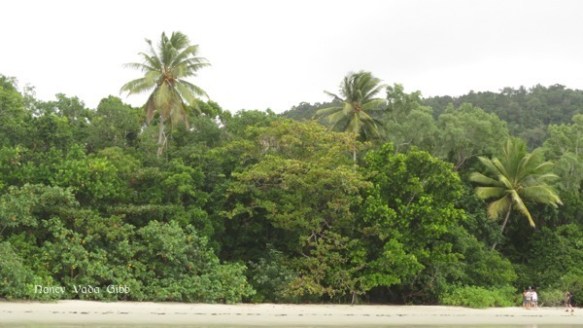
A bit of bitumen before the dust started. The distant hills beckoned.

IMG_0924

IMG_0932

So we were at fabled Adels Grove at last! Named after a French naturalist who established a sort of oasis there, it’s now a business running a holiday park, canoe/kayak hire and solar-powered boat trips up the gorge. Usually you have to book for the latter and initially we were told we’d have to wait two days, but luckily there was a cancellation. Here’s what the gorge looks like from the air.
IMG_0936

It was surreal gliding along the Lawn Hill River, no motor discernible, with a knowledgeable guide explaining various features. (This is the boat with the previous load of passengers).

IMG_0939

Gregory Adels 07

IMG_0944

Through the gorge we went, admiring the huge cliffs with ferns and trees clinging precariously……. (the sun was very bright, difficult to take good photos with the deep shade)

Gregory Adels 08

IMG_0947

IMG_0960

….. spotting a lone croc sunbaking and a couple of Leichhardt trees…..

IMG_0950

….. and finally coming to a barrier, the Indarri Falls, formed by calcite concretions called Tufa which had slowly built up over the years. The river is very high in mineral content, much higher than most other rivers. Some people were swimming near this barrier, apparently a fairly safe place compared the rest of the river! It was a very hot day and I quite envied them, but we were relatively cool on the boat under a canopy.

IMG_0953

IMG_0955

IMG_0956

IMG_0954

An explanation of tufa, for those scientifically inclined, as gleaned from a series of noticeboards:

Rainwater falling on the Barkly Tableland, a large area of limestone to the SW, soaks into the porous rock. Rainwater combines with carbon dioxide in the soil to form a weak acid which dissolves the limestone. the water now rich in calcite and dolomite flows through aquifers (underground springs) of the Georgina Basin which underlies the tableland. Where the honeycomb-like limestone meets the less-porous sandstone, underground water is forced upwards as springs which fed into the creeks and rivers.
In the creek, as water flows over obstructions such as rocks or debris, a reaction similar to unscrewing the top of a soft drink bottle takes place and carbon dioxid e gas is given off and a skin of solid calcium carbonate (calcite) is deposited on the obstructing surface. With time the calcite forms a porous brittle rock known as Tufa.

As calcite is deposited in the creek, plant and animal matter can be trapped and  fossilised within the tufa….. Scientists believe that in ancient times calcite rafts played role in fossil formation.

Indarri FallsWater at work:M.yrs

Back down the gorge to our starting point. Nobody wanted to leave the boat, but another  group of passengers was waiting.

IMG_0959

Time to move on. We packed up and left the river with regret, heading back the 148 km to the Burke & Wills Roadhouse, then north towards Normanton.

150. Mary Kathleen.

A previous blog (No. 144, Another Postcard – a Wee Mishap) has covered the events in between leaving Camooweal and returning to Mt. Isa. Briefly, we set off via dirt road for Adels Grove in the Lawn Hill National Park, but some way along a caravan spring broke, Dave did a marvellous jury rig job and we limped back to Mt. Isa. Next day Dave managed to obtain the necessary materials to do a proper job. Mt. Isa was hot, the camp was hot and uninteresting (although it did have $3 washing machines), the caravan was fixed … time to move on.

IMG_0737IMG_0743

IMG_0783

One thing not mentioned in the Postcard was the remarkable lady who we met at the Barkly Highway-dirt road turnoff where we’d stopped for a cuppa before the long slog back to Mt. Isa. We had spotted her some days earlier, walking along by the highway pushing a well-laden … something-on-wheels. Unfortunately with the caravan in tow we couldn’t stop then, so it was a delight to meet her in person with time to chat. A lovely friendly and very fit looking person with a friendly little once-white-and-fluffy dog called Dexter as her only companion. Dexter rides in state on top of everything else but under a canopy, so remains relatively cool. They sleep under the stars most nights.

IMG_0769IMG_0772

The tricycle has a small solar-powered motor to help her get up hills, plus she has a mobile phone, a good camera, a CB radio, and an EPB (emergency personal beacon) so is well equipped. The whole weighs about 350 kg, still not enough to prevent being blown over by a road train thundering past. Tracy righted it on her own.

IMG_0774

She has been on the road for over one year and intends to continue for another two or so! She is basically trying to raise money for mental health awareness. Her website can explain it better than me: www.onewomanwandering.com.au.

IMG_0773IMG_0775IMG_0777

To resume the blog:

We thought it would be a good idea not to go too far from Mt. Isa until we were confident all was well with Westy the caravan. We still had hopes to get to Adels Grove but by a different route, Cloncurry to Gregory Downs (all surfaced) and then, perhaps, the last 90 km or so unsurfaced to the Grove.

The 180 or so km between Mt. Isa and Cloncurry seemed a good testing ground, with a planned stop at the old Mary Kathleen uranium mine, where there is now free parking in the abandoned township. After stocking up on groceries etc in Mt. Isa (and taking some more photos for Ross F. who once lived there) we set off. All went well and soon we were at the entrance with its very rough looking track. Oh well – spring testing time!

IMG_0806

IMG_0807

IMG_0816IMG_0813

The area is not well signposted and we missed the turnoff to the camp and lurched along a winding bush track for some time until finding the back entrance. Once in the ‘township’ – all that remains are concrete slabs, a few rock walls and some plantings of hardy oleander –  we found a suitable slab to serve as our front patio and were soon set up with our lovely big awning providing welcome shade on what was one of the hottest days we’ve encountered so far, barring the one when the spring broke (!).

IMG_0857

IMG_0855

That evening we were entertained by a mob of cattle wandering past; it seems the township is part of a private property. A few years ago the owners were greatly agitated at the news that the mine might be revived, but it seems their fears were unfounded. They were fearful that stirring up the old tailing dumps would mean radioactive and/or poisonous chemicals would be blown all over the property and would contaminate water and vegetation. This did not seem to worry all the campers we saw, some had obviously been there for some time.

IMG_0854

We decided to try and find the mine itself, leaving Westy behind. More lurching along innumerable bush tracks, finding a couple of old ruins and then by good luck we spotted a tiny little sign saying Mine and an arrow. (Later we were to direct several other lost explorers to that little sign!).

IMG_0814

IMG_0815We parked where the top of the open cut mine was just visible, then walked. What a surprise was in store.

IMG_0833IMG_0820

A lake! Our photos do not do justice to the colour. Not for swimming though – the water conceals and/or contains a multitude of sins such as poisonous chemicals and mine tailings.

cloncurry Camooweal 37

IMG_0829

The temptation to try to walk all around the ‘lake’ on one of the terraces was overwhelming. Dave finally found a reasonable approach and we were off along the third terrace from the bottom, which for some reason has a low outer wall of large boulders and thick wire and also appeared considerably wider than some of the other terraces. I’m proud that I did that walk.

IMG_0838

cloncurry Camooweal 36

cloncurry Camooweal 42cloncurry Camooweal 41

IMG_0843

The colours were amazing … and so many minerals visible in the rocks. IMG_0839cloncurry Camooweal 38IMG_0845

One shrub seemed predominant everywhere, and I finally found out what it was – Calotrope – a “priority weed” for the Burke Shire in fact. (We’ve been seeing more and more of it as we move east). 

IMG_0822IMG_0821IMG_0884

We decided not to stay more than one night but to head for Cloncurry and then north. We called in at the scene of the Stockman’s Challenge on the way – what a difference a week makes. The grounds people had obviously taken full advantage of the well-tilled earth and planted lots of new shade trees. Grass was springing up everywhere in the well-fertilised red soil.

IMG_0860IMG_0867IMG_0866

Dave’s version: Mount Isa to Cloncurry to Gregory Downs

After putting everything back together at Mount Isa and hopefully locking everything in place with  large quantities of Loctite we left early-ish and drove quietly down to the Mary Kathleen Mine village. After setting up there and having lunch we went for a walk through the mine, or rather we walked around a large hole in the ground that had been the Mary Kathleen uranium mine. Uranium was discovered here in 1954, the mine started production 1958 and closed in 1982.
The Spring rebuild seemed to be holding up so we carried on through Cloncurry and up the highway to Gregory Downs. We topped up tanks at the Burke and Wills Roadhouse…..

IMG_0873

….. and while doing so I noticed something shiny in one of the tires, drove forward to clear the pumps and stopped to inspect the wheel, unfortunately the bull dust was coating everything and I couldn’t find the shiny bit. Keeping my fingers crossed we drove off towards Gregory Downs and stopped at a free camp beside the highway.

IMG_0877

Checking the tire again I found there was a nail in it although the tire was not flat. This brought on the old dilemma, had the nail gone through the carcass of the tire or had it gone sideways in the tire and should I pull the nail out or should I leave it in. Guessing from the angle of the visible part of the nail that it had gone in sideways I decided to pull the nail out and found I had guessed wrong. So I changed the tire to the spare and the next morning we carried on to Gregory Downs where we are now camped in the bed of the Gregory River in company with about 20 or 30 other vans.

Tomorrow we will head up to the Adel Grove where I have to get the tire repaired.

149. Camooweal

Another place I couldn’t wait to visit. Nowadays it is considered a sort of outer suburb of Mt. Isa (!) But it has a total different character; it’s the OUTBACK.

The 189 km of Barkly Highway between Mt. Isa and Camooweal (“Tojo’s Highway”) with its varied scenery and thousands of red anthills, was broken at one point by an unusual feature – a section of the old highway which was built during World War II with American funds. It was originally designed as a link between the southern states and the theoretical ‘front line’ in the NT. Before 1940 it was just a track which ran close to the telegraph line erected in 1897 and meandered from waterhole to waterhole. The new road, commenced in 1941, was ten miles shorter. By the end of 1941. Australian and American traffic on the road was up to 1,000 vehicles pre day! (That’s a section of the old road in the foreground of the second photo.)

IMG_0483

IMG_0484

IMG_0476 (1)

Nowadays it is a useful resting/camping place for many caravans, and sadly the place where one dog had to be left behind. No not this one …

IMG_0486

IMG_0485

This rest place was not far from the turnoff to the station “Calton Downs” where my grandfather d’Archy worked as a stockman aged 22 according to the Queensland electoral roll of 1905.  Ten years later he was managing  “Headingly” station and three years later, now a married man, he was managing “Chatsworth”. Perhaps not the easiest country for mustering.

IMG_0480

IMG_0477

Our first stop on the outskirts of Camooweal was the Drover’s Camp. My great grandfather having been a drover in this area in the late 1890s and 1900s I was especially keen to visit. However, the focus is on the 1920s-1940s and the volunteers who care for the place were once real drovers themselves.

IMG_0489

IMG_0499

It was a fascinating display and Dave found the long talk very worthwhile.Tales of the Canning Stock route and of setting up camp with everything done in orderly fashion including lining up all the pack bags in precise order so the could be grabbed by the correct person and loaded on the correct packhorse next morning.IMG_0491

IMG_0502

IMG_0505IMG_0501

A fascinating demonstration of how to make and light a carbide lamp (oh the horrid smell!).

IMG_0493

IMG_0498

And an extraordinary portrait gallery of drovers, including several women.

IMG_0507

IMG_0510

Then on through the town – very small with one general store cum post office and a couple of roadhouses and two fuel stations.

IMG_0632IMG_0634IMG_0595

Road trains thundered along the main street…

IMG_0620IMG_0629

The township of Camooweal does not have a great many attractions but one which does get attention is this statue of a stockman. I like the way he looks backwards.

IMG_0594IMG_0587

IMG_0586

He is beside a lovely old building, once the shire hall, said to be a fine example of colonial architecture and currently being restored. It was a beautiful pink colour which Dave said was merely undercoat but which I hope will also be the final colour.

IMG_0604

IMG_0619

IMG_0614

We were heading for a free camp on the banks of a large billabong just outside town. It had been raining in the area recently and the ground was quite soft so we were a little nervous about venturing too far from the main camping area.

IMG_0572

IMG_0703

IMG_0560

Later on we wished we had – there are several kilometres of dirt track bordering the waterhole, with caravans and other camping vehicles spread far and wide. It looked like some had bedded down for a long stay. And why not? Absolutely glorious scenery, peace and quiet, water and necessities available not too far away …. we could definitely have stayed there for much longer. And all free. The birdlife along the river was amazing. Brolgas, egrets, pelicans …. and beautiful white and purple waterlilies. I make no apology for the number of photographs.

This is what I saw the first morning.The waterhole at this point is narrow with a small number of waterlilies.

IMG_0563

IMG_0577

IMG_0544Early next morning I went for a short walk:IMG_0546

IMG_0545

IMG_0525Some of Dave’s bird photos:

cloncurry Camooweal 20

cloncurry Camooweal 30

cloncurry Camooweal 32

Further down the track, so to speak the waterhole widened and the waterlilies exponentially multiplied – as did the birdlife.

IMG_0554IMG_0555IMG_0542IMG_0540IMG_0539IMG_0536

IMG_0659

IMG_0660More of Dave’s birds:

cloncurry Camooweal 29cloncurry Camooweal 28cloncurry Camooweal 24cloncurry Camooweal 22

More camping as the far end of the waterhole, where it starts to narrow:IMG_0696IMG_0674IMG_0670IMG_0669

IMG_0658

Apart from an occasional sortie into town to get bread and milk, we made one short trip, as one does – to the Northern Territory. Only 12 kilometres down the road. The effects of unseasonal rain were still in evidence.IMG_0646

cloncurry Camooweal 17

Here’s map showing Camooweal and its relation to some other places we’ve passed through. We will be heading for Normanton soon.

IMG_0625

We didn’t visit the Camooweal Caves National Park, as the caves are closed to visitors and camping is not permitted within the park.

Next blog: an Adventure! Actually it’s already been covered  by Blog No. 144.