52 Ancestors – Week 28

Theme: Random

I have a distantly related great aunt who died aged 13 “of natural causes” in 1906. She was one of 5 children born to George Johnston and Jessie Yuille of St. Rollox, Glasgow. Only two of them survived to full adulthood. She had an interesting name – at a time when middle names were still fairly rare.

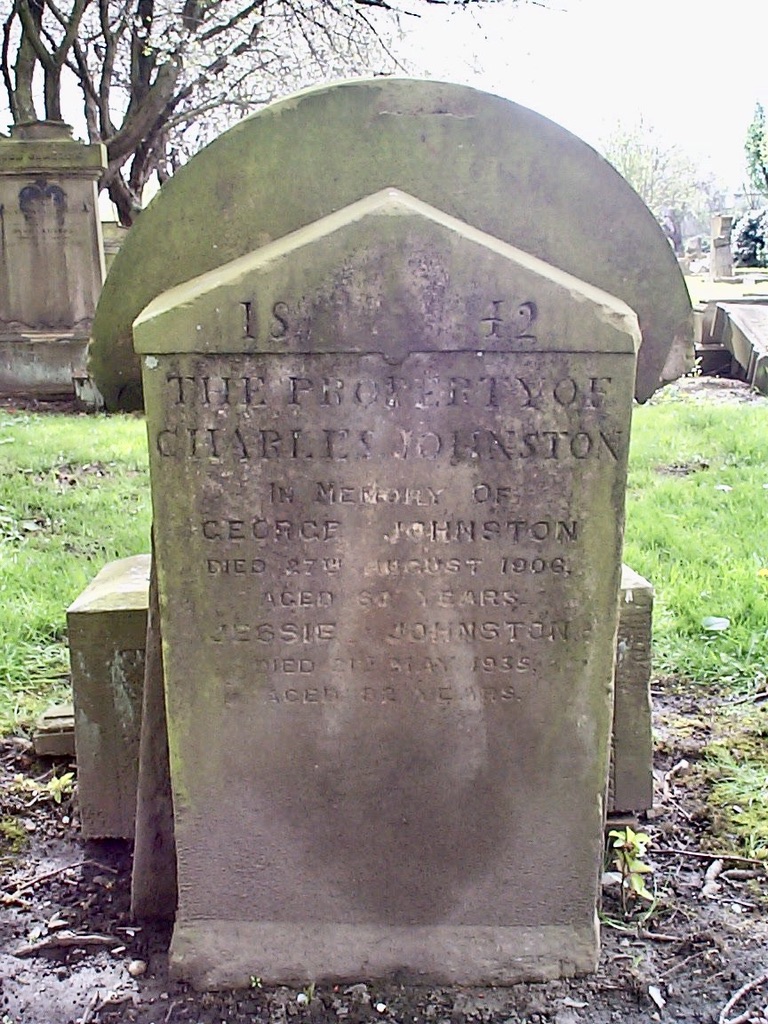
Her name was Catherine McFarlane McGavin Johnston. She is interred with her Great Grandfather Charles and her parents in Charles’ huge lair in Glasgow’s Southern Necropolis.

Why all the names?

Catherine’s paternal grandmother was Isabella McFarlane 1819-1857.

Catherine’s father’s sister, her aunt Catherine Johnston 1840-1863, married David McGavin.

One of this Aunt Catherine’s daughters was Isabella McFarlane McGavin 1866-1890 who died aged 24. Perhaps Catherine McFarlane McGavin Johnston, born 3 years later, was named in her memory.

To compound the sad story, Catherine’s elder brother George 1891-1891 had died two years earlier aged 8 months, and her father died 3 months after her.

52 Ancestors – Week 27.

Theme: the Great Outdoors.

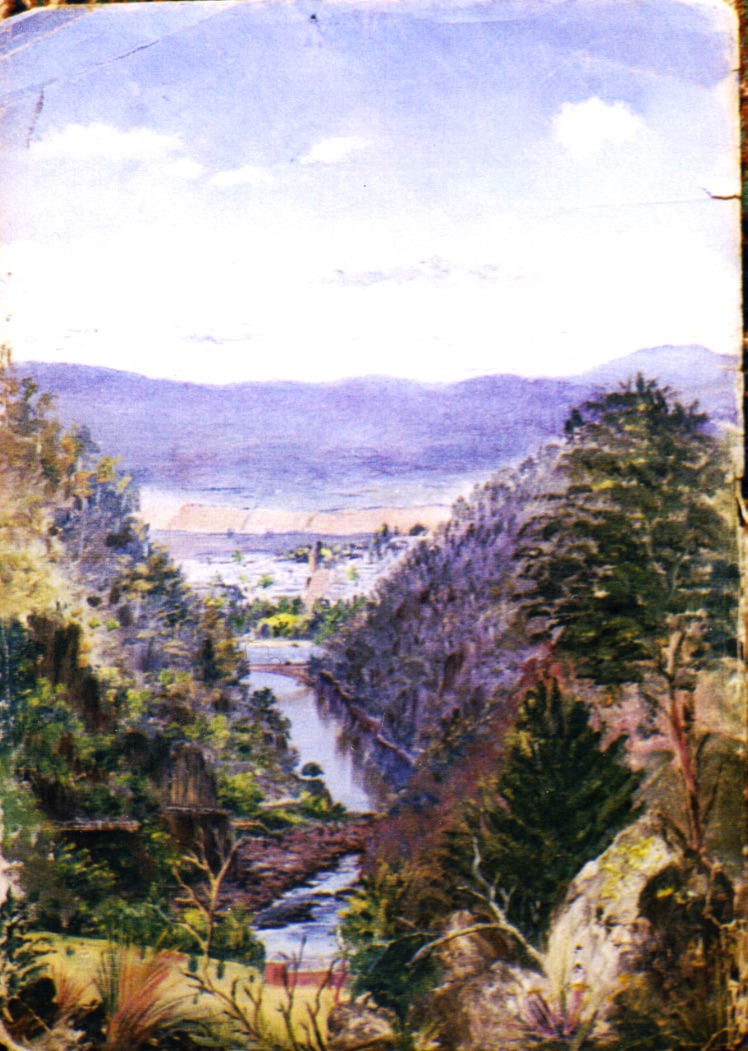
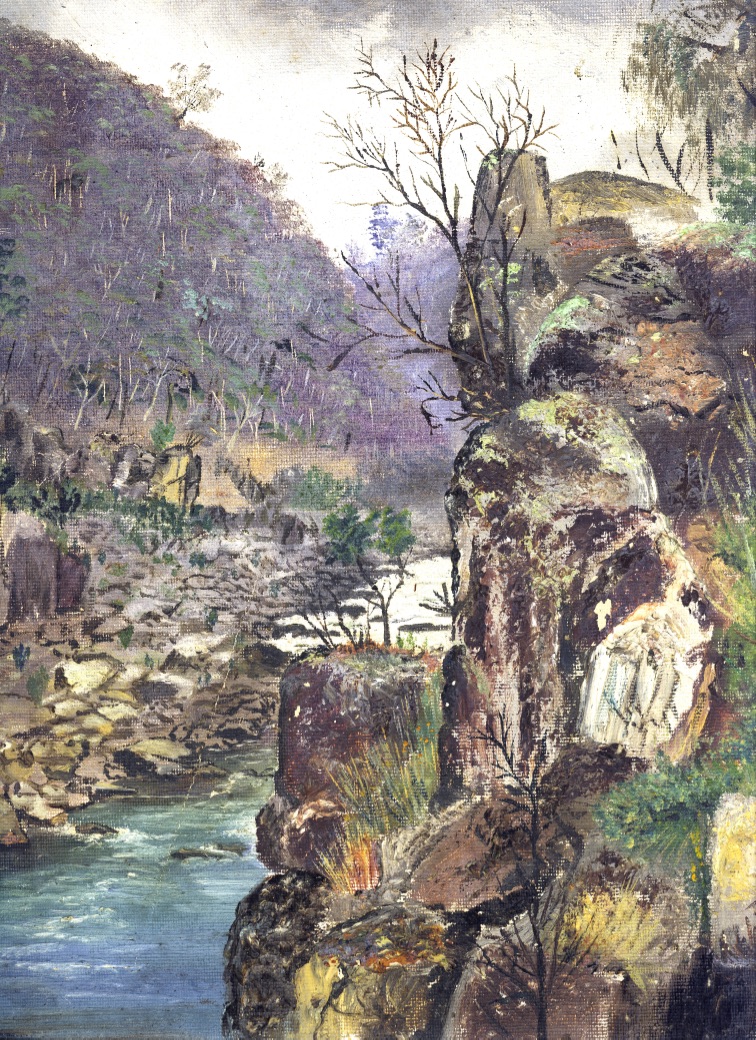
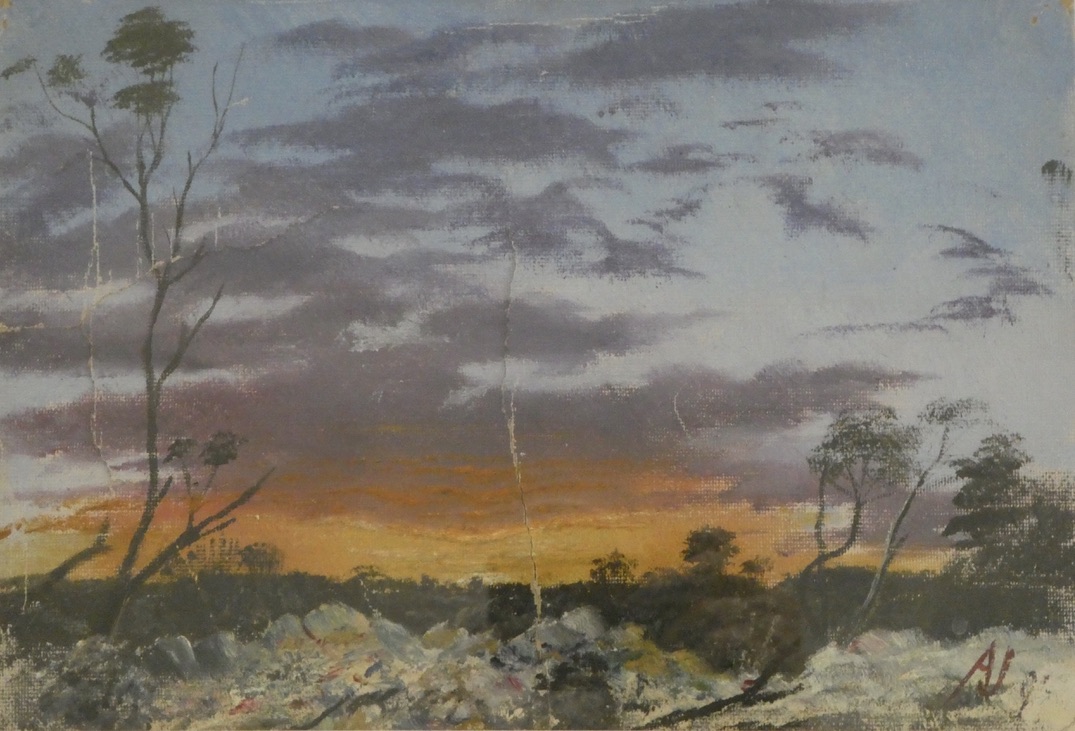
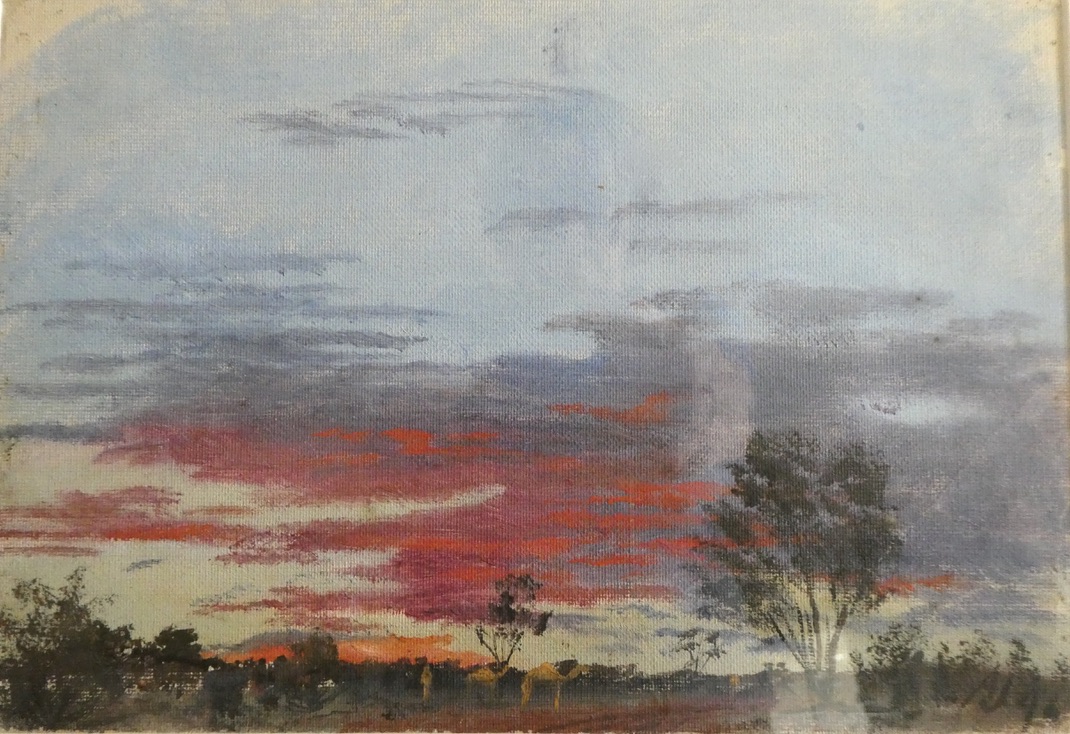
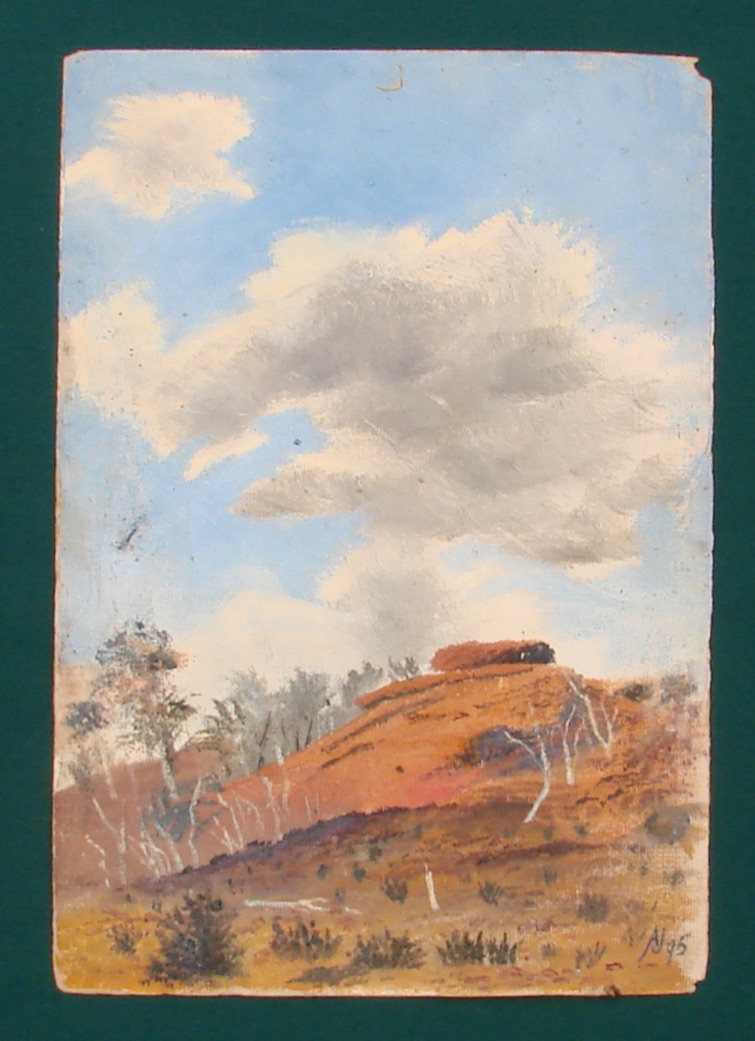
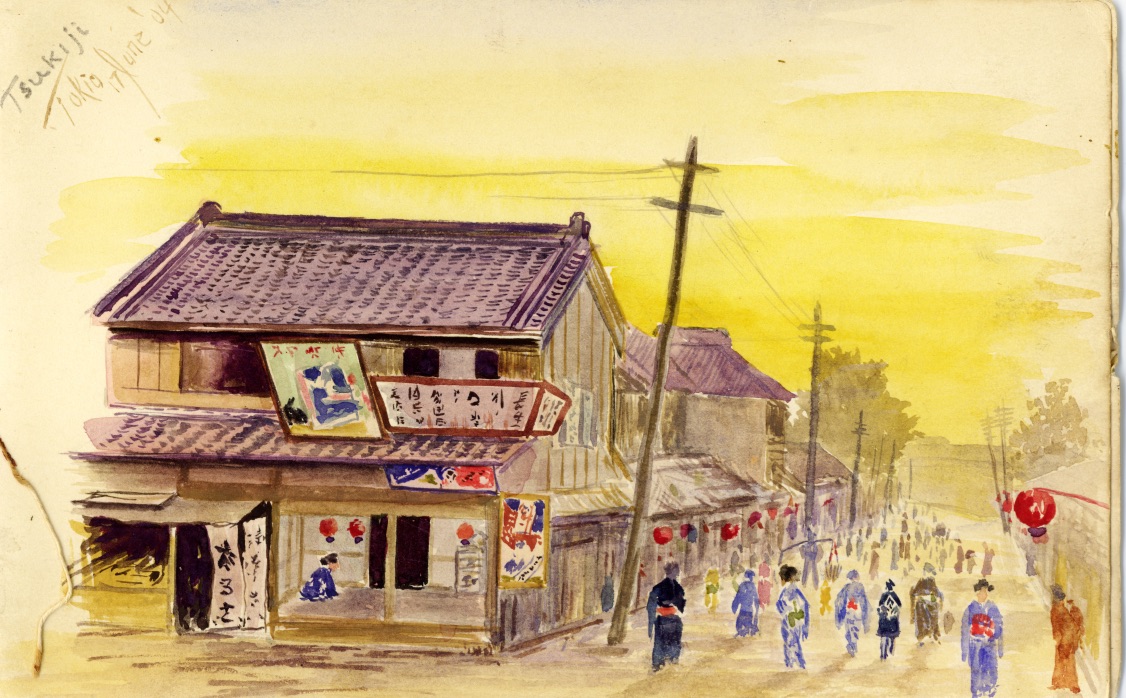
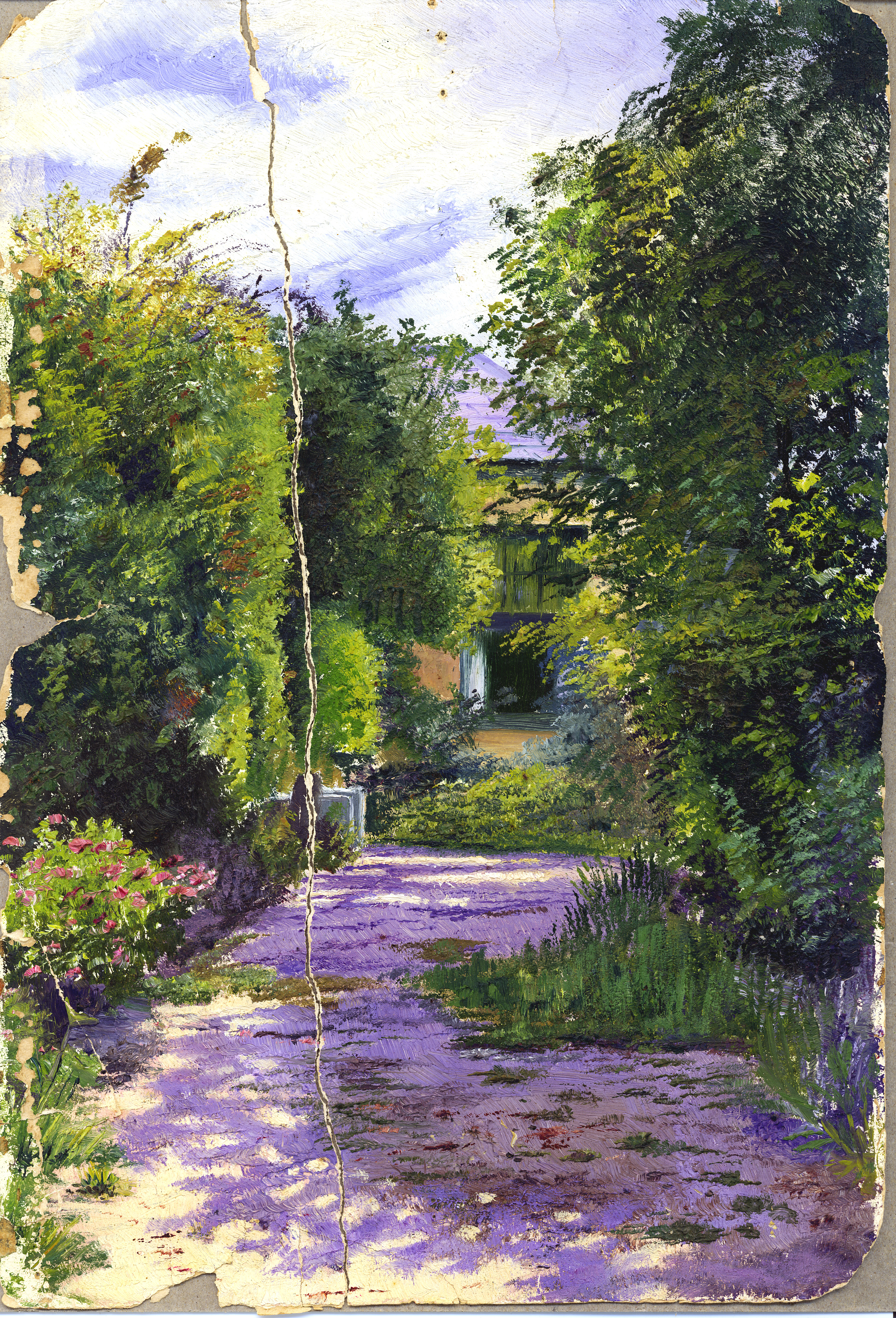
My Grandfather Alex Johnston was a journalist and artist. Born in Tasmania in 1868, as a young man he took off for the wilds of Western Australia, but not before he had explored the scenery around his hometown, as evidenced by some early paintings. Subsequent paintings in a series of sketchbooks have enabled me to trace his wanderings.

He also loved the sea, and on arrival in Western Australia must have spent some time around the waterfront at Fremantle (Oct-Nov 1894) before starting as a journalist at the ‘Coolgardie Miner’ in the tiny little goldfields town where he obviously enjoyed wandering around and painted many sunset scenes.

After a few years he was off to the fabled East via a steamer which called in at Manilla in 1899 and then Celebes, Hong Kong and Shanghai (June-Nov 1899). Returning home via Aden and Ceylon (now Sri Lanka) in March 1900 he returned to the goldfields until the end of 1900; then was off again to the East (Sumatra, Penang, Yenoshima, Kyoto in 1904 and back with a stop off in New Guinea (July 1904). He seldom painted people apart from the Japanese and then mostly in crowd scenes.

While working as a journalist back home in Melbourne, he met and married Bertha Wade in 1908 and they spent the next few years wandering around northern NSW and southern Queensland before settling down in Sydney where their first-born arrived in 1912 when Alex was 42.

They bought a lovely old house in leafy Tambourine Bay, Sydney, where they lived the rest of their lives.

Alex continued work as a journalist while also painting around the neighbourhood, particularly the jacaranda trees, at every opportunity. For a time he owned a sailing boat. He was interested in all aspects of nature and could identify the call of every bird in the garden, according to my father. He encouraged me to take an interest in nature, and in reading in general, lending me one volume of the Encyclopaedia Britannica at a time to take home.

My parents were not much into the Great Outdoors and never took the family camping but I seem to have inherited Granddad’s interests. I wish he had lived long enough to see me graduate with a degree in Zoology, and to know I am now living in the most beautiful great outdoors country of all, New Zealand. He would be so interested in the many modern nnovations that have taken place since his time – supersonic jets, digital cameras, computers, the world wide web – he would have embraced them all.

52 Ancestors – Week 26.

The topic for this week is ‘SLOW’.

Last week I interpreted ‘Fast’ in terms of generations, so this week I’m interpreting ‘Slow’ similarly.

Great Grandfather Alexander Johnston was born in 1829.

His son my Grandfather Alexander Johnston was born in 1868 when his father was 39.

My Father Warwick was born in 1912 when his father was 44.

I was born in 1940 and my daughter was born in 1977.

So that is 142 years (1829 to 1977) and four generations.

If one generation normally takes 25 years then one would expect my daughter to be 6th generation.

No wonder many of my DNA matches are difficult to identify as they are with people two generations younger than me!

52 Ancestors – Week 25.

Topic for this week: Fast.

‘Fast’ has many meanings. I chose to interpret it as ‘a Fast Breeder’ (!)

My GGF Edwin Hunt 1837-1895 married fellow schoolteacher Margaret Morgan 1838-1920 on 19 July 1862 in Reading, Berkshire. Almost exactly one year later they had the first of their ten children, Fanny Elizabeth Hunt, on 25 July 1863.

She was followed within 14 months by her sister Margaret Hunt in 1864, then brothers Edwin, William and Arthur in 1866, 1867 and 1868; then another two sisters Florence and Alice in 1869 and 1870. Another son Walter followed almost exactly a year later in 1871. After a gap of 3 years a baby boy Ernest was born who only survived 6 months, and finally another two years later, my grandmother Edith Lillian Hunt made her entrance to the world on 1 March 1876.

All children with the exception of Alice and Ernest reached adulthood, and all emigrated to Sydney, Australia with their parents in 1879. Most married – there are a great many descendants. Many stayed in close touch throughout their lives.

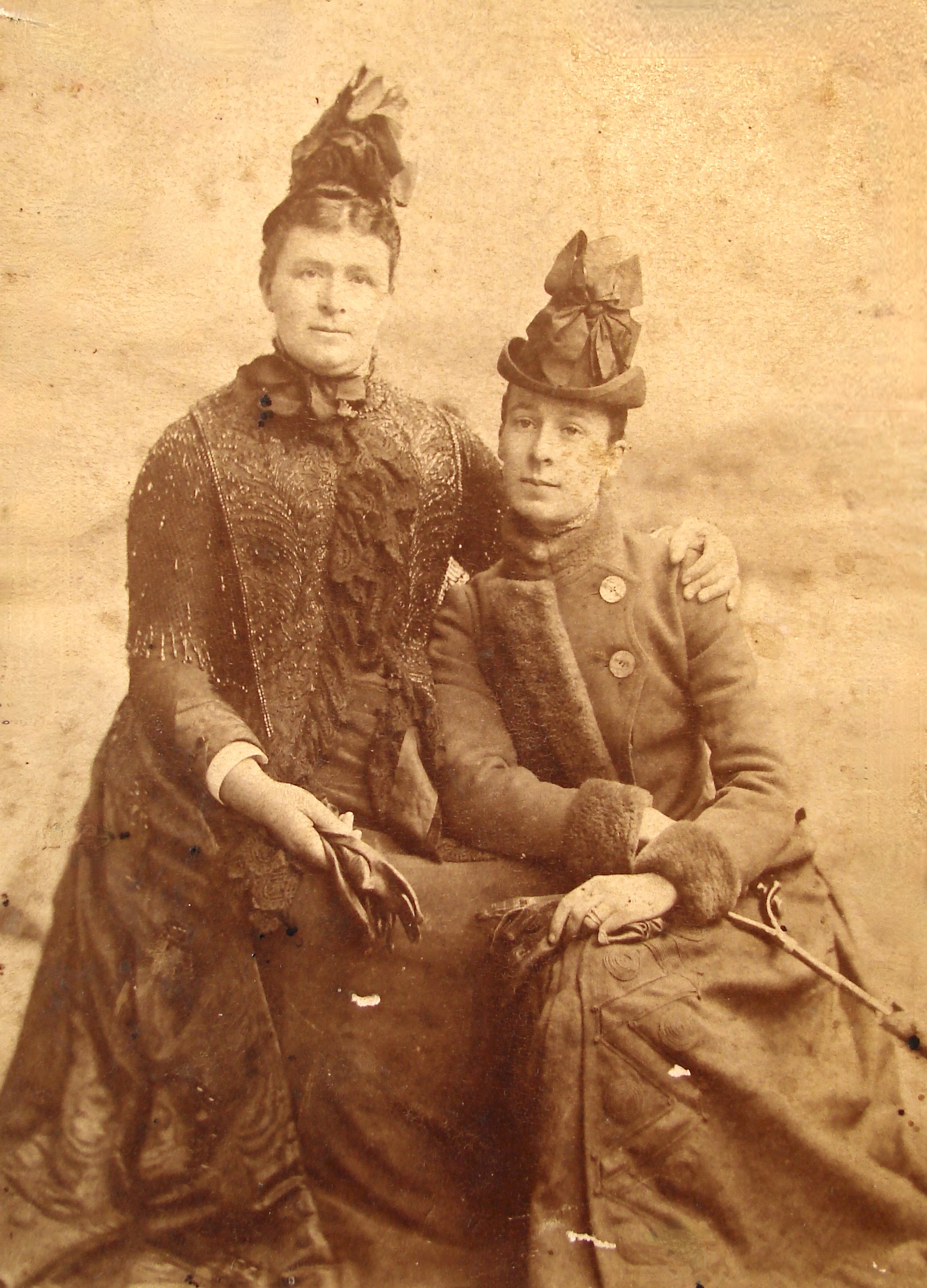
Photos of an older mother Margaret show a calm, well-dressed old lady. One wonders how she coped on the long ship voyage from England to Australia. Probably NOT the way these ladies in a photo found on the web are depicted!

52 Ancestors …. Week 24.

The topic for this week is “Last One Standing”.

For the purpose of this exercise (only), I chose to interpret this as “The last person with a particular surname descended from a specific ancestor”. Which excludes daughters who marry and change their surname although of course they would still be blood descendants.

My daughter Nicole Hoffmann was the last Hoffmann-of-that-surname descended from her 3xG Grandfather Gottfried Hoffmann (born about 1829 in Saxony) and his wife Karoline.

Gottfried and Karoline had one known son, Friedrich Hoffmann 1862-1933. There may have been other children but none can be found.

Friedrich Hoffmann was born in Friedrichsdorf in the Duchy of Anhalt, Saxony. He married Louisa Berger 1865-1952 In about 1885 in Pfalz, Bayern.

Friedrich and Louisa had 3 sons and a daughter. The eldest son, another Frederick 1886-1975, the only child born in Germany, went to the USA where he married Maude Estelle Jones and had a son and daughter but their son did not marry. So there are no more American Hoffmanns of this particular line with the Hoffmann surname (but plenty of female descendants!)

Another son of Friedrich and Louisa, Charles Hoffmann 1892-abt 1959 married and lived in England but did not have any children.

However, Friedrich and Louisa’s second son William Hoffmann 1889-1955 married Margaret Louisa Darragh in 1912 in Belfast and they had a son to carry on the Hoffmann surname, and also a daughter.

William and Margaret Louisa’s son William Frederick Hoffmann 1914-1953 married Joyce Attrill in 1940 in Kent and they in turn had a son, Geoffrey Kendall Hoffmann, 19444-1983. Geoff married Nancy Johnston (me) in Sydney, Australia and we had one daughter, Nicole Hoffmann.

Nicole’s surname is no longer Hoffmann. Until her marriage she was the Last Hoffmann Standing. Of course there are many, many other Hoffman/n families but none as far as can be ascertained with blood ties to our line descended from Gottfried and Karoline.

(A fuller account of the Hoffmann family is at https://nancyvada.me/genealogy/the-hoffmanns-of-belfast/ – it needs updating).

Dave’s Disaster Discoveries – or Things That Went Wrong – a Summary

By Dave Gibb, with additional comments by Nancy in italics.

  1. The trip was two years late. The air show and ferry were booked and paid for two years ago – the weather forecast was for near-perfect weather for weeks ahead – and then Covid arrived.

2. The highway was closed at Dashwood Pass due to a grape truck rolling over – traffic delayed for approximately five hours.

3. The sewage hose burst at Plimmerton just out of Wellington and we could not source a new hose until we got to Auckland. (The caravan has four tanks – two for fresh water, one each for grey water (from sink and shower) and black water (from the toilet – we do not need cassettes). Normally the latter two tanks are emptied by a 3 inch diameter hose attached to a coupling at the side of the caravan, the black water first so the grey will flush the hose. This coupling came apart rather unexpectedly at the start of the emptying process, with sh…. spraying around everywhere.)

4. It rained for four days in Auckland. Nancy had food poisoning. (But we still managed to visit Dave’s brother and sister in law and they gave us some cotton sheets as I had forgotten to pack any.)

5. The Brynderwyns were closed so it took an extra 2 ¾ hours to detour through Mangawhai.

6. Missed a corner on the detour due to confusing GPS signals and drove 20 minutes in the wrong direction before being able to turn around (on a narrow grravel road, with a large caravan), so detour was 3+ hours in total.)

7. Hit tree and gatepost at Russell POP, tore off corner fittings. (See blog, with photos.)

8. Hooked, fought and lost a large kingfish when out fishing with friends in Russell. (ditto.)

9. the famous Carl of Carl’s Coffee Cart at Long Beach, Russell was on holiday!

10. 3-day rain while in Russell, with an even larger storm predicted, so abandoned plans for Cape Reinga and ran west to the Kauri Coast.

11. Planned to stay at a DOC Camp but it was closed so ended up at the Kauri Coast Top 10 Holiday Park for 4 days waiting for the wind and rain to stop. (The rivers around the camp rose quite a bit but then subsided).

12. Slide-out leaked from the heavy rain and wind onslaught. Carpet (but not bed) wet and everything damp. (On the other hand, the camp provided lovely hot showers and washing and drying machines).

13. Stayed in a small camp at the head of the Hauraki Gulf. Shower swallowed coins. Nancy’s left knee very painful.

14. Travelling south, got frustrated with the Auckland traffic and drove straight through to Ardmore as the camp at Whangaparoa where we were planning to stop was swamped.

15. The washing machine at the commercial laundry at Papakura swallowed $6 for nothing.

16. Carried on to Te Aroha where it rained non-stop and one of Nancy’s troublesome teeth developed an abscess. The special little Italian restaurant we had been so looking forward to revisiting was closed.

17. Moved to Paeroa. Lost the outside refrigerator top vent somewhere between Te Aroha and Paeroa. (Had script for antibiotics made up and tooth abscess finally subsided after 3 days).

18. Mussels in the special Mothers’ Day lunch at the Coromandel Town hotel still had most of their whiskers (but were otherwise very delicious, with cream and white wine).

19. Left jockey wheel in clamp leaving Whitianga camp but luckily it was only a short distance to the dump point. Then left the keys in the water filler locker cover. Fortunately they were still there somehow when we arrived at Waihi Beach. (Surely a miracle! – it was such a long, narrow twisty road).

20. Reached Tauranga. Raining again. Set up at Welcome Bay (NZMCA Camp some way from the town). Computer crashed terminally while chatting to family.

21. Changed ferry booking to 5 days earlier. Planned to leave next morning and wend our way south to Wellington over the next sseven days. When all packed up and ready to leave, discovered one of the caravan springs had broken. This just happened to be on a Saturday morning when everybody we needed was closed.

22. Rained at Tauranga most of the time we were there. (Sitting in the Welcome Bay camp debating on whether repairs could be made locally, and if so how to get the caravan there (on a trailer?); leave caravan in Tauranga and drive down to Christchurch and return for caravan months later, and/or perhaps ship the caravan down to Christchurch to be repaired there… At least we were able to visit Dave’s sister and brother in law twice in their nursing home.)

(Dave continues..) Managed to Mickey Mouse a solution to get the caravan mobile and delivered to Alliance RV in Tauranga for servicing. They were on the ball and ordered a new spring set – from Christchurch of course – for overnight delivery by Courier. The spring was dispatched before midday Monday and finally turned up in Tauranga mid morning Wednesday. Alliance RV worked magic and had us on the road by 4.30pm Wednesday (our ferry booking was for the Friday afternoon).

23. While the caravan was being repaired we stayed with friend Barbara in Greerton. The only available plug in the bedroom meant the phone was on the floor while charging. Sometime during the night I managed to knock my torch off the bedside table and it landed on my phone and cracked the screen!

THANKFULLY THE REST OF THE TRIP HOME WAS TROUBLE-FREE.

52 Ancestors – Week 23.

Topic: So Many Descendants.

My Great Great Grandfather Henry Prendergast (1813-1867) married Mary Costello (1812-1902) in February 1832 in Tuam, Galway. They had ten children, of whom seven survived. The whole family emigrated to Australia on the “Pestonjee Bomanjee” in 1854 and their last child was born in Australia.

As far as I can ascertain, there were 51 grandchildren and 106 great and great-great grandchildren – several had families of over 14. A total of 157 early descendants with at least another 30-50 in the current generation and further down the track. Every now and then I make another connection through DNA, then have fun trying to work out the line of descendancy.

One third cousin turned out to be now living in my home town! It is lovely to have a cousin living nearby. So many family stories to swap!

I do not have a photo of Henry and Mary, but this is their daughter Margaret (my great grandmother, born 1844) and one of her daughters.

52 Ancestors … Week 22

Topic: At the Cemetery.

When I first saw my Great Grandfather Frederick Wentworth Wade’s grave in the beautiful old St. Johns Cemetery in Invercargill NZ, it had several well-weathered blocks of marble inscribed with his name and dates 1838-1912, his second wife Ada Gresham Macloskey’s name and dates 1858-1931, and on top the remains of what was a large simple cross with Ada’s name (his first wife Adela 1848-1874 died in Melbourne, Australia aged 26). But the cross had been broken off and was lying alongside the main block in two pieces. I was on a very brief visit from Australia – no time to do anything.

Some years later (2002), now married to a New Zealander, I revisited the cemetery and discovered the cross was missing. But scouting around I soon found it on someone else’s grave site. The large lettering ADA was unmistakable. We carried it back to its rightful place.

A little later still I made contact with a distant cousin Barbara Ashmore, descended from Ada’s sister Constance Macloskey 1862-1897. Constance’s grave is a short distance from Frederick and Ada’s. Barbara and I decided to have both graves restored, that is the respective monuments cleaned and in Ada’s case the cross repaired, strengthened and re-erected, and fresh gravel placed on top. We also had plaques inserted, in Barbara’s case for her uncle Compton Tothill 1895-1915 who died aged 20 at Gallipoli in WW1 and is buried in Chunuk Blair, and in my case for Frederick and Ada’s only daughter Florence (Fonna) 1878-1965 who had left instructions in her will that she was to be buried with her parents and her name also inscribed on the monument, but apparently this was not done.

Fonna was the only paternal relative who I ever met apart from my grandparents, I remembered her dimly as a lovely old lady, a world traveller. Amazingly, my relatively newly discovered cousin Barbara and her mother had known her too! In the second photo Fonna is third from the left and Barbara’s mother Mary Alicia Compton Tothill 1896-1971 is the bride, marrying Irishman Albert Switzer Ashmore 1889-1970.

So it was a great pleasure to be able to restore the grave to some semblance of what it once was and at the same time to honour the wishes of my Great Aunt Fonna.

52 Ancestors – Week 21.

The topic for this week is BRICK WALL

I have one mysterious ancestor, my GGGF Thomas Darchy, born February 1820 in Augsburg Bavaria. Thomas Darchy, a wealthy young man aged 19 with mysterious antecedents, arrived unaccompanied in Adelaide, Australia in 1839 on board the “India”. Several family legends claim that he was the son of a Scottish nobleman and a French heiress, and/or a descendant of the French Dauphin “on the wrong side of the blanket”. Intriguingly, Thomas’ great grandson Darchy Catt has been told by someone who did not know the family history that he looks “just like a Bourbon”!

From legal records held in the Swiss Archives we know Thomas was born in Augsburg, Bavaria on 24 February 1820, his baptismal certificate naming his parents as Thomas Darchy ‘English property owner’ and Amey Maude Philipse; his godfather was given as ‘Herr Alexander Johann Wilhelm Bradford, English nobleman owning estates in and near London’. In reality the godfather/guardian was Dr. Alexander Broadfoot, a pecunious army surgeon on half pay and the son of a Scottish merchant. Later he was to be appointed Inspector General of Health in the Ionian Islands, quite a promotion. Ten days before Thomas’ birth the baby was entrusted to the guardianship of a Swiss doctor Frederick Louis Ferdinand Sacc, formerly aide de camp and advisor to the King of Prussia and Prince of Neuchatel. Dr. Sacc, a Prussian, became a citizen of Neuchatel soon after his appointment as Thomas’ guardian.


Thomas spent his first nine or ten years happily in Cortaillod in the Canton of Neuchatel, Switzerland being cared for by members of the Sacc family. Then in 1829 Dr. Sacc received a letter saying Thomas was to go to England (Sacc’s private papers in the Archives include a draft letter a distressed Sacc wrote protesting that this was “too soon”). It is not known exactly who ordered this, but Broadfoot was involved.

Thomas was escorted back to England or Scotland by a well-known churchman and Fellow of Trinity College, Julius Charles Hare, who was issued with a special passport attesting to his identity by the Ambassador of the King of the Low Countries. At that stage Thomas probably only spoke French and German, and it is likely Hare instructed him in English language and social customs on the long journey. It is curious that in all the collected papers of Hare and all the books and articles written about him there is not a single mention of his trip to Neuchatel to collect Thomas. Nor has any trace of Thomas’ parents or their marriage been found in any records. Were the names falsified? Why all the pomp and intrigue?

It is not known where Thomas spent the next nine years, nor with whom, nor the source of his early wealth. It did not come from the estates of Dr. Sacc or Dr. Broadfoot. But he never made any secret of his early years in Cortaillod and several of his children visited Neuchatel and the Sacc family after his death.

All attempts to verify his parentage and to find their marriage have also failed. A brick wall indeed!

A fuller story is at https://nancyvada.me/the-mysterious-advent-of-thomas-darchy/

52 Ancestors – Week 20.

The theme is ; BEARDED.

All the ancestral male portraits which I have show bearded gentlemen. One favourite is my Great Grandfather Alexander Johnston (1829 – 1906). How I acquired his portrait is a story in itself.

When I first started genealogy I knew little about my father’s family. I knew his father, a younger Alexander, had been born in Launceston, Tasmania and that his father had been a librarian. I started to correspond with a lady living there whose Johnston family were also from Launceston but we soon established we were not related. However she went on making enquiries on my behalf and one was at the Launceston Library. It turned out they had a huge portrait of Great Grandfather, commissioned on his retiring after over 60 years’ “faithful service”. Without being asked, the Library had a professional photograph taken and mailed it to me.

Great Grandfather looked exactly like my own clean-shaven father, apart from his huge beard. The same benign expression, the same dark eyes. But both look totally unlike my Granddad.

I’m certainly not bearded but I seem to have inherited characteristics from both GGFather and Gfather ….

The story of Alexander and his wife Margaret is at https://nancyvada.me/alexander-johnston-margaret-lyle-tasmanian-pioneers/