52 Ancestors – Week 28

Theme: Random

I have a distantly related great aunt who died aged 13 “of natural causes” in 1906. She was one of 5 children born to George Johnston and Jessie Yuille of St. Rollox, Glasgow. Only two of them survived to full adulthood. She had an interesting name – at a time when middle names were still fairly rare.

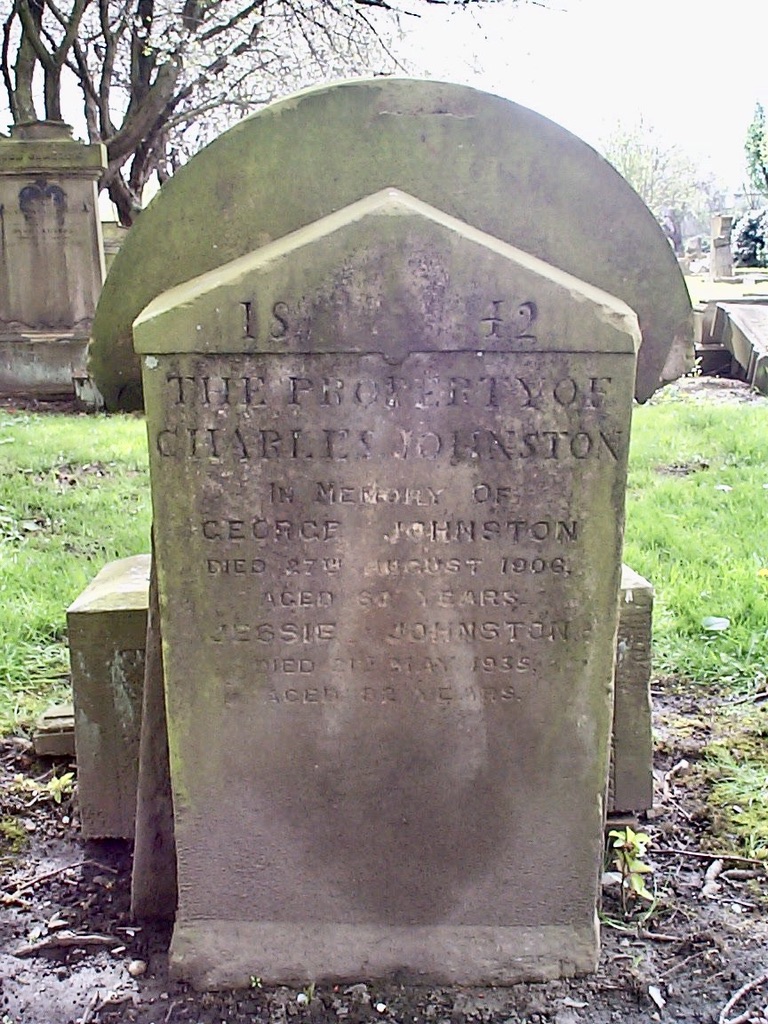
Her name was Catherine McFarlane McGavin Johnston. She is interred with her Great Grandfather Charles and her parents in Charles’ huge lair in Glasgow’s Southern Necropolis.

Why all the names?

Catherine’s paternal grandmother was Isabella McFarlane 1819-1857.

Catherine’s father’s sister, her aunt Catherine Johnston 1840-1863, married David McGavin.

One of this Aunt Catherine’s daughters was Isabella McFarlane McGavin 1866-1890 who died aged 24. Perhaps Catherine McFarlane McGavin Johnston, born 3 years later, was named in her memory.

To compound the sad story, Catherine’s elder brother George 1891-1891 had died two years earlier aged 8 months, and her father died 3 months after her.

52 Ancestors – Week 27.

Theme: the Great Outdoors.

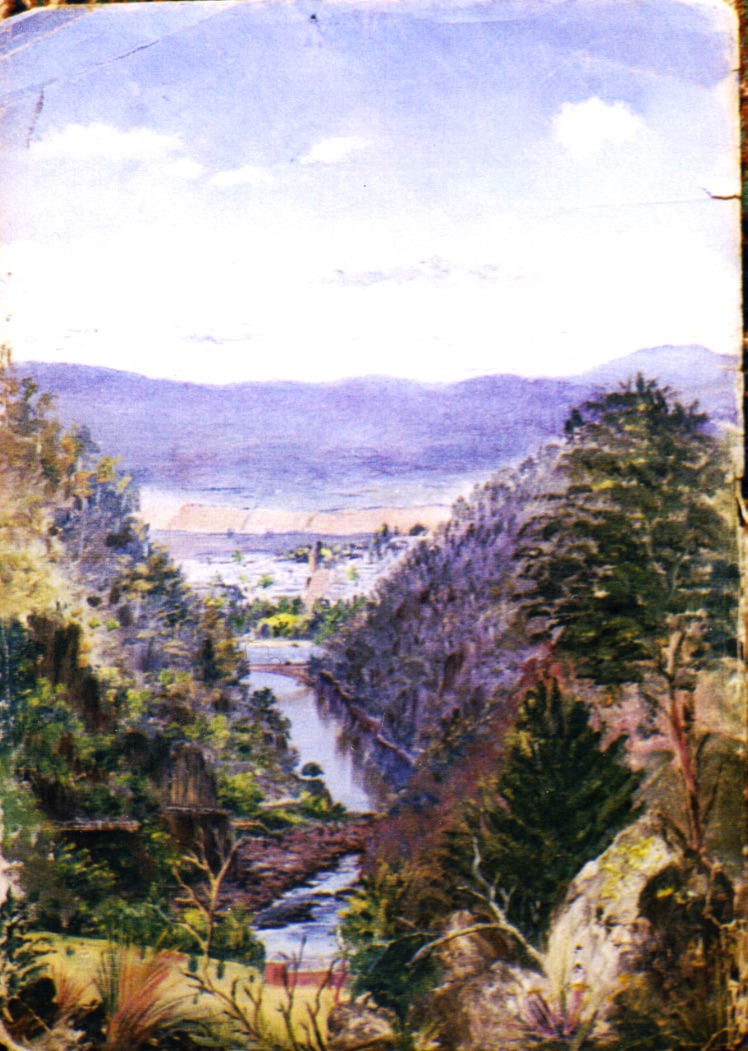
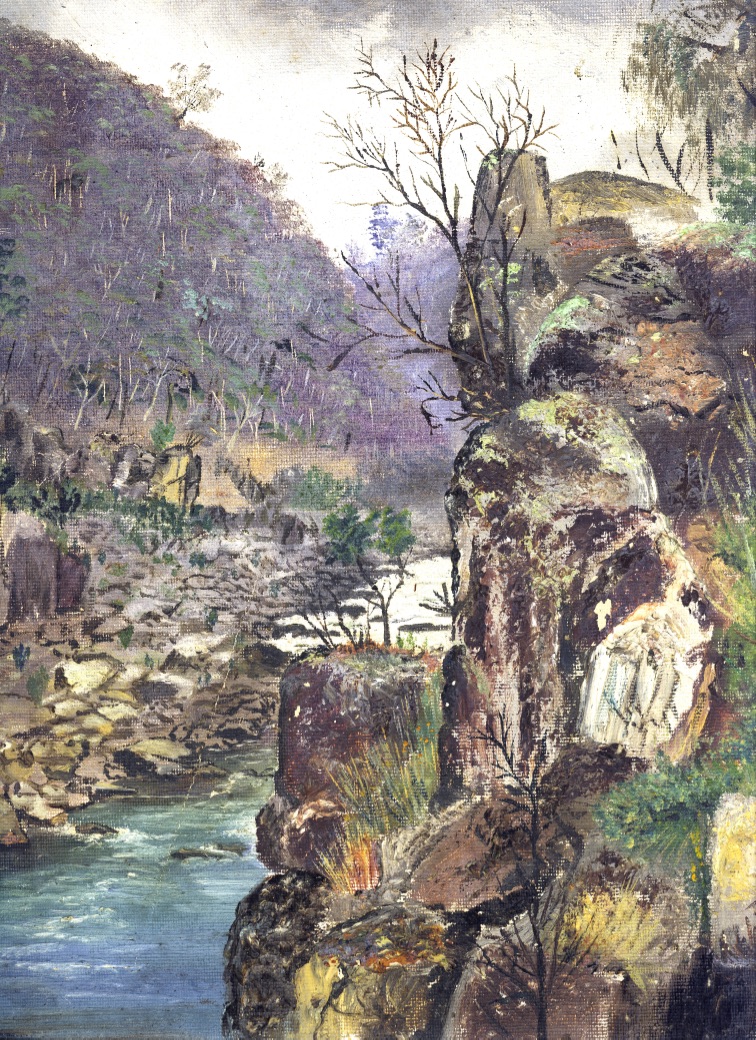
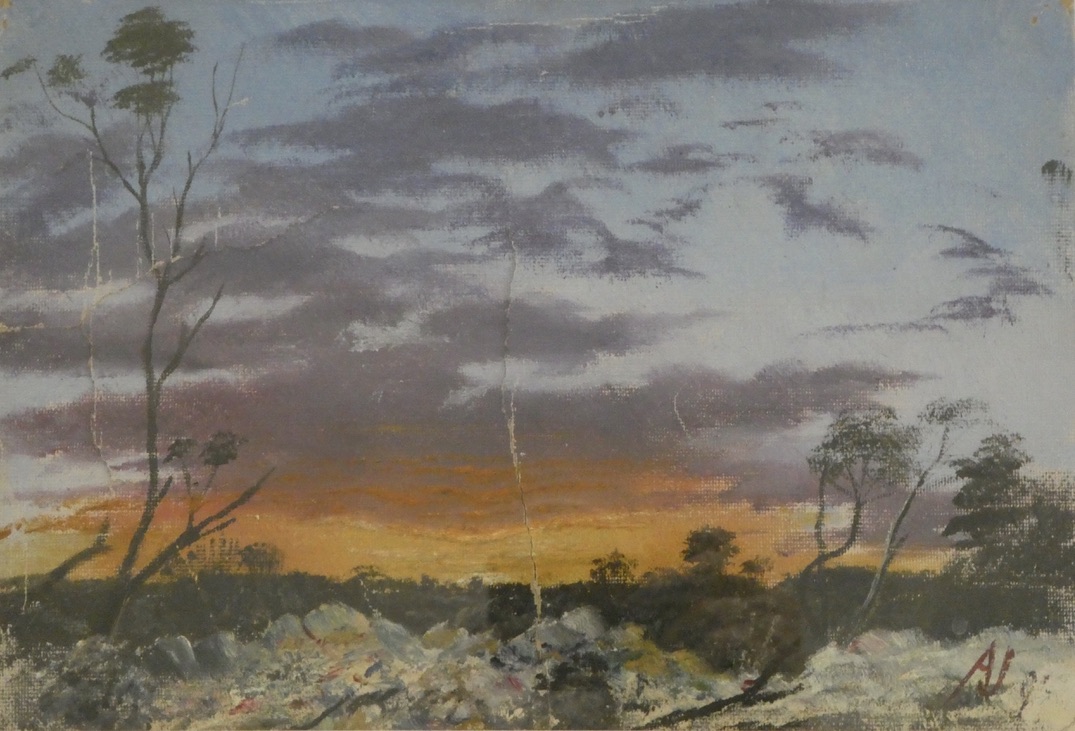
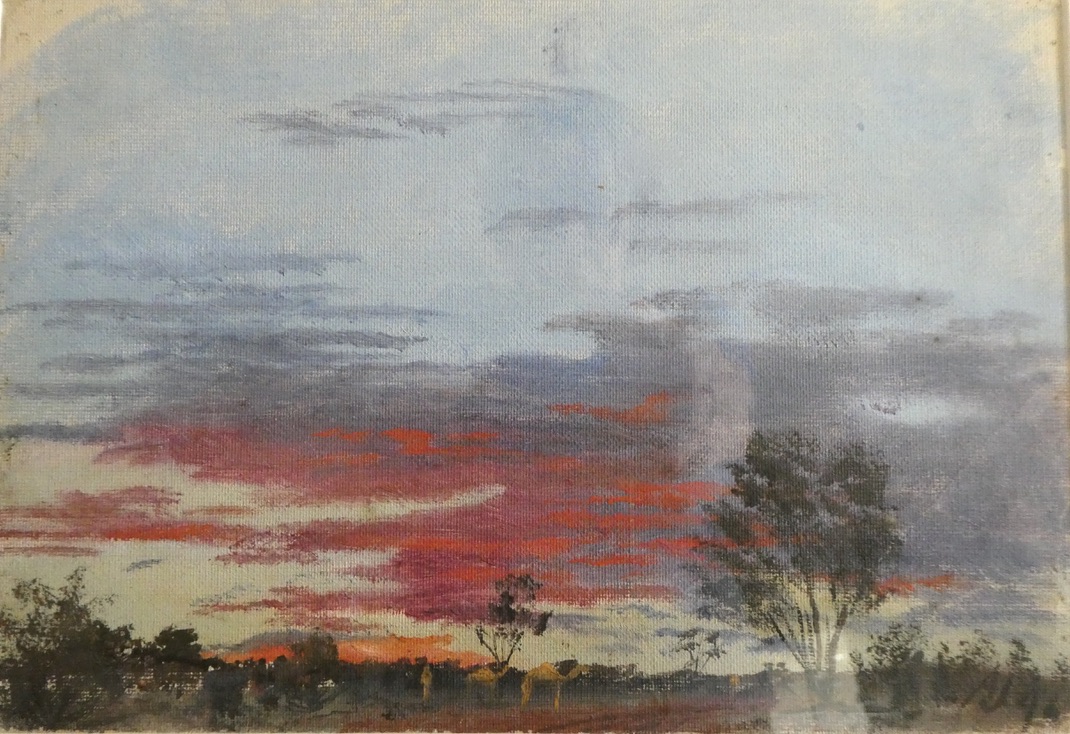
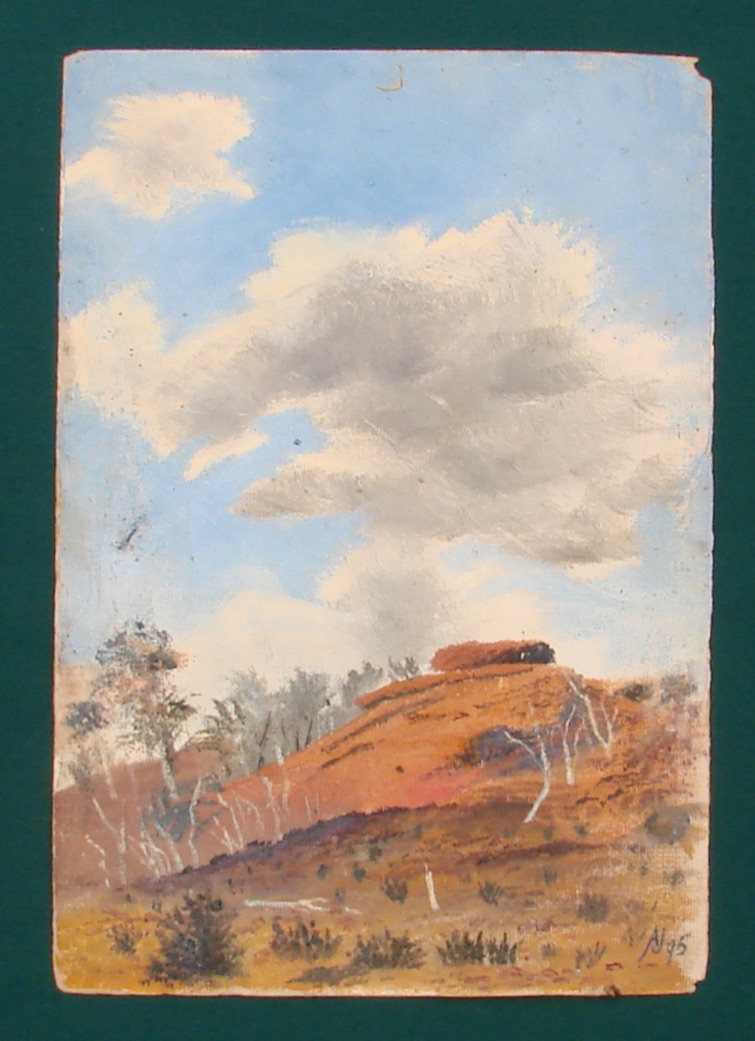
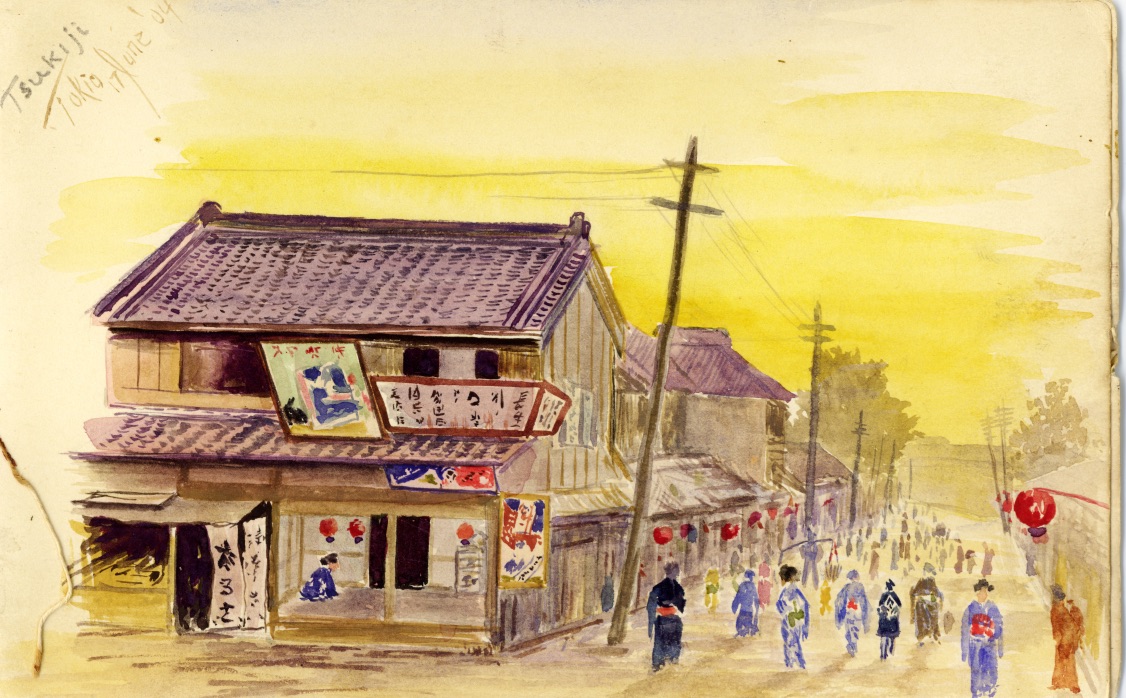
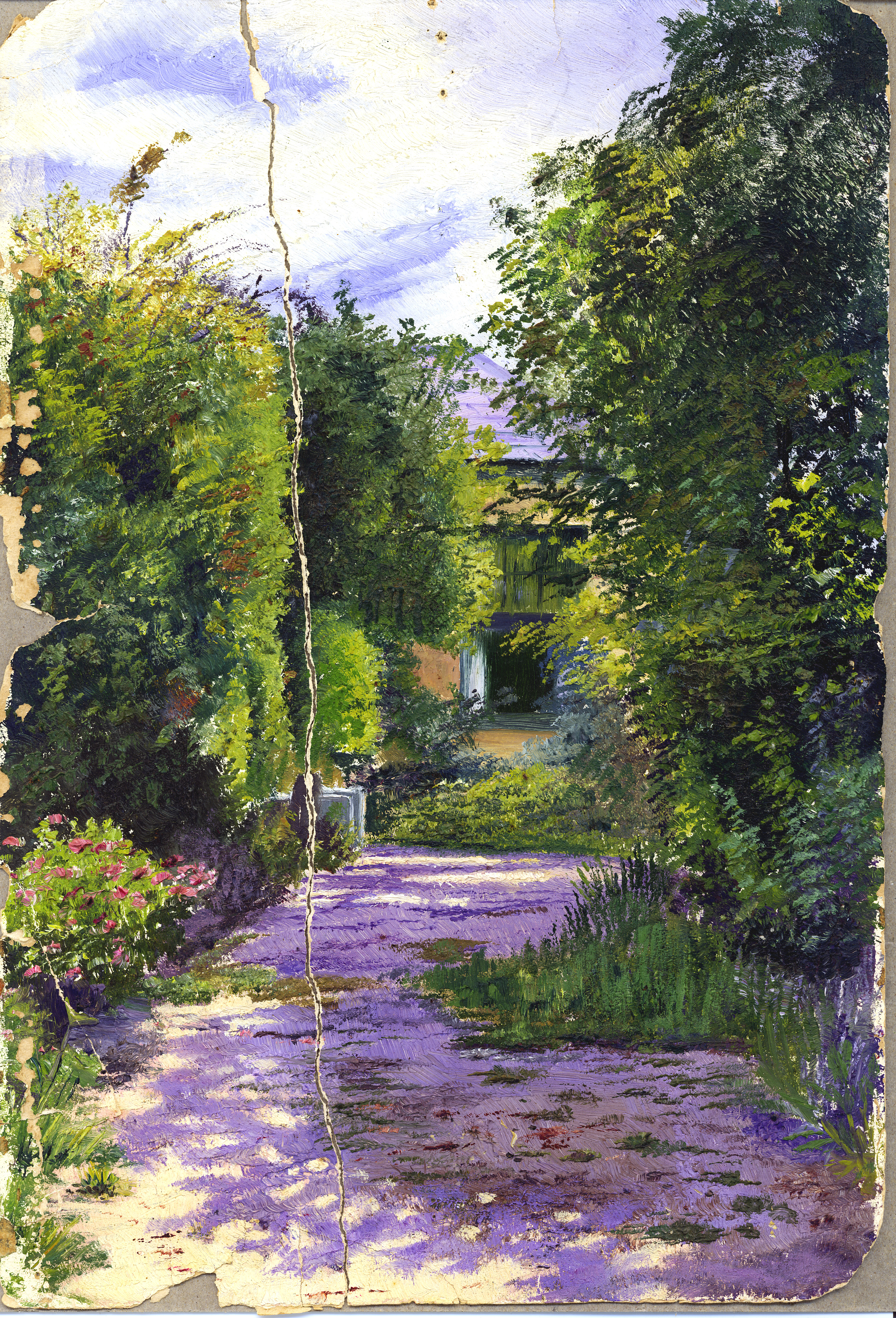
My Grandfather Alex Johnston was a journalist and artist. Born in Tasmania in 1868, as a young man he took off for the wilds of Western Australia, but not before he had explored the scenery around his hometown, as evidenced by some early paintings. Subsequent paintings in a series of sketchbooks have enabled me to trace his wanderings.

He also loved the sea, and on arrival in Western Australia must have spent some time around the waterfront at Fremantle (Oct-Nov 1894) before starting as a journalist at the ‘Coolgardie Miner’ in the tiny little goldfields town where he obviously enjoyed wandering around and painted many sunset scenes.

After a few years he was off to the fabled East via a steamer which called in at Manilla in 1899 and then Celebes, Hong Kong and Shanghai (June-Nov 1899). Returning home via Aden and Ceylon (now Sri Lanka) in March 1900 he returned to the goldfields until the end of 1900; then was off again to the East (Sumatra, Penang, Yenoshima, Kyoto in 1904 and back with a stop off in New Guinea (July 1904). He seldom painted people apart from the Japanese and then mostly in crowd scenes.

While working as a journalist back home in Melbourne, he met and married Bertha Wade in 1908 and they spent the next few years wandering around northern NSW and southern Queensland before settling down in Sydney where their first-born arrived in 1912 when Alex was 42.

They bought a lovely old house in leafy Tambourine Bay, Sydney, where they lived the rest of their lives.

Alex continued work as a journalist while also painting around the neighbourhood, particularly the jacaranda trees, at every opportunity. For a time he owned a sailing boat. He was interested in all aspects of nature and could identify the call of every bird in the garden, according to my father. He encouraged me to take an interest in nature, and in reading in general, lending me one volume of the Encyclopaedia Britannica at a time to take home.

My parents were not much into the Great Outdoors and never took the family camping but I seem to have inherited Granddad’s interests. I wish he had lived long enough to see me graduate with a degree in Zoology, and to know I am now living in the most beautiful great outdoors country of all, New Zealand. He would be so interested in the many modern nnovations that have taken place since his time – supersonic jets, digital cameras, computers, the world wide web – he would have embraced them all.

52 Ancestors – Week 26.

The topic for this week is ‘SLOW’.

Last week I interpreted ‘Fast’ in terms of generations, so this week I’m interpreting ‘Slow’ similarly.

Great Grandfather Alexander Johnston was born in 1829.

His son my Grandfather Alexander Johnston was born in 1868 when his father was 39.

My Father Warwick was born in 1912 when his father was 44.

I was born in 1940 and my daughter was born in 1977.

So that is 142 years (1829 to 1977) and four generations.

If one generation normally takes 25 years then one would expect my daughter to be 6th generation.

No wonder many of my DNA matches are difficult to identify as they are with people two generations younger than me!

52 Ancestors – Week 25.

Topic for this week: Fast.

‘Fast’ has many meanings. I chose to interpret it as ‘a Fast Breeder’ (!)

My GGF Edwin Hunt 1837-1895 married fellow schoolteacher Margaret Morgan 1838-1920 on 19 July 1862 in Reading, Berkshire. Almost exactly one year later they had the first of their ten children, Fanny Elizabeth Hunt, on 25 July 1863.

She was followed within 14 months by her sister Margaret Hunt in 1864, then brothers Edwin, William and Arthur in 1866, 1867 and 1868; then another two sisters Florence and Alice in 1869 and 1870. Another son Walter followed almost exactly a year later in 1871. After a gap of 3 years a baby boy Ernest was born who only survived 6 months, and finally another two years later, my grandmother Edith Lillian Hunt made her entrance to the world on 1 March 1876.

All children with the exception of Alice and Ernest reached adulthood, and all emigrated to Sydney, Australia with their parents in 1879. Most married – there are a great many descendants. Many stayed in close touch throughout their lives.

Photos of an older mother Margaret show a calm, well-dressed old lady. One wonders how she coped on the long ship voyage from England to Australia. Probably NOT the way these ladies in a photo found on the web are depicted!

The Circumforaneous Gibbs resurrected.

(Although this blog is now mostly about my family history, in addition I am also going to use it for our travels for the next 2 months. It does not seem worthwhile to set up a completely separate blog for such a short time. Many readers, I know, originally subscribed for the travel not the history!))

The Circumforaneous Gibbs are on the road again. Finally! This may be the swansong of our Jayco caravan “T5” with us, but hopefully not our own Swansong.

Leaving both Georgie (18 year old Burmese) and Tiki (6 year old foxie) in the care of homesitters five days ago, we headed north, spending one night in a newish camp at The Store, Kekerengu – right on the beach.

It was beautiful sunny weather with signs of autumn just appearing in the roadside poplars. The Wairarapa vineyards were still draped in netting, in contrast to further north where grape harvesting has finished. Which meant many heavily-laden trucks full of loose grapes. Which meant when negotiating a particularly tricky turn at the southern end of the Dashwood Pass, a truck overturned … grapes everywhere … and the highway was closed for over 6 hours. Cars were diverted down a narrow twisty road but we, together with hundreds of caravans, motorhomes, lorries, a horse float and sundry other large vehicles were parked in two orderly lines covering the road (that’s us with the red ute). Nobody seemed to be complaining and little pockets of friendship sprung up. Horses were unloaded and grazed by the roadside. The truckie next to us happily accepted the offer of a cup of tea.

Finally on our way we made good time to the Omaka aerodrome and the special parking area reserved for members of the NZ Motorhome and Caravan Association (NZMCA). By sheer good luck we were directed to a level site very close to the gate to the airfield road, and in addition a shuttle service could pick us up at that gate and take us to the entrance proper – very welcome as our large and very comfortable deck chairs are heavy. Those chairs by the way were a prize at a Motorhome and Caravan Show several years ago, plus various other goodies AND in addition I won a separate prize, $1,000 worth of diesel!

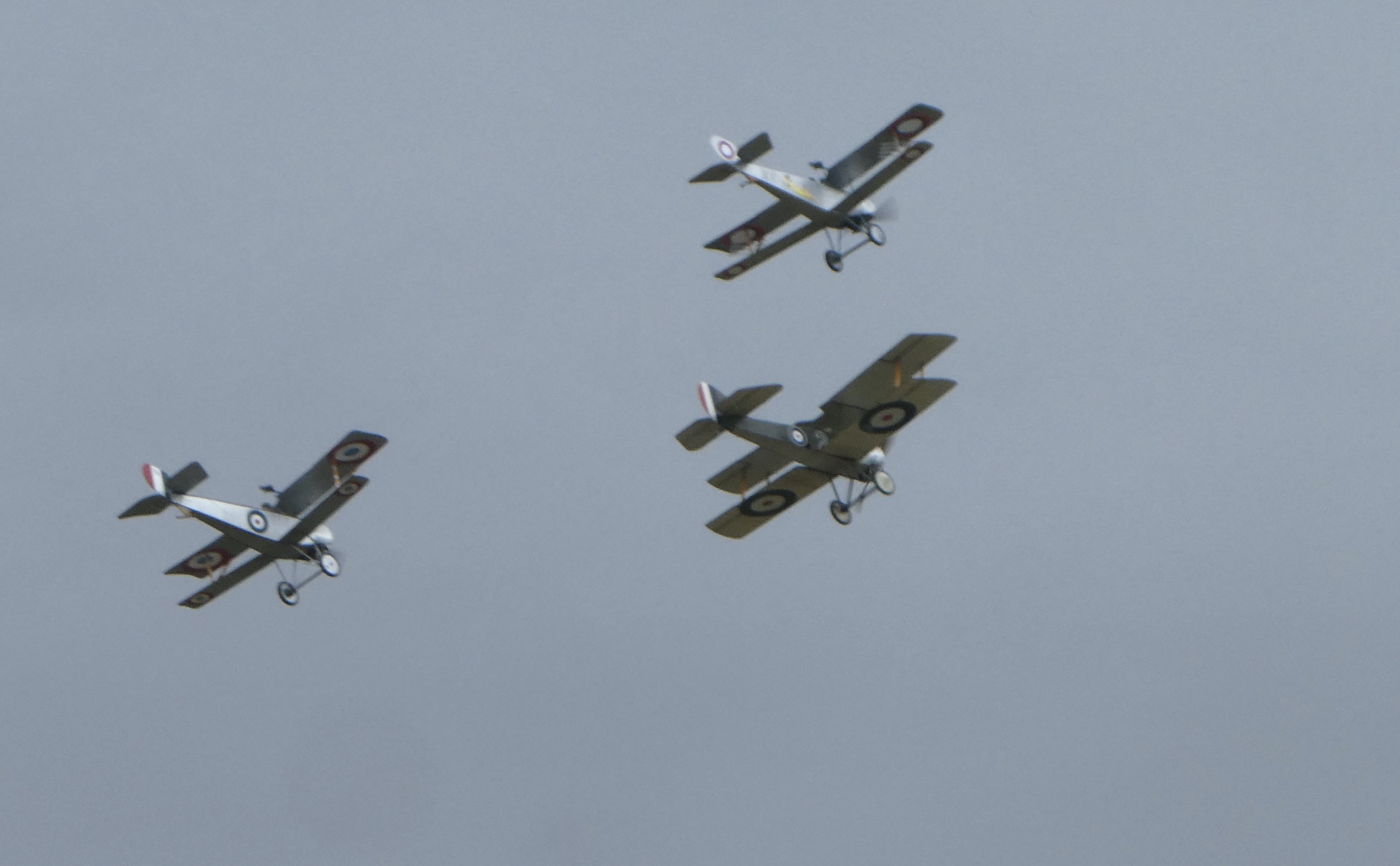
The air show was awesome. After being postponed twice due to Covid, organisation was superb and the programme varied. I’m not aircraft-mad but I do enjoy watching those fantastic old WW1 planes flitting about, and the amazing aerobatics of the speedy little Yaks, a lone Pitts Special 6 which did corkscrews, the precision parachuting by the Air Force, and of course the incredibly precise Harvards flying in formation – all nine of them – my late father in law Squadron Leader Bill Hoffmann flew Harvards and the distinctive noise they make is one of the very few which I can recognise.

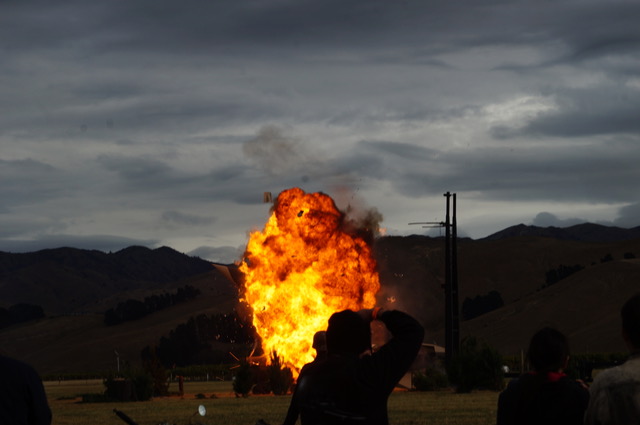
The usual War scenarios were played out with lots of pops and bangs and dramatic ‘deaths’, and ‘officers’ in a variety of uniforms rushed around looking puzzled. Always entertaining! The old warplanes zoomed around overhead and a huge rocket was dramatically demolished (photo by Dave).

There were a few new events, particularly on the first evening when, at the end of a practice day, there was a twilight visit by two witches and rocket-man, who also appeared alone the next two days – superman in a golden helmet with two jetpacks on his back, whizzing around with effortless ease. Oh to be able to fly like him! But apparently his landing was not quite so easy (!).

That first day finished with a fantastic fireworks display. For once I was glad we did not have Tiki with us – the first day or so away I was missing her, it felt strange walking around without her and not having to stop our journey every now and then for her to read her pee-mail, to borrow a phrase from her Facebook friend Charlie Browne.

So now we are holed up at the Blenheim Racecourse in company with a huge number of other motorhomes and caravans. NZMCA members have use of the area except of course on race days when everyone has to leave. We are parked right next to the track – which satisfies my penchant for wide open spaces. The racecourse is a curious mix of old buildings and new, with signs on some warning they are not earthquake-proof (and therefore don’t park too close…).

We are booked on the Cook Straits ferry two days hence. Will we make it? Both ferry companies have been having innumerable difficulties recently – mechanical failures, rough seas, etc – indeed we met one couple at Kekerengu who were two of three vehicles away from loading when they were told the crossing had been cancelled due to rough seas and they would have to rebook – and there were no vacant slots for at least a week. This doesn’t seem particularly fair. Luckily we do not have any must-make-it dates in the next few weeks.

52 Ancestors … Week 15.

The theme for this week is Solitude.

A recurring theme in my mother’s father’s family. My great grandfather Francis (Frank) Darchy was born in 1854 on an Australian outback sheep and cattle station to a wealthy grazing family. Together with his six brothers he attended an expensive private boys’ school in Melbourne. His family were famous for entertaining with “bumpers of champagne”. But the family’s sheep and cattle properties were mostly disbanded during the Depression of the 1880s and most of the brothers were forced to earn their own livings. Most took off for the loneliness and solitude of the Australian bush, the only life they knew. They became stockmen and later the more able became managers of cattle/sheep stations. Stockmen drove stock sometimes for thousands of miles across the Australian continent. The Australian Banjo Patterson’s poem ‘Clancy of the Overflow’ describes the life of a stockman beautifully.

Clancy of The Overflow [poem by Banjo Paterson]

Incidentally my grandfather worked at The Bulletin, where this poem was first published, and I went to school with a granddaughter of Banjo.

Initially Frank was an outback mailman, travelling between Dirranbandi, Camooweal and Anthony’s Lagoon – a particularly lonely job, spending weeks on horseback, leading a packhorse with perhaps a dog for company, going from one remote cattle station to another – covering hundreds of miles. His wife ran a boarding house in a country town. How often did he see her?

Two of Frank’s sons Dick (1882-1938) and Ted (1885-1947) fought in the First World War. Ted was badly gassed in France. Returning home, he also returned to the outback and the lonely life of a stockman. At the time of his death in 1947 he was working on the ironically named Gallipoli Station in the Northern Territory (he did not fight at Gallipoli but in France), maintaining one of the outer pump stations which were so essential for providing water from artesian wells for the stock. He spent his days alone, being supplied with food and smokes every few days. He died alone, coughing his heart out judging from the position in which he was found. In lonely solitude.

52 Ancestors …. Week 14 (Apr. 2-8)

This week’s theme: Begins With a Vowel. I’ve chosen two A’s, with links to an I.

My paternal Great Grandmother Adela Campbell Scott Macloskey was born in 1848 in Greenock, Scotland, the last-but-one of 14 children of John Macloskey and Mary Ann Brooks. She was only six years old when the family emigrated to Melbourne, Australia where father John, a successful merchant and tailor, died three months later of dysentery.

When Adela was just eighteen she married Dubliner Frederick Wentworth Wade, an up and coming young accountant, later to become a solicitor and barrister and one of Invercargill’s founding fathers, on 29 August 1865 in Invercargill, New Zealand. Was it with her parents’ blessing? What was she doing in New Zealand?

It is curious about Invercargill. Close to the southernmost tip of mainland New Zealand, five separate Macloskey wives married there, yet none were born there. Two of the elder Macloskey girls journeyed to NZ in 1860; one of them married in December 1861, the other six months later. Adela’s future husband also arrived in Invercargill that year. Perhaps he had met the Macloskey family earlier in Melbourne, or met the married sisters in Invercargill. Then Adela visited her sisters …

Adela and Frederick had six children in the space of nine years. When the youngest, my grandmother Bertha was six months old her mother took her to Melbourne presumably to meet her extended family, and Adela died there of pthisis (TB) aged 26.

It is not known how Bertha was returned to her father in Invercargill, but just two years later Frederick married again, in Melbourne – Adela’s niece Ada Gresham Macloskey, aged 19, who became mother to five children aged between three and 11, and then two years later had one of her own – Florence Ada “Fonna” – six children to manage when she was still only 21!

A fuller story of the Macloskey Wives of Invercargill is at https://nancyvada.me/genealogy/the-macloskey-wives-of-invercargill/

52 Ancestors …. Week 13.

This week’s theme is Light A Candle.

Light a candle in memory of …. whom? Just about any and all my ancestors … No, no, that would be rather too many (!)

So I chose to interpret the theme as something which any one of my Great Grandparents would most likely have said many, many times in those pre-electricity days. Something which we say occasionally even now when wanting to create a romantic atmosphere … or perhaps when the mosquitoes and sandflies become annoying.

Consulting Mrs. Google:
“Artificial light in the 1800s changed concepts of time, work, leisure activities, and consumption. Lighting systems shifted from candles, to whale and other oils, to coal gas…The first electric light used in a home in England was in Swan’s electrical workshop in Newcastle-upon-Tyne in 1881.”

And .. “Before gas or electric lighting were invented, the greatest light source indoors usually came from the fixed fire in the grate. Home activities revolved around the hearth, with candlelight or oil lamps providing dim (but mobile) light around the home. Move an arm’s length from the candle, however, and you couldn’t read, draw or mend.”

And …“While the rich used candles (probably made from beeswax or spermaceti wax extracted from the head of the sperm whale), others were not so fortunate. The less wealthy commonly lit their houses with stinking, smoky, dripping tallow candles which gave out very little light. The poor mostly used even feebler and fast-burning rushlights, usually dipped in smelly animal fat. The average 40cm rushlight only burned for about an hour. “

So what did my Great Grandparents use? Fortunately most of them came from homes where their father had a trade or profession – my paternal GGGFs were a shoemaker, a schoolteacher, a doctor, a merchant tailor, a shopkeeper, another schoolteacher, a Welsh farmer and one mysterious very wealthy young man who turned up in Australia in 1840 and became a grazier (wealthy land and stock owner). Apart from the Welsh farmer, all would have received a regular income and most likely have been able to afford reasonable candles which burnt for long hours.

Nowadays we just flick a switch, or when there is a power outage use a generator or resort to battery-fed torches or LEDlights. I wonder what my ancestors would think of me in our modern caravan with lights fed by solar panels, and bottled gas to cook by. Come to think of it we do still carry candles – the small round insect-repelling sort.

52 Ancestors in 52 weeks – Week 12.

Theme for this week: Membership.

My first foray into genealogical research in the 1990s was at a local Family History society where I was amazed at the number of old records still existing (or so I thought), but when computers and then the internet and email became available the scope exploded. Eventually I discovered e-mail lists and the Rootsweb lists in particular, wonderful international communities of like-minded people all focussed on a particular area or subject, eager to help with research enquiries, happy to discuss theories, and keen to gossip about aspects of life within those areas. The Lanark-List in particular – and best of all Membership was free. The only limit on the number of Lists I could join was the amount of time I had available. This was of course before Ancestry and MyHeritage and ScotlandsPeople, when parish registers and Census records were difficult to access unless one went to the local LDS Centre or joined a family history society. I shall never forget the camaraderie of those early Rootsweb lists, and also of a private group for people with cochlear implants – which eventually led to me meeting my husband – but that is another story.

52 Ancestors ….. Week 11.

The theme for this week is LUCKY.

My Great Uncle George Johnston 1855-1885 was born in Launceston, Tasmania a few weeks after his Glasgow-born emigrant parents arrived on the “Storm Cloud” in 1855 after a voyage of 71 days through the stormiest seas in the world. Perhaps that is why the sea fascinated him. He became a merchant sailor at an early age, the first seaman in the extended Johnston family for generations. He spent many years on cargo and passenger boats, both sail and stream, plying between the Far East, the UK, The Americas, New Zealand and Australia.

George loved his family and wrote frequent letters home, of which about 20 survive. In January 1877 he was visiting his uncle and family in London and wrote of a walk to the docks with his cousin and how he was lucky to secure a late berth on the 3-masted “Loch Ard”. He was still on that boat in November 1877 from Shanghai en route to Sydney then going on to Twatow and Amoy, and wrote of how they were lucky to evade a typhoon and how “the other ship which I at one time thought of shipping in came up 4 days ago with her topgallant masts gone – she lost them in a typhoon.”

Again luck favoured him and he did not remain on the “Loch Ard” much longer, as seven months later she was wrecked off Cape Otway on a voyage from London to Melbourne with the loss of 52 lives in a total of 54 passengers and crew.

George obtained his First Mate’s ticket on 25 October 1883 in London. Perhaps he decided then that he was tired of sailing the world and wanted to be closer to home and his family. He signed on with the SS “Cahors”, a new powerful screw steamer which carried about 200 passengers and cargo between Melbourne, Sydney and Brisbane, making several record-breaking runs. In 1884 George became the Second Officer.

His family in Tasmania were doubtless happy to know he was relatively closer to home and no longer subject to the perils of the open sea.

But on 10 June 1885 George’s luck ran out. The “Cahors” ran onto a reef just 13 miles out of land, in a relatively calm sea. As reported in the Launceston Daily Telegraph some months later:

“ Mr. Johnston and the crew worked all night, aiding the passengers, who were at last transhipped to the steamer “Burwah” and landed safely. He was lightly clad in his under-clothing, wet and exhausted from over-exertion, but he went ashore in charge of the mails, which he landed safely at Clarence Head, and remained there during the night. Next day, the 12th of June, he was going back in a launch to the captain and part of the crew who remained in charge of the wreck, when a heavy sea struck the launch and she nearly foundered. Mr. Johnston was washed overboard, and as the launch could not be brought to or turned, he perished in sight of those who admired his gallantry and unselfish labours to save others, and who were most anxious to rescue him. The launch had, in fact, put out contrary to law, as the danger flag was flying at Clarence Head at the time.”

Photo: It is thought that the young man sitting in the foreground was George Johnston.

A fuller version of George’s story is at www.nancyvada.me/George-Johnston-sailor-boy