52 Ancestors …. Week 7, 2025.

Theme: Letters and Diaries

My Great Grandfather Alexander Johnston (1829-1906) came from a family of seven, and from all accounts they were a loving, tight-knit family.

Only one sibling emigrated from their home town of Glasgow, and that was Alexander, who with his wife Margaret (Lyle) and little son Charles made the long journey to Tasmania in southern Australia, through some of the stormiest seas in the world. That was in 1855, the passage having taken 71 days on the perhaps aptly named “Storm Cloud”.

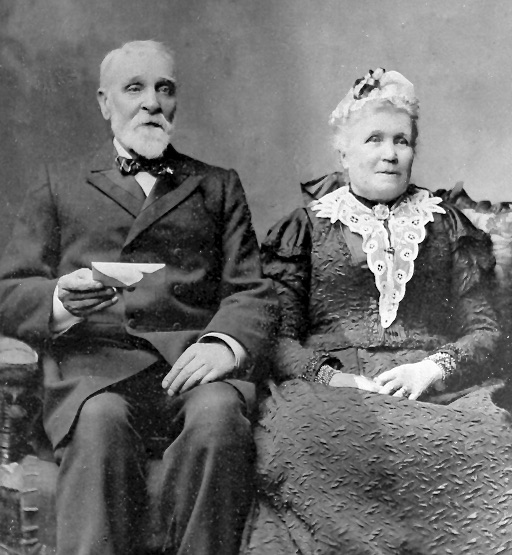
They must have kept in close touch with their Glasgow siblings. The only way would have been by letter transported via sailing ship. Such letters would have been very eagerly awaited. So much so that it became a custom to have a photograph taken holding a letter …. As in this precious photograph.

It shows Alexander’s older brother Peter Johnston (1824-1916) and his wife Agnes (Todd) (1829-1902). The photo is doubly precious as it is the only one which survived a house flooding which resulted in all earlier family mementos, photographs, etc being destroyed. Somehow this one survived.

We do not have any of the letters received by Alexander, but we do have a number of letters written to his Tasmanian-based family by his son George Johnston (1855-1885), an ocean-going merchant seaman. He frequently visited his aunts and uncles in Glasgow and mentioned them in his letters, including Uncle Peter and Agnes. George’s letters will doubtless be covered in a later theme.

52 Ancestors 2025 …. Week 6. AMENDED

Theme: Surprise

I am reposting this blog due to the amazing number of typos and other errors … I plead being under the influence of a strong painkiller at the time I wrote it … but that is no real excuse (!) My thanks to Lesley, Arthur and Dave for pointing out some of the errors.

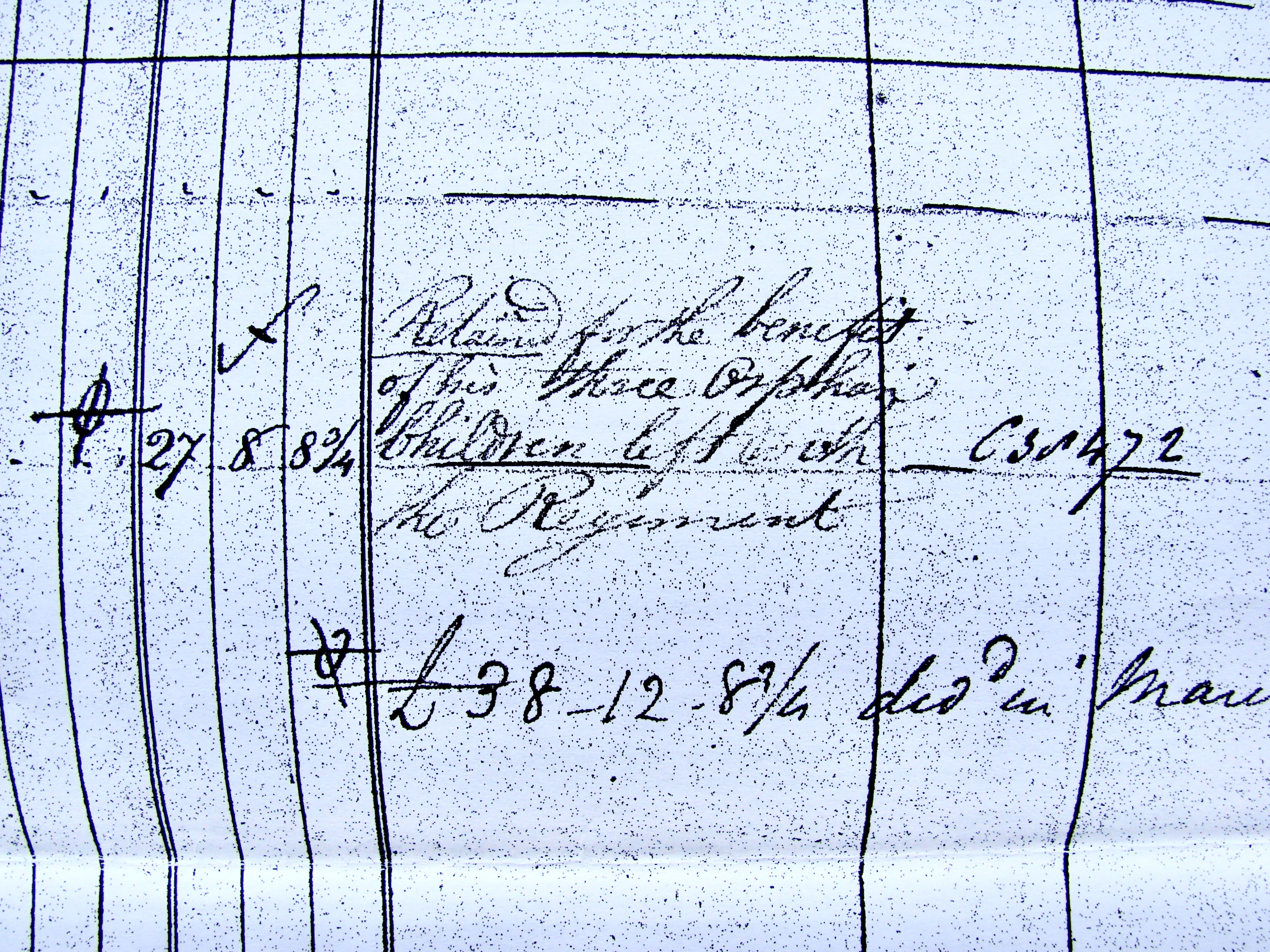
My Great Great Uncle John Lyle (1789-1822), born in Paisley, Scotland was a soldier with the 51st Regiment of Foot. He fought at Waterloo – and survived. Seeking more information about him, I hired a researcher to check the Regimental files in the British Archives. The British Army kept very detailed records in those days so among other things I learnt that he had enlisted on 24 August 1805 when he was 18 (the Battle of Trafalgar was in October of that year) and that he was 5 feet 3 inches in height which increased to 5 feet 7 inches over the next six years. He had a brown complexion, grey eyes, brown hair and a round face. He rose through the ranks quickly, becoming a Corporal the year after enlistment and attaining Sergeant (”Serjeant”) rank 7 years later. He is mentioned in detailed Muster Lists and Pay lists and notes about long marches.

In 1822 John was sent to Jamaica with the Regiment, where he died of yellow fever a few months later. The Regimental Returns for June-July 1822 show that following John’s death, a quite reasonable sum of money for those days was retained “… for the benefit of his three orphan children left with the Regiment”. What a surprise!

The births of all three children are in the Regimental records, which give his wife’s name as Agnes Lyle (it is not certain that Agnes’ maiden name was also Lyle). I have not been able to discover a marriage record. Their first child, named John, was born in Dumfries in 1810, after the Regiment had served in the Peninsular Wars for several years and returned home. His second child, a girl named Agnes, was born in 1813 in Liverpool; soon after John would have been sent away to fight in the Pyrenees. How many years was it before he saw his daughter again? Or did his wife and children follow the Regiment? The third child, another daughter, was born in Valenciennes, France in 1819, where the Regiment was posted after Waterloo.

Regimental records do not show whether his wife accompanied John during his various campaigns, and there is no record of her death. Did she go to Jamaica with him? No burial records can be found. The children, too, cannot be traced. Maybe one day a DNA match will be found ….

52 Ancestors, 2025 …. Week 5.

Theme: Challenge.

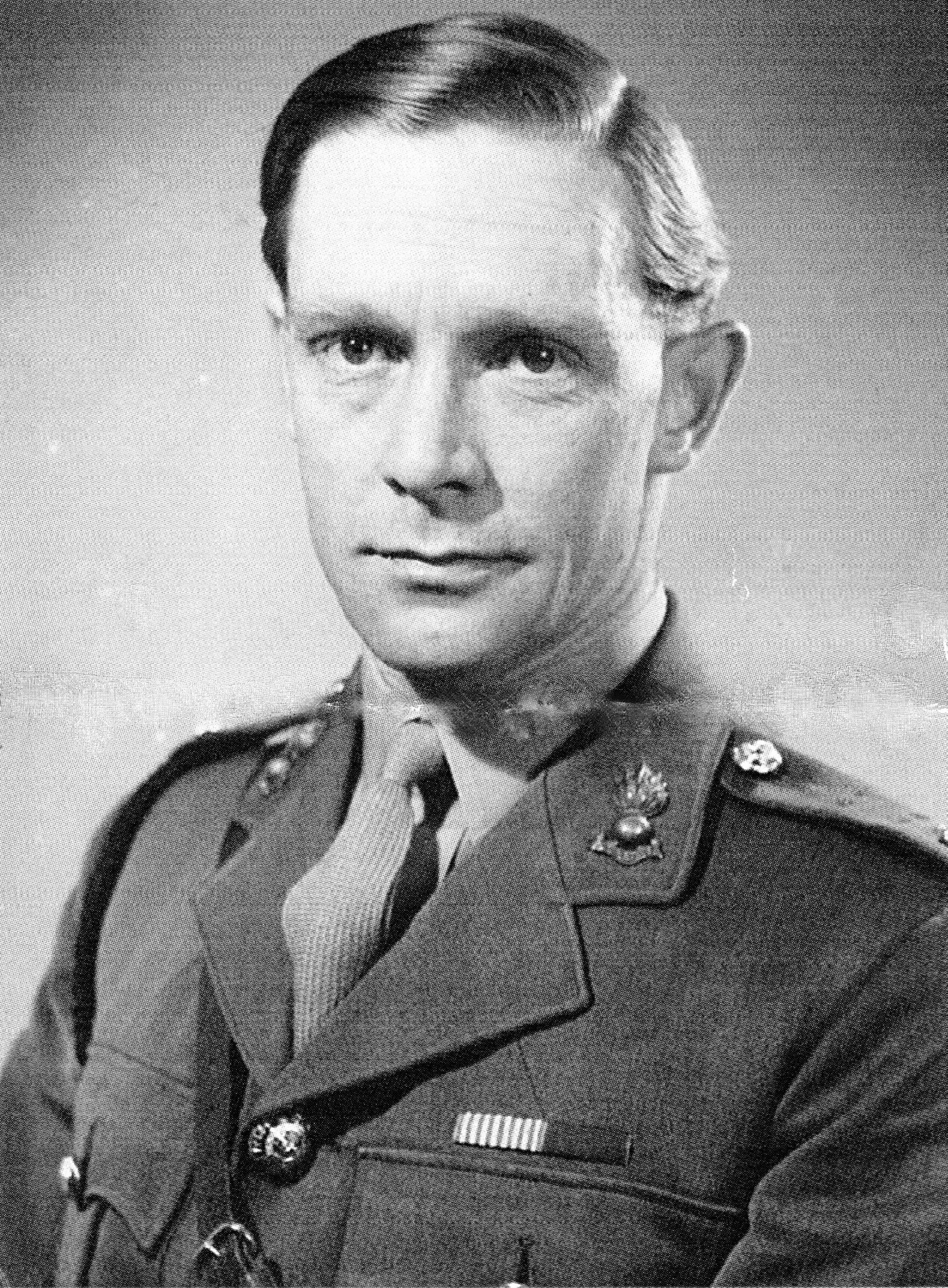
My second cousin Peter John Hunt (1929-2012) was a surveyor on the New Zealand Geological Survey Antarctic Expedition (1960–61), He received the Polar Medal and RGS Sir Cuthbert Peek award in 1969. Hunt Mountain (3660m) in Antarctica was named after him.

Originally a British Army officer, “……during the summer of 1959/60 he took part in the Geological and Topographical Survey Expedition, and after spending the following winter at Scott Base, he led the Southern Party of the 1960/61 Summer Expedition. The work of these field parties covered about 12,000 square miles of previously unexplored land in the Ross Dependency from Cape Parr (80° 30′ S) to the Beardmore Glacier (84° S), about 400 miles south of Scott Base. (Royal Engineers Journal, No. 2 1962)

He spent the winter at Scott Base in 1960. At that time they had none of the modern Antarctic-style clothing such as down-filled parkas, and very few of the modern comforts now available such as well-insulated huts, a cinema, etc . Transport was mainly by dog sledge. They had one smallish bulldozer, 4 tractors and a Landrover. Heaters ran on kerosene.

Peter kept a diary over that winter. On 30 March 1960 he wrote “Today we have seen the sun from (Scott) Base for the last time – till about the third week of August. ‘Officially’ it sets at this latitude on 4th April but of course we are screened here by the hills to the north and west. As the sun recedes slowly from the dog lines down on the Ice Shelf those dogs still in the light seem quite content, while those in the shade kick up a fantastic rumpus in an attempt perhaps to persuade the sun to return!”

By 1 May 1960 they only had 2-3 hours of twilight and ran the dogs for exercise when the moon was up.

While on a brief field expedition during the winter, sleeping in a tent, he wrote: “I would like to spend a penny outside but it would be suicidal.”

The diary was finally posted to his mother in early Spring. Until then his family had had to rely on the occasional radio message.

52 Ancestors …. Week 4

Theme: Overlooked.

When I first started investigating my maternal grandparents’ line, it was known that my Great Grandparents Edwin Hunt and Margaret Morgan and their large family had emigrated to Australia from Berkshire in 1879, and that he had two sisters Elizabeth and Mary Anne who had emigrated earlier. A third sister Emma and a brother Reuben remained behind in England.

Over the years, and particularly once internet searching became available, the various lines were investigated and recorded. It was fortunate that the 1841 Census showed Reuben, at that time aged 17, living with his parents and siblings – otherwise his existence may have been doubted, as he cannot be traced further.

So matters rested for many years. Edwin and Margaret had 5 children born between 1820 and 1837 …. with gaps of several years between most of them. Perhaps that is why the gap between two of the sisters went unremarked (1829 and 1833).

But a few years ago, a cousin directly descended from Mary Anne did think to check, and with increased access to death records discovered there had been another sister, named Zebra, born in 1831 and died aged 2 in 1834. As was customary in those times, the deaths of little children were rarely if ever spoken about.

Her name may have been a contraction of Zipporah, a popular name at the time. A distant cousin born in 1843 was named Zilla(h), and the fourth child of Edwin’s sister Mary Anne was named Lizzie Zebra, born 1863 – indeed it was while searching for a source of her name Zebra that the 2-year-old was discovered.

52 Ancestors – Week 3, 2025

Theme: Nickname

I am late with this – I couldn’t think of anything new to write about concerning my family’s or my husband’s family’s various nicknames – nothing very startling or unusual – but then I remembered…..

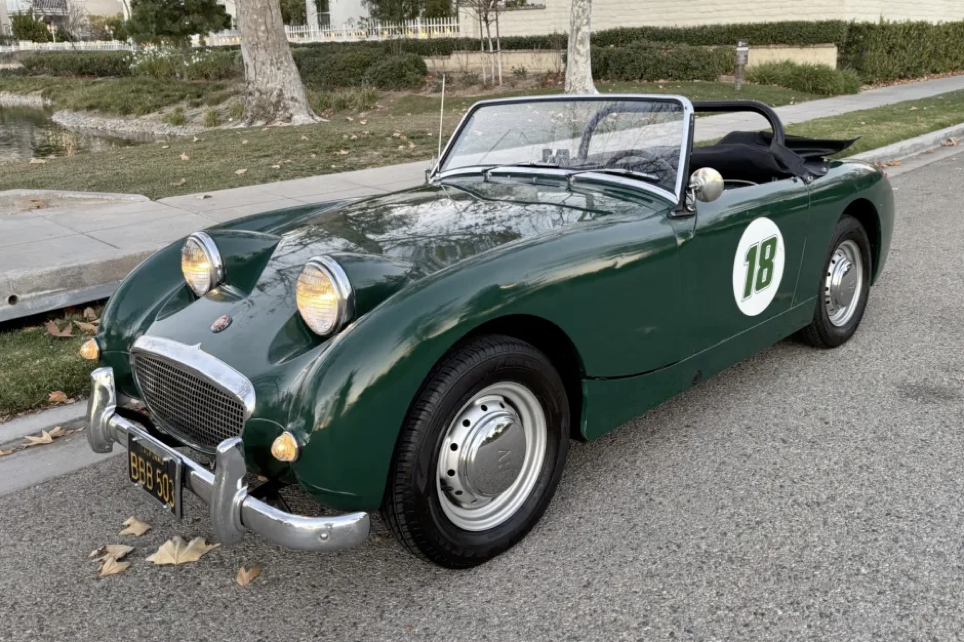
I once owned a gorgeous little sports car – British racing green with a black hood and tonneau – an Austin Healey Sprite Mark 1. Always known as a Bugeye.

According to the Austin Healey website:
“The Austin-Healey Sprite series AN5 (produced between 1958-1960) is the original Sprite. It is perhaps better known in North America as the Bugeye and elsewhere as the Frogeye. This nickname is owing to the unique headlight mounting. … Power was supplied by the Austin 948 cc A-Series engine producing 43 hp, and while performance was hardly neck snapping, no one complained because the car was just so much fun to drive.”

And it was. Whenever possible I drove with the hood down, even in light rain, which meant sometimes I was invisible to the car in front, being so low to the ground … the steering wheel was minuscule compared to modern styles and in addition was very, very sensitive, racing-car style – which scared a friend who tried to drive it. The suspension was very low so I had to be wary of speed bumps and potholes.

There were no outside door handles and no roll-up windows. An invitation to thieves. But a previous owner had fitted a nifty little switch well hidden under the dashboard and although my dear little Bugeye WAS stolen twice, each time it was abandoned just down the road with wires hanging down under the dashboard – but that hidden switch foiled the thieves every time.

Only recently have I discovered that a cousin owned exactly the same type of car at exactly the same time! His most enduring memory was waiting at traffic lights in the middle of a three-lane road, with huge trucks on both sides of him, and the thought – “I hope they know I’m here” !!!

This is not my photo, my Bugeye did not have a racing number on it or a roll bar, but the colour is so close….. A wonderful memory.
 

52 Ancestors – Week 2, 2025.

Theme: Favourite Photo.

This photo shows my Aunt Betty and my mother Vada d’Archy in the grounds of their home in Toowoomba, Queensland. It must have been taken soon after their father Dick d’Archy left to fight in the First World War. He had been managing a large cattle station in far North Queensland, where my mother was born in 1913. Their mother Lily Hunt was a gentle Englishwoman who not surprisingly took the girls back to her own mother and sisters in Toowoomba. They had a large house which was shared at different times with a number of relatives.

My aunt had a special fondness for the house, named “Redmarley” after the Hunt family’s ancestral village in Worcestershire. Many years later she made more than one trip to Toowomba to try and locate the house. Here it is in a second photo – with a number of relatives – my mother Vada is the little girl being held by – I think – her Aunt Margaret. My grandmother Lily is standing to their left, and Betty is in front of her mother.

52 Ancestors in 52 Weeks – Week 1, 2025

Theme: In the Beginning.

I have decided to take up the 52 Ancestors in 52 Weeks challenge again – I completed almost every week in 2023 but only the first few months in 2024. 2025 presents a whole new list of topics.

From as early as I can remember there was a huge old bible sitting on top of the piano …. There was a roughly-drawn family tree with a few names written inside it which meant nothing to me for a long time. I was told it came from my father’s Johnston family.

Something prompted me to copy the entry when I was about 12 …. And somehow, miraculously, that piece of paper survived …

Fast forward many years. I started to become interested in genealogy. My father knew nothing about his father’s Scottish Johnston family; granddad was a journalist and an intensely private man but I knew he had been born in Launceston, Tasmania and his ancestors came from Scotland. By then the bible had been lost, probably during a house move, but I still had that scrap of paper. It had a rough-drawn chart going back three generations, showing that Alexander Johnston married Margaret Lyle, they had 3 children Charles, Margaret and Alexander, and there were very few descendants – none from Charles, one only from Margaret who married a Huxtable, and although Alexander had two, one died in infancy.

But the Tasmanian Archives, when consulted, listed three children – George, Margaret and Alexander (my grandad). Where was Charles? Initially and somewhat naively I assumed Charles had been christened George – at that stage I had no birth dates.

All became clear eventually when I discovered an immigration record. Alexander and Bertha had a little son Charles with them when they emigrated to Tasmania in 1855. George was born soon after their arrival.

There are many stories about this family, probably the most interesting being about George, a merchant seaman who lost his life in a shipwreck off the Australian coast, when aged only 33. Charles, Margaret and Alexander all ended up living in Sydney with their families but over the years contact was lost; it was not until I started actively investigating that I made contact with some of their descendants – certainly more than that early rough tree indicated. Margaret in particular has at last count about 98 descendants!

I was born in Sydney, Australia but now live in New Zealand. By an amazing coincidence I discovered that one of Margaret’s descendants is actually living in the same city. How lovely it is to have a cousin here!

52 Ancestors ….. Week 22.

Topic: Creativity

My mother “Vada” (d’Archy) Johnston was always very clever with her hands. A stay-at-home mother like most of her contemporaries, she was always knitting, crocheting or sewing something. She used to make all her own and my dresses. When my brother and I were young she went to a number of evening classes where among other things she learned to make lampshades and artificial flowers – some of the latter she then sold to a local dressmaker; they were beautiful and very realistic. I was fascinated by the process and loved watching her – she had a little bag full of sand and tools which were heated in the flame of a spirit lamp. Stamens, etc were purchased. Other tools of her trade were reels of fine wire, tiny wire clippers and scissors, and special fabric glue. Sadly I do not have any examples of her work.

It ran in the family. Her English-born mother Lily (Hunt) d’Archy did much embroidery but I think some of it was simply repairs – including to damask napkins, which I still have. Her sister my Aunt Betty d’Archy made my christening gown – ultra-fine muslim with lots of lace and tiny satin bows. It is shortly to be worn by my Great Niece .. the 6th wearer and 3rd generation.

52 Ancestors …. Week 21.

Topic: Nickname

Like most other late 19th Century families in England and Australia at least, my Darchy family delighted in never using a person’s full first name. It was usually just shortened – William became “Bill”, Frances became “Frank” etc, or the middle name was used – Edith Lillian was always “Lily” and her daughters Lillian Vada and Nancy Elizabeth were always “Vada” and “Betty”. Clara Cecille was “Clare” and George Thomas Darchy was always “Tim” possibly because there were several other Thomases variously known as “Tom” and “Dick”.

A few had more unique nicknames – Frances Clare Darchy was always known as “Aunt Jig” because when young she could never stay still. Her nephew FritzEdward Wreford Darchy was “Reefer” while another nephew also FritzEdward was “Son” or “Ted”.

My English mother -in-law’s father also came from a nickname-addicted family of ten. Adeline Maud Attrill was “Add”, Mabel Florence Attrill was “Mae” , Edith Emma Attrill was “Ede”, Sydney Claude was “Sid”. Not really unique nicknames but easy to trip off the tongue in a hurry!

I was always just plain “Nan”, even at school where there were some quite creative names, especially among the boarders. It wasn’t until I had left home and all the people who knew me that I became Nancy. When I started writing family stories I always used my middle name Vada as well, to distinguish me from countless other Nancys, not just within the family but out in the big wide world.

52 Ancestors …. Week 20.

Topic: Taking Care of Business.

My GG Uncle Charles Johnston 1854-1933 was born in Airth, Stirlingshire. He was just two years old when he emigrated to Tasmania with his parents on the ‘Storm Cloud’.

He grew up in Launceston, Tasmania but must have moved to Sydney about six years before marrying Charlotte Jane Newsom, daughter of William and Ann Elizabeth Newsom, in 1891 when he was 37. They had one son born in 1894.

Charles was a draper rather than a carpenter, the latter being both his father’s and his son’s occupation. His father later became a Librarian, but that didn’t rub off on Charles either.

Charles had a small haberdashery shop in Falcon Street Crows Nest, North Sydney, only 100 yards from a major shopping centre and road junction . Charles’ cousin Walter Louis Huxtable was to say two decades later that Charles’ shop was “100 yards from a fortune”. Five roads converged at the junction and in the middle was a tram centre for trams from all parts of Sydney, then a burgeoning city. Nevertheless the business continued for many years, until Charles retired about 1920. He died aged 79. It is not known if Charlotte assisted her husband in the business.