52 Ancestors – Week 39.

The theme for this week is Surprise.

DNA testing has certainly opened the door to finding more cousins. But too often after establishing a family link and exchanging a couple of emails, communication stops. But not always.

My Great Grandmother Margaret Prendergast (1844-1915) arrived in Australia from Ireland as a 6 year old in 1854, together with her parents and most of her 9 siblings. They went to a small country town in South Western NSW called Maude, where they stayed. Grown-up Margaret went to Melbourne, married, was widowed after a few years, then married again to my Great Grandfather, and lived in various country towns while he worked at droving or managing remote sheep and cattle stations. Grandfather did the same.

I was born in Sydney, Australia, lived in Brisbane for many years and moved to New Zealand in 2000.

Margaret’s elder brother Patrick John Prendergast (1837-1886) stayed in Maude and married a local lady. They had 10 children of whom one went to Blackall in outback Queensland, where some descendants still live. A great granddaughter of his, named Joan, now lives in Brisbane. She is a third cousin with whom I have established DNA contact via quite a small match – but I recognised the surname!

So after discussing at some length via various emails the coincidence that we both lived in the same city for many years but never knew the existence of each other, I casually mentioned that I now Iive in a certain town in New Zealand. And Joan exclaimed – “So does my sister!” What a surprise.

Pat and I are now good friends and see each other often. The known Prendergast family tree has greatly expanded. It is so good to have at least one relative in my new home town. Incidentally I also have another third cousin living here from a different family entirely.

52 Ancestors …. Weeks 37 and 38

Topic for Week 37: Prosperity; Topic for Week 38: Adversity.

Both Prosperity and Adversity have been major features of my Australian Darchy family – so I am combining the two weeks’ postings.

My mysterious ancestor Thomas Darchy, born in 1820 in Augsburg Bavaria to English/Scottish/French/Prussian parents – the still unravelled story possibly involving a runaway heiress – spent his first 20 years in the care of a guardian in Switzerland, He was ‘collected’ in 1830 by a respectable churchman who had to sign all sorts of legal papers, then disappeared for the next 10 years and finally turned up, unaccompanied, and a very wealthy young man, on a ship in Australian waters in 1840.

He soon became involved in the budding Australian grazing industry – cattle and sheep – exploring and taming wild country and pushing westwards from the south-east coast (the only settled area at the time). His wife Susan Byrne was said to have been the first white woman west of the Murrumbidgee River. He owned or leased several properties including “Gelam”, before settling on “Oxley” near Hay in the Riverina area of New South Wales, some time before the birth of his sixth child in 1857. A tutor and later governess was employed to teach the ten children and later the boys were sent off one by one to a prestigious boarding school in Melbourne.

A newspaper correspondent journeying towards the Hay district in 1872 wrote:

“Continuing the journey for a few miles I got thoroughly into the much dreaded “lignum” country.  The name is doubtless a corruption of polygonum. It is a kind of hard-stemmed, thick, rushlike plant, with a number of branches from each stem. The lignum country presents an extraordinary sight.  There are scores of miles of it – the lignum growing from five to fourteen feet high, in fact over horse and rider’s head. It resembles a great artificial plantation, and is said to bear a nice flower, but it was not in flower when I saw it. No use whatever is made of this plant, and not a blade of grass was growing near it. In fact the lignum country is the terror of the traveller, whether in a vehicle or on horseback. The ground on which it grows is quite black, and exceedingly sticky and tenacious. A few yards over this adhesive soil made my horse’s hoofs resemble pans, and another horseman and myself had to dismount several times to clear the tenacious clayey composition off. The wheels of a buggy resembled cheeses, all the spokes being filled up with this black clay. The driver had to dismount at intervals and with a spade clear the spokes of this waxy substance, in order to make the slightest progress.

“Regarding “Gelam” … This is one of the stations first taken up by Mr. Thomas D’Archy, Esq., about thirty years ago.  Mr. D’Archy also took up the station above “Pimpanpa”. The difficulties and strange adventure, particularly with the blacks at that time, of Mr. and Mrs. D’Archy, were of a very remarkable kind, but their recital would occupy too much space here… “Gelam” has an area of about sixty square miles, and a frontage to the Murrumbidgee of ten miles.  It carries about 5000 sheep and 500 head of cattle….

(And a little later) … to avoid a long dreary ride of nearly forty miles without a habitation, I took a northerly course across plains, the greatest part of which were under water for eighteen miles to “Oxley”. Large quantities of wild fowl were on the plains, chiefly bustards and wild duck. It was about four o’clock in the afternoon when a narrow belt of trees on the plains indicated my approach to the “long and lazy Lachlan.” “Oxley” is the residence and station of Thomas D’Archy, Esq., J.P.  I received a most hearty welcome at the station and remained there several days.  Mr. D’Archy is the oldest resident in that part of the country; and the health of this hospitable pioneer and his kind hearted lady, were drunk in bumpers of champagne at the last Pastoral Association’s dinner held at Hay.” … “Oxley has an area of 160 square miles and has a frontage to the Lachlan of eighteen miles. Mr. D’Archy has marched with the times, and has seen almost all his early compeers come and go. The station is well improved. Sixty or seventy miles of wire fencing have been erected on the run which is also subdivided into paddocks.  Mr. D’Archy was the first to secure the waters of the Lachlan by damming.”

So, Thomas Darchy overcame some early adversity to achieve prosperity. But five years later he died aged 57, probably of apoplexy (stroke). Too much good living?

He did not live to see Adversity hit his family again in the form of a major economic depression in 1890, accompanied by a bad drought and rabbit plague, with prices of wool falling heavily and later a shearer’s strike. By then several of his sons were running their own properties – mostly leased on long-term loans held by investors based in Britain with no understanding of Australian conditions.

My own great grandfather Frank Darchy, in partnership with a brother and cousin, was forced to give up his property “Cuthowarra” near Wilcannia, and his brother Michael also went broke at “Tarcoola”. Frank, declared bankrupt, took to droving and was for a time an outback postman. Michael was more fortunate and managed to hold on to some of his properties.

Another brother Louis also went droving and was for a time a station overseer – but by 1910 he was a station cook and took his own life in despair in 1910. Yet another brother FritzEdward whose four children were all born in 1890-97, was to die in a lunatic asylum aged 56.

Fortunately Thomas Darchy’s three daughters were not so affected; two married and the third made a name for herself as a journalist – the subject of another story.

52 Ancestors … Week 36

Topic: Tradesman.

My 2xG Grandfather Charles Johnston (1797-1848) was a boot and shoe maker in Glasgow. Pigot’s 1837 Directory shows him listed at 267 George Street, which is now a prestigious address in the heart of the Glasgow Business district.

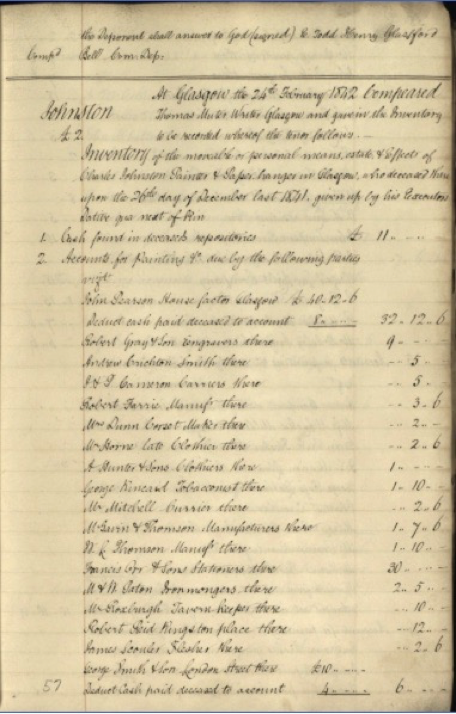
George died in 1848. He did not leave a will, but on 24 July 1850 his son Charles (1817-abt.1856) made a solemn declaration to the effect that he and his brother (which one was not stipulated) and their mother “entered upon the management of the deceased’s personal estate”. The value of the deceased‘s Stock in Trade and household furniture was 39 Pounds, 13 shillings and one pence; and there were a large number of book debts to the value of 100 pounds, 13 shillings and threepence. There was a further list of 21 people headed “Book debts due but bad (underlined) and on which no value can be put” to the value of twenty six pounds and eight shillings.

The younger Charles took over the business. The 1851 Scottish Census shows him living at the same address, 267 George Street, a shoemaker employing six men. So the business must have survived and flourished.

Scottish records are wonderful! Here is the first page of the declaration:

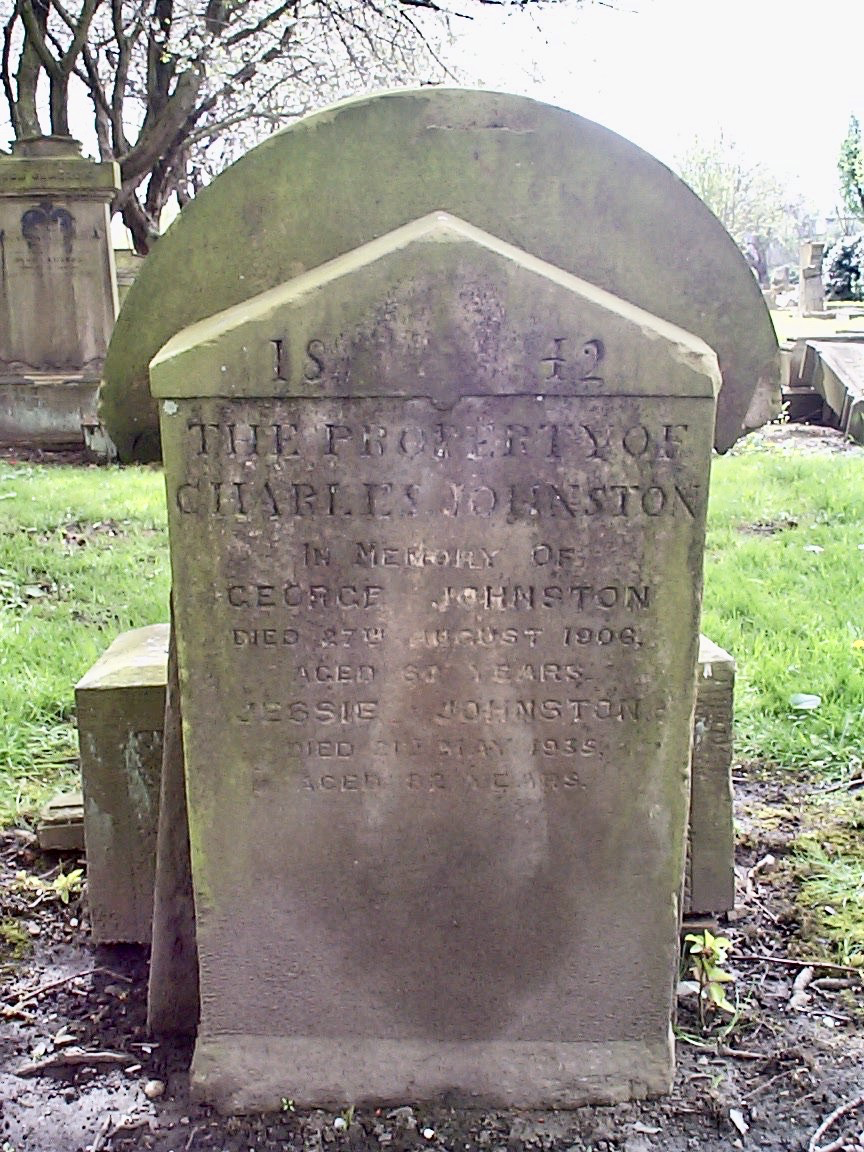
The elder Charles was buried on 24 December 1848 in Glasgow’s Southern Necropolis. Either he or his son the younger Charles was the registered owner of the lair, the address of the owner being 267 George St., Glasgow. It is a most imposing lair and as was common in those times, various other bodies were also interred there. Records enabled me to identify them and to greatly expand the family tree. Charles was obviously a very prosperous tradesman.

52 Ancestors in 52 Weeks – Week 35

Topic: Disaster.

Recently I was working on my husband’s family history and discovered that not only was his great grandfather Thomas “Tom” Brown 1857-1940 a coal miner in Wingate, Durham, northern England all his life, but he was also a third generation miner. Tom lived to be 83 and rose to be a Deputy Overman in the mine, an important position. His father John and three brothers were also miners. The 1861 Census shows that one of these brothers was only 12 years old.

From https://www.nmrs.org.uk/mines-map/accidents-disasters/durham/wingate-grange-colliery-explosion-wingate-1906/
The Wingate Colliery had an excellent safety record. Coal was first discovered there in 1839. It employed 1,200 men and boys in the various shifts…. There were two shafts at the colliery, an upcast and a downcast each of fourteen and a half feet in diameter and five seams had been worked at the colliery. They were The Five Quarter seam at 74 fathoms, the Main Coal seam at 89 fathoms, the Low Main seam at 110 fathoms, the Hutton seam at 129 fathoms and the Harvey seam at 153 fathoms.

The shift for the workmen was arranged as a fore-shift for the hewers which went down at 4 a.m. and worked up to 10.30 a.m. when the places they occupied were filled by a similar number of hewers in the back shift who went down at 9.30 a.m. and finished work at 3.30 p.m. A shift of haulage man and lads went down at 6 a.m. and loaded the coal produced by the hewers. They stopped work at the same time as the back shift hewers.


A repairing and stonework shift went into the mine at night. On ordinary nights, the shift in the Five Quarter seam was from 8 p.m. to 4 a.m., in the Low Main seam from 9 p.m. to 5 a.m. and in the Hutton and Harvey seams from 10 p.m. to 6 a.m. but on Sunday nights this shift went down together at 10 p.m., being proceeded by a shift of examiners. The undermanager was Mr. Robert Owen who had worked at the Wingate Grange colliery in various capacities for 40 years. There were also four overmen….. and one of them was Tom Brown’s father John Brown 1815-1900.


Up to 1906 the colliery had not had a serious accident for the 67 years that it had been established. But explosion in 1906 in the mine killed 26 pit workers and 86 ponies. The colliery closed in 1962.


My husband’s forefather John Brown and his sons must have been lucky – we do not know if they were actually working at the time or on other shifts.


As someone wrote: ““In those days, many young teenagers endured 12-hour shifts in the dangerous underground world. Wages were poor, working conditions appalling and serious injuries often occurred.”

52 Ancestors in 52 Weeks – Week 34.

Topic for this week: Newest Discovery

I missed the deadline this week – I was trying to finish off a family history book in time for a printer’s deadline.

The book is about my late husband’s family. An interesting mix of Northern Irish, Scottish lowlanders, English colaminers, South Londoners, schoolteachers, newspaper proprietors and an airforce pilot.

I did wonder how one of the grandfathers, Syd Attrill 1890-1968 from Plumstead, Kent from a family of metal turners who worked in the Royal Arsenal in London, met his wife Florence Brown 1887-1963 from Wingate, County Durham, from a family of coal miners going back several generations. It became clear when I checked the family papers my wonderful mother in law had accumulated – both Syd and Flo were newly minted schoolteachers, two of the first to be officially certificated, and in what was probably Syd’s first job, he was sent – you can guess – to Wingate! They were married on 24 July 1915 in Castle Eden, Co. Durham.

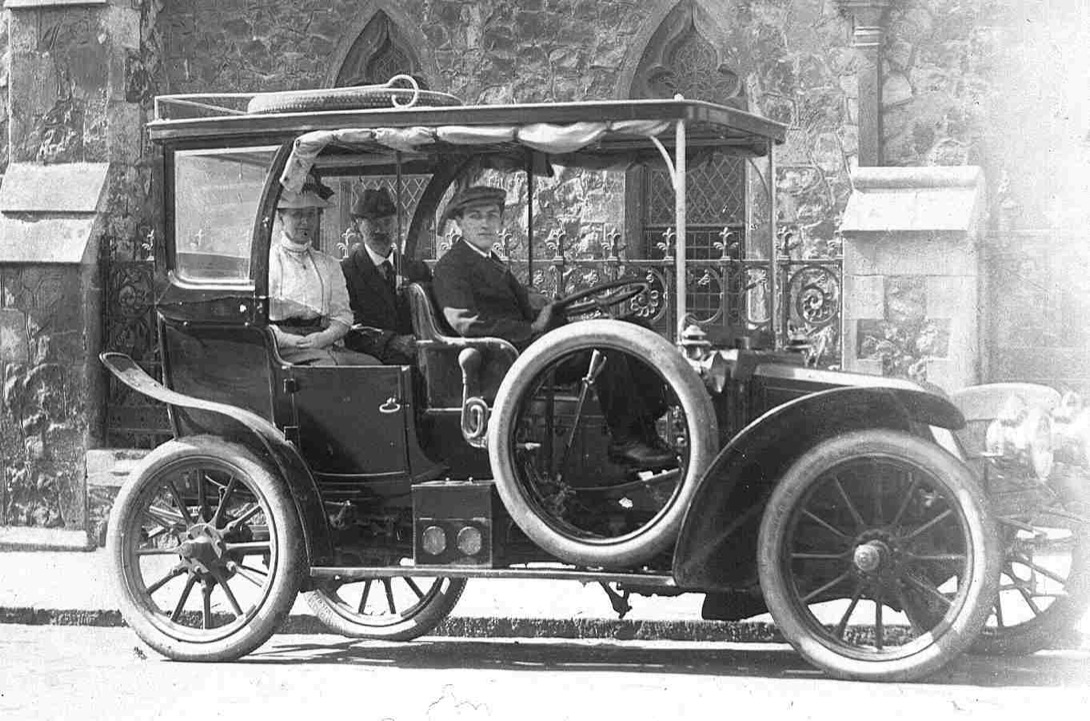
Postscript: Syd was a gunner during the First World War, serving most of his time in Egypt and the Middle East. He was wounded but survived. A little daughter was born during his time away but sadly did not survive. But mother in law Joy did survive and had a very happy childhood with adoring parents. I love the photo of them – so young and hopeful.

52 Ancestors – Week 33

The theme for Week 33 is “Strength.” Strength comes in many forms: physical, emotional, spiritual, just to name a few. What ancestor do you think of when you think of strength?

My G GrandUncle John Johnston 1831-1909 was born in Glasgow, the second-last of seven children. His father was a shoemaker as was one of his brothers, the others were a master tailor, a carver and gilder, a cabinetmaker, a tobacconist and later commercial traveller and then Court officer. John, initially a warehouseman, married Benjamina “Jessie” Leckie in 1856, according to the forms of the United Presbyterian Church. Soon after the birth of their first child they moved to Edinburgh where he studied for the Congregational Ministry at the Edinburgh Theological Hall. This was a little surprising seeing the Johnstons were strong Presbyterians with several Reverends in the immediate family. But religious differences did not split the family –
for example in 1875 John travelled from London to Glasgow to officiate at the marriage of his niece Elizabeth Jane Johnston to the Rev. Adam Gray, Minister of Sutton United Presbyterian Church in Cheshire.

John must have preached for a time in Edinburgh, but his little family were soon on the move, first to Stirlingshire, then Aberdeenshire and finally to Stoke Newington in London where John became the long-serving minister of the Raleigh Memorial Church (nowadays the Abney Reformed Church). Along the way four more children were born. Jessie died in 1871 aged 38 and John remarried, another, younger Jessie with whom he had another child in 1874.

Between 1886 and 1903 Charles Booth did an important survey into life and labour in London, and it includes 27 pages devoted to an interview with John Johnston.

John’s obituary, which appeared in the Congregational Year Book for 1910, includes the following:
“Mr Johnston twice underwent imprisonment for non-payment of the education rate, being an ardent Passive Resister. “

The ‘education rate’ was a locally-collected tax fixed on property values, collected from everyone in the parish to support Church of England institutions such as a National School, and other schools were not allowed to share this money but had to depend on voluntary contributions, so no wonder a Congregational minister would be against it.

52 Ancestors – Week 32

Topic: Reunion.

In 1806 my 5 X GrandFather Hugh Vesty Byrne (1772-1842) was transported to Australia on the convict ship “Tellicherry” for his part in the Irish rebellion of 1798, along with Michael (Martin) Burke, Michael Dwyer, Arthur Devlin and John Mernagh. The voyage took 168 days. Of 166 prisoners, five men and one woman died on the voyage. And at least one baby was born – my 4x GrandMother Ann “Nanno” Byrne. Her mother lived to be 98 and had 16 children.

The Lord Lieutenant of Ireland had summoned them from Kilmainham Gaol in Dublin and exiled them to Botany Bay as Irish State Prisoners but free men in the Colony of NSW. His directive was that they were NEVER to be allowed back to their beloved Ireland. Most of them were given land grants of 100 acres.

200 years on a Reunion of Tellicherry descendants was held in Campbelltown, NSW, the area where most of the released convicts settled. Two full days were devoted to various presentations, the walls of the meeting hall were covered with family trees, and special visits were made to the local church of St. John and the cemetery where so many of those early settlers and their immediate descendants were buried.

The organisers, principally Dr. Ann Prendergast and Jennifer Killen, did a fantastic job. I met so many Darchy relatives I knew of only vaguely. It was the start of my abiding interest in my Darchy family and my mysterious 4X Grandfather Thomas who married ‘Nanno”.

Thomas Darchy’s story is told elsewhere on this website. I will be adding some photos at a later date.

52 Ancestors – Week 31

Topic: Flew the Coop

Samuel Todd Johnston 1866-1934 and his brother Peter Johnston Jun., 1874-1946, were my First cousins twice removed, ie my Grandfather’s cousins – although I very much doubt they ever met. They were also the brothers of Mary Learmonth Johnston who was the recipient of the birthday book I wrote about in Week 29.

There were seven siblings who all stayed close to home throughout their lives with the exception of those two brothers. Samuel went to Chicago and Peter to Canada, and both married but as far as is known had no children. Samuel’s occupation is unknown but Peter was a butcher, so probably went to a good job. Samuel was not in the 1891 Scottish Census but Peter, then aged 17, was still living with his parents and sisters at that stage, and was still there in 1901. Unfortunately no entry can be found for the family in the 1881 Census. Peter was still living at home in 1901. The birthday book notes that Peter “left Scotland for America on 9 Feb 1910. “ it also noted “4 years since he left”. But nothing about Samuel.

Their sister Mary must have tried hard to maintain contact. In her birthday book she noted the birthdays of their wives – “Mrs. S T Johnston” and “Mrs Peter Johnston”. But nothing about their marriage dates (which were often noted for other people). Mary died in 1932 and someone else took over the birthday book and noted her death as well as Samuel’s; Peter’s turned up in an internet search.

It is impossible to know if other family members maintained contact. It seems that Mary was the glue that held the extended family together.

52 Ancestors … Week 30.

Theme: In the News.

George Thomas Darchy was my great grand uncle. Born in Melbourne, Australia in 1864, he was the ninth child of pioneering pastoral Thomas Darchy and his wife Susan Byrne, and the only one of fheir children not born ‘at home’ on their outback sheep and cattle station.

His early education would have been at home with a private tutor, after which he attended a prestigious boys’ school in Melbourne. He would have been 14 when his father died in 1877. His elder brothers took over the family grazing properties and for a time did well.

The family’s fortunes were greatly decimated by the 1890s Depression, “the most severe Australia has ever faced” which meant like his brothers he was forced to work as a station hand (jackaroo), drover, woolscourer and the like. One became an outback postman. The most able (my great grandfather) became a station manager. George may have helped his brothers for a time but eventually struck out on his own. He went to northern Queensland and – as his daughter wrote many years later – ‘successfully isolated himself from his family”.

He married Irish Anna Maria Hynes in 1899 in Longreach, giving his occupation as a station manager, but in reality it seems he was a labourer and later drover all his life. With a few exceptions when he worked as a stockman and his wife as cook on an outback station, they were always based in Longreach, which like many country towns had its own newspaper – a wonderful source of information! For some reason he was always known as Tim Darchy.

As an example of just some of Tim’s droving, here are excerpts from various old newspapers predominantly in Longreach, where the local hero ‘Tim Darchy’ was always the first name mentioned in stock movements. To truck or trucking refers to stock being loaded onto railroad trucks, mostly from Longreach. So Tim would have been a very familiar figure at the railway yards.

1911: Tim Darchy has trucked 1600 Bexley ewes for Newmarket …

April 1912: Tim Darchy trucked 5100 mixed sheep from Bimerah for Murrarue.

1913: Drover Tim Darchy has passed with 5000 wethers from Greenhills to Parkgate.

Dec 1913; Drover Tim Darchy has gone to Belmore to lift 150 mixed cattle, trucking here for Rockhampton.

Jan 1914: Tim Darchy has passed Arrilalah with 180 mixed cattle from Belmore, trucking here for Rockhampton.

March 1914: Drover Tim Darchy has arrived with 550 mixed cattle from Muttaburrja, which were sold here.

April 1914; Drover Tim Darchy delivered 2600 wethers from Glenbuck to Strathdarr.

June 1914: Drover Tim Darchy has left here for Westlqnd for 1700 wethers, trucking here for Brisbane.

July 1914: in regard to the removal of 7000 head of cattle from Brighton Downs, it transpires that 1500 fats have been purchased by the American Meat Company and these truck here later on for Brisbane. … Tim Darchy left this morning to lift the first 1000, and probably J.Nolan will lift the second lot.

Aug 1914: Tim Darchy has left Cleave (?) with 2200 weaners for Meroondah Downs.

Sept 1914: Drover Tim Darchy has trucked 1000 wethers from Mahrigong to Gladstone meat works.

Mar 1915: Tim Darchy trucked 3500 sheep from Baratria to Gladstone.

in 1916 George was charged in the Longreach district court with indecent exposure and fined 10s or 24 hrs. The same year the newspaper reported that (as a drover) he “came here with 200 cattle from Crossmore, which were to truck for Emerald.” He was referred to as Tim Darchy.

Jan 1923: Crossing Longreach Reserve; 100 rams from Longreach to Luthrie, Hill owner, Tim Darchy in charge.

in 1932 George was reported as the drover in charge of droving 2,000 wethers from Langdale to Evanston.

In 1938 the Longreach Leader of Sat. 9 July reported that 2400 ewes were moved from Campsie to Glenreigh (Tangorin), T P Delahunty owner, G T Darchy in charge.

His obituary appeared in the Longreach Leader on 22 July 1949. Presumably since he was always known as Tim, they thought George was his second name.

Mr Thomas George Darchy, an old resident of Longreach, passed away at the Base Hospital, Longreach, on 16 July, at the age of 87 years. He was the last surviving member of one of the early pioneering families of the Lachlan and Murray River districts. He was educated at Scotch College, Melbourne, and he came to Queensland in his early twenties as a jackaroo on Maneroo and later Corona and rose to the ??? (unreadable) of the district. In his later years he followed droving pursuits until seven years ago. In 1897 he married Miss Anna Maria Hynes by whom he is survived, and there is one daughter Mrs. J. Aitchison, Rockhampton. The funeral left the Church of England, Rev Torlach officiating at the Church and the graveside.

George/Tim is buried in Longreach General Cemetery. I was very fortunate in being able to visit his grave when on a tour of the Australian outback a few years ago – possibly the first Darchy relative to do so.

52 Ancestors – Week 29

Theme: Birthdays

Almost ten years ago I received an email from an unknown person:
“As a collector of Scottish Mauchline ware*, I have today been given a present of a lovely little ‘Birthday book’. This book originally belonged to Mary Learmonth Johnston and it says it was a present from Maggie and Mary, August 23rd 1889. I have just done a bit of research on the internet and found Mary and her family members all mentioned in this book on your site. Mary’s birthday was the 2nd of March and her date of death is in the book as 8/10/1932.

 Her parents Peter and Agnes and her siblings and various other people’s birthdays and deaths feature in this book; she has brothers who went to live in Canada and America and an Aunt who died in Portugal! …. It is a lovely little book and I love that it meant so much to Mary. “

What a wonderful surprise, and such a thoughtful person! After some correspondence I was sent photos of all relevant pages in the book. It contains not only birthdates but death dates too and also, sometimes, places.

Mary Learmonth Johnston 1853-1932 was the eldest of seven children of Peter Johnston 1824-1919 and Agnes Todd 1829-1902 of Glasgow. She never married. She made a name for herself as a China merchant, starting as a saleswoman of fancy goods (1891) then as a glazier and china merchant (1901). She lived with her widowed father, who was 91 when he died, and her sister Maggie who had ‘no occupation’ according to the Scottish Censuses – she may have been disabled. From the number of entries in the birthday book Mary Learmonth Johnston must have been the family historian. She may have been surprised to learn just how many Mary Learmonth Johnstons there are in the family history, plus a couple with a different surname, but all related – seven at last count.

Mauchlin ware: A line of Scottish white-wood keepsakes and decorative items produced from about 1820 – 1939 by W&A Smith and small shops in and around Mauchline, Scotland. Not, as I had first surmised, china ware.