52 Ancestors in 52 Weeks, 2026. Week 4.

Theme: A Theory in Progress.

As another participant in 52 Ancestors has written, “There are times when you aren’t quite sure what is right in your research. This is a good week to explore a theory that you have about someone in your family tree”.

My Paternal Grandmother Bertha Wade was born in Invercargill, New Zealand on 5 January 1868 to barrister and solicitor Frederick Wentworth Wade and his wife Adela Macloskey. The sixth of their children, she was only six months old when her mother died during a visit to her family in Melbourne. Bertha was with her at the time but it is not known when she returned to New Zealand. One theory is that she was taken back by her uncle Richard Macloskey’s eldest daughter Ada Gresham Macloskey, although no shipping record can be found. It is known however that Ada had visited her aunt in NZ just a year previously when she was 17.

What is also known is that three years after his wife’s death, Bertha’s father married Ada in Melbourne (so the family must have approved). So 19 year old Ada, besides having a daughter of her own just a year later in 1878, became stepmother to five children between the ages of eleven and three.

But this story is about Bertha. Her eldest sister Annie was an enlightened young woman who signed the first NZ Suffrage petition in 1873 together with her step mother Ada. At that time Annie was working in her father’s office, but she soon took off for the wilds of Western Australia where records show she lived for 3 years, and later in Melbourne, Victoria. One of her brothers Frederick was also on the WA goldfields for some years before marrying in Perth in 1905. Bertha’s second eldest sister Adela also left home early to become a nurse (and much later Matron of the prestigious Geelong Grammar school near Melbourne). Her other brother seemed to have remained in NZ.

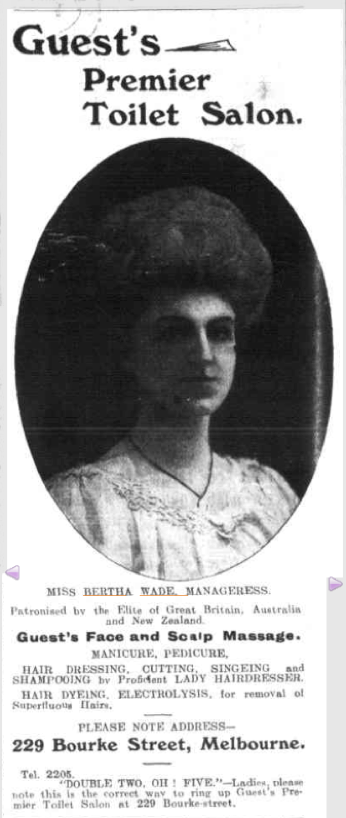
Bertha herself must have soon followed her elder sisters to Australia and doubtless adventure. No record of her arrival can be found, but by the time she was 26 in 1901 she seems to have found her feet as Manageress of “Guest’s Toilet Salon” in Bourke Street, Melbourne (a very prestigious address). I cannot be entirely sure that the Manageress was my Bertha but it seems very likely. Advertisements appeared regularly in the Melbourne newspapers, always at the bottom of the social pages, until 1907. In an interview with Mr. Guest himself in 1900, Miss Bertha Wade was described as an expert manicurist. She must have been promoted soon after. Unfortunately it was not said if she came from New Zealand.

One advertisement contained a very poor photograph of Bertha – it is impossible to make out her features but she does appear to have a huge cloud of hair. My one lasting memory of my grandmother just before she died is that she had a huge cloud of snow white hair.

The last advertisement for the Salon with Manageress Miss Bertha Wade appeared on 1 August 1907. Guests continued to operate at a different address, but there was no further mention of a manageress.

Just over a year later, Bertha Elizabeth Wade married my Grandfather Alexander Johnston in Melbourne. Both gave their address as a boarding house. The wedding must have been rather hush-hush as there were no engagement or marriage notices, and they were married at a Manse which advertised its marriage services for a fee. Alex was a journalist from Tasmania who had previously led an adventurous life in WA and who had made several trips to Japan and the Far East. He was 42 and Bertha was 34.

It seems reasonably certain that Miss Wade, Manageress was indeed my Grandmother Bertha. There was one other Bertha Wade in Melbourne for a time but the electoral rolls showed she was elsewhere after the time Bertha married, whereas Bertha’s electoral roll entry simply stopped.

My father never really talked about his mother, and her will made no mention of any early profession of hers – but there is one other supporting fact, she was a wealthy woman and owned the house where my grandparents lived. Of course she may well have received a legacy from her father. Her will indicates a strong forthright woman who stated that granddad could continue to live in the house until he died but must maintain the insurance, house rates etc and not ask their son to pay them!

52 Ancestors in 52 Weeks, 2026. Week 3.

Topic: What this story means to me.

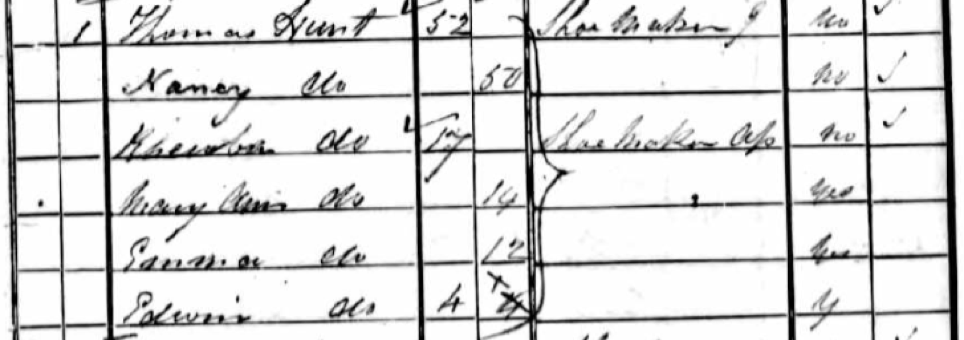
My GGGM Ann (Nancy) Welding was born in the little village of Upton St. Leonard in rural Gloucestershire and baptised on 10 January 1790. Her parents Thomas Wilday/Weldin/Wilding and his wife Elizabeth Fowler later had two more children. She was baptised Nancy but referred to as Ann in several legal documents including her marriage and the 1851 Census, but as Nancy in the 1841 Census when the information was given by her husband.

It is not known where or how Nancy received an education, most likely at the instigation of her father who signed his marriage register in 1786. When Nancy married Thomas Hunt in Redmarley d’Abitot, Glos on 1 Feb 1819, she also signed the marriage register in full. By then she was 29. Thomas, a cordwainer (shoemaker), made a cross. It is thought that Nancy was a governess or lady’s maid at the nearby grand “Down House”.

Nancy and Thomas had six children. The eldest, Elizabeth, was a nurse and later the matron on an immigrant ship which also carried her sister Mary Anne and the latter’s first four children to Australia in 1864. In Sydney Elizabeth became known as an “accoucheusse”, helping mothers with new babies, and Mary Anne, by then with eight children by two husbands, taught French. Next came Reuben, about whom, very frustratingly, I still know nothing. Then 3 sisters including Mary Anne, one of whom stayed in England and the third died aged 2. Finally my GGGF Edwin Hunt came along when Nancy was 48 if the dates are to be believed … he was a pupil teacher at 14 according to the Census, and before long headmaster at a school in Reading, Berkshire – where he speedily married the headmistress of the nearby girls’ school. They had 10 children of whom 9 survived and all emigrated to Australia as well, in 1879.

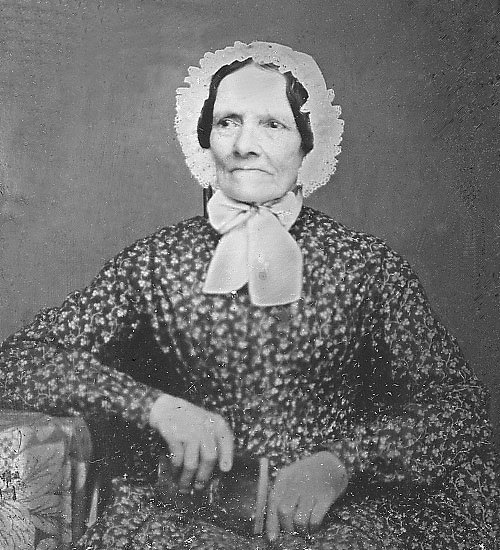
Thomas died when he was 54 and the children were mostly still at home. Nancy went to work as a nurse and lived to 70 (1859). I have a photograph of her, a rather determined-looking old lady in a frilly mob cap, with work-worn hands. How would she have felt about three of her children going to the other side of the world, where all her numerous grandchildren thrived?

What appeals to me about Nancy – apart from our shared name – is what a strong woman she must have been and her obvious influence on her children’s education. Her influence has endured – one of her grandchildren was the first woman Science graduate from the University of Sydney in the 1880s, and several great great grandchildren have been or are teachers and/or scientists.

52 Ancestors – Week 2, 2026.

Theme: A Record That Adds Color.

I’ve chosen to interpret this theme a little differently. 

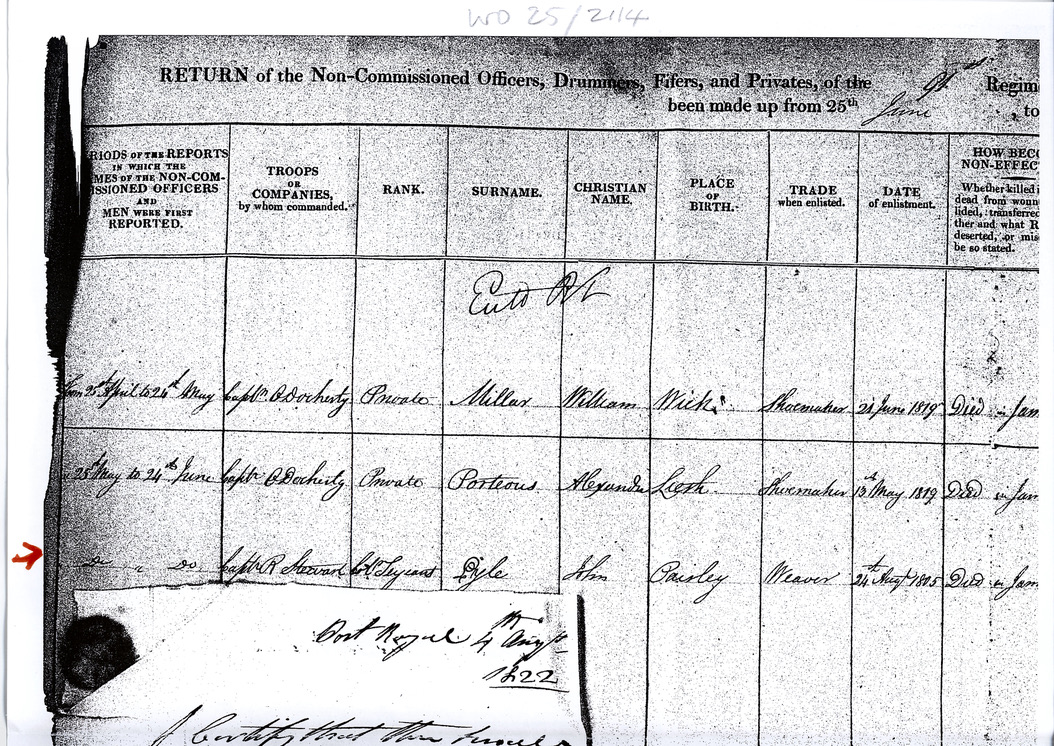
My Scottish Great Great Grandfather Dr. Thomas Lyle had a brother, John Lyle (1789-1822). For a long time I knew little about John, then discovered he had been a soldier in the 51st Regiment of Foot and had fought at Waterloo. I paid a researcher in London to go to the National Archives where she discovered a whole set of papers about him. Initially a foot soldier, he must have shown promise as he was promoted to Sergeant, then at the time of Waterloo he was made Colour Sergeant – ie he was privileged to carry the banner of the Regiment into battle. According to Wikipedia, “… the colour sergeant was a non-commissioned officer rank that is above sergeant and below warrant officer class 2. This rank, introduced in 1813, is typically responsible for training and discipline within a company and is considered prestigious due to its historical role in protecting the regimental colors during battles.”

Somehow John survived Waterloo; by then he and his wife had 2 children and after the battle his Regiment was one of those which remained in France. His wife either followed the Regiment or joined it at Valenceinnes, for that is where she bore their third child. 

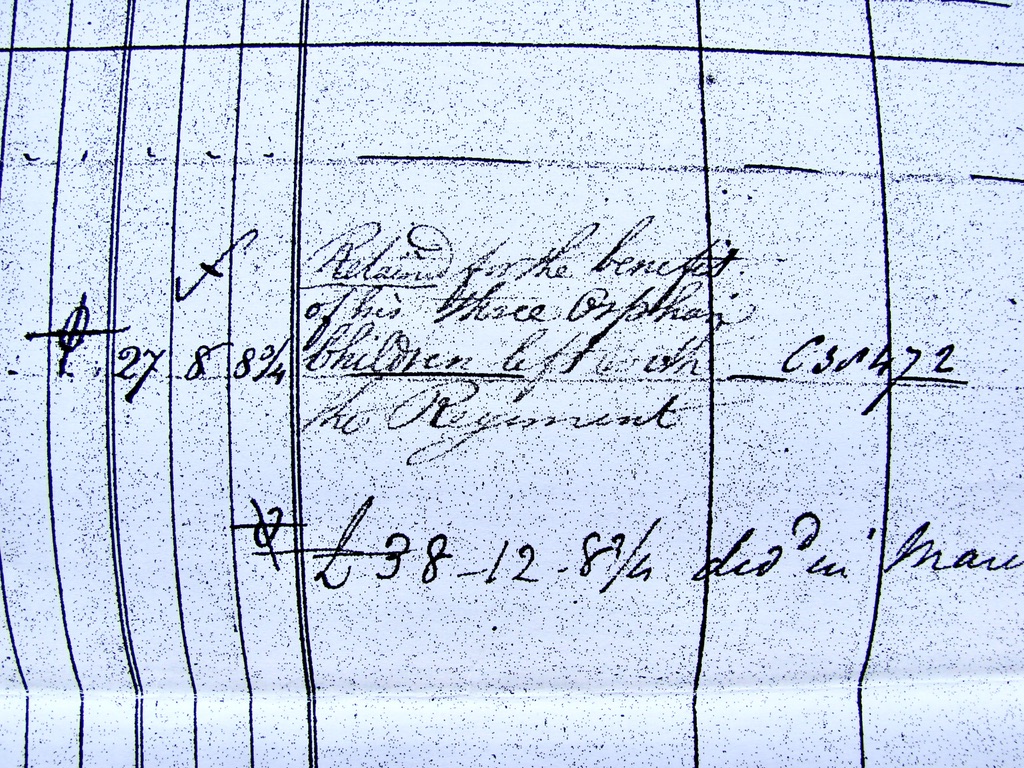
But within a few years he and his family were off to Jamaica, where he speedily succumbed to yellow fever. It is not known what happened to his wife, but the official papers say he left three orphaned children “in the care of the Regiment”. I have been unable to trace them further.

52 Ancestors in 52 Weeks – 2026

Week 1, 2026.

Theme: An Ancestor I Admire.

My Scottish GGMother Margaret Lyle (1827-1925), born in Glasgow, spent much of her chidlhood in Airth, Stirlngshire – a small village where her father Dr. Thomas Lyle (1791-1859) practiced – although it would seem he was more inclined to write poetry and to follow his hobby of bryology, spending long days in the surounding hills. He still found time to fill in the Census entries for his neighbours! Margaret had three brothers and three sisters. Dr. Lyle seems to have neglected the education of his daughters at least as Margaret signed her name with a cross. She married cabinet maker and precentor (choir leader) Alexander Johnston in Glasgow in 1853 when aged 26; the 1851 Census showed her living in Glasgow with her sisters and working as a cap maker. Dr. Lyle could not have been a good provider!

Margaret and Alexander Johnston emigrated to Tasmania at the bottom of Australia in 1854, only a few months after her mother died. The voyage took 71 days in the stormiest seas of the world. By then they had a small son, Charles, less than a year old; then a few weeks after arrival Margaret was delivered of another son, George. How did she cope with baby Charles and life aboard the Immigrant ship? 

The family settled in Launceston, Tasmania where eventually a daughter and final son arrived, the latter when Margaret was over 40. Later her two sisters also emigrated, but they lived in a different part of Tasmania. 

Margaret’s second son George, the one almost born at sea, was to lose his life at sea aged 29 in 1855. After years serving as a seaman on the huge windjammers which sailed the world’s oceans (I have many of his letters written home over that time from all over the world which show his deep affection for his family) George must have decided to settle a little closer to home, becoming second officer on an almost-new coastal steamer. But tragedy struck on a moonlit night just off the Australian coast when the ship hit rocks;  fortunately help was not too far away but after working all night helping offload passengers to a nearby steamer, George (by then probably exhausted, and thinly clad) insisted on returning to the wreck for the mail and was swept overboard and lost. 

Margaret’s husband Alexander died in 1906, aged 76, and Margaret moved to Sydney to be near her surviving children, all married with their own children. In her old age Margaret was mainly with her daughter and granddaughter – yet another Margaret (1896-1978) who lived quite close to my own Grandfather. All the Huxtable children lived long lives, the eldest to 90, but Margaret trumped that, living to 97. Photos of her show a tiny upright little lady.

How I wish I had known her!

52 Ancestors …. Week 14.

Topic: Language.

My Scottish ancestors came from the Scottish Borders where in the 1700s to at least early 1800s the Lowland Scots language used was Lalans – both Robert Burns and Robert Louis Stevenson used it.

From https://nativetribe.info/lallans-indigenous-heritage-scottish-lowland-traditional-language-cultural-practices/:

Lallans, also known as Scots Lowland, is a vibrant language with a long and complex history. It’s not merely a dialect; it’s a distinct language with its own grammar and vocabulary. Its roots stretch back to the Old English spoken in the Lowlands of Scotland.

For centuries, Lallans thrived as the common tongue of the Scottish Lowlands. It was the language of literature, law, and everyday life. However, the influence of English, particularly after the Acts of Union in 1707, led to a decline in its usage.

Despite the challenges, Lallans has persevered. Dedicated individuals and organizations work tirelessly to promote and preserve this valuable linguistic heritage. Lallans Indigenous Heritage continues to inspire and enrich Scottish culture.

52 Ancestors …. Week 11.

Topic: Brick Wall.

Was the Rev. John Johnston married twice?

My GG Uncle John Johnston (1831-1909) married Benjamina “Jessie” Leckie (1833 – ?) in Glasgow when he was 24 and she was 22, according to the forms of the United Presbyterian Church. Soon after the birth of their first child less than a year later, they moved to Edinburgh where John studied for the Congregational Ministry at the Edinburgh Theological Hall. This was a little surprising seeing the Johnstons were mostly strong Presbyterians with several Reverends among the immediate family.

John and Jessie had five children between 1857 and 1863, all born in Scotland – Edinburgh (two) and then Stirlingshire (two). The last one, a little daughter named Jane, lived for less than a year. She was born in Pitsligo, Aberdeenshire.


Some time after that the family moved to Stoke Newington in London where John was the Congregationalist Minister at the Abney Park Memorial Church. Another child was born in 1874, eleven years after Jane. A surprise!

The 1871 Census was checked – and John had declared himself a “widower”. There was no doubt the Census entry was for the correct family, according to the address given. So, was John’s youngest child, born three years after this Census, by a different mother also named Jessie (who maiden surname was not given)? Unless the first Jessie was away from home at the time and the Census taker made an incorrect assumption about John being a widower?

A transcript of the birth certificate for the 1874-born child gave the information that the mother’s maiden surname was Will, but no christian name given. It could easily have been Wills, Mill(s), etc as is the nature of transcriptions.

Surprisingly a possible marriage was found, for a John Johnston to Susan Mills, in Isleworth, London on 8 January 1865. (No indication of whether this John was a Reverend). John’s last child with his first wife was born in October 1863 and died in February 1864 in Pitligo, Aberdeenshire. Was this the correct John Johnston? Isleworth (in the South West West) and Stoke Newington (in the North), while both within the area known as ‘Greater London’, are 25 km apart which would have been a far greater distance in those days than is considered now. However, John’s living children at that time would have been aged 8, 6, 5 and 3 – definitely children in need of a mother!

But a further search recently has turned up a Jessie C. Will born about 1839 in Aberdeen to Thomas and Margaret Will, living in Hackney, London in 1871 with her parents – aged 32, unmarried, occupation not given. If this was the correct Jessie, she must have married John later in 1871 (the Censuses were usually taken early in the year). Hackney is very close to Stoke Newington.

I feel reasonably certain I have found the correct second wife, but all searches for a marriage have so far been negative.

52 Ancestors … Weeks 9 & 10, 1925.

Themes: Family Secret and Siblings.

I am behind with this series of 52 Ancestors but conveniently can combine two weeks’ stories into one!

I nearly missed recording the birth and death of my GGGrandparents’ fourth child, a little girl called Zebra Hunt who was born in November 1831 and died in July 1834 in Reading, Berkshire. As was common at the time, the death of a child was rarely if ever spoken about …. But I am still surprised that Zebra’s elder sister Elizabeth (aged 11 at the time Zebra was born) never spoke about her even much later in life. Elizabeth was a nurse and the Matron on an immigrant ship arriving in Australia in 1864. She would have seen her share of children’s deaths particularly as she later worked as an accoucheuse (midwife) in Sydney.

The name Zebra may have been a form of Ziporah, a popular name in Victorian times. Another form was Zillah. That was the name given to another distant cousin born in 1843, while yet another was Lizzie Zebra born 1863 (yes, Lizzie, not Elizabeth). The latter had several children including Elizabeth Stella born in 1903; she became a dancing teacher who styled herself “Estella Donalda Zebra Eugene Brown-de-Boshier”, Boshier being her mother Lizzie Zebra’s maiden surname.

Little Zebra only came to light when a cousin started to wonder where the name Zillah came from, and also noticed there was an almost five year gap between Zebra’s immediate siblings. Otherwise we would probably never have discovered her (My grateful thanks to Alison P. for her research in this regard).

Curiously, there was also a 4 year gap between the first two children – Elizabeth born in 1820 and Reuben in 1824 (the family moved from Worcestershire to Berkshire during that time, perhaps when father Thomas Hunt was seeking work); then 5 years until Emma appeared in 1829, followed by Zebra in Nov 1831 and then Mary Ann in October 1833 – and finally Edwin in 1937 who must have been quite a surprise as their mother, my namesake Nancy, would have been aged 47 by then.

52 Ancestors …. Week 8, 2025.

Theme: Migration.

My Great Grandmother was Adela Campbell Scott Macloskey (1848-1874), the 13th child of merchant tailor John Macloskey (1789-1854) and Mary Ann Brooks/ Brookes (1805-1886). Her father is thought to have come from Rostrevor, County Antrim in what is now Northern Ireland; her mother was also Irish but where they met and married is not known. Their children were all born in Greenock in Scotland apart from the last one, James Power Macloskey (c1851-1926) who was born in Liverpool; perhaps the family had moved there for business reasons.

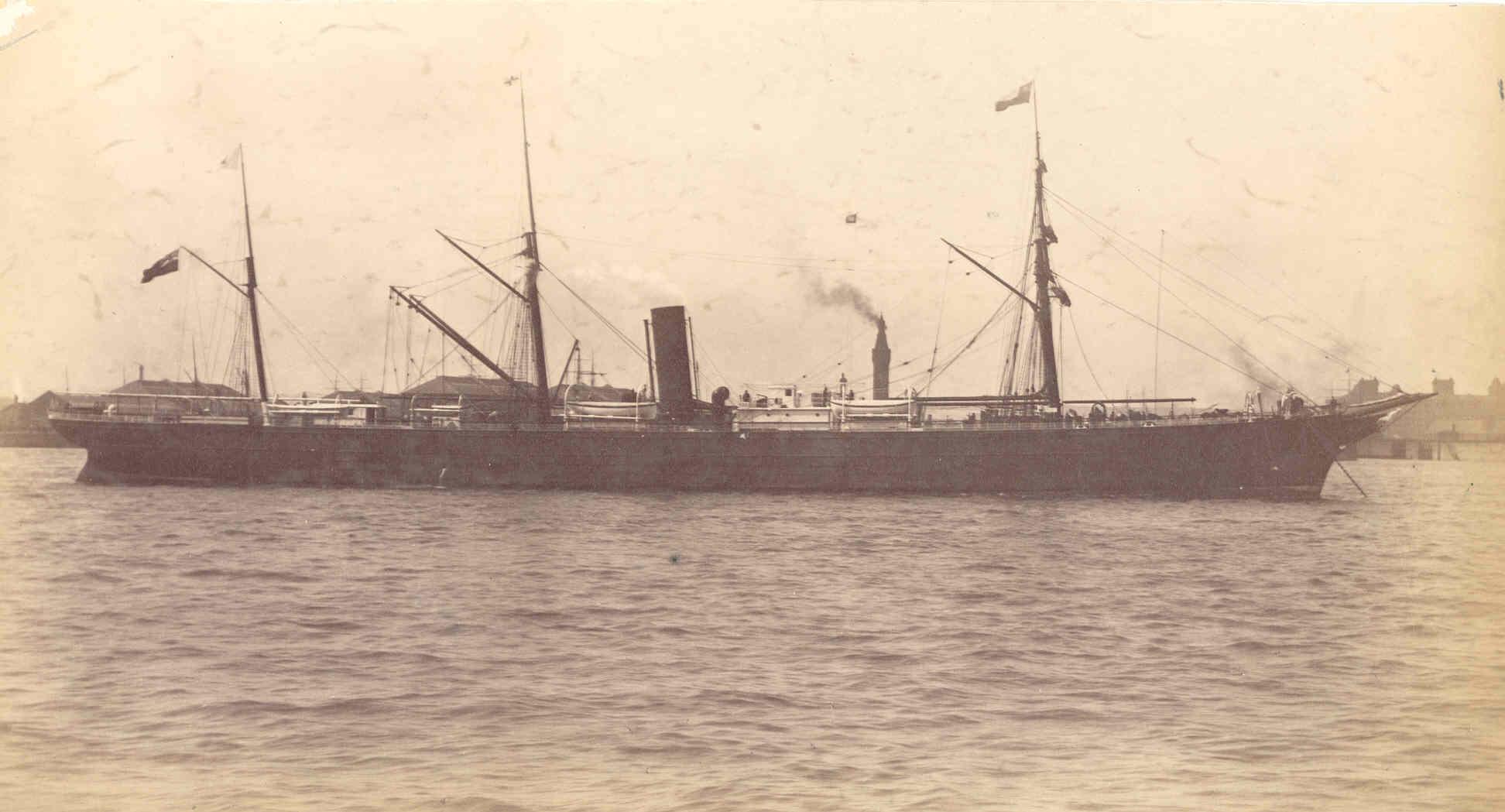
The name of their immigrant ship so far remains undiscovered, but what is known is that the whole family with the exception of the first and sixth-born (who both lived less than a year) arrived in what is now Melbourne, Australia in early 1854.

Why did they emigrate? It was the time of the Victorian goldrush. John was a tailor, not a gold miner; perhaps he saw business opportunities in Ballarat, one of the towns which sprang up after the discovery of gold in 1851.

Initially the family lived at Collingwood Flat, low lying ground along the Yarra River in Melbourne, an overcrowded working-class suburb doubtless with water and sanitation problems. Sadly the father John Macloskey died of dysentery six weeks after their arrival, on 11 March 1854.

Mary Ann was left with ten children aged from 25 to 2 – all listed on John’s death certificate, the informant being his eldest living child William Joseph Macloskey, aged 23.

She remarried just a year later, to Alexander Richard Minzies/Menzies (c1807-1883), who must have been a wonderful man to take on ten step-children! There were no further children. They always lived in Melbourne but as Richard was a Victorian Treasury official, doubtlesss in far more comfortable surroundings.

Alexander himself had emigrated from Liverpool just months before the Macloskeys, on the “Covenantor” which arrived in 1852. Like Mary Ann he had been married before, to Christina Campbell (c 1806 -c 1839), and had a daughter Mary Campbell Menzies (1835-1921) who in 1855 married the Macloskey’s eldest son Richard Brooke Macloskey (1830-1876) – just a year after Richard’s mother had remarried – to his new father-in-law !

It was probably just serendipity that Mary Ann’s second name was Campbell. No family link can be found – perhaps thankfully as the family tree was already very complicated and difficult to draw.

In addition, my Great Grandmother Adela Macloskey married Frederick Wentworth Wade (1838-1912) and had seven children with him before dying of phthisis (TB) at the age of 26; within two years Frederick remarried …. To Richard Brooke Macloskey and Mary Campbell Menzies’ second child Ada Gresham Macloskey (1858-1931)!!

52 Ancestors …. Week 7, 2025.

Theme: Letters and Diaries

My Great Grandfather Alexander Johnston (1829-1906) came from a family of seven, and from all accounts they were a loving, tight-knit family.

Only one sibling emigrated from their home town of Glasgow, and that was Alexander, who with his wife Margaret (Lyle) and little son Charles made the long journey to Tasmania in southern Australia, through some of the stormiest seas in the world. That was in 1855, the passage having taken 71 days on the perhaps aptly named “Storm Cloud”.

They must have kept in close touch with their Glasgow siblings. The only way would have been by letter transported via sailing ship. Such letters would have been very eagerly awaited. So much so that it became a custom to have a photograph taken holding a letter …. As in this precious photograph.

It shows Alexander’s older brother Peter Johnston (1824-1916) and his wife Agnes (Todd) (1829-1902). The photo is doubly precious as it is the only one which survived a house flooding which resulted in all earlier family mementos, photographs, etc being destroyed. Somehow this one survived.

We do not have any of the letters received by Alexander, but we do have a number of letters written to his Tasmanian-based family by his son George Johnston (1855-1885), an ocean-going merchant seaman. He frequently visited his aunts and uncles in Glasgow and mentioned them in his letters, including Uncle Peter and Agnes. George’s letters will doubtless be covered in a later theme.

52 Ancestors 2025 …. Week 6. AMENDED

Theme: Surprise

I am reposting this blog due to the amazing number of typos and other errors … I plead being under the influence of a strong painkiller at the time I wrote it … but that is no real excuse (!) My thanks to Lesley, Arthur and Dave for pointing out some of the errors.

My Great Great Uncle John Lyle (1789-1822), born in Paisley, Scotland was a soldier with the 51st Regiment of Foot. He fought at Waterloo – and survived. Seeking more information about him, I hired a researcher to check the Regimental files in the British Archives. The British Army kept very detailed records in those days so among other things I learnt that he had enlisted on 24 August 1805 when he was 18 (the Battle of Trafalgar was in October of that year) and that he was 5 feet 3 inches in height which increased to 5 feet 7 inches over the next six years. He had a brown complexion, grey eyes, brown hair and a round face. He rose through the ranks quickly, becoming a Corporal the year after enlistment and attaining Sergeant (”Serjeant”) rank 7 years later. He is mentioned in detailed Muster Lists and Pay lists and notes about long marches.

In 1822 John was sent to Jamaica with the Regiment, where he died of yellow fever a few months later. The Regimental Returns for June-July 1822 show that following John’s death, a quite reasonable sum of money for those days was retained “… for the benefit of his three orphan children left with the Regiment”. What a surprise!

The births of all three children are in the Regimental records, which give his wife’s name as Agnes Lyle (it is not certain that Agnes’ maiden name was also Lyle). I have not been able to discover a marriage record. Their first child, named John, was born in Dumfries in 1810, after the Regiment had served in the Peninsular Wars for several years and returned home. His second child, a girl named Agnes, was born in 1813 in Liverpool; soon after John would have been sent away to fight in the Pyrenees. How many years was it before he saw his daughter again? Or did his wife and children follow the Regiment? The third child, another daughter, was born in Valenciennes, France in 1819, where the Regiment was posted after Waterloo.

Regimental records do not show whether his wife accompanied John during his various campaigns, and there is no record of her death. Did she go to Jamaica with him? No burial records can be found. The children, too, cannot be traced. Maybe one day a DNA match will be found ….