52 Ancestors …. Week 8, 2025.

Theme: Migration.

My Great Grandmother was Adela Campbell Scott Macloskey (1848-1874), the 13th child of merchant tailor John Macloskey (1789-1854) and Mary Ann Brooks/ Brookes (1805-1886). Her father is thought to have come from Rostrevor, County Antrim in what is now Northern Ireland; her mother was also Irish but where they met and married is not known. Their children were all born in Greenock in Scotland apart from the last one, James Power Macloskey (c1851-1926) who was born in Liverpool; perhaps the family had moved there for business reasons.

The name of their immigrant ship so far remains undiscovered, but what is known is that the whole family with the exception of the first and sixth-born (who both lived less than a year) arrived in what is now Melbourne, Australia in early 1854.

Why did they emigrate? It was the time of the Victorian goldrush. John was a tailor, not a gold miner; perhaps he saw business opportunities in Ballarat, one of the towns which sprang up after the discovery of gold in 1851.

Initially the family lived at Collingwood Flat, low lying ground along the Yarra River in Melbourne, an overcrowded working-class suburb doubtless with water and sanitation problems. Sadly the father John Macloskey died of dysentery six weeks after their arrival, on 11 March 1854.

Mary Ann was left with ten children aged from 25 to 2 – all listed on John’s death certificate, the informant being his eldest living child William Joseph Macloskey, aged 23.

She remarried just a year later, to Alexander Richard Minzies/Menzies (c1807-1883), who must have been a wonderful man to take on ten step-children! There were no further children. They always lived in Melbourne but as Richard was a Victorian Treasury official, doubtlesss in far more comfortable surroundings.

Alexander himself had emigrated from Liverpool just months before the Macloskeys, on the “Covenantor” which arrived in 1852. Like Mary Ann he had been married before, to Christina Campbell (c 1806 -c 1839), and had a daughter Mary Campbell Menzies (1835-1921) who in 1855 married the Macloskey’s eldest son Richard Brooke Macloskey (1830-1876) – just a year after Richard’s mother had remarried – to his new father-in-law !

It was probably just serendipity that Mary Ann’s second name was Campbell. No family link can be found – perhaps thankfully as the family tree was already very complicated and difficult to draw.

In addition, my Great Grandmother Adela Macloskey married Frederick Wentworth Wade (1838-1912) and had seven children with him before dying of phthisis (TB) at the age of 26; within two years Frederick remarried …. To Richard Brooke Macloskey and Mary Campbell Menzies’ second child Ada Gresham Macloskey (1858-1931)!!
52 Ancestors …. Week 7, 2025.

Theme: Letters and Diaries

My Great Grandfather Alexander Johnston (1829-1906) came from a family of seven, and from all accounts they were a loving, tight-knit family.

Only one sibling emigrated from their home town of Glasgow, and that was Alexander, who with his wife Margaret (Lyle) and little son Charles made the long journey to Tasmania in southern Australia, through some of the stormiest seas in the world. That was in 1855, the passage having taken 71 days on the perhaps aptly named “Storm Cloud”.

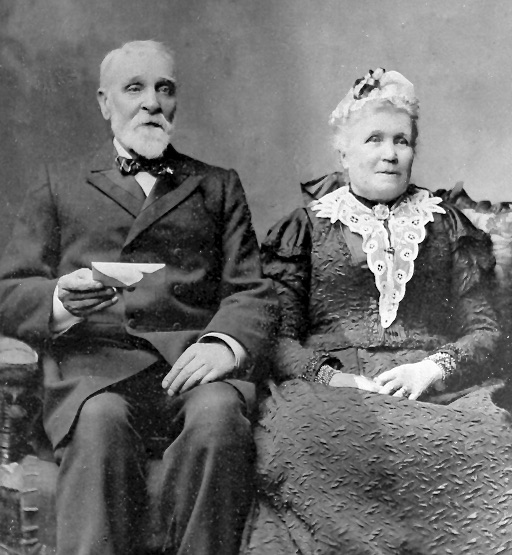
They must have kept in close touch with their Glasgow siblings. The only way would have been by letter transported via sailing ship. Such letters would have been very eagerly awaited. So much so that it became a custom to have a photograph taken holding a letter …. As in this precious photograph.

It shows Alexander’s older brother Peter Johnston (1824-1916) and his wife Agnes (Todd) (1829-1902). The photo is doubly precious as it is the only one which survived a house flooding which resulted in all earlier family mementos, photographs, etc being destroyed. Somehow this one survived.

We do not have any of the letters received by Alexander, but we do have a number of letters written to his Tasmanian-based family by his son George Johnston (1855-1885), an ocean-going merchant seaman. He frequently visited his aunts and uncles in Glasgow and mentioned them in his letters, including Uncle Peter and Agnes. George’s letters will doubtless be covered in a later theme.

52 Ancestors 2025 …. Week 6. AMENDED

Theme: Surprise

I am reposting this blog due to the amazing number of typos and other errors … I plead being under the influence of a strong painkiller at the time I wrote it … but that is no real excuse (!) My thanks to Lesley, Arthur and Dave for pointing out some of the errors.

My Great Great Uncle John Lyle (1789-1822), born in Paisley, Scotland was a soldier with the 51st Regiment of Foot. He fought at Waterloo – and survived. Seeking more information about him, I hired a researcher to check the Regimental files in the British Archives. The British Army kept very detailed records in those days so among other things I learnt that he had enlisted on 24 August 1805 when he was 18 (the Battle of Trafalgar was in October of that year) and that he was 5 feet 3 inches in height which increased to 5 feet 7 inches over the next six years. He had a brown complexion, grey eyes, brown hair and a round face. He rose through the ranks quickly, becoming a Corporal the year after enlistment and attaining Sergeant (”Serjeant”) rank 7 years later. He is mentioned in detailed Muster Lists and Pay lists and notes about long marches.

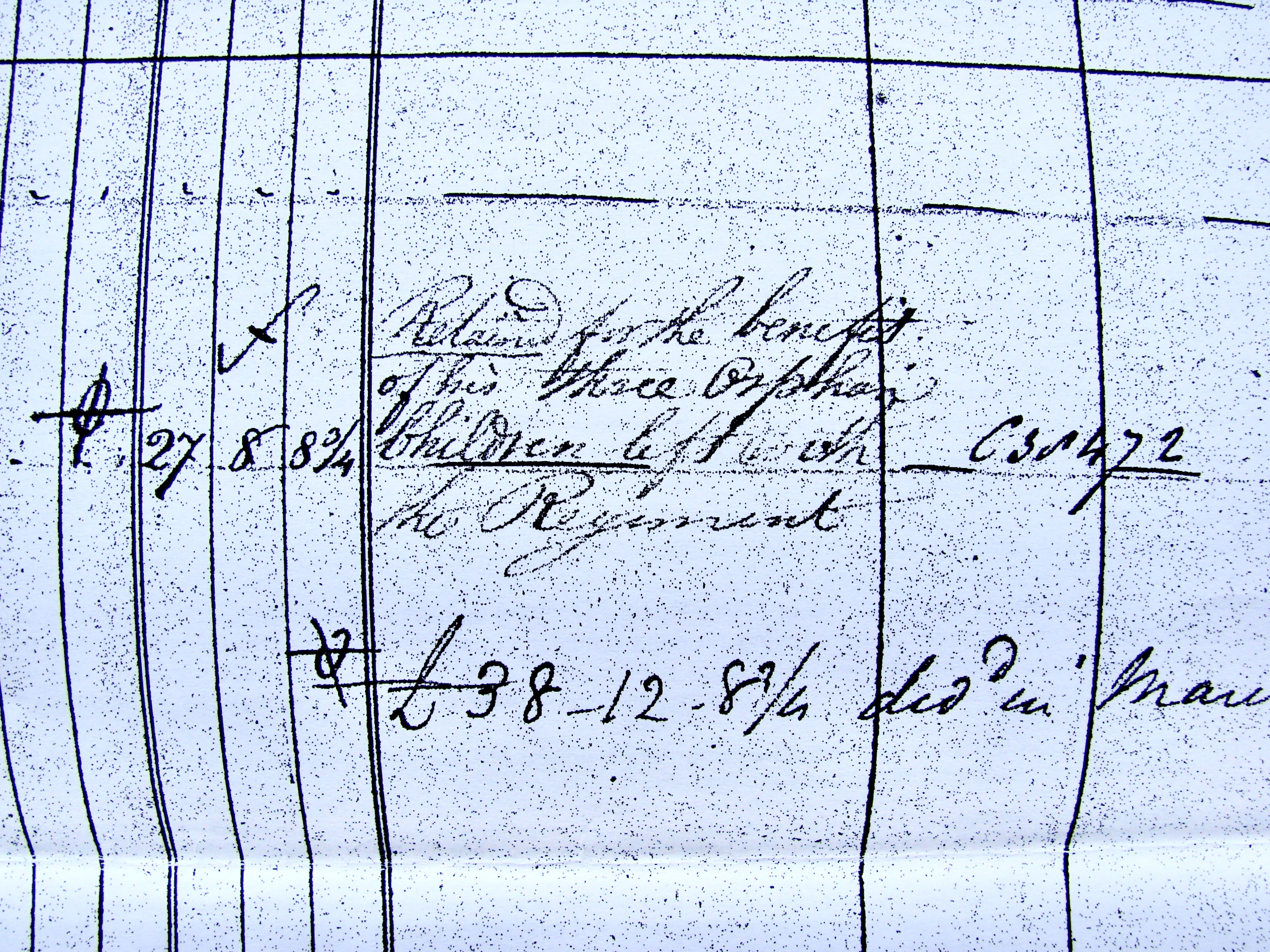
In 1822 John was sent to Jamaica with the Regiment, where he died of yellow fever a few months later. The Regimental Returns for June-July 1822 show that following John’s death, a quite reasonable sum of money for those days was retained “… for the benefit of his three orphan children left with the Regiment”. What a surprise!

The births of all three children are in the Regimental records, which give his wife’s name as Agnes Lyle (it is not certain that Agnes’ maiden name was also Lyle). I have not been able to discover a marriage record. Their first child, named John, was born in Dumfries in 1810, after the Regiment had served in the Peninsular Wars for several years and returned home. His second child, a girl named Agnes, was born in 1813 in Liverpool; soon after John would have been sent away to fight in the Pyrenees. How many years was it before he saw his daughter again? Or did his wife and children follow the Regiment? The third child, another daughter, was born in Valenciennes, France in 1819, where the Regiment was posted after Waterloo.

Regimental records do not show whether his wife accompanied John during his various campaigns, and there is no record of her death. Did she go to Jamaica with him? No burial records can be found. The children, too, cannot be traced. Maybe one day a DNA match will be found ….