Not all heirlooms have monetary value, but can still be priceless, affording glimpses into a family life long gone.
My GGGF Dr. Thomas Lyle (1791-1859) although a qualified Scottish surgeon, was far more interested in Bryozoa – mosses and lichen. He lived in the tiny Stirlingshire town of Airth on the River Forth for some years, occasionally practising medicine, advising a neighbouring landowner on his garden, and collecting mosses and lichen in the nearby woods. Bannockburn of battle fame was about 7 miles distant.
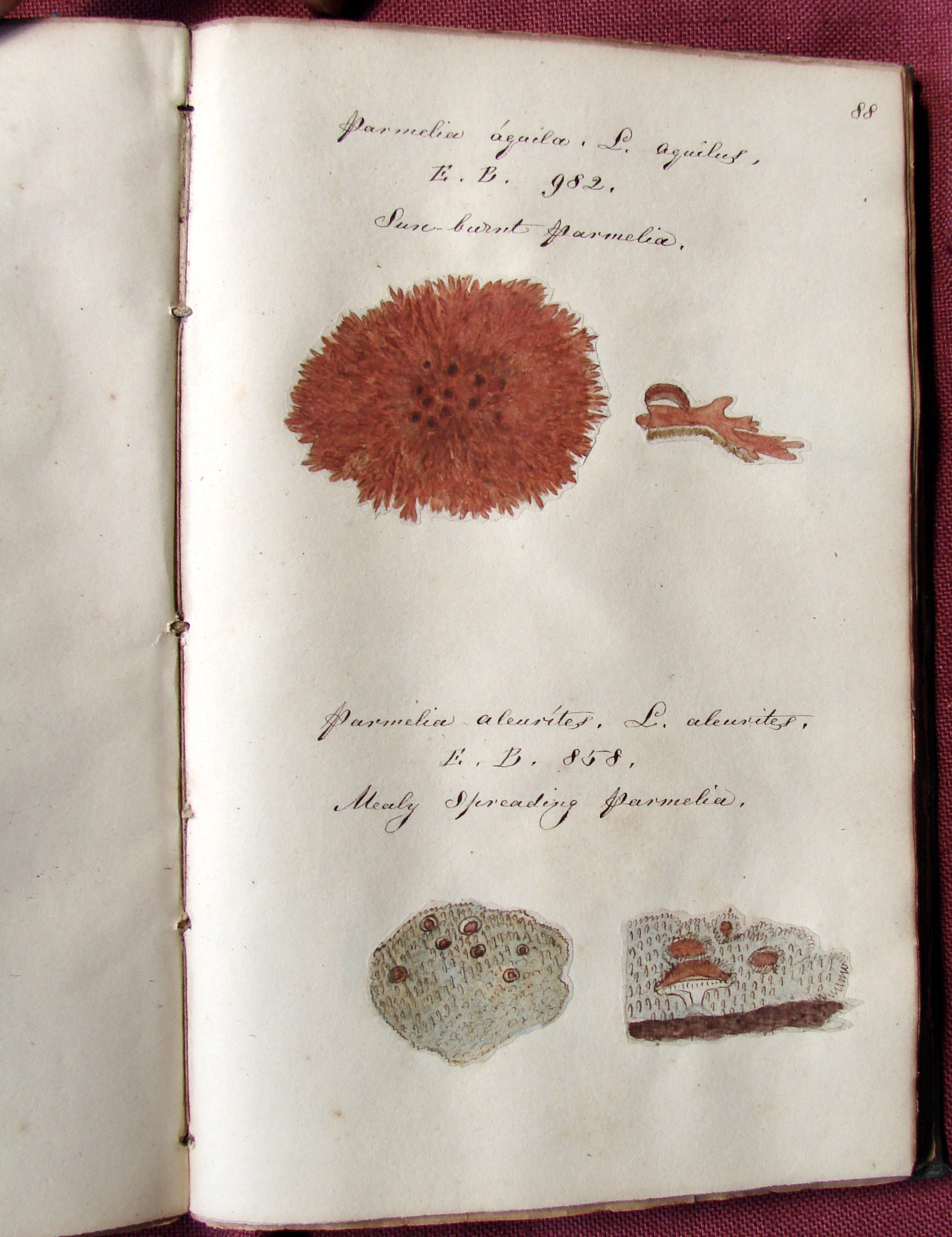
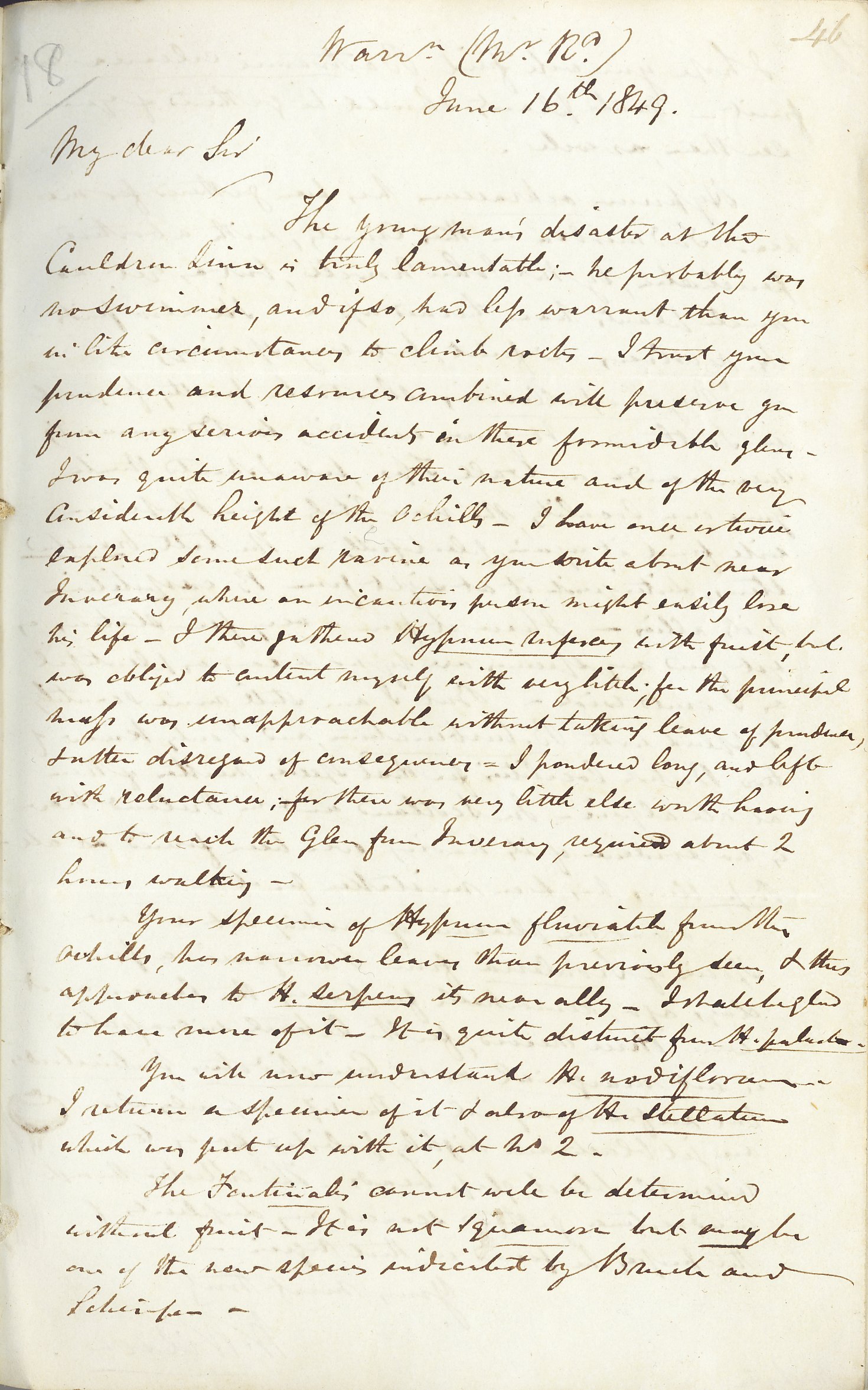
He maintained a voluminous correspondence with Mr. William Wilson of Manchester, a world authority on mosses. I have in my possession two wonderful hand-bound books – one is a collection of letters from Mr. Wilson covering the period 1849 to 1854. The other is an exquisite book full of watercolours of mosses, meticulously catalogued.
Both Lyle and Wilson had very delicate spidery cursive handwriting which is not difficult to read if one has a magnifying glass! Although the correspondence was mostly professional,
Occasionally a personal snippet was included – for example on 18 October 1853 Wilson wrote: “If you must needs go to Glasgow, I sincerely hope that you will succeed in the attainment of your moderate wishes, and escape from the pestilence that you go to withstand – I shall rejoice if this revolutionary event of your life shall be productive of good to you and your wife…” (most likely he was referring to typhoid).
But alas, on 9 March 1854 Wilson again wrote: “My dear Sir, You have often been in my thoughts and I had fully intended to write to you on the day that I received yours informing me of your loss – it is a relief, I trust, both to yourself and to your departed wife (who must have suffered much under the protracted and hopeless illness) that she is gone to her rest. I trust also that you will have all the consolation which you need, in this your bereavement. The parting is a solemn event, and must have caused deep exercise of thought and feeling ….”
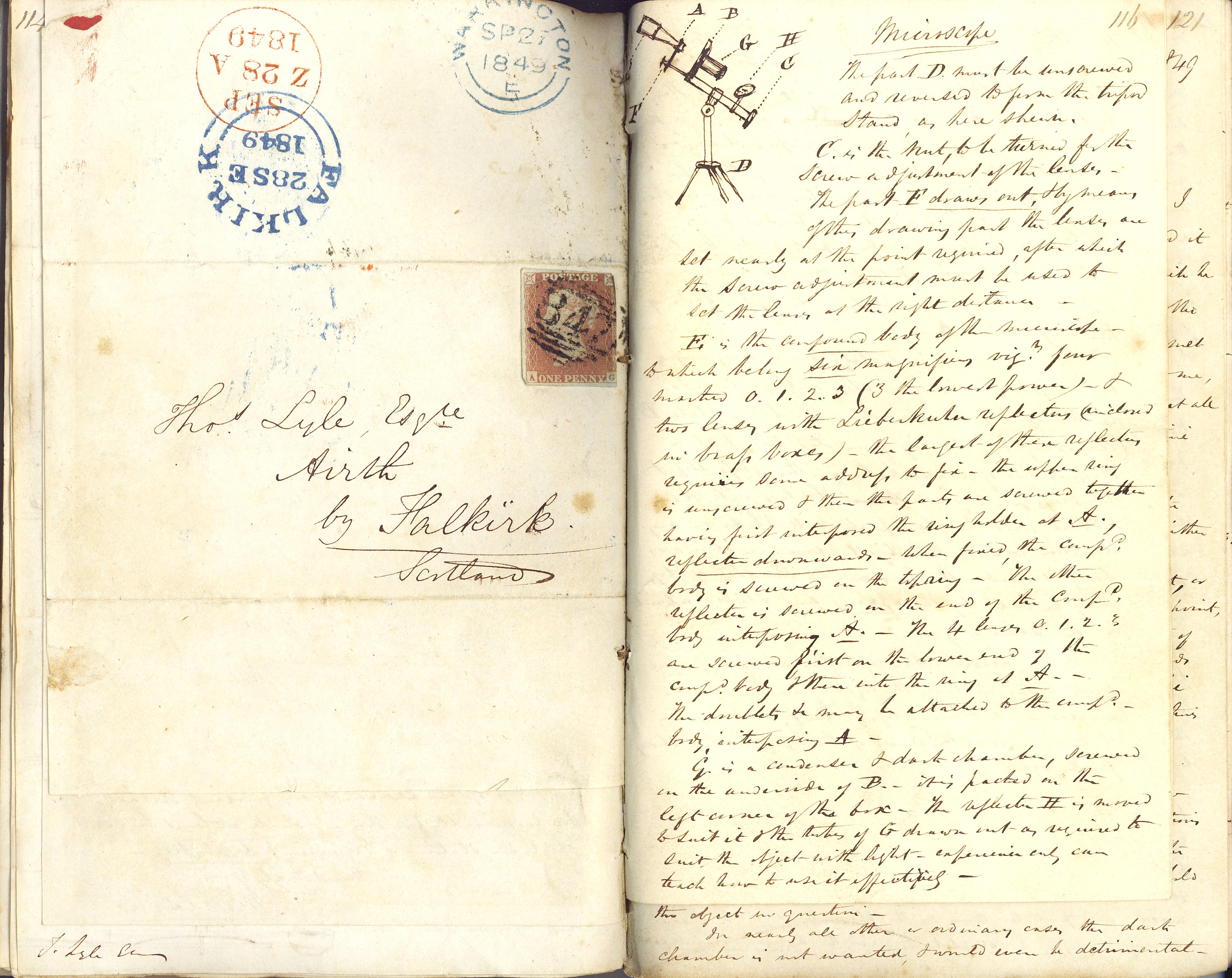
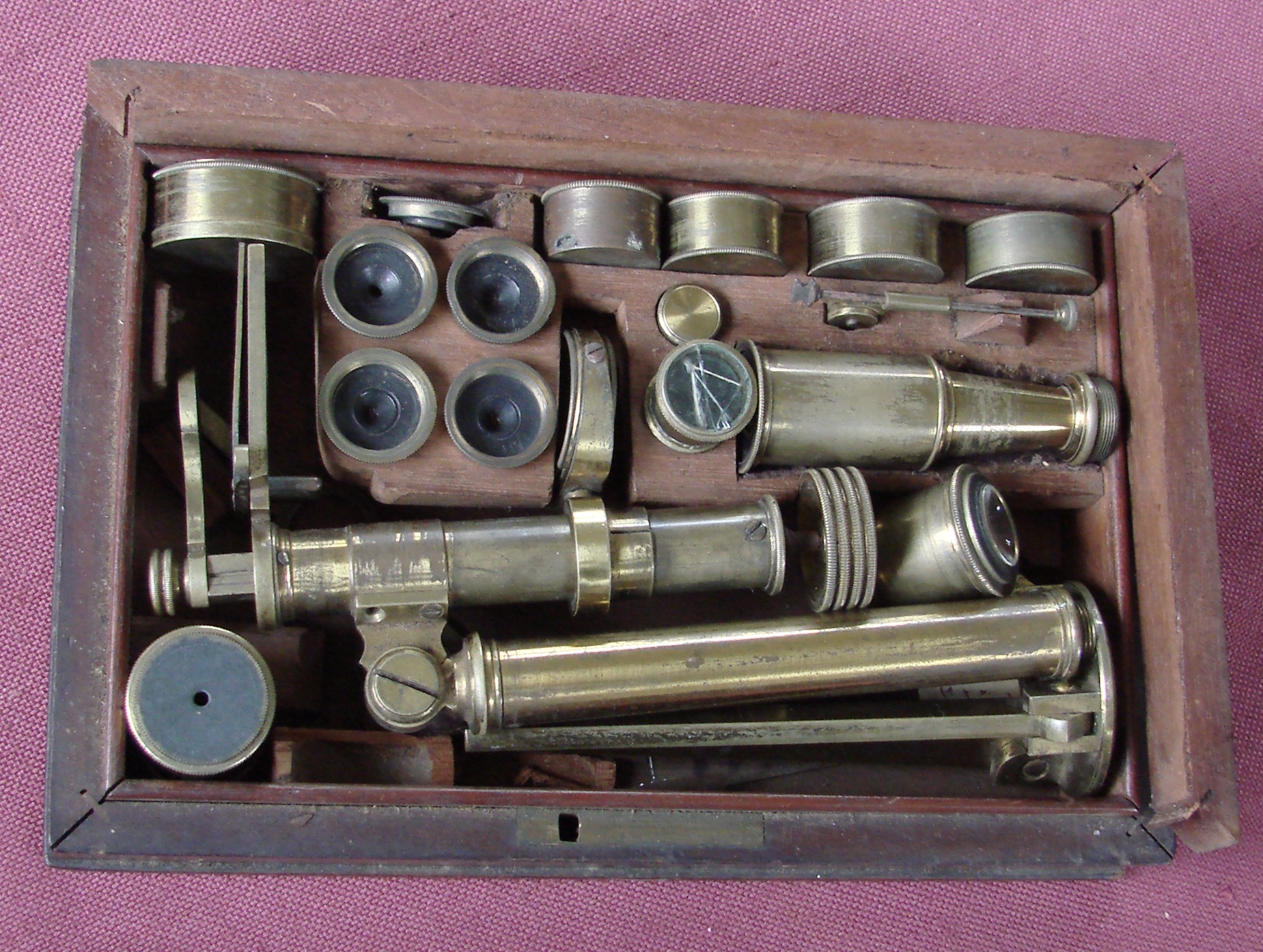
I also have a very old microscope which belonged to Dr. Lyle. A treasure indeed. And a number of other items which I may well write about later in the year.
As an Australian, all my more immediate ancestors were immigrants. Australia’s very first immigrants were indigenous Aboriginals and Torres Strait Islanders who arrived over 70,000 years ago. The first European immigrants arrived with the First Fleet in 1788. So our history is very different and more recent compared to America’s.
My earliest Australian immigrants were Irish Hugh Vesty Byrne (1772-1842) and his wife Sarah Dwyer (1774-1872) from Wicklow, who were ‘persuaded’ to emigrate in 1806. Hugh was a political prisoner given the choice of rotting in an Irish gaol or being transported to Australia and given his freedom on arrival. My GGG Grandmother Ann Byrne was born on board the “Tellicherry” in early 1806 on as it reached Australian waters.
Ann Byrne’s daughter Susan Byrne (1826-1892) married my second earliest immigrant, Thomas Darchy (1820-1877) who was born in Bavaria and spent his childhood in Switzerland. He arrived in Australia in 1840 on the “India” – which was wrecked on a subsequent voyage.
Next was another Irish family, the Macloskeys originally from County Antrim but lived in Greenock for some years before emigrating to newly-established Melbourne in early 1853. They were John Macloskey (1789-1854) and his wife Mary Ann Brooks (1805-1886) and their 12 living children … their second youngest, Adela Wade, married Dubliner Frederick Wentworth Wade (1838-1912) who had arrived in Melbourne around 1859 and subsequently shifted to New Zealand about 1863. They married in NZ in 1865. Most of the Macloskey descendants are now in Australia but there are a few in New Zealand.
Yet another Irish line were Henry Prendergast (1813-1867) and Mary Costello (abt 1812-1902) who arrived in Adelaide in 1854 on the “Pestonjee Bomanjee” with seven children. Henry was a shopkeeper who set up a store not too far from the huge d’Archy property in western NSW. Their daughter Margaret (1844-1915) married one of the d’Archy boys, against some opposition! I have a huge number of distant Prendergast cousins.
My Scottish GGG Father Alexander Johnston (1829-1906) and his wife Margaret Lyle (1827-1925) were close behind, also in 1854. They went to Launceston, Tasmania. Their second child was born within weeks after their arrival. One of their sons married a daughter of Frederick Wade.
And finally my English and Welsh GG Parents – Edwin Hunt (1837-1895) and his wife Margaret Morgan (1838-1920) and eight living childfren arrived in Sydney on the fast steamship “Aconcagua’ in 1879. Their youngest daughter Lily Hunt, aged 3 at the time of arrival, married a grandson of both Thomas Darchy and Henry Prendergast.
What a wealth of Immigration stories they could tell! One arrived in convict chains, some in the basic transport level of early immigrant sailing ships, some in comparative luxury. They went to different parts of Australia and New Zealand. I was born in Sydney – proud of my multinational heritage.
My Great Great Aunt Susan Darchy (1857-1922) was born to a wealthy pioneering family in western NSW, Australia. She had a privileged childhood growing up on an outback cattle station, with a private tutor and a succession of governesses.
Her parents took her to England in 1873 when she was 17, possibly so she could make her debut at court. She was only 20 when her father died. She visited Europe again with her mother and younger sister Rose Ann at least twice and in 1885 was at Aix-les-Bains in the South of France staying at the same place as Queen Victoria of England. Susan, Rose and her brother Louis were all presented to the Queen on more than one occasion.
Susan Darchy with her motherQueen Victoria at aux-les-Bains
A bad recession hit Australia in the 1890s together with a drought and rabbit plague. The English Banks, with little knowledge or understanding of Australian conditions, foreclosed on a huge number of pastoral properties. The Darchy children had to earn a living! Susan wrote some years later: “I found myself in Sydney with 20 pounds in my pocket and facing the necessity of doing something to earn money before that was exhausted.” She began writing to newspapers, including those overseas.
Through her own courage, determination and energy she soon became a well-known journalist, being in charge of the Social and Fashion columns of an Australian daily newspaper. According to an article on the Lady Journalists of NSW, “A great deal of tact and discretion is required in one who has the control of the social department of a large daily paper, and during the times that Miss Darchy has managed that portion of the Telegraph she has exhibited those qualifications to the fullest extent…..The lady who supplies the social and fashion news to a big daily journal in a large city like Sydney has abundant work to do; but Miss Darchy is active and industrious, and by economy of time manages to (also) contribute regularly to a daily paper in Paris and to send a colonial letter periodically to the Sketch, an illustrated journal published in London. She also writes for several country papers in New South Wales….”
In 1899 Susan delivered a public lecture in Sydney’s School of Arts on “The Power of Thought”. She…“treated the subject in a general way, emphasising the importance of right thinking and showing that it could be taught by scientific methods. For the results of scientific thinking she claimed perfect health and happiness to the individual.” There must have been many other such lectures given. A small entrance fee would have been charged.
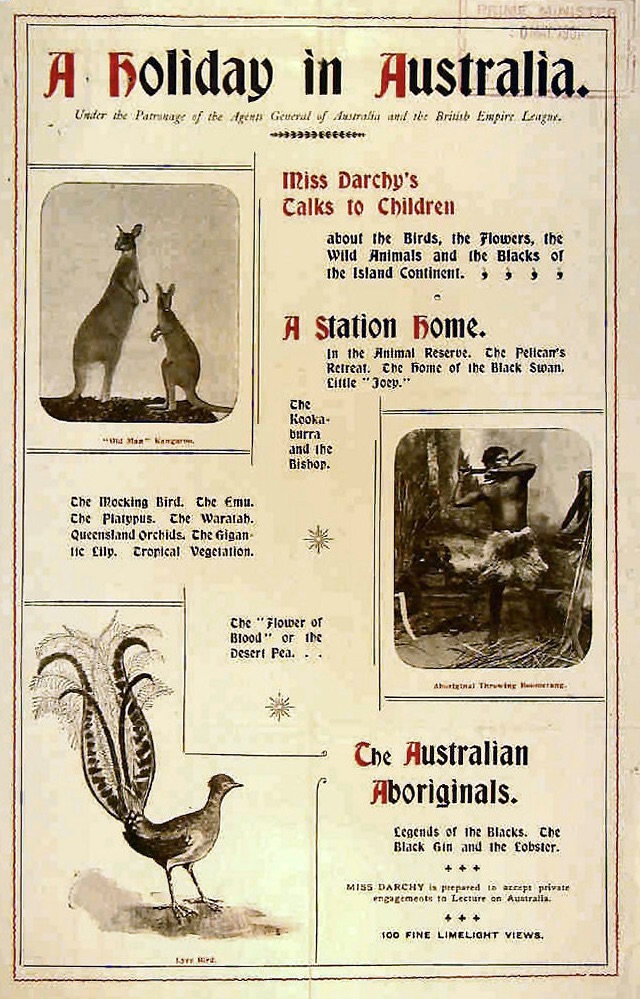
In 1900 Susan went overseas and gave a series of lectures on Australia in San Francisco and London. The San Francisco Chronicle published a very long article about her entitled “What Australian Women Are Doing”. Her lectures on the Australian Bush were very well received in London and she was mentioned several times in the Court Circular of The Times.
Susan tried to obtain finance for her lecture tours from the Australian Government, but was unsuccessful. A letter to the Prime Minister written in 1901 says: “My object in writing to you is to ask you if the Commonwealth could not help me to make my work of greater value to Australia.I (have) managed in three months to give twenty five lectures in London and various parts of England. So far, I have had everything to face single handed, this work has been enormous and the expenses very great. Those in the know here are amazed at the measure of success I have secured, for independent lectures of anyone who has not poisoned a few husbands or who has not become distinguished in South Africa are considered suicidal.” It would seem she knew the Prime Minister personally!
She continued “I was fortunate in getting work to do under the auspices of the British Empire League, through the influence of Sir Andrew Clarke and Mrs Copeland, but although the work done by the League is important I am able to touch another class of people than they do. There are few women lecturers here, and I am the only one representing Australia and I find that the womans’ point of view and the womans’ presence counts for much. The secretaries tell me that my audiences come next to Winston Churchill’s, and I suppose that means something today.” Unfortunately her application was unsuccessful. Barton wrote: “You work has my full sympathy, however, and I trust that your efforts may be attended by the success which they merit.”
She also went to Canada, from where she wrote a very long entertaining letter to her old newspaper, mainly about her travels.
An Australian newspaper said in 1901 that Susan was “waking things up at Home” (ie England). (Sydney Stock and Station Journal, 26 Feb 1901 p.8)
Returning to Australia, Susan set up a high fashion dressmaking business known as “D’Archy et Cie” .(By that itme the spelling of the surname had changed slightly). A Melbourne newspaper reported in 1903: “Good work, fair prices and an admirable cut have brought D’Archy et Cie of Collins St. into prominence, so much so that another dressmaker has been engaged….. Susan was described as a clever designer, whose forte was evening and race gowns. By 1907 the competition for quality staff particularly apprentices, bodice hands and improvers, was increasing, as evidenced by the number of similar advertisements in the main Melbourne newspaper. The business was still going in 1909 but cannot be found after that.
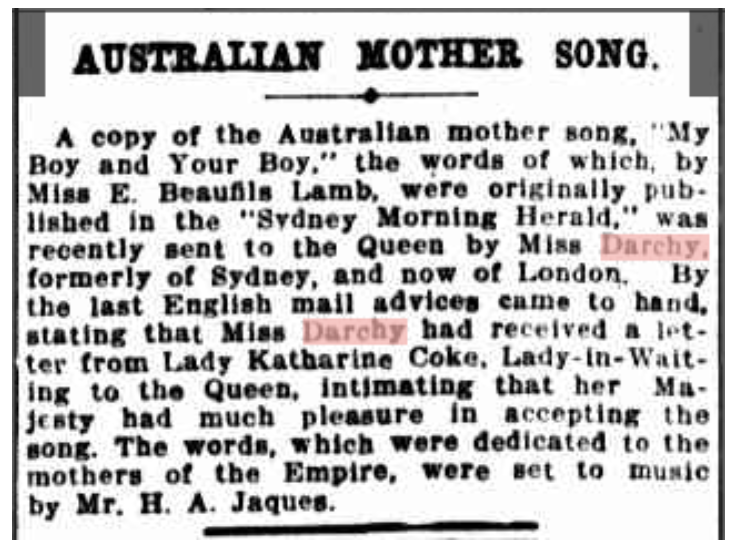
It would appear that Susan returned to England again and did much work for the Australian War effort. The Sydney Morning Herald of October 6 1915 reported regarding a very patriotic song:
Sydney Morning Herald 6 October 1915
Indeed several of Susan’s brothers including my own GGGFather enlisted … (for American readers – Australia’s experiences in World War I were VERY different to that of your country.)
Susan’s old newspaper The Maitland Daily Mercury published her obituary on 12 August 1922 p.4.: Miss Susan Darchy, who died on Thurday … was prominent in Sydney journalistic circles twenty years ago. For many years she worked as a journalist in America and England, and in the latter place did much excellent war work. She returned to Australia only a few months back.”
My 3rd cousin Dr. Patricia Ann Prendergast (“AnnieP”) did not come into my life until I was in my fifties, but I still consider her a major influencer in the rest of my life, particularly as regards my genealogical work.
In 1987 AnnieP published a study leave project “The Search for Thomas and Susan d’Archy” – it led to a PhD. As she explained in her background to the project, “I first came across the name d’Archy when I was putting together a history of my family who settled in what is now called the Western Riverina (of what became the state of NSW) in the early 1850s. My GGG Aunt Margaret married as her second husband Francis, son of Thomas d’Archy squatter of Oxley Station, Hay and his wife Susan nee Byrne. … The next step in my search for Thomas d’Archy was to try and trace his descendants …. I began by looking through phone directories and the only entries for what is a very unusual name were two in Sydney and one in Queensland. Miss Nancy Elizabeth d’Archy of Kings Cross is a GG Daughter of Thomas ….”.
Miss N E d’Archy was my Aunt Betty, my mother’s sister. When I was visiting her one day she told me about Annie P interviewing her and showed me what had been sent as a result. As a researcher myself, albeit in a different field, I was immediately interested and impressed by what she had discovered. Until then apart from my mother’s English family I had only a vague idea of my maternal grandfather’s origins and a single badly drawn tree in a bible was the only source of information about my paternal side.
Over the following years I came to know AnnieP well, corresponding often and staying with her on several occasions. I was always impressed by the depth of her research and knowledge, her organisational skills and her boundless enthusiasm, even when in her later years she developed various medical challenges. She organised a special weekend for descendants of the early Australian settlers and convicts who arrived on the same ship, the “Tellicherry”, as Susan Byrne d’Archy’s grandparents. That was where I met a number of d’Archy relatives who AnnieP had tracked down, for the first time.
AnnieP was very generous in sharing all her materials and indeed without her early research, particularly in locating some records in Neuchatel, Switzerland, the early history of the d’Archys would be a mystery indeed. It still is in some ways …








 Nancy's Families