An address I gave at the Brisbane, Queensland Powerhouse Theatre on 23 October 2000, at the launch of Australia’s first ever live captioned theatre performance – Shakespeare’s Richard II. It was the result of a collaboration between the Powerhouse and a small committee from the Queensland Deaf Society (Michelle Rodda, Tom McCaul, myself and one other person). The Brisbane Lord Mayor was to do the official launch but could not attend so the honour was given to me.
I became totally deaf when I was six. I did all the things a hearing child did – went to the Pantomine at Christmas, school plays, and the Saturday afternoon pictures (movies). As a teenager I went to the pictures in the evening with boyfriends. I did enjoy them even though I couldn’t understand that much. Then as I got older I would try to read the script of a play or opera beforehand, and get a seat near the stage so I could lipread.
i also learned Auslan (Australian sign language) but with my strong English language background I have trouble at sign interpreted theatre as the signing doesn’t exactly follow English word order, especially in the singing.
The advent of captioned TV was a milestone in my life. I probably owned the first Teletext TV in North Queensland and had to wait months until transmission of captions started. The only program at first was a daytime soap and friends could not understand why I would rush home in time to catch it – “that silly program??”
Then in 1997 I attended a couple of Conferences for Hard of Hearing people in America, where all the proceedings were real time captioned. I was goggle eyed and suffered serious brain overload – it was like reading a book nonstop for hours and hours and trying to absorb all the new information all at once.
A highlight of that trip was attending a captioned live theatre production near New York City. They had started theatre captioning there only a little while earlier; now they have regular captioned performances on Broadway and elsewhere. It is also happening in the UK, where a special company called Stage Text has been formed.
I still can’t quite believe that my dream is on the point of coming true – to see captioned live theatre in Australia. This means better access to theatre productions for the Hearing Impaired and Deaf communities in particular – and will probably assist hearing people too, at times when they struggle to understand strange accents. We hope to demonstrate that this is not just a one-off but something that can be incorporated into any theatre production.
And so it gives me great pleasure to officially launch tonight’s captioned theatre production, an I hope that everyone enjoys it ,. whether they have a hearing loss or not. Thank you!
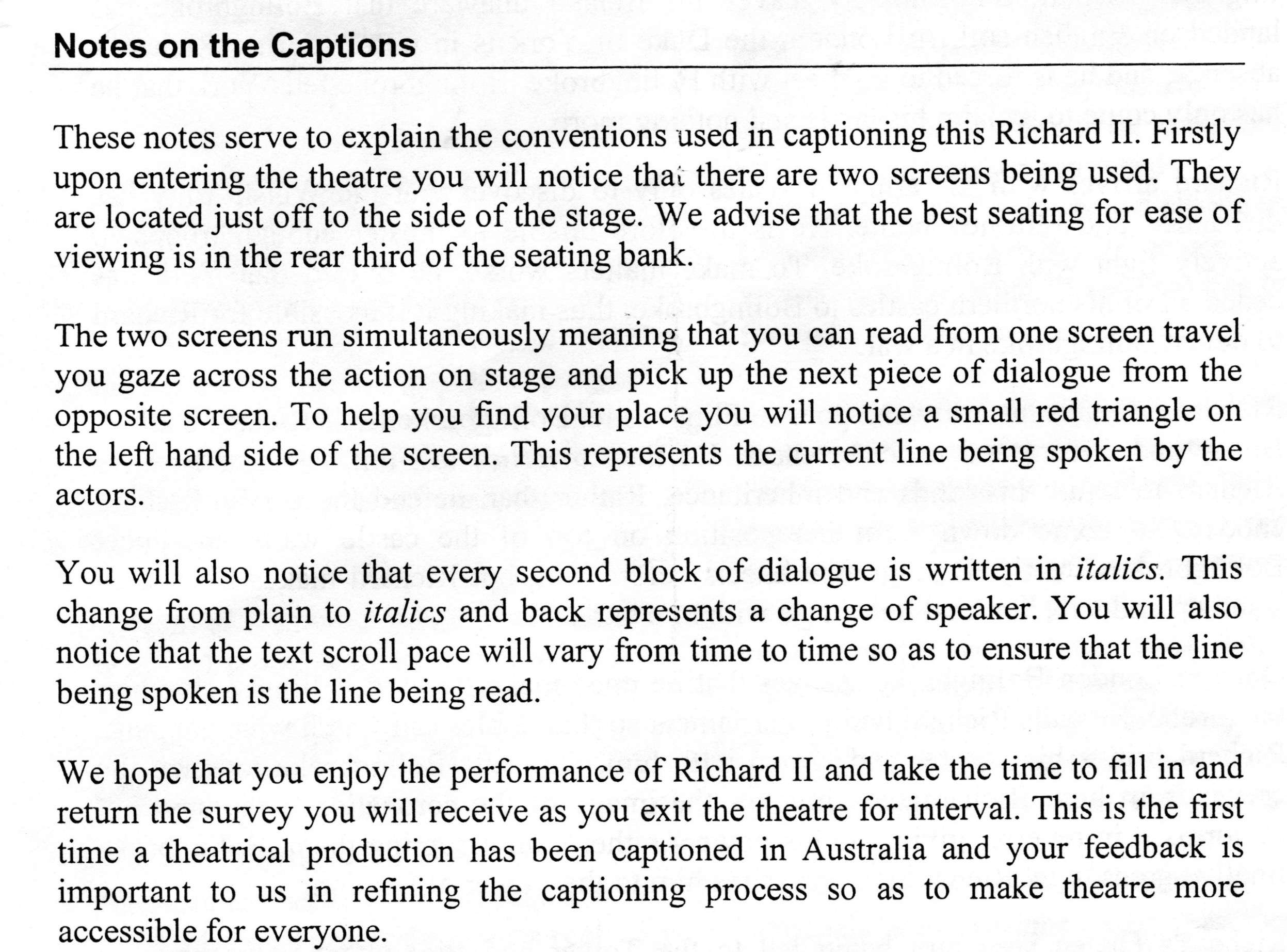
The Powerhouse Theatre provided some notes, not only about the play but about the captions. As theatre captioning methods have changed greatly since that time, I am including those notes here.
 Nancy's Families