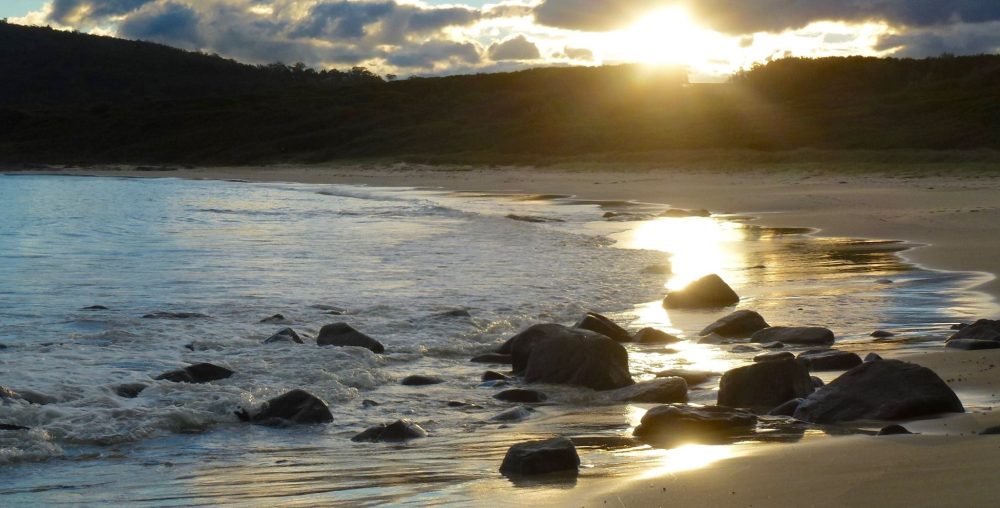
Topic: What this story means to me.
My GGGM Ann (Nancy) Welding was born in the little village of Upton St. Leonard in rural Gloucestershire and baptised on 10 January 1790. Her parents Thomas Wilday/Weldin/Wilding and his wife Elizabeth Fowler later had two more children. She was baptised Nancy but referred to as Ann in several legal documents including her marriage and the 1851 Census, but as Nancy in the 1841 Census when the information was given by her husband.
It is not known where or how Nancy received an education, most likely at the instigation of her father who signed his marriage register in 1786. When Nancy married Thomas Hunt in Redmarley d’Abitot, Glos on 1 Feb 1819, she also signed the marriage register in full. By then she was 29. Thomas, a cordwainer (shoemaker), made a cross. It is thought that Nancy was a governess or lady’s maid at the nearby grand “Down House”.
Nancy and Thomas had six children. The eldest, Elizabeth, was a nurse and later the matron on an immigrant ship which also carried her sister Mary Anne and the latter’s first four children to Australia in 1864. In Sydney Elizabeth became known as an “accoucheusse”, helping mothers with new babies, and Mary Anne, by then with eight children by two husbands, taught French. Next came Reuben, about whom, very frustratingly, I still know nothing. Then 3 sisters including Mary Anne, one of whom stayed in England and the third died aged 2. Finally my GGGF Edwin Hunt came along when Nancy was 48 if the dates are to be believed … he was a pupil teacher at 14 according to the Census, and before long headmaster at a school in Reading, Berkshire – where he speedily married the headmistress of the nearby girls’ school. They had 10 children of whom 9 survived and all emigrated to Australia as well, in 1879.
Thomas died when he was 54 and the children were mostly still at home. Nancy went to work as a nurse and lived to 70 (1859). I have a photograph of her, a rather determined-looking old lady in a frilly mob cap, with work-worn hands. How would she have felt about three of her children going to the other side of the world, where all her numerous grandchildren thrived?
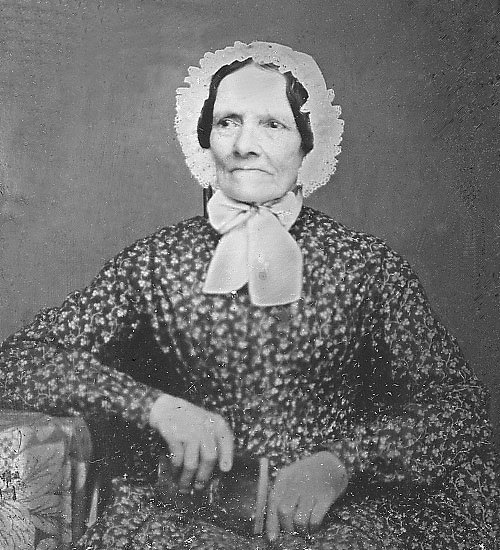
What appeals to me about Nancy – apart from our shared name – is what a strong woman she must have been and her obvious influence on her children’s education. Her influence has endured – one of her grandchildren was the first woman Science graduate from the University of Sydney in the 1880s, and several great great grandchildren have been or are teachers and/or scientists.
 Nancy's Families